What It Is
Bao Tang Ha Nam is the provincial museum that served the former Ha Nam province before the administrative merge brought it under the broader Ninh Binh (닌빈 / 宁平 / ニンビン) umbrella. Sitting in Phu Ly town — about 55 km north of Ninh Binh city — the museum houses a modest but well-curated collection spanning Bronze Age artifacts, Tran dynasty ceramics, and ethnographic displays documenting village life in the Red River Delta lowlands.
The building itself dates from the late 1990s, a Soviet-influenced concrete block that's been renovated twice since. Inside, roughly 3,000 objects are arranged across two floors. It's not a blockbuster museum — you won't need half a day — but for travelers already exploring Ninh Binh province who want context beyond limestone karsts, it fills in the human story of this part of northern Vietnam (베트남 / 越南 / ベトナム).
Why Travelers Go
Most visitors to Ninh Binh head straight to Tam Coc or Trang An and skip anything that isn't a boat ride through karst valleys. Fair enough. But Bao Tang Ha Nam offers something those sites don't: a window into lowland delta culture — rice agriculture, silk weaving traditions, and the bronze drum heritage that predates recorded Vietnamese history.
It's also genuinely quiet. No tour buses, no ticket touts. If you've spent the morning dodging selfie sticks at Bai Dinh, the contrast is stark. The museum attracts local school groups on weekdays and almost nobody on weekends.
Best Time to Visit
The museum is indoors and air-conditioned, so weather matters less than you'd think. That said:
- October to March — Cooler months mean the ride from Ninh Binh city is pleasant rather than sweat-soaked. This also overlaps with peak travel season for Ninh Binh generally, so you can slot the museum into a broader itinerary.
- Avoid Tet week (late January or early February) — the museum closes for the holiday and Phu Ly town largely shuts down.
- Weekday mornings are best for photographs without school groups blocking the display cases. Aim to arrive around 8:30 AM when doors open.
How to Get There
From Ninh Binh city center, Phu Ly is about 55 km north along National Highway 1A or the newer expressway.
- Motorbike: The most flexible option. Takes 50-60 minutes via QL1A. The road is flat, well-paved, and boring — which is fine. Rental bikes in Ninh Binh run 120,000-150,000 VND/day.
- Bus: Local buses run from Ninh Binh bus station to Phu Ly roughly every 30 minutes. Fare is around 40,000-50,000 VND. Journey takes about 1 hour 15 minutes with stops.
- Grab/taxi: A one-way Grab car costs approximately 250,000-350,000 VND depending on traffic and surge. Not the cheapest but convenient if you're combining with other stops along the route.
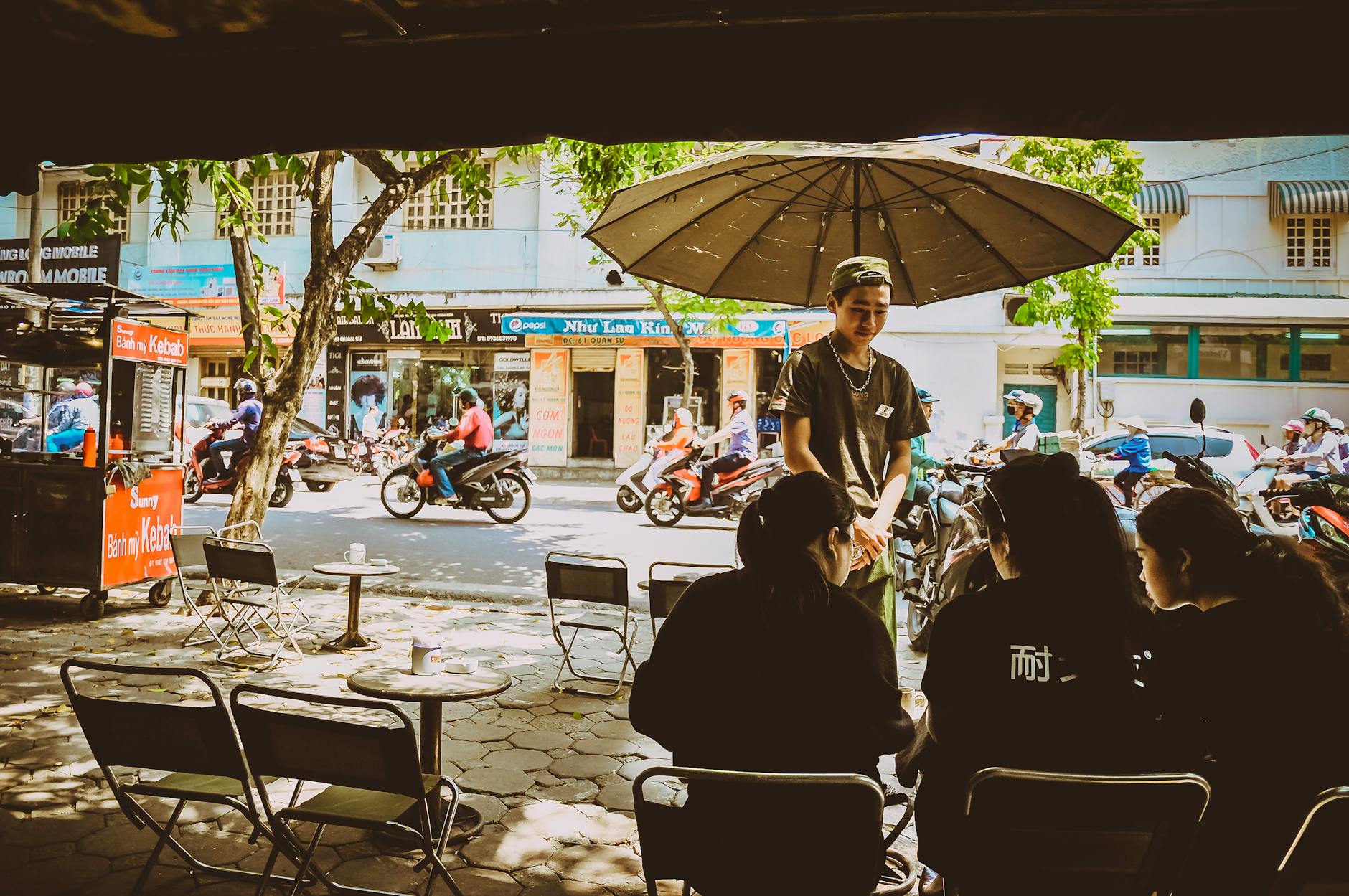
The museum sits on Tran Hung Dao street in central Phu Ly — anyone in town can point you there.

Photo by Karolina on Pexels
What to Do
1. The Bronze Age Gallery (Ground Floor)
The standout pieces are three Dong Son-era bronze drums excavated from sites around Ha Nam in the 1970s. The spiral motifs and boat-people engravings are some of the clearest examples outside of Hanoi's National History Museum. Labels are in Vietnamese and passable English.
2. Tran Dynasty Ceramics Room
A small but focused collection of 13th-14th century celadon and brown-glazed wares from kiln sites in the area. If you've visited Bat Trang village near Hanoi, this gives you the historical precursor — the Red River Delta was producing serious ceramics centuries before Bat Trang became a brand name.
3. The Silk and Weaving Display
Ha Nam was historically one of northern Vietnam's silk-producing regions. The museum has two working looms (occasionally demonstrated by staff on request) and a timeline of local textile traditions. It's niche but genuinely interesting if you care about craft heritage.
4. Wartime Photography Hall (Second Floor)
A sobering room of black-and-white photographs documenting Ha Nam during the American War — bombed bridges, militia units, reconstruction efforts. Presented factually, without heavy propaganda. Worth 15 minutes.
5. The Garden and Stele Collection
Out back, a shaded courtyard holds a dozen stone steles from demolished pagodas and communal houses. Most date from the 17th-18th century. It's peaceful, and photographers will like the moss-covered carvings in morning light.
Where to Eat Nearby
Phu Ly isn't a food destination, but two things are worth seeking:
- "Bun cha" on Quang Trung street — Three or four stalls cluster near the market. The version here uses slightly sweeter dipping broth than Hanoi's standard. A full plate with extra nem runs 40,000-50,000 VND.
- "Banh cuon" Hai Phong style — A shop called Banh Cuon Ba Lien on Le Loi street makes thin rice crepes stuffed with minced pork and wood ear mushroom. Served with fried shallots and a side of cha lua. 35,000 VND for a full portion. Open mornings only until about 10 AM.
Where to Stay
Most travelers base themselves in Ninh Binh city and day-trip to Phu Ly. That said, if you're passing through:
- Budget: Nha Nghi (guesthouses) on Tran Hung Dao street from 200,000-300,000 VND/night. Basic but clean. Don't expect English.
- Mid-range: Muong Thanh hotel chain has a property in Phu Ly — around 500,000-700,000 VND/night with breakfast. Reliable, anonymous, air-conditioned.
- Better option: Stay in Ninh Binh city where the hotel scene caters to international travelers, then ride up for a morning visit.

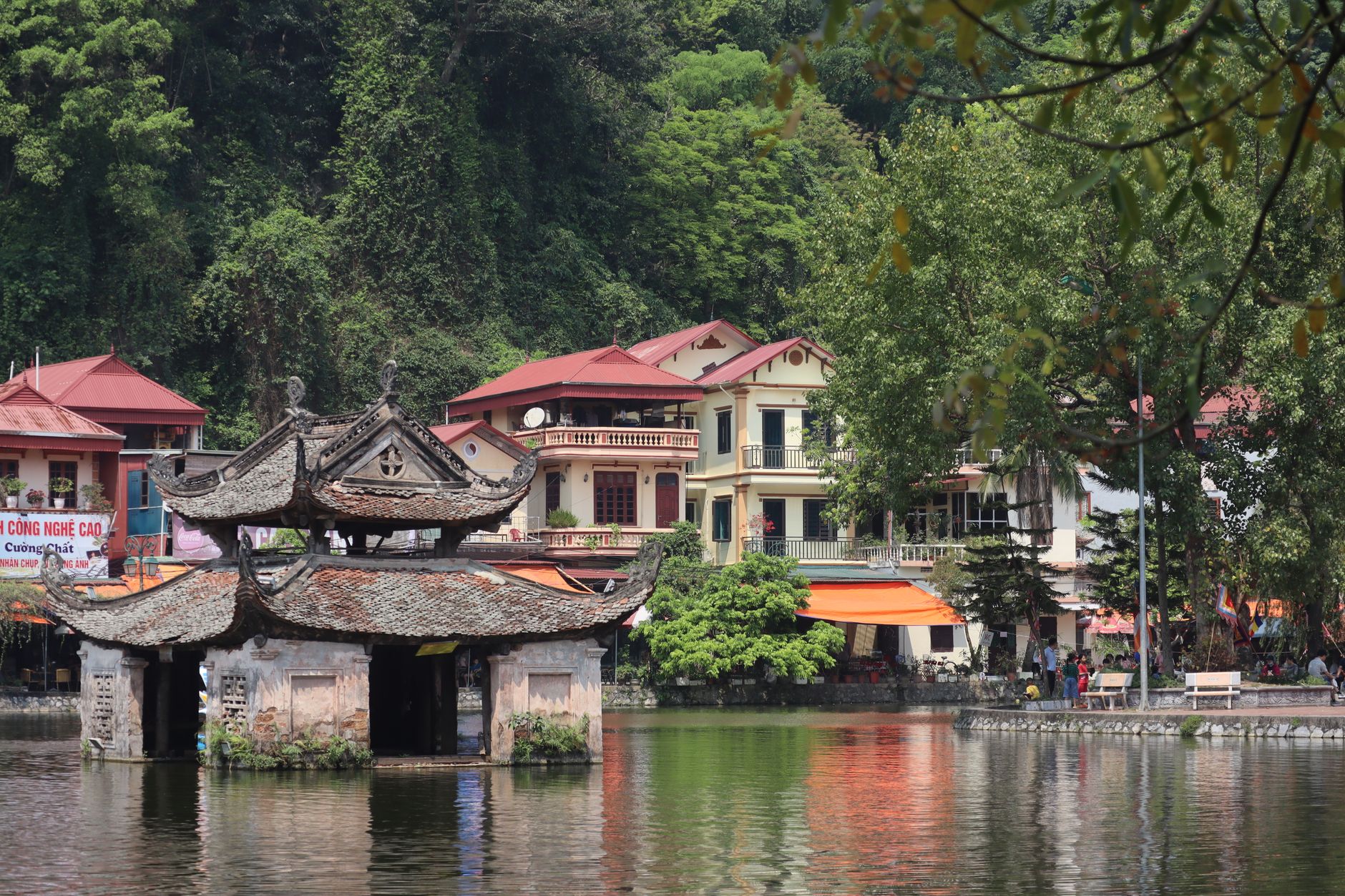
Photo by Tito Zzzz on Pexels
Practical Tips Locals Would Tell You
- Bring your own water. The museum has no cafe or vending machines inside.
- Entry fee is 20,000 VND for foreigners (as of early 2024). They sometimes waive it if nobody's at the desk — just ask politely.
- Photography is allowed everywhere except the wartime room. No flash.
- The museum closes for lunch from 11:30 AM to 1:30 PM. Plan accordingly or you'll be staring at a locked gate.
- If you combine this with a visit to Ninh Binh's main sights like Tam Coc or Hoa Lu, budget a full day — Phu Ly is in the opposite direction from the karst landscape.
Common Mistakes to Avoid
- Showing up on Monday — The museum is closed every Monday and public holidays.
- Expecting English-speaking staff — Bring Google Translate or a Vietnamese phrasebook. The written exhibit labels have English but staff interactions will be in Vietnamese.
- Rushing through in 20 minutes — Give it at least 45 minutes to an hour. The bronze drums alone deserve slow looking.
- Confusing Phu Ly with Ninh Binh city — They're different towns, 55 km apart. GPS "Bao Tang Ha Nam, Phu Ly" to avoid ending up at the wrong museum.
Practical Notes
Bao Tang Ha Nam won't be the highlight of anyone's Vietnam trip, and that's fine. It's a low-key, educational stop that adds depth if you're spending multiple days around Ninh Binh and want more than boat rides and pagoda steps. Pair it with the morning banh cuon, and you've got a satisfying half-day detour into delta culture that most travelers never see.
Last updated · May 29, 2026 · independently researched, never sponsored.