Pho is Hanoi's defining dish. It is also a dish where the gap between great and average is narrow, and the gap between average and tourist-trap is wide. After two years of eating pho almost daily across the Old Quarter, here are the seven bowls worth lining up for — and three I'd pass on.
What separates great pho from average
A great northern pho has three things:
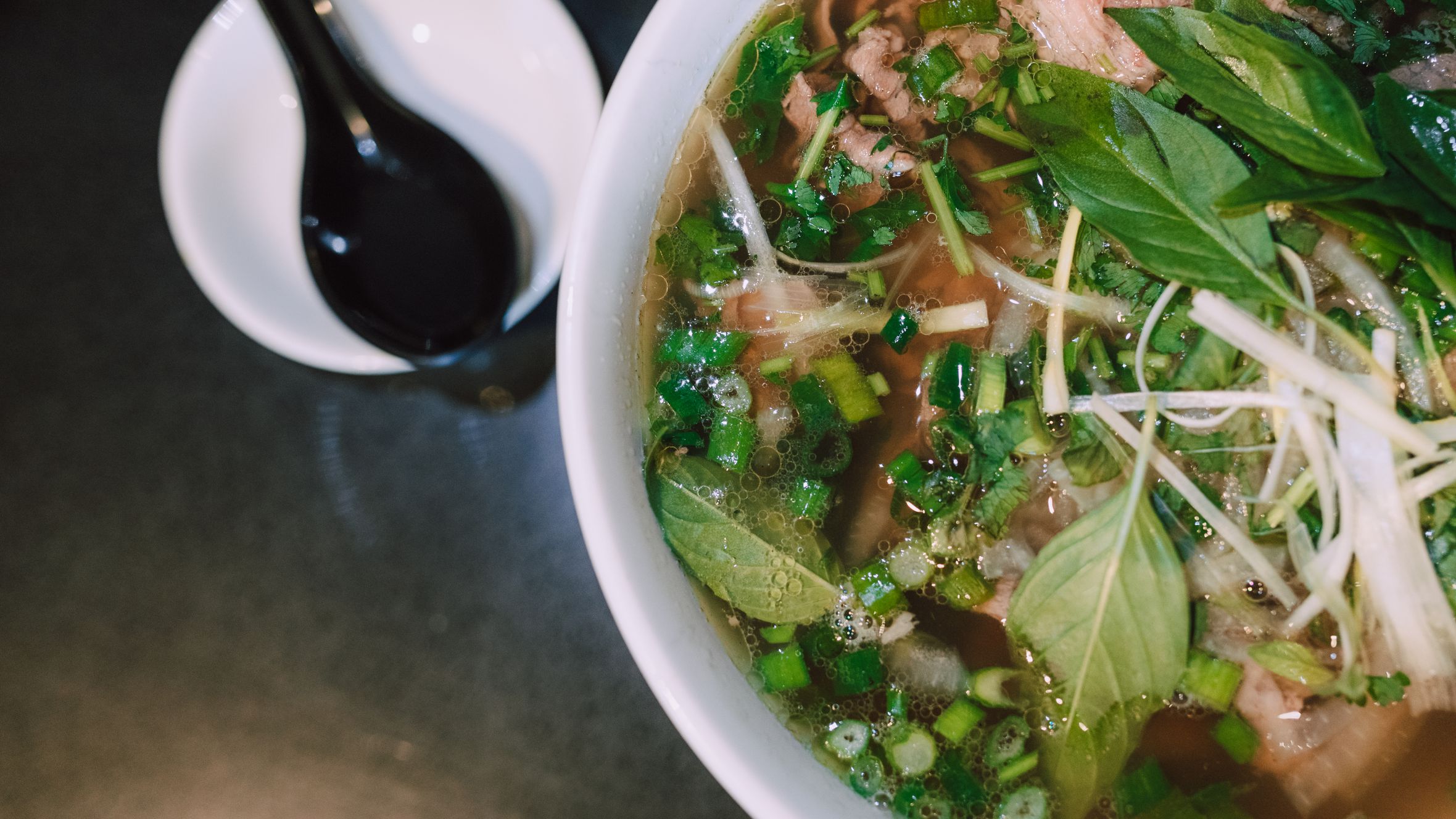
- A clear, gold stock. Not cloudy. You should see the rice noodles through the broth. The aroma is gentle anise and cinnamon, not a wall of MSG. Cloudy stock means the kitchen is reusing yesterday's bones or rushing the simmer.
- Noodles cooked through but elastic. They should hold shape under chopsticks for at least the first five minutes. Mushy noodles mean the kitchen pre-cooks too far ahead.
- A generous herb plate, with sawtooth coriander. Sawtooth coriander (ngo gai) is the giveaway — it's harder to source and signals a kitchen that cares. If they only give you cilantro, the bowl will be flatter than it should be.
A great pho place will also give you gio chao quay (fried dough sticks) on the side without you asking.
The seven worth queueing for
1. Pho Gia Truyen — 49 Bat Dan
The default benchmark, even after a noticeable quality dip in 2024. Open 6:00–10:30, queue is real. Order pho tai (rare beef) or pho tai gau (rare + brisket fat). 60,000 VND. The bowl is still better than 80% of what's in the Old Quarter, just no longer the clear best.
2. Pho Suong — 24B Trung Yen
Three minutes' walk from Hoan Kiem Lake. Smaller, scruffier, no English signage. The bowl is cleaner and brighter than Gia Truyen — lighter on the cinnamon, more on the green-onion note. 45,000 VND. Open 06:00–11:00.
3. Pho 10 Ly Quoc Su — 10 Ly Quoc Su
The other commonly-recommended Old Quarter spot. Stays open until 22:00, which is rare for pho. Kitchen is consistent. Less interesting flavor than Suong but more reliable hours. Good for a late dinner. 55,000 VND.
4. Pho Bat Dan (the smaller one) — 39 Bat Dan
Three doors down from Gia Truyen. No queue, no English menu, half the price (35,000 VND). Today, the bowl is genuinely better than the famous one next door. Open 06:00–11:00. The owner doesn't make eye contact and that is part of the experience.
5. Pho Thin — 13 Lo Duc
The famous stir-fried beef variation. Pho xao thit bo — beef quickly stir-fried in a wok with garlic, tossed onto noodles, then submerged in stock at the table. It's not canonical pho. It is delicious. One visit is enough; it doesn't replace the others. 70,000 VND.
6. Pho Vui — 25 Hang Giay
Open before sunrise (5:00) for the pre-work crowd. By 8:30 they're sold out. Smaller portions but the stock is exceptional — cleanest of the seven. Plastic stools on the pavement. 40,000 VND. This is the pho experience locals actually have, not the Instagram one.
7. Pho Ga Cham — 134 Cau Go
For chicken pho specifically. Pho ga is its own category and Cham is the best example I've found in Hanoi. The chicken stock is golden, the meat torn fresh off the bone, served with lime + sliced chili instead of the usual lime + hoisin. 50,000 VND.
What I order, day to day
For most weekday breakfasts: Bat Dan #39. It's a five-minute walk from my apartment, and it's better than the famous one. For weekends with friends visiting: Pho Suong, because it's a 90-second walk from Hoan Kiem and they always have seats.
For dinner pho (rare in Hanoi — locals don't eat pho after 11): Pho 10. For chicken pho: Cham.
The three to skip
I won't name them, but they all share a tell: English-only menus, queues of foreign tourists, and a Bib Gourmand sticker visibly displayed. Each was good 5+ years ago and rode the recognition into a slow decline. The kitchen knows the queue will form whether the bowl is great or merely acceptable.
If you spot the pattern, walk to one of the seven above. Most are within a 6-minute radius.
How to actually order, without Vietnamese
Point at the menu. Say "pho tai" (rare beef) or "pho chin" (well-done) or "pho ga" (chicken). Sit. The bowl arrives in 90 seconds. Squeeze in lime, dunk a piece of fried dough, eat. Total spend including a coffee: 80,000–100,000 VND. About $3.50.
There is no tipping. Pay at the front counter when you leave. Cash is best — most stalls don't take cards.
When to go
Pho is a breakfast dish. The 06:30–08:30 window is when stocks are at their freshest. By 10:00, the broth has been sitting for hours and the noodles get pre-cooked in larger batches. Yes, that means waking up early. Yes, it's worth it.
Last updated · Apr 25, 2026 · independently researched, never sponsored.