Jellyfish noodles sound like a novelty, but "bun sua" has been a fixture of Nha Trang (냐짱 / 芽庄 / ニャチャン)'s morning food scene for generations. It's not dramatic — the flavors are restrained, almost austere — and that's exactly why knowing what to pair it with matters.
What Bun Sua Actually Is
The dish is simple by design. Cleaned jellyfish is cut into short, semi-translucent strands and served cold over thin rice vermicelli. The broth is light — typically pork-based, sometimes with a hint of dried shrimp — and poured in just enough to loosen the noodles without submerging them. A scatter of fried shallots, a few sprigs of Vietnamese coriander (rau ram), and a squeeze of kumquat (tac) finish it. The jellyfish itself has almost no flavor; its contribution is textural — a gentle, springy resistance between the teeth that sets it apart from any other noodle topping you'll find on the coast.
Don't expect a rich, complex bowl in the way that "bun bo hue" hits you. Bun sua is meant to be light. That's its appeal at 7 a.m. when the heat is already climbing.
Where to Find It
The most reliable spot locals actually go to is Bun Sua Co Ut, tucked off Phan Boi Chau street in the area behind the central market. It opens around 6:30 a.m. and typically sells out before 10. A bowl runs 35,000–45,000 VND depending on portion size. There's no English menu; point at what the table next to you has.
A second option closer to the beach strip is a small cart that sets up near the intersection of Le Thanh Ton and Biet Thu streets from roughly 7 a.m. to 9 a.m. — look for the aluminum pot and the stack of white bowls. This one draws more foot traffic from tourists staying in the hotel corridor, but the jellyfish quality holds up.
Avoid anywhere that lists it on a laminated tourist menu alongside "grilled squid" and "seafood fried rice." Bun sua at those places is usually pre-soaked jellyfish with no texture left.

Photo by FOX ^.ᆽ.^= ∫ on Pexels
What to Pair With It for a Full Meal
Bun sua on its own is not a filling meal for most people. The bowls are modest in size and the broth is thin. Here's how to round it out without overcomplicating things.
Cha Lua and Gio Heo on the Side
Most bun sua spots will offer sliced "cha lua" (Vietnamese pork roll) as an add-on for 10,000–15,000 VND. Order it. The firm, slightly fatty pork adds enough substance to carry you through the morning. Some stalls also offer "gio heo" — braised pig's trotter — which pairs surprisingly well with the cold jellyfish because the richness of the trotter offsets the dish's restraint.
A Plate of Banh Cuon Alongside
If you're eating at a stall that sells multiple things — common in Nha Trang's market-adjacent streets — ask if they have "banh cuon". The steamed rice rolls, soft and filled with minced pork and wood-ear mushroom, work as a complement rather than a repeat. They share the same delicate register as bun sua without competing with it. Not every bun sua spot offers this, but it's worth scanning the menu board.
The Dipping Sauce Setup
A good bun sua counter will have two condiments available: a thin fish sauce-chili mix and a fermented shrimp paste (mam ruoc). The mam ruoc is the more divisive of the two — pungent, funky, deeply savory. Try a small dab stirred into the broth before committing. It transforms the bowl into something more assertive, which some people prefer and others find overwhelming. The fish sauce mix is the safer starting point.
What to Drink
The obvious answer in this heat is "ca phe sua da" — iced milk coffee — but it's a heavy pairing for a delicate noodle dish. A better match is fresh coconut water (30,000–35,000 VND from any street cart nearby) or plain iced green tea, which most stalls provide for free or at 5,000 VND. Save the coffee for after, when you've finished eating.
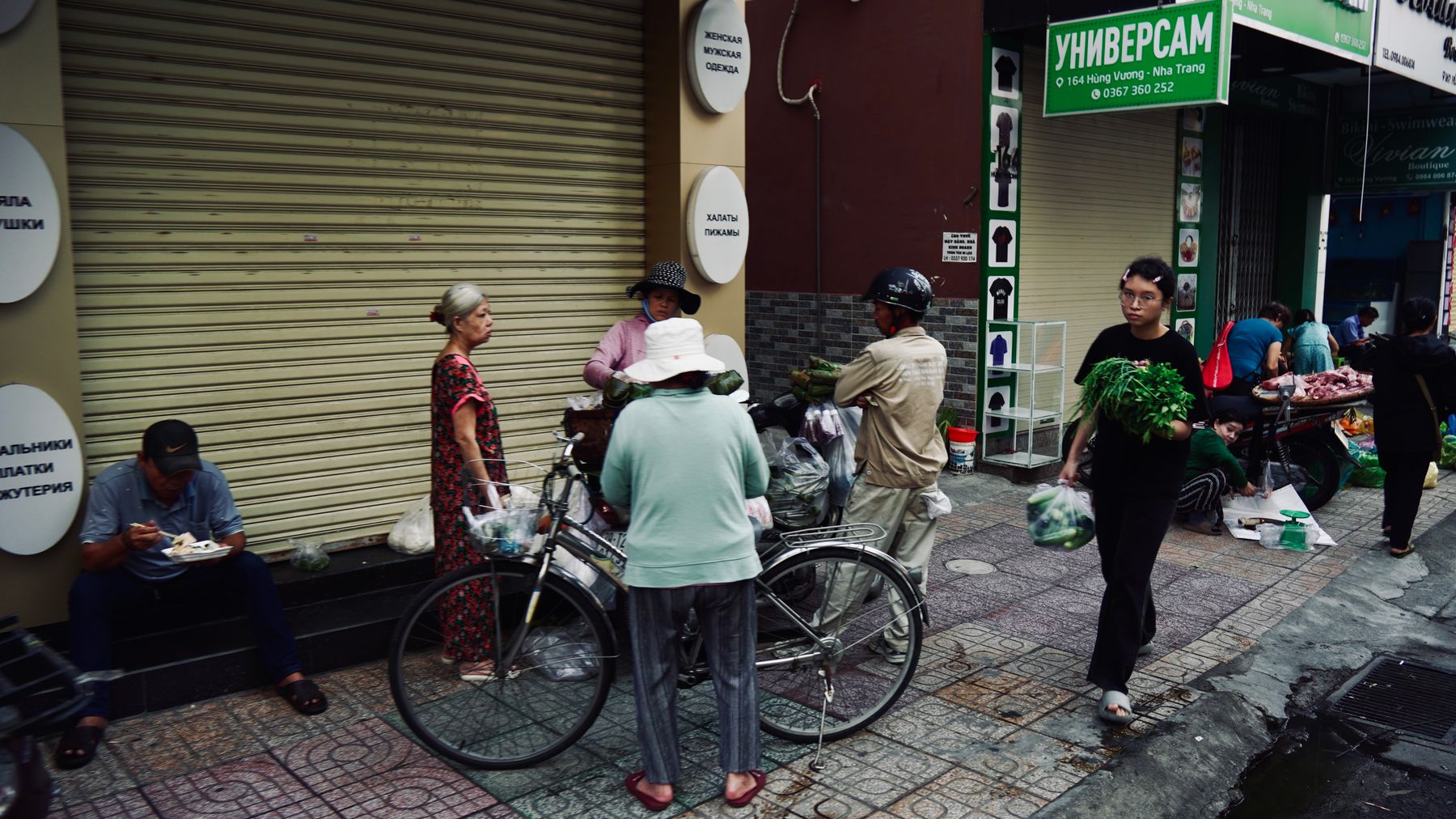
Photo by Tuan Vy on Pexels
Timing and Expectations
Bun sua is a morning dish. Outside of a handful of spots near the fish market that run a lunchtime service, you will not reliably find it after 10 a.m. Plan your morning accordingly — which in Nha Trang means beating the heat, not fighting it. Get there by 7:30, eat slowly, and use the cool of the early hour to walk down toward Tran Phu beach after.
The dish will not be the most memorable thing you eat in central Vietnam (베트남 / 越南 / ベトナム). That's fine. It's not trying to be. What it is, is specific to this coast, to this city, and to a food tradition that doesn't perform for cameras. That's enough reason to seek it out.
Practical Notes
Cash only at street-level bun sua spots; bring small bills (20,000–50,000 VND denominations). Jellyfish availability can dip between November and February when fishing activity slows — if you're visiting in the off-season, call ahead or ask your guesthouse to confirm before making a trip.
Last updated · May 26, 2026 · independently researched, never sponsored.