What Thinh Long Beach Actually Is
Thinh Long Beach sits at the mouth of the Day River where it empties into the Gulf of Tonkin, about 150 km southeast of Hanoi. For decades it belonged to Hai Hau district in Nam Dinh province — and with recent administrative changes linking it more closely to the greater Ninh Binh (닌빈 / 宁平 / ニンビン) travel corridor, it's now easier than ever to tack onto a trip south of the capital.
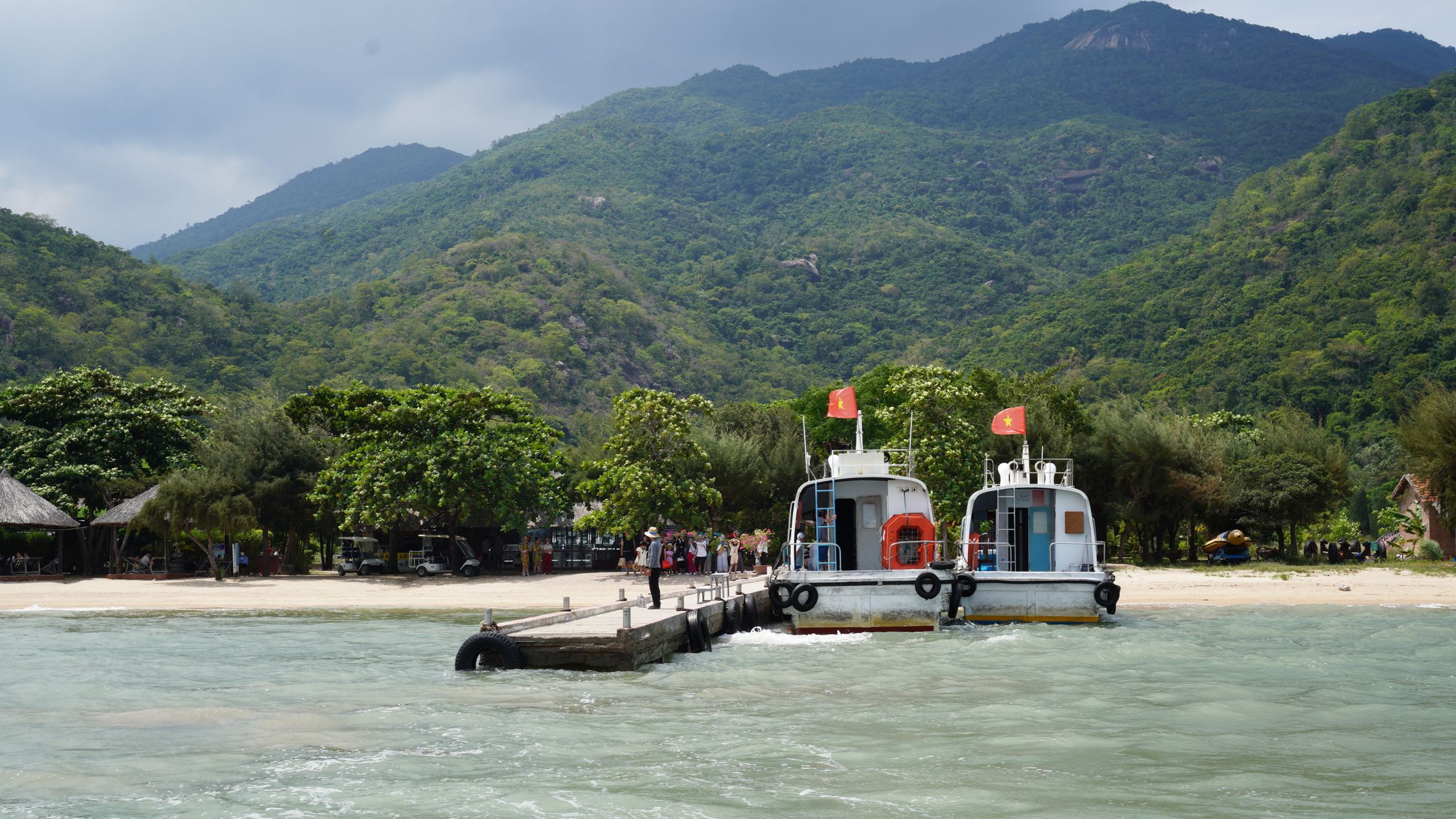
This is not a polished resort beach. Thinh Long is a working coastal town with a fishing fleet, salt flats, and a wide sandy shore that fills up with Vietnamese families on summer weekends but stays nearly empty the rest of the year. The sand is firm and tan-colored, the water is warm but silty, and the vibe is deeply local. If you're looking for cocktail bars and lounge chairs, wrong beach. If you want to see how northern Vietnamese actually spend a beach holiday, this is it.
The beach stretches roughly 3 km along the coast, backed by a row of small seafood restaurants and basic guesthouses. A Catholic church spire — a remnant of the region's long Catholic history — marks the town center just inland.
Why Travelers Go
Most foreign visitors in the area are based in Ninh Binh, doing the standard circuit of Tam Coc, Hoa Lu, and Trang An. Thinh Long offers something completely different: flat coastal terrain, cheap seafood, and zero tourist infrastructure aimed at foreigners.
People come here to eat. The seafood at Thinh Long is genuinely good and absurdly cheap — we're talking 80,000-150,000 VND for a plate of grilled clams that would cost triple in Hanoi (하노이 / 河内 / ハノイ). The beach itself is fine for a morning swim or an afternoon walk, but the real draw is the food, the fishing village atmosphere, and the sense that you've wandered somewhere most guidebooks forgot to mention.
It also pairs well with a longer Ninh Binh stay. After two or three days of karst landscapes and rice paddies, a day at the coast resets the pace.
Best Time to Visit
The sweet spot is May through September, when the weather is hot enough for swimming and the water is warmest. June through August is peak season for Vietnamese visitors — weekends get busy, but weekdays remain calm.
Avoid November through February. The northeast monsoon makes the coast grey, windy, and cold (15-18°C some days). The beach is deserted and most seafood restaurants scale back their hours. March and April are transitional — pleasant enough for a visit but the water is still cool.
How to Get There
From Ninh Binh city (the most common base): head east on National Highway 10 toward Nam Dinh, then continue south on DT490 toward Hai Hau and Thinh Long. Total distance is about 65 km. By motorbike, expect 1.5-2 hours depending on traffic through the towns. A private car or taxi runs around 500,000-700,000 VND one way.
From Hanoi: take the expressway toward Nam Dinh (about 90 km, 1.5 hours), then another 50 km south to Thinh Long. Total drive time is around 2.5 hours. Buses from Giap Bat station run to Nam Dinh city (80,000-120,000 VND), and from Nam Dinh you can grab a local bus or xe om for the final 35 km stretch to the coast.
There's no direct tourist shuttle. This is a drive-yourself or hire-a-driver destination.

Photo by Quang Nguyen Vinh on Pexels
What to Do
Walk the Beach at Low Tide
At low tide, the beach extends dramatically and you can walk a long way out on firm wet sand. Early morning is best — local women harvest clams by hand along the waterline, and the fishing boats are heading out. It's a working beach, not a postcard, and that's the appeal.
Eat Seafood at the Beachfront Strip
The row of open-air restaurants along the beach road is where everyone ends up. Point at what looks good in the tanks and ice displays. Grilled "ngao" (clams) with scallion oil, steamed crab, stir-fried squid with chili — the basics are done well and priced for domestic tourists. A full seafood meal for two with beer runs 300,000-500,000 VND.
Visit the Salt Fields
Just north of town, the Hai Hau salt flats are still active. Workers rake sea salt into white pyramids between March and September. You can pull over on any of the small roads crossing the flats and watch. No entrance fee, no ticket booth — just salt, sun, and labor.
Explore the Catholic Villages
The Hai Hau coastline has one of the highest concentrations of Catholic parishes in Vietnam, dating back to Portuguese and French missionary activity. Several churches within a 10 km radius of Thinh Long are architecturally striking — Phu Nhai Cathedral, about 20 km north, is one of the largest churches in Vietnam. Worth a detour if old architecture interests you.
Catch the Fish Market at Dawn
The small fishing harbor at Thinh Long comes alive around 5:00-6:00 AM when boats return. It's chaotic, loud, and smells exactly like you'd expect. Watching the auction and sorting process is genuinely interesting if you're an early riser.
Where to Eat Nearby
Beyond the beachfront seafood strip, look for "bun cha" stalls in Thinh Long town — the northern version with grilled pork patties over noodles, solid and cheap at 30,000-40,000 VND. Nam Dinh province is also famous for "pho" — in fact, many Hanoians consider Nam Dinh-style pho the original. If you're passing through Nam Dinh city on the way back, stop at any crowded pho shop near the cathedral for a bowl (40,000-50,000 VND). The broth tends to be cleaner and more beef-forward than the Hanoi version.
Where to Stay
Accommodation is basic. A handful of mini-hotels and guesthouses line the road behind the beach, charging 250,000-500,000 VND per night for air-conditioned rooms with hot water. Don't expect anything fancy — clean sheets and a working fan are the baseline. There are no international-brand hotels here.
If you want more comfort, stay in Ninh Binh city (where options range from 300,000 VND hostels to 2,000,000 VND boutique hotels near Tam Coc) and treat Thinh Long as a day trip.

Photo by Đạt Nguyễn on Pexels
Practical Tips Locals Would Tell You
- Bring cash. There are a couple of ATMs in town but card payment is essentially nonexistent at the beach restaurants.
- Wear shoes on the beach. Broken shells and occasional fishing debris make barefoot walks risky in some stretches.
- Sunscreen is your problem. There's almost no natural shade on the beach and the beachfront stalls don't reliably stock it. Bring your own from Hanoi or Ninh Binh.
- Weekend afternoons get crowded in summer. Arrive Friday evening or early Saturday to claim a good table at the seafood strip.
Common Mistakes to Avoid
Don't come expecting a resort experience — there are no beach clubs, no cocktail menus, no English-language anything. This is a Vietnamese beach for Vietnamese families.
Don't skip the seafood and eat instant noodles at your guesthouse. The whole point of being here is the food.
Don't try to swim after heavy rain — river runoff muddies the water significantly for a day or two. Check conditions before you drive out.
Practical Notes
Thinh Long works best as a day trip from Ninh Binh or a one-night detour on a longer northern Vietnam loop. Pair it with the karst scenery around Tam Coc and Hoa Lu for contrast — limestone mountains one day, flat coastline the next. It's not a destination that needs three days, but it's a genuine window into a part of northern Vietnam that most travelers drive right past.
Last updated · May 29, 2026 · independently researched, never sponsored.