What it is
Khu di tich An Phu - Kinh Chu is a national heritage complex spread across An Phu Mountain and the surrounding limestone karst in the Kinh Mon area of Hai Phong. The site pairs a hilltop temple dedicated to the Tran dynasty general Tran Hung Dao with Kinh Chu Cave — a grotto that doubles as an open-air gallery of centuries-old carved inscriptions. Together they form one of the more interesting day trips in the Red River Delta that almost no foreign visitor bothers with.
An Phu Mountain rises only about 200 meters above the flatlands, but its cultural weight is heavier than its altitude. The temple at the summit dates to the 13th century, built to honor Tran Hung Dao after his campaigns against Mongol invasions. Kinh Chu Cave, at the base of a neighboring cliff, houses more than 40 stone stele and rock-face inscriptions — some carved as far back as the 15th century. Scholars and calligraphy nerds consider it one of the richest collections of carved epigraphy in northern Vietnam (베트남 / 越南 / ベトナム).
Why travelers go
This is not a place you visit for Instagram content. You go because you want something quieter and more layered than the standard Hanoi day-trip circuit. The temple grounds on An Phu are genuinely atmospheric — incense smoke, old banyan trees, a view over patchwork rice paddies that stretches toward Ha Long Bay on clear days. Kinh Chu Cave is the real draw for anyone interested in Vietnamese history or Buddhist art: the inscriptions span dynasties, and standing in front of a 500-year-old carving in near-total silence is a different experience from shuffling through a crowded museum in Hanoi.
It also pairs well with a broader loop through the Kinh Mon limestone corridor, which has the same geological bones as Ninh Binh (닌빈 / 宁平 / ニンビン) but without the tourist infrastructure — or the crowds.
Best time to visit
The sweet spot is October through March, when the north is cooler and drier. The climb up An Phu Mountain is short but steep in places, and doing it in July humidity is unpleasant. January and February can be foggy, which kills the summit view but adds a moody quality to the cave.
Avoid the days right around Tet and the Tran Temple Festival period (usually the 8th day of the first lunar month and surrounding dates). The site gets a surge of domestic pilgrims during these windows, and the atmosphere shifts from contemplative to carnival — loudspeakers, vendor stalls, packed stairs.

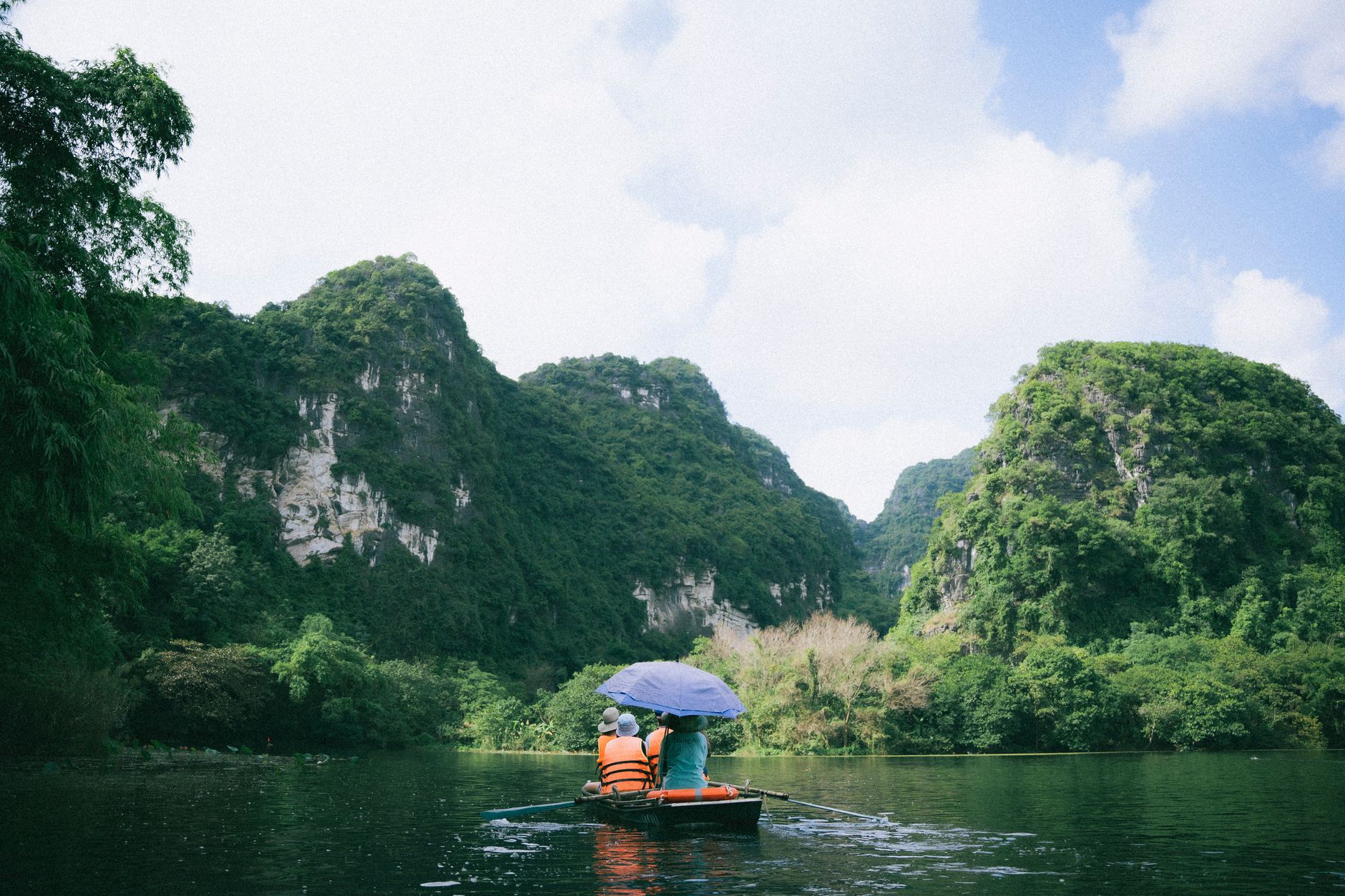
Photo by Quang Nguyen Vinh on Pexels
How to get there
From Hanoi, the Kinh Mon area sits about 90 km east along the QL5 highway or the newer Hanoi–Hai Phong Expressway.
By bus: Catch a bus from Hanoi's Gia Lam or Luong Yen station heading toward Hai Phong or Kinh Mon town. Tickets run 80,000–120,000 VND. The ride takes roughly 2 hours on the expressway. Get off at Kinh Mon town, then grab a local "xe om" (motorbike taxi) for the last 5 km to the site — expect 20,000–30,000 VND.
By motorbike or car: Take the Hanoi–Hai Phong Expressway (toll around 160,000 VND for a car, 45,000 VND for a motorbike one-way), exit toward Kinh Mon. The drive is about 1.5 hours without traffic. Google Maps handles the routing fine once you search for "Khu di tich An Phu Kinh Chu."
From Hai Phong city center: It's about 50 km west. A Grab car runs around 250,000–350,000 VND one way, or you can ride a motorbike in about an hour via QL5.
What to do
Climb An Phu Mountain
The path to the summit temple takes about 20–30 minutes on stone steps. It's not technical, just steep in a few sections. At the top, the Tran Hung Dao temple is modest in size but well-maintained, with wooden carvings and a quiet courtyard. The panoramic view of the delta below is the payoff — on a clear day you can trace the flat green landscape all the way to the coast.
Explore Kinh Chu Cave
The cave sits at the foot of the limestone cliffs, a short walk from the main parking area. Inside, the inscriptions are carved directly into the rock walls — poetry, royal edicts, Buddhist sutras, and records of temple restorations. Bring a flashlight or use your phone light to read the deeper carvings. A few of the stele near the entrance have been annotated with Vietnamese explanations, but most are left raw. Budget 30–45 minutes.
Walk the temple circuit
Beyond the main An Phu temple, several smaller shrines and pagodas are scattered around the base of the mountain. The loop takes about an hour at an easy pace. Look for the old well near the eastern path — locals still consider the water auspicious.
Take the Kinh Mon karst loop
If you have your own wheels, ride the back roads through the surrounding limestone hills. The scenery echoes Tam Coc on a smaller scale — jagged karst towers rising from flat paddies — but you'll have the roads mostly to yourself.
Where to eat nearby
Kinh Mon town has a handful of "com binh dan" (everyday rice) spots along the main road. For something more specific, look for "banh cuon" — the thin steamed rice rolls are a northern staple and done well in this area, often served with a side of fried shallots and "nem chua" (fermented pork). A full plate runs 25,000–40,000 VND.
If you're heading back toward Hai Phong after the visit, stop for "bun ca" (fish noodle soup), which Hai Phong does better than almost anywhere in the north. Stalls near the Cho Sat area serve bowls for 30,000–45,000 VND.

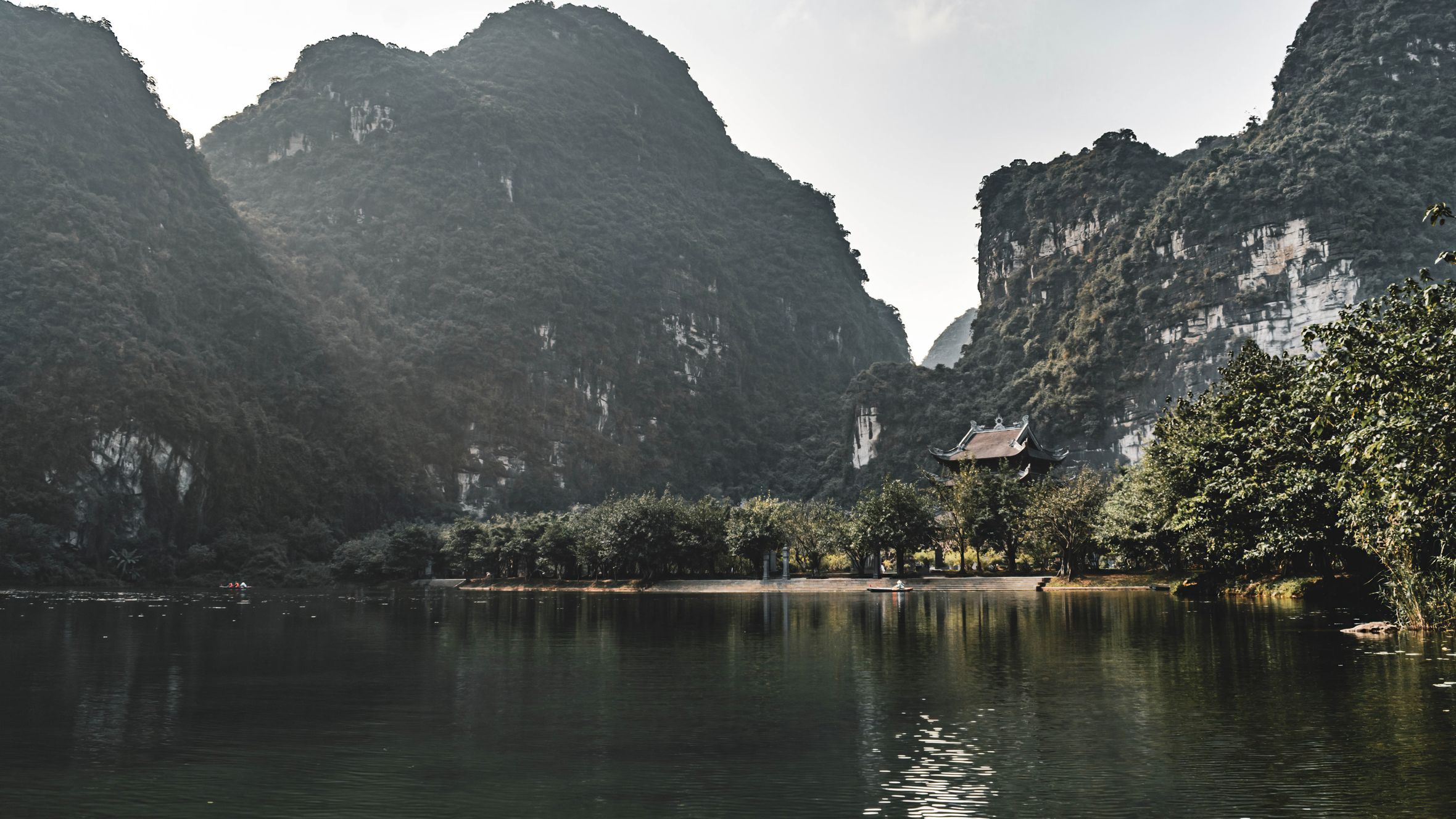
Photo by Quang Nguyen Vinh on Pexels
Where to stay
Most travelers do An Phu - Kinh Chu as a day trip from Hanoi or Hai Phong. If you want to stay closer, Kinh Mon town has basic guesthouses ("nha nghi") for 200,000–350,000 VND per night — clean enough, no frills, cold water is possible in winter. For more comfort, Hai Phong city has mid-range hotels in the 500,000–900,000 VND range and a few international-standard options above that.
Practical tips locals would tell you
- Bring cash. There's no ATM at the site and vendors don't take cards. Entry is free, but you'll want small bills for parking (5,000–10,000 VND), incense, and drinks.
- Wear proper shoes. The stone steps on An Phu get slippery after rain. Sandals are fine in dry weather, but anything with grip is better.
- Start early. The site opens around 7:00 AM. Morning light is best for the cave inscriptions, and you'll beat the midday heat on the climb.
- Dress modestly at the temples — cover shoulders and knees. This is still an active worship site, not just a tourist attraction.
Common mistakes to avoid
Don't confuse this with the Kinh Thien Palace at the Imperial Citadel Thang Long in Hanoi — they're completely different sites, and search results sometimes mix them up. Double-check your navigation before you leave.
Don't skip Kinh Chu Cave and only do the mountain climb. The cave inscriptions are the historically significant part; the mountain is the scenic part. Do both.
Don't plan this as an afternoon trip from Hanoi. With travel time, you need a full morning at minimum. Leave Hanoi by 7:00 AM and you'll be back by early afternoon with enough time to see everything without rushing.
Last updated · May 29, 2026 · independently researched, never sponsored.