What is "banh hoi long heo", and why Mui Ne?
"Banh hoi long heo" is a dish of paper-thin, crispy rice noodle cake paired with grilled pork intestine (long), usually served with fresh herbs, dipping sauce, and sometimes a side of nem chua or a pickled egg. It's comfort food—cheap, fast, and wildly satisfying.
Mui Ne (무이네 / 美奈 / ムイネー) has become obsessed with this dish over the last decade. Locals attribute it to the influx of workers from the Red River Delta and central regions, who brought their appetites and their recipes. The key difference here versus Hanoi or Thai Nguyen: Mui Ne vendors tend to grill the intestines longer and hotter, giving them a more caramelized, crispy exterior. The "banh hoi" itself is often made on-site, staying fresher and crispier than industrially pre-made batches you find elsewhere.
The Core Spots: Where Locals Go
Banh Hoi 88 (Rach Dua Street, near Phan Boi Chau)
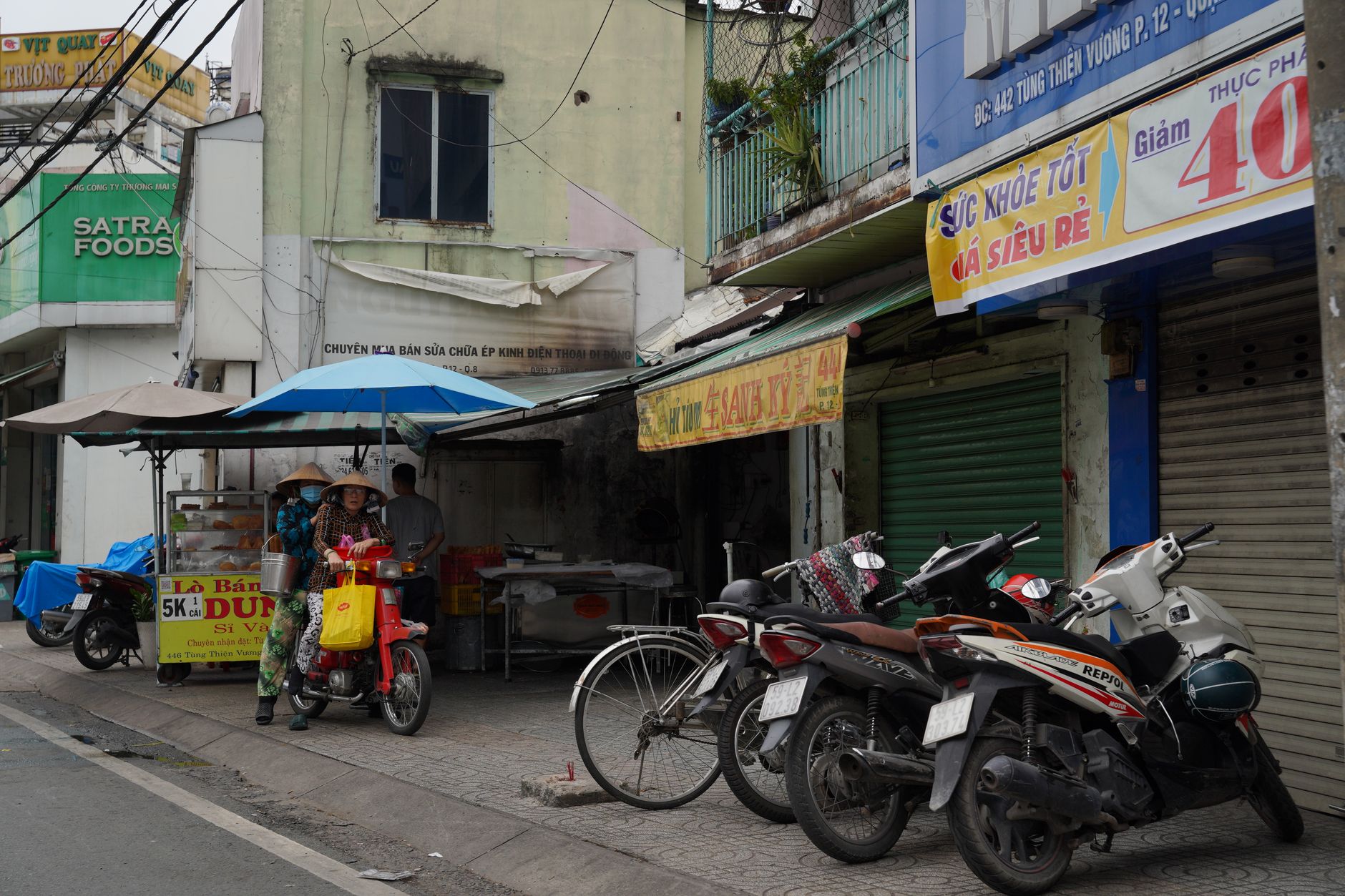
This is the one every local will point you to first. The stall sits in a small open-air court off the main road—easy to miss if you're not looking. Owner Ong Minh has been making "banh hoi" and grilling intestines here for 12 years. He makes the noodle cake fresh every 30 minutes, working in batches; you'll see stacks of just-cooked sheets cooling on a rack.
The intestines arrive from the market at dawn, cleaned and pre-blanched. He grills them over charcoal in a steel drum cut in half, turning them constantly. They take on a dark, almost burnt crust while staying tender inside. A plate (one serving) runs 25,000–30,000 VND and includes banh hoi, five or six pieces of grilled intestine, a small bowl of nuoc cham (fish sauce dip), fresh mint, basil, and a slice of lime.
Go before 10:30 a.m. or between noon and 1 p.m. By mid-afternoon, supplies dwindle.
Banh Hoi Trang (Tran Hung Dao Street, near the fishing harbor)
Trang's spot is louder, busier, and more chaotic—which locals love. This is where construction workers, fishermen, and truck drivers eat. The "banh hoi" here is slightly thicker and chewier than at Banh Hoi 88, more forgiving if you prefer less crispness. The intestines are grilled the same way but with occasional sesame seeds sprinkled on top (Trang's signature touch).
A plate runs 28,000 VND. Trang also offers a combo: "banh hoi long heo + cha gio" (spring roll) for 40,000 VND, which gives you a richer meal. She opens at 5:30 a.m. and usually sells out by 10 a.m.
Banh Hoi Hoa (Hung Vuong Street, near the market entrance)
This is the least "Instagram-famous" of the three, which means it stays authentic. Hoa cooks on a bigger scale—five or six grills running at once—so there's always fresh product. The "banh hoi" here is slightly oilier (she fries it in a mix of lard and vegetable oil), which some locals swear by; others say it's too rich.
Price: 25,000 VND per plate. Hoa serves a wider menu than most: if you want to pair intestines with grilled squid or shrimp instead, she'll do it for 35,000 VND. Open 6 a.m. to 2 p.m.; closed Sundays.
Banh Hoi Phuc (Phan Thiet Beach promenade, near the old pier)
If you want to eat seaside with a view, Phuc's cart is the only "banh hoi long heo" spot with sightlines to the water. It's a mobile operation—he sets up every morning and packs down by 11 a.m.—so it's hit-or-miss if you're not an early riser. The noodle cake is thinner here, almost translucent, which means it crisps up to a shatter. Grilled intestines are charred harder, almost burnt; a polarizing style, but locals who grew up eating this way swear by it.
Price: 24,000 VND. He accepts cash only.
Banh Hoi Thu (Ham Tien Ward, residential area, no signage)
This is a home-based operation. Thu cooks out of her front room and sells only to neighborhood regulars and walk-ins. No menu, no name on the street—you find it by word of mouth or by asking a local. The "banh hoi" is handmade every hour, and she keeps her batch small so nothing sits. Intestines come from her brother-in-law's butcher stall at the market.
Price: 23,000 VND (the cheapest in Mui Ne). The catch: you never know if she's open or has stock. Go midweek, early morning, or ask at a nearby coffee stall if she's cooking today. Cash only.
Timing and Logistics
The best window is 5:30 a.m. to 10:30 a.m.—before the day heat sets in, and while vendors still have that first batch of fresh-grilled intestines. A secondary window opens around noon to 1:30 p.m. for lunch crowds, but by then, some stalls have sold out or are running day-old "banh hoi".
Dinner service (after 5 p.m.) is rare. Most vendors close by mid-afternoon.

Photo by Quang Nguyen Vinh on Pexels
How to Order
You don't need much Vietnamese. Walk up, point to the stall or say "mot dia banh hoi long heo" (one plate of banh hoi with pork intestine). If you want extra sauce, say "them nuoc cham" (more fish sauce). If you prefer it spicier, ask for "them ot" (chili).
Most stalls will ask "ot khong?" (chili or not?). A simple "co" (yes) or "khong" (no) suffices.
Pay when you leave, not when you order—cash preferred everywhere.
What Makes Mui Ne's Version Distinct
Compare Mui Ne to Hanoi (하노이 / 河内 / ハノイ) or Thai Nguyen, and three differences stand out:
-
Grilling intensity: Mui Ne vendors grill intestines hotter and longer, chasing a darker crust. This changes the texture—crispier exterior, more caramelized flavor—versus the more gently grilled versions up north.
-
Fresher "banh hoi": Most Mui Ne makers cook the noodle cake multiple times daily. Up north, you often get factory-made sheets reheated to order. Freshness matters here.
-
Pairing with local condiments: Mui Ne adds nem chua (sour pork roll) or pickled quail egg as a side. This is less common in other regions and gives the meal a different flavor arc.

Photo by Nhựt Nguyên Trần on Pexels
Cost and Budget
Expect 23,000–30,000 VND (roughly USD 0.95–1.25) per plate. A combo (banh hoi long heo + spring roll or egg) runs 35,000–45,000 VND. This is one of the cheapest, most filling meals in Mui Ne.
Practical Notes
Cash is essential—no card readers at street stalls. Bring small bills (5,000 or 10,000 VND notes). Go early if you want choice; by 11 a.m., most top-tier spots have minimal stock. If you're staying in town, ask your guesthouse owner which stall they prefer; they often have a neighborhood favorite that tourists miss entirely.
Last updated · May 29, 2026 · independently researched, never sponsored.