What it is
Thac Yang Bay is a set of tiered waterfalls tucked into the foothills west of Nha Trang (냐짱 / 芽庄 / ニャチャン) in Khanh Hoa province. The falls sit inside Yang Bay Tourist Park, a managed eco-tourism area that opened in the early 2000s around a site the local Raglai ethnic minority community has known for generations. The name comes from the Raglai language — "Yang" means god or spirit, "Bay" means sky. So, loosely: sky spirit falls.
The park covers a wide area of forest along the Cho River, with three main waterfalls — Yang Bay (the largest), Yang Khang, and Ho Cho — connected by walking paths. It's not wilderness; the park has ticket gates, paved walkways in places, and a handful of built-up attractions alongside the natural ones. But the water is real, the forest is thick, and the air temperature drops noticeably once you're under the canopy.
Why travelers go
Most people visiting Nha Trang spend their days on beaches or island-hopping boats. Thac Yang Bay offers the opposite — cool air, freshwater pools, and green rather than blue. It's a genuine change of pace from the coastal heat, especially between March and August when Nha Trang gets properly hot.
The falls themselves are the main draw, but the park also keeps a small hot spring area fed by natural mineral water, a section with crocodile and ostrich enclosures (more zoo than safari — set your expectations accordingly), and a cultural performance area where Raglai musicians play traditional instruments. It's a mixed bag: part nature, part theme park, part cultural exhibit. The waterfall sections and forest trails are the strongest reason to come.
Best time to visit
The waterfalls run year-round, but the best window is September through December, right at the tail end and just after the rainy season. Water volume peaks and the falls actually look powerful rather than trickling. The surrounding forest is at its greenest.
January to April is dry season — the falls thin out considerably. You can still swim in the pools, but don't expect dramatic cascades. Avoid Vietnamese public holidays (especially Tet and the April 30 / May 1 long weekend) if you dislike crowds. The park gets packed with domestic tour groups on those dates.
How to get there from Nha Trang
Thac Yang Bay is about 45 km southwest of central Nha Trang, roughly a 50–60 minute drive via National Road 1A south to Dien Khanh, then west on Provincial Road 2 (Tinh Lo 2) toward the mountains.
Motorbike: The most flexible option. Rental bikes in Nha Trang run 120,000–180,000 VND/day for a semi-auto. The road is paved and in decent shape the whole way, with some winding sections once you leave the plains. Fill up before you head inland — fuel stops thin out past Dien Khanh.
Taxi / Grab: A Grab car from central Nha Trang costs roughly 250,000–350,000 VND one way. Agree on a return pickup or keep your driver waiting — getting a ride back from the park can be difficult since Grab coverage is spotty out there.
Tour: Most Nha Trang tour agencies sell a day trip for 400,000–600,000 VND per person including transport, entrance ticket, and lunch. Convenient but you'll be on someone else's schedule.
Entrance fee: 100,000 VND for adults (as of early 2025). Kids under 1.2 m get a discount. The hot springs cost extra — around 60,000–80,000 VND.

Photo by ㅤ quang vinh ㅤ on Pexels
What to do
Swim at the main Yang Bay falls
The primary cascade drops around 40 meters across several rock tiers into a wide pool at the base. The water is cool — genuinely refreshing, not teeth-chattering. You can wade and swim in the lower pool. Arrive before 10 AM to have it relatively quiet before tour buses roll in.
Walk the forest trail to Ho Cho falls
A marked trail (about 2 km one way) leads through the forest to the smaller Ho Cho waterfall. It's less visited than the main falls and quieter. The path is mostly flat with a few short climbs. Wear shoes with grip — the rocks near the water get slippery.
Soak in the mineral hot springs
The park's hot spring area has a few pools at different temperatures. Nothing fancy — concrete tubs with natural mineral water piped in — but the warm soak feels good after a morning of walking. Best appreciated during the cooler months from November to February.
Watch the Raglai musical performance
The cultural area hosts short performances on traditional instruments including stone xylophones and bamboo flutes. It's brief and clearly staged for tourists, but the musicianship is real. Showtimes are usually mid-morning and early afternoon — check at the gate.
Try the ostrich racing (yes, really)
The park runs an ostrich racing track where you can watch — or ride, if you're game. It's absurd and has nothing to do with Vietnamese culture, but it exists and kids love it. Rides are around 50,000 VND.
Where to eat nearby
The park has its own restaurant serving standard Vietnamese tourist-park food — "com tam", grilled meat, and rice sets in the 60,000–100,000 VND range. It's acceptable but not memorable.
Better option: stop in Dien Khanh town on the way back. The small restaurants along the main road serve proper home-style meals. Look for "banh canh" — the thick tapioca-and-rice noodle soup that's a Khanh Hoa staple. A bowl runs 30,000–45,000 VND. If you're riding back to Nha Trang hungry, the seafood "bun" stalls near the Cho Dam market area are worth a detour.
Where to stay
There's no real reason to stay overnight near Yang Bay — Nha Trang is under an hour away with every accommodation tier you'd want. That said:
- Budget: Nha Trang backpacker hostels and guesthouses start around 150,000–250,000 VND/night along Tran Phu and the side streets behind the beach.
- Mid-range: Decent hotels with pools and sea views in the 500,000–1,000,000 VND range are easy to find.
- Splurge: Several resort properties north of the city toward Cam Ranh Bay, from 2,000,000 VND up.
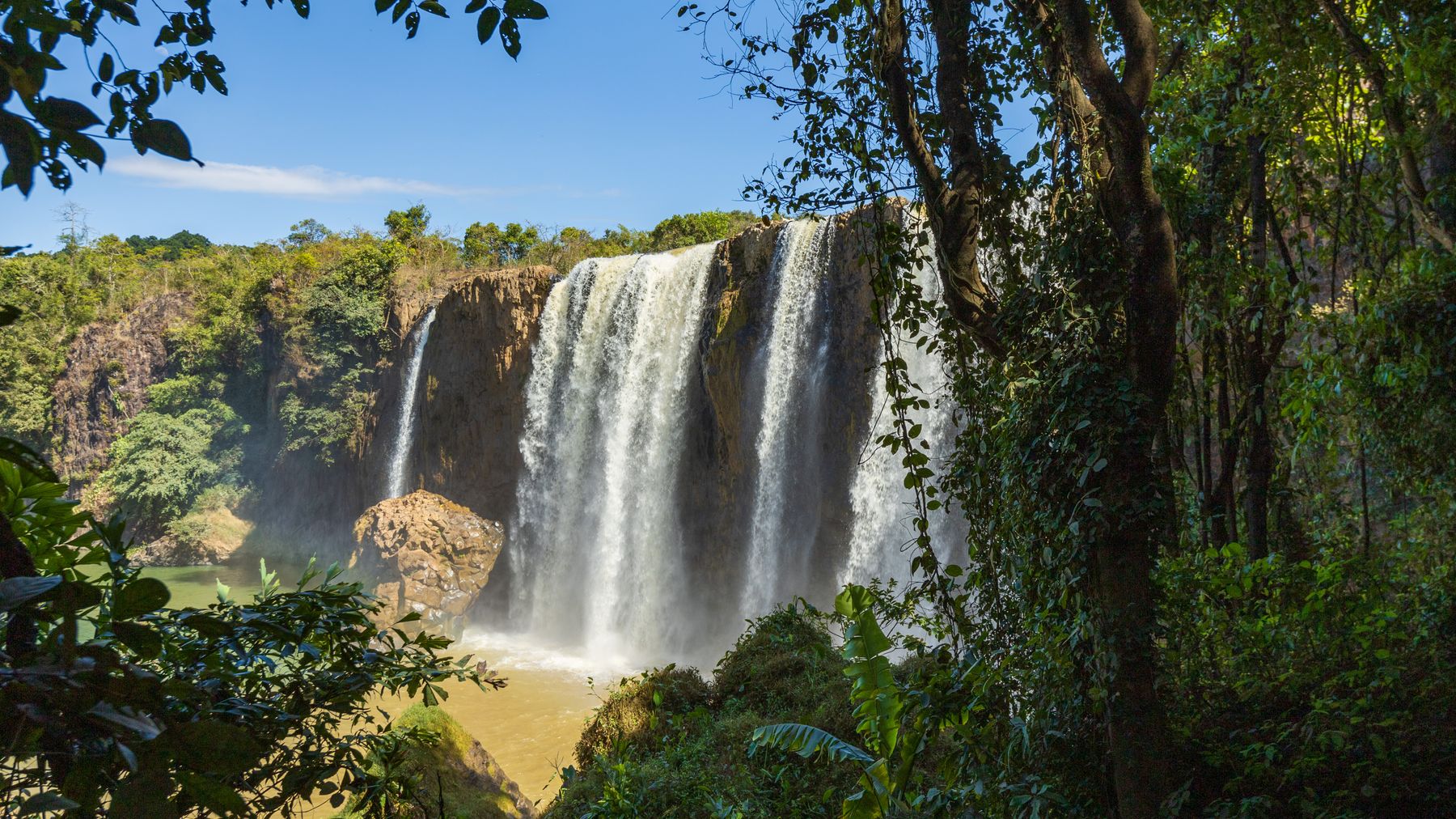
Photo by Serg Alesenko on Pexels
Practical tips locals would tell you
- Bring your own towel and a dry bag for your phone. The park rents lockers near the main falls for 20,000 VND, but they run out on busy days.
- Wear water sandals or shoes you don't mind getting wet. Flip-flops are risky on the mossy rocks.
- Pack insect repellent. The forest canopy means mosquitoes, especially in the afternoon.
- Bring cash. Card payment is unreliable inside the park.
- If you're combining this with a broader Central Vietnam trip — Nha Trang connects easily to Hoi An and Da Nang by sleeper bus or a short flight, and Hue (후에 / 顺化 / フエ) is reachable by train along one of the best rail stretches in the country.
Common mistakes to avoid
- Going at midday on a weekend. Tour groups from Nha Trang arrive between 10 AM and noon. The park feels completely different at 8:30 AM.
- Expecting pristine wilderness. The park is managed and commercial in places. If you accept that upfront, you'll enjoy it more.
- Skipping the forest trails. Most visitors cluster around the main waterfall and the animal area. The trails to the secondary falls are where the actual calm is.
- Not negotiating a taxi return. If you take a Grab or taxi, sort out your return ride before your driver leaves. Cell signal inside the park is weak.
Practical notes
Thac Yang Bay is a solid half-day trip from Nha Trang — leave early, swim, walk the trails, eat on the way back. It won't redefine your trip, but it's a clean break from the coast and worth the hour's ride if you have a free morning.
Last updated · May 26, 2026 · independently researched, never sponsored.