Cai Be floating market is not the spectacle it was twenty years ago, and that's worth knowing before you charter a boat. What remains is a working wholesale trade — sampans loaded with watermelon, pomelo, and dragon fruit that farmers bring downriver before dawn — plus a cluster of cottage industries along the canal banks that are genuinely worth your morning.
Getting There from Can Tho or Saigon
From Can Tho, Cai Be sits roughly 50 km northeast — about 90 minutes by road, or you can arrange a boat through your guesthouse that combines the river crossing with the market visit itself. From Saigon, it's around 90 km southwest via the Cao Lanh highway, just over two hours by car or minivan. Most travelers combine Cai Be with a wider Mekong loop that includes Vinh Long or My Tho. If you're going independently, the town of Cai Be itself is the departure point; look for boat operators along the main riverside road near the Catholic church — the French Gothic spire is hard to miss and useful as a landmark.
Budget around 150,000–250,000 VND per person for a shared two-hour boat trip, or 400,000–600,000 VND to charter a small vessel for your group. Prices are negotiable and vary by season.
The Market Itself: What's Actually Happening
The floating market peaks between 5 a.m. and 8 a.m. Wholesale is the primary business — larger boats anchored mid-river display their goods on bamboo poles hung over the bow, a system called "beo hang" that signals what each vessel is selling. Buyers pull alongside in smaller craft and transactions happen fast, mostly between traders who know each other.
For visitors, the experience is less about shopping and more about watching a supply chain operate on water. You'll see pomelo from Binh Minh, rambutan, jackfruit the size of a child, and green-skinned oranges stacked with a precision that makes no engineering sense. There are a handful of floating stalls selling "hu tieu" and rice porridge to the workers — eating a bowl on the river at 6 a.m. is the kind of detail that sticks with you.
By 9 a.m. it thins out significantly. If you arrive at 10, you've largely missed it.

Photo by Loifotos on Pexels
Coconut Candy and the Workshop Circuit
The stronger argument for spending time in Cai Be is the network of small family workshops along the canal banks, most of them a short boat ride or walk from the market. These are the places that produce "keo dua" — coconut candy — along with rice paper, rice wine, and popped rice.
The coconut candy process is tactile and slow: fresh coconut milk is simmered with sugar over low heat, poured onto flat trays, cooled, then sliced and wrapped by hand in edible rice paper. Durian-flavored, pandan-green, and plain coconut versions are the most common. The workers move quickly and the smell of caramelizing coconut is aggressively good. You can buy direct from most workshops — a bag of mixed flavors runs 30,000–50,000 VND and tastes nothing like the packaged version you'll find at Ben Thanh Market.
The rice-paper workshops are equally worth a stop. Flat rounds of "banh trang" are pressed, steamed over cloth-covered pots, then dried on bamboo frames in the sun. The women who work these lines have been doing it for decades and are not particularly interested in performing the process for tourists, which makes watching it more honest. You can buy fresh sheets on the spot.
Fruit, Orchards, and What Grows Here
Tien Giang province produces a serious volume of tropical fruit — longan, mango, rambutan, star apple — and some of the boat operators will include a stop at a fruit orchard as part of the morning itinerary. These orchard visits can feel staged at the larger, tour-group-oriented stops, but smaller family plots where you're buying fruit at market price rather than paying an "entrance" fee are a different story. Ask your boat operator specifically for a working orchard, not a tourist one. The distinction is usually the presence or absence of a souvenir shop at the entrance.
Star apple — "vu sua" — ripens between November and February and is worth seeking out if you're here in season. The flesh is milky-sweet and nothing like what you'll find in Saigon (사이공 / 西贡 / サイゴン) markets after it's traveled a few days.
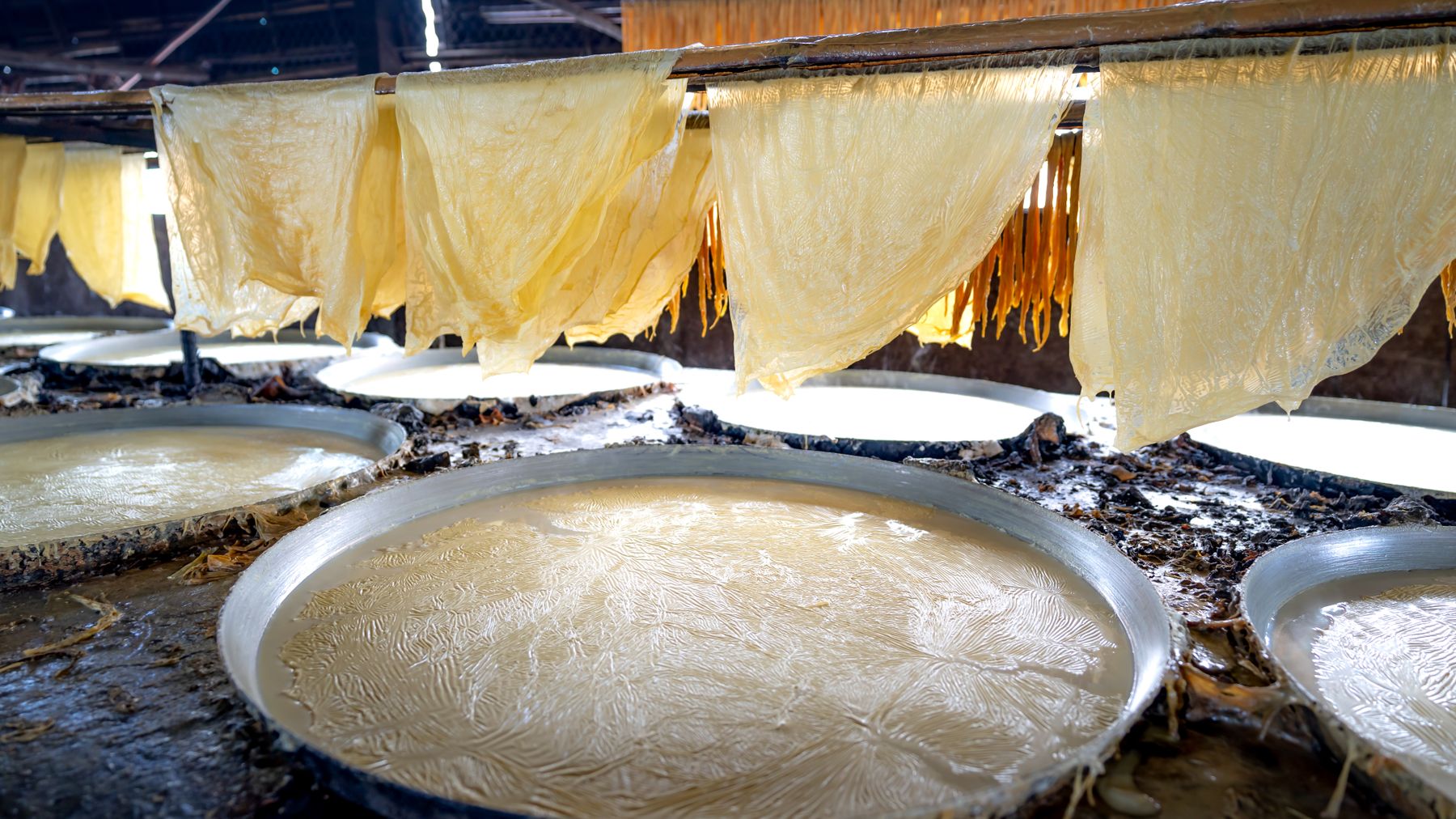
Photo by Quang Nguyen Vinh on Pexels
Food on the Ground
Cai Be town has a modest cluster of com binh dan (everyday rice) restaurants along the main street near the market, open from around 6 a.m. for workers and boatmen. Expect a plate with two or three dishes — braised pork, stir-fried morning glory, a piece of fried fish — for 40,000–60,000 VND. Nobody is going to hand you a menu. Point at what looks good.
If you want something more substantial, a few guesthouses and small restaurants along the river do set Mekong meals — elephant ear fish ("ca tai tuong") wrapped in rice paper with herbs, served whole and vertical on a wire frame. It's a southern staple and well-executed here.
Practical Notes
The market is at its most active Monday through Saturday; Sunday trade drops off noticeably. Bring small bills — 10,000 and 20,000 VND notes — for workshop purchases and canal-side snacks. A light rain jacket is worth carrying even in the dry season, since river mornings can be damp and boat canopies are inconsistent.
Last updated · May 26, 2026 · independently researched, never sponsored.