Chau Doc sits about 245 km from Saigon near the Cambodian border, and most visitors show up for the floating houses and Sam Mountain. The Cham Muslim community living in the riverside villages — particularly Chau Giang and Da Phuoc across the Hau River — is a quieter draw, but it's one of the more genuinely interesting food detours in the southern delta.
The Cham people of An Giang are predominantly Sunni Muslim, descendants of the Champa kingdom, and their food reflects that heritage: no pork, halal-slaughtered beef and goat, rice-based dishes with coconut milk, and a dessert tradition that borrows from both Malay and Khmer influences. If you've been eating your way through the delta and want something that tastes nothing like "hu tieu" or "banh canh", this is it.
Getting to the Cham Villages
From Chau Doc's main ferry landing near the central market, a small passenger ferry crosses to Chau Giang for around 5,000–10,000 VND per person depending on the time of day. The crossing takes under five minutes. You can also hire a xe om (motorbike taxi) driver to take you over via the bridge further upstream if you prefer to keep a bike nearby. Most Cham food is concentrated along the main road running parallel to the river in Chau Giang village — it's walkable once you're across.
The Halal Beef Noodle: "Bo Kho" Cham Style
The dish people come specifically for is the Cham version of "bo kho" — a slow-braised beef noodle soup that's richer and more aromatic than what you'd find in a Vietnamese-Chinese shophouse. The Cham cooks use lemongrass, galangal, and a house spice blend that varies by family but typically includes star anise and turmeric. The broth is deeper in color and less sweet than the Saigon (사이공 / 西贡 / サイゴン) version, with visible fat pools on the surface that tell you the beef shank has been cooking since early morning.
It's served over thick round noodles or sometimes egg noodles, topped with fresh herbs — Vietnamese coriander, bean sprouts, a wedge of lime. A bowl runs 35,000–50,000 VND. Look for stalls that open before 8 a.m.; this is a breakfast dish and most places sell out by mid-morning.
Some households also prepare "cari de" — Cham-style goat curry — though this is less consistently available and sometimes requires ordering in advance through a local guesthouse or guide.
The Community Kitchen Dynamic
What makes eating in Chau Giang different from street food elsewhere in Vietnam (베트남 / 越南 / ベトナム) is the community kitchen model. Several Cham families run informal stalls out of their homes or in open-air structures attached to the local mosque compounds. These aren't restaurants in any formal sense — there's no menu on a sign, no printed price list. You sit on a low plastic stool or a bamboo platform, and the food comes out in a fairly set sequence based on what was cooked that morning.
If you're traveling without a Vietnamese speaker, a smile and pointing at what other diners are eating goes a long way. The welcome is genuine. The Cham community here has hosted curious visitors for years and takes a quiet pride in showing off their food — but it helps to be respectful of the space. Mosques are active places of worship; dress modestly (shoulders and knees covered) if you're wandering near them.

Photo by FOX ^.ᆽ.^= ∫ on Pexels
Cham Desserts: The Underrated Part
If you only eat one thing in Chau Giang, make it the desserts. The Cham sweet tradition is coconut-heavy, mildly spiced, and completely distinct from the che (Vietnamese sweet soups) you'll find across the delta.
"Chuoi nuong Cham" — grilled banana wrapped in sticky rice and grated coconut — is the most accessible entry point. It's sold from baskets along the main village road for around 10,000–15,000 VND each, warm from a charcoal grill.
"Banh gan" is a denser coconut-egg custard steamed in banana leaf, slightly caramelized on top, with a texture somewhere between flan and a firm pudding. It's less sweet than it looks and goes well with unsweetened tea.
During Ramadan and Eid al-Fitr, the range of sweets expands significantly — families prepare dishes that are rarely made at other times of year, including rice-based confections flavored with pandan and sesame. If your trip coincides with either period, the village feels genuinely festive and food is often shared with visitors.
What to Drink
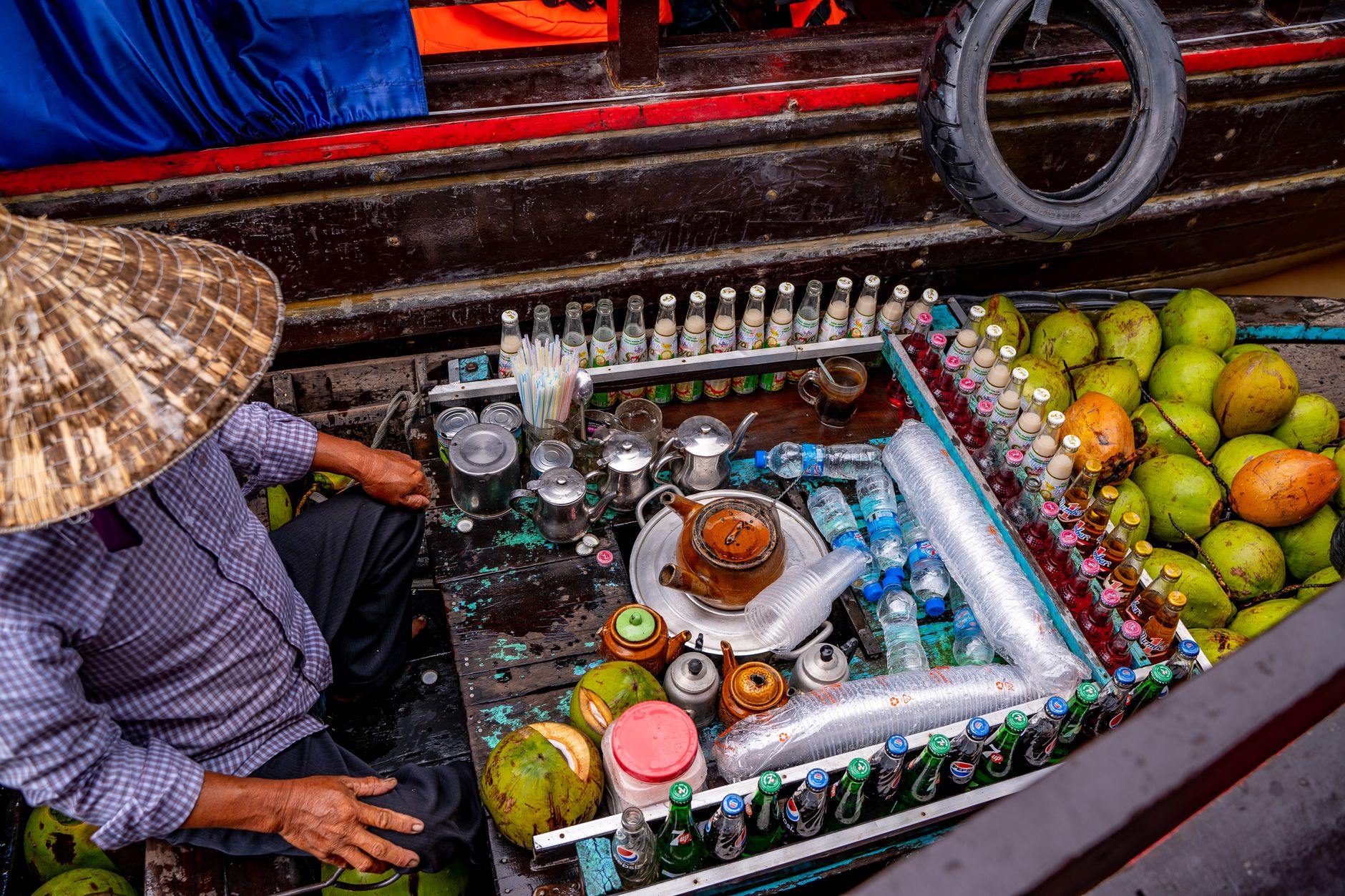
The Cham villages are alcohol-free. You'll find fresh coconut water, bottled water, and sweetened iced teas sold from the same stalls serving food. The "ca phe sua da" culture of the broader delta doesn't really extend here — coffee isn't part of the Cham food landscape in the same way. Come caffeinated if that matters to you.

Photo by Claire Dao on Pexels
Combining With a Broader Chau Doc Day
Most people pair a Chau Giang visit with a morning on Sam Mountain or a boat trip through the floating fish farms near town. The ferry runs regularly enough that you can cross for breakfast, spend two to three hours eating and walking, and be back in Chau Doc by late morning. It fits naturally into a day that might also include the Chau Doc market — one of the busiest in the delta — where you'll find dried fish, fermented shrimp paste, and produce moving between Vietnam and Cambodia.
If you're building a broader Mekong itinerary, Chau Doc pairs well with Can Tho to the south (about 2.5 hours by road) and makes a reasonable base before crossing into Cambodia via the Vinh Xuong border.
Practical Notes
The Cham villages are easiest to visit Tuesday through Sunday — some family stalls close on Monday. Budget 80,000–120,000 VND per person for a full breakfast spread including noodles, a dessert, and a drink. There are no ATMs in Chau Giang village itself, so bring cash from Chau Doc before crossing.
Last updated · May 26, 2026 · independently researched, never sponsored.