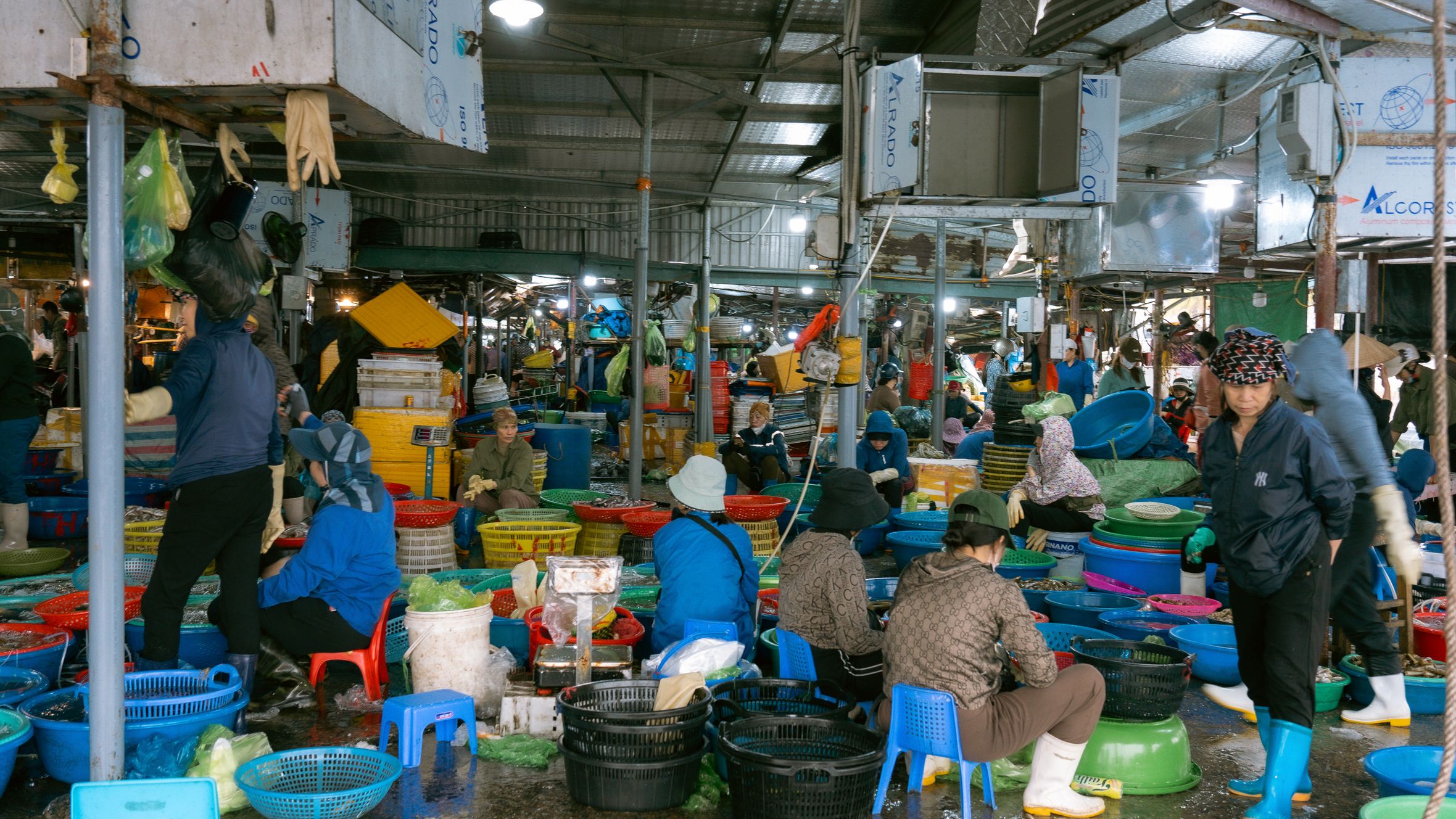
Cho Lon — literally 'big market' — has been feeding Saigon's Teochew, Cantonese, and Hakka communities since the 18th century. It's noisier, denser, and more unapologetically itself than most of District 1, and if you come hungry, it rewards you well.
Start at Binh Tay Market
Forget Ben Thanh Market and head straight to Binh Tay on Thap Muoi Street in District 6. It opens around 6am, and the first hour is the best: wholesale buyers moving fast, the smell of dried seafood and five-spice competing with diesel from the street. The market itself is a 1928 colonial structure with a central courtyard and a clock tower that nobody seems to agree on the time of. You're not really here to shop — you're here to eat breakfast at the stalls clustered along the outer perimeter.
Look for the women selling "hu tieu" from mobile carts near the south entrance. Cho Lon's version leans Teochew: clear broth, thin rice noodles, a few slices of pork, and dried shrimp that add a faint brininess you won't find in the southern "hu tieu Nam Vang" style. A bowl runs 35,000–45,000 VND. Sit on a plastic stool, order a Vietnamese iced coffee alongside it, and watch the market do its thing.
Dim Sum on Trieu Quang Phuc
Trieu Quang Phuc Street in District 5 is where Cho Lon does its version of morning dim sum. It's not Hong Kong — the trolleys aren't wheeled tableside, and the tea service is more utilitarian — but the food is good and the prices are honest.
Most shophouses open by 7am and do steady business until about 10:30am, after which the kitchens slow down. Look for places displaying bamboo steamer baskets stacked in the window. Order "ha cao" (shrimp dumplings), "siu mai" (pork and prawn), and "banh cuon" filled with wood ear mushroom and minced pork — Cho Lon's banh cuon skews slightly sweeter than the Hanoi version. Expect to spend 80,000–130,000 VND per person for a full dim sum spread if you order four or five dishes.
A few spots also do "chao" (Cantonese congee) with century egg and preserved pork. If you see it, order it. It's one of those dishes that tastes like it belongs to a different, slower era of morning.

Photo by Vietnam Tri Duong Photographer on Pexels
The Lanes Off Luong Nhu Hoc
Luong Nhu Hoc Street is Cho Lon's incense and paper-offering district, which makes it interesting for a wander, but the real food is in the narrow lanes that branch off it to the east. These aren't on most maps by name — you navigate by smell.
One recurring find is "banh bao" — large steamed buns filled with pork, quail egg, and Chinese sausage. The Cho Lon version is bigger and denser than what you get in central Saigon (사이공 / 西贡 / サイゴン), closer to the Cantonese original. Vendors sell them from steamers mounted on bicycles or parked carts. Price: 20,000–25,000 VND each.
Also worth hunting down: "xoi man", savory sticky rice topped with lap xuong (Chinese sausage), fried shallots, and shredded chicken. It's a full meal in a small styrofoam container and costs around 30,000 VND. Several stalls operate near the junction of Nguyen Trai and Chau Van Liem.
Hu Tieu Sa Dec — The Lunchtime Bowl
By late morning, pivot to lunch. "Hu tieu (후띠우 / 粿条 / フーティウ) Sa Dec" is a slightly different strain of the dish from your breakfast bowl — the noodles are chewier, the broth richer, and pork ribs often feature alongside the usual toppings. The Sa Dec style originated in Dong Thap province but has deep roots in Cho Lon's restaurant culture, given the overlap between Mekong traders and the Chinese merchant community.
Look for dedicated hu tieu houses on Nguyen Trai Street between Chau Van Liem and Phung Hung. A full bowl with ribs, minced pork, and liver runs 55,000–70,000 VND. Ask for "them hanh phi" (extra fried shallots) — it's free and it makes the bowl.

Photo by Change C.C on Pexels
Afternoon Sugar: Che and Tofu
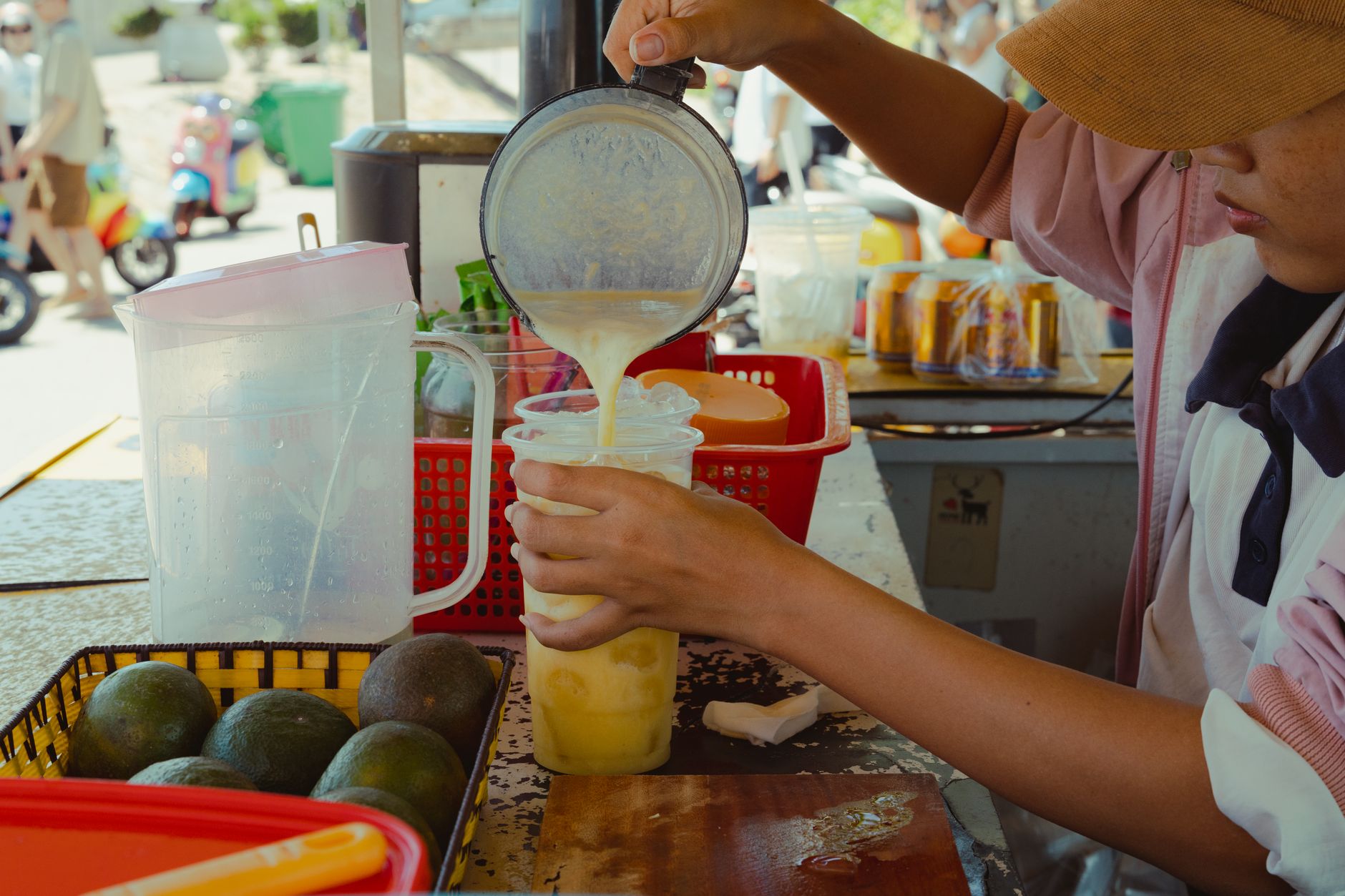
Cho Lon takes its sweets seriously. "Che ba mau" (three-color dessert) appears everywhere, but the local specialty to seek out is "tau hu" — silken tofu served warm or cold, topped with ginger syrup. It's delicate, mildly sweet, and one of those things that makes sense at 3pm when the heat is serious.
Several old-school "tau hu" vendors operate near Pham Van Phu Street, selling from small metal pots. Cost is typically 15,000–20,000 VND per cup. Some shops have been at the same corner for 40 years; you can usually tell by the regulars.
For something cold, find a "che" shop on Nguyen Trai and order "che dau xanh" (mung bean sweet soup) over shaved ice. It pairs unexpectedly well with the afternoon heat and costs under 25,000 VND.
Practical Notes
Cho Lon sits roughly 5km west of Ben Thanh Market — a 15-minute taxi ride or a longer but cheaper xe om trip. The area is most active between 6am and noon; afternoons are quieter and some food stalls close by 2pm. Bring small bills (10,000 and 20,000 VND notes) for street vendors, and wear shoes you don't mind getting wet if the market drains are running.
Last updated · May 26, 2026 · independently researched, never sponsored.