Real "com" is one of those things Hanoi residents talk about the way other people talk about truffle season. It appears in late August, peaks through September and into early October, and then it's gone. What fills the rest of the year is a pale imitation — dyed green, texturally wrong, and missing the grassy sweetness that makes the original worth caring about.
What Com Actually Is
Com is young glutinous rice harvested before the grain fully matures. The rice is still soft, slightly milky inside, and bright green from chlorophyll. Once it ripens fully, you've lost the window. The variety used is nep, a short-grain sticky rice, and the specific fields around Lang Vong village — about 6 km southwest of Hoan Kiem Lake in the Cau Giay district — have been producing it for several hundred years.
The color is not added. It comes from harvesting early, and it fades naturally within days. That's your first test for authenticity: real com turns from vivid green to a duller, yellower tone within 24 to 48 hours of purchase. If it's still fluorescent green a week later, someone helped it along with food coloring.
How It's Made in Vong Village
The production process is slow, physical work that hasn't changed much in generations. Farmers harvest the rice stalks at dawn when the grain is at peak tenderness, then bring the paddy to dedicated family workshops the same morning.
The grain is roasted in large flat pans over charcoal — not to cook it, but to set the color and dry the outer husk slightly. Temperature control here is everything. Too hot and the rice loses its green; too cool and it won't pound properly. The roasting is done in small batches, constantly stirred with a long wooden paddle, and takes about 20 minutes per batch.
After roasting, the grain goes into a stone mortar and is pounded with a long wooden pestle — traditionally by foot, stepping rhythmically on a lever mechanism called a coi giay. The pounding strips the outer husk while leaving the inner grain intact. This step is repeated four to six times with resting intervals between each round, which is why a single batch takes the better part of a day.
The final product is hand-sifted to remove husk fragments, then wrapped in layers of lotus leaf to hold moisture. The lotus leaf adds a faint fragrance that's considered part of the flavor profile, not just packaging.
Why the Season Is So Short
The window runs roughly from late August through mid-October, depending on the year's weather. Early September is generally the sweet spot — the grain is at peak ripeness and the workshops in Vong are running at full capacity. By late October, the nep harvest is over and production stops entirely.
Cold nights accelerate ripening, so a warm September can push the peak later. A wet one can damage yield. Vong village producers will tell you without prompting that each year is slightly different, and regulars who've been buying com for decades say you can taste the variation. Weather shapes flavor here in a way that feels almost agricultural in the wine-country sense.
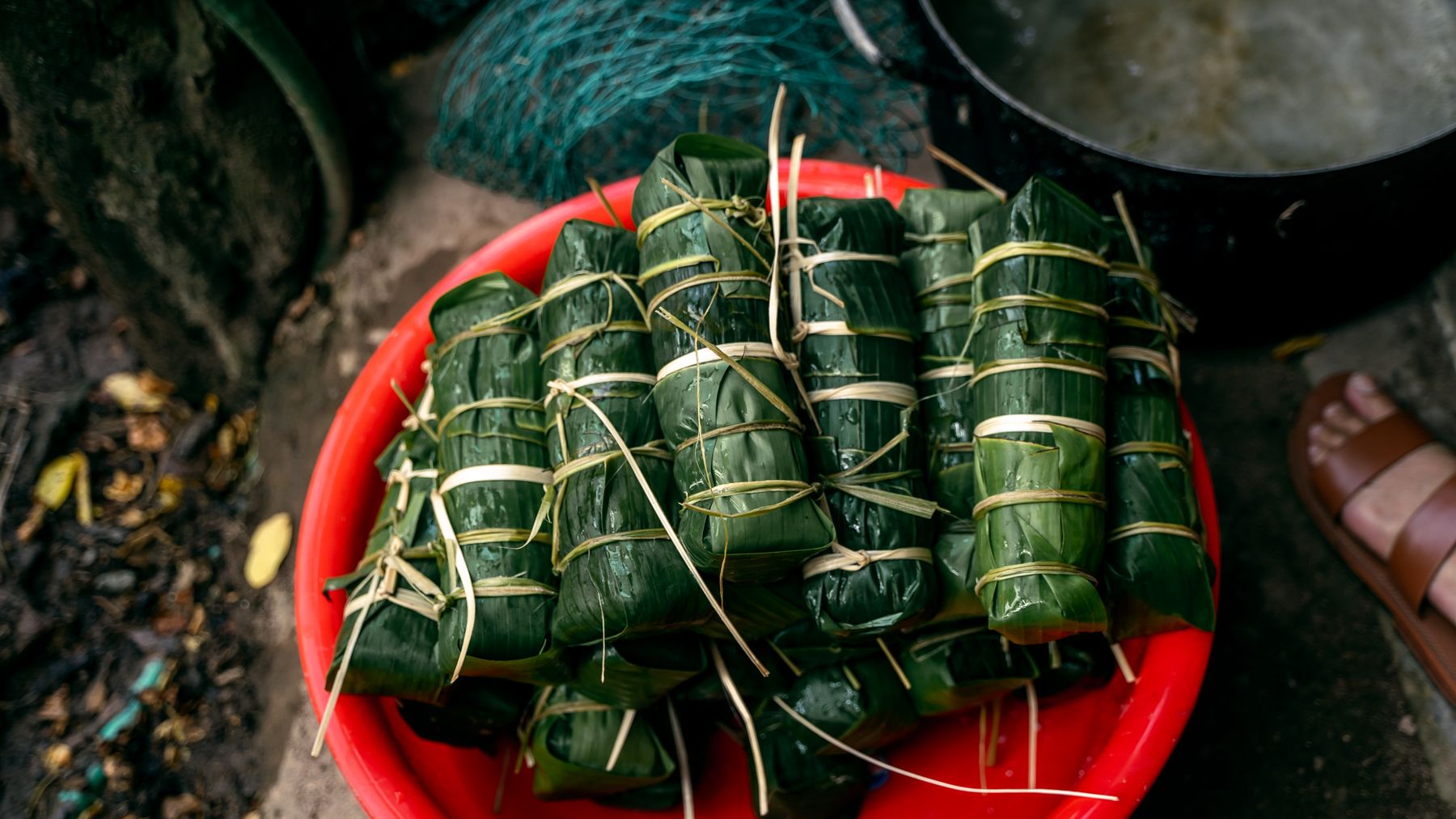
Photo by Vietnam Tri Duong Photographer on Pexels
How to Eat It
Freshly made com is eaten in several ways, and the simplest is often the best: a small amount eaten plain, maybe with a slice of ripe banana (chuoi tay — the short, fat variety — is traditional) on the side. The banana's sweetness and the rice's savory grassiness balance each other well. No sauce, no seasoning.
Com is also pressed into flat cakes called "banh com" — sweetened with mung bean paste and wrapped in dong leaves — which you'll find at specialty shops on Hang Than street in the Old Quarter. These are popular as gifts and last a day or two longer than loose com.
For dessert, com appears in "che com", a sweetened porridge with coconut milk and sometimes taro. Street vendors selling che in Hanoi (하노이 / 河内 / ハノイ) shift their menus around September to include it. The dish is subtle — don't expect it to taste like dessert by Western standards. It's lightly sweet and more about texture than flavor intensity.
Where to Buy Real Com in Hanoi
The most direct route is to go to the source. Lang Vong village is accessible by taxi (roughly 70,000–90,000 VND from the Old Quarter) or by xe om along Nguyen Trai street. Several family workshops sell directly from their front rooms during the season. No signage, no branding — you'll identify them by the lotus-leaf packages stacked near the door and the smell of roasted rice in the air.
For those who don't want to make the trip, a handful of vendors in Hanoi have been selling genuine Vong com for years. The stalls along Hang Than street are reliable during September. Expect to pay 80,000–120,000 VND per 200g package for the real thing. Anything significantly cheaper is worth scrutinizing.
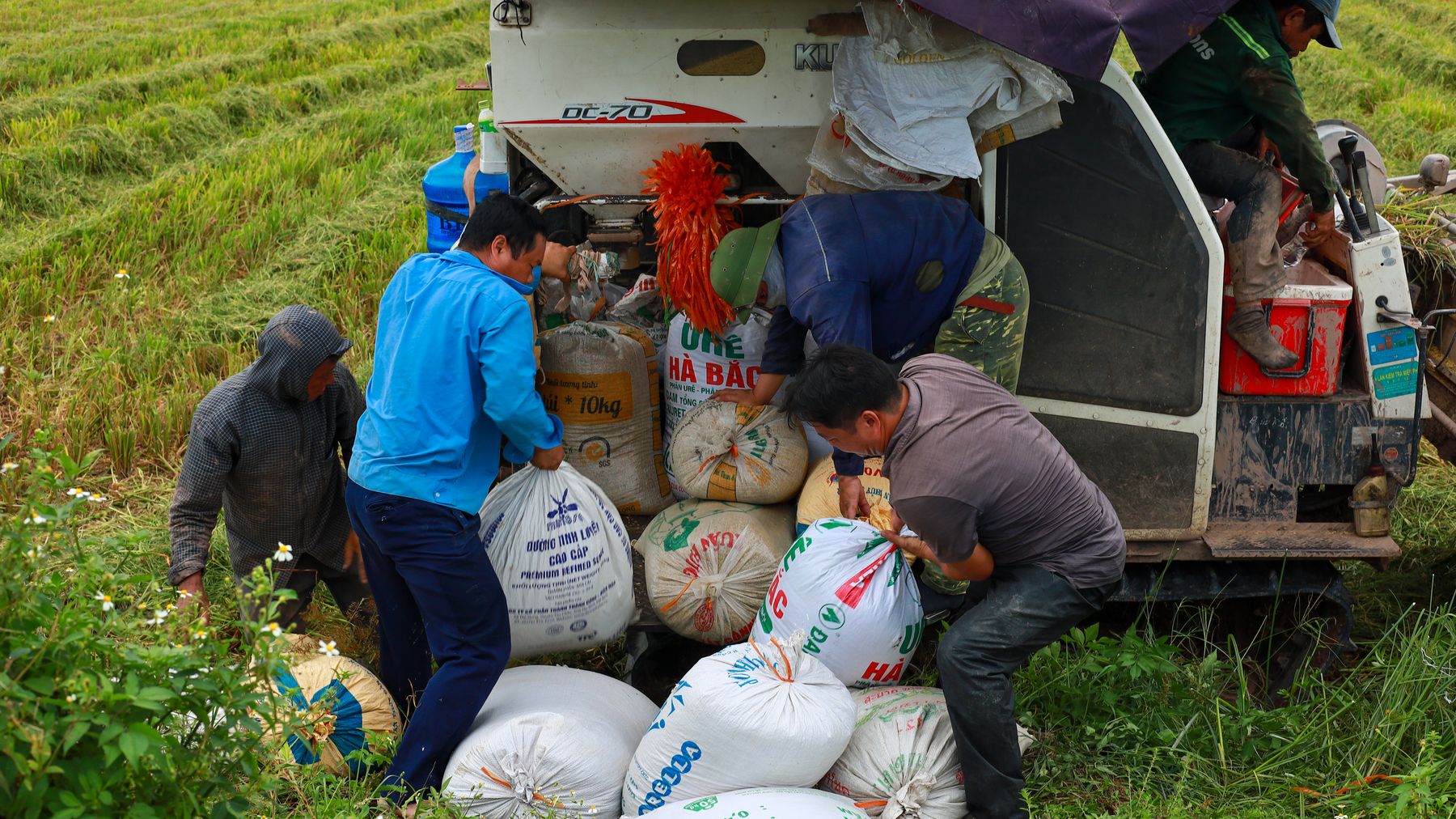
Photo by Hồng Quang Official on Pexels
How to Spot Imitations
The fakes are everywhere from August through December and even into Tet. They're usually made from fully mature rice that's been dried, dyed with food coloring, and occasionally perfumed to mimic the lotus-leaf scent. The texture is the giveaway: real com has a slight give when you press it, almost like damp sand. Fake com is drier, grainier, and often clumps differently.
Color that doesn't fade is suspicious. So is com being sold outside the September–October window by vendors claiming it's "freshly made." Vong village doesn't produce in December. If someone says otherwise, they're selling you something else.
Why It Matters
Com is one of the few foods in Hanoi with a fully intact production chain — specific village, specific variety, specific season, specific technique — that hasn't been industrialized. The cultural weight around it is significant: it appears in poetry about Hanoi autumn, it's given as a gift between families, and it's one of those things that older Hanoians use to mark the turning of the year. Autumn in Hanoi without com is, for a lot of people, not quite autumn.
For visitors, the timing is worth planning around. If you're in Hanoi in September, go to Vong village on a weekday morning. Buy a small package, eat it the same day with a banana, and don't overthink it.
Practical Notes
Com season typically runs late August to mid-October; aim for the first two weeks of September for peak quality. Lang Vong village is in Cau Giay district, roughly 6 km from Hoan Kiem Lake. Freshly purchased com should be eaten within one to two days — store it wrapped in its lotus leaf at room temperature, not refrigerated.
Last updated · May 26, 2026 · independently researched, never sponsored.