
Den Mau Dong Dang sits at the edge of Dong Dang town, about 14 km north of Lang Son city, close to the Chinese border. It's one of the most significant temples in Vietnam (베트남 / 越南 / ベトナム)'s Mother Goddess worship tradition — "Dao Mau" — and draws a steady stream of pilgrims and curious travelers year-round, though most visitors outside of festival season will have the place largely to themselves.
What it is and why it matters
The temple is dedicated to the worship of Mother Goddesses, a syncretic spiritual practice deeply rooted in Vietnamese folk religion. The site has been a place of worship for centuries, though the current structures have been rebuilt and expanded over time. Unlike the grand Buddhist pagodas you'll find in Hanoi or Ninh Binh (닌빈 / 宁平 / ニンビン), Den Mau Dong Dang is more intimate — incense-heavy, colorful, and alive with ritual. Devotees come here to pray for health, prosperity, and good fortune, and the temple is particularly associated with "len dong" spirit mediumship ceremonies, where practitioners channel the Mother Goddesses through elaborate costumed rituals set to traditional music.
The temple complex includes several worship halls arranged along a hillside, with the main shrine housing statues of the principal Mother Goddesses. The setting is attractive without being dramatic — green hills, old trees, stone steps worn smooth.
Why travelers go
Most foreign visitors end up here as part of a broader Lang Son trip, often combined with a visit to the Dong Dang border gate or the nearby Ky Lua market. But the temple is worth a dedicated stop for a few reasons: it's one of the best places in northern Vietnam to witness "Dao Mau" worship in practice, especially if you time it right. The architecture blends Chinese and Vietnamese influences in ways you won't see further south. And Dong Dang itself — a small, no-nonsense border town — gives you a glimpse of daily life in a part of Vietnam that most itineraries skip entirely.
If you've been to Tran Quoc Pagoda in Hanoi or Bai Dinh in Ninh Binh, this is a different register entirely. Less polished, more personal.
Best time to visit
The temple is busiest during the first lunar month (usually late January to February), particularly around the [Lunar New Year](/posts/tet / 越南春节 / テト)-lunar-new-year-guide) period after Tet. The annual temple festival falls on the 10th day of the first lunar month, and that's when you'll see the most elaborate ceremonies, including "len dong" rituals with full musical accompaniment. If you want atmosphere and crowds, aim for that window.
For a quieter visit, March through May is ideal — the weather in Lang Son is mild (18-25°C), the rain hasn't started in earnest, and the temple grounds are green. Avoid July and August if you dislike humidity and afternoon downpours. Winter months (December-January) are surprisingly cold this far north; temperatures can dip to 5-8°C, so pack layers.
How to get there
From Hanoi, the most straightforward route is a bus from My Dinh or Gia Lam bus station to Lang Son city. The ride takes about 3-3.5 hours on the expressway and costs 120,000-180,000 VND depending on the operator. Hoang Long and Hung Thanh are reliable bus companies on this route.
From Lang Son city, Dong Dang is another 14 km north. You can grab a local bus (15,000-20,000 VND, 25 minutes) or hire a "xe om" (motorbike taxi) for around 60,000-80,000 VND one way. If you're riding your own motorbike — which is the best way to explore Lang Son province — take QL1A north from the city. The temple is signposted on the left side of the road as you enter Dong Dang.
There's also a train from Hanoi to Dong Dang (the line terminates here), but it's slow — around 5-6 hours — and runs infrequently. It's a scenic ride if you have the time, but not practical for a day trip.
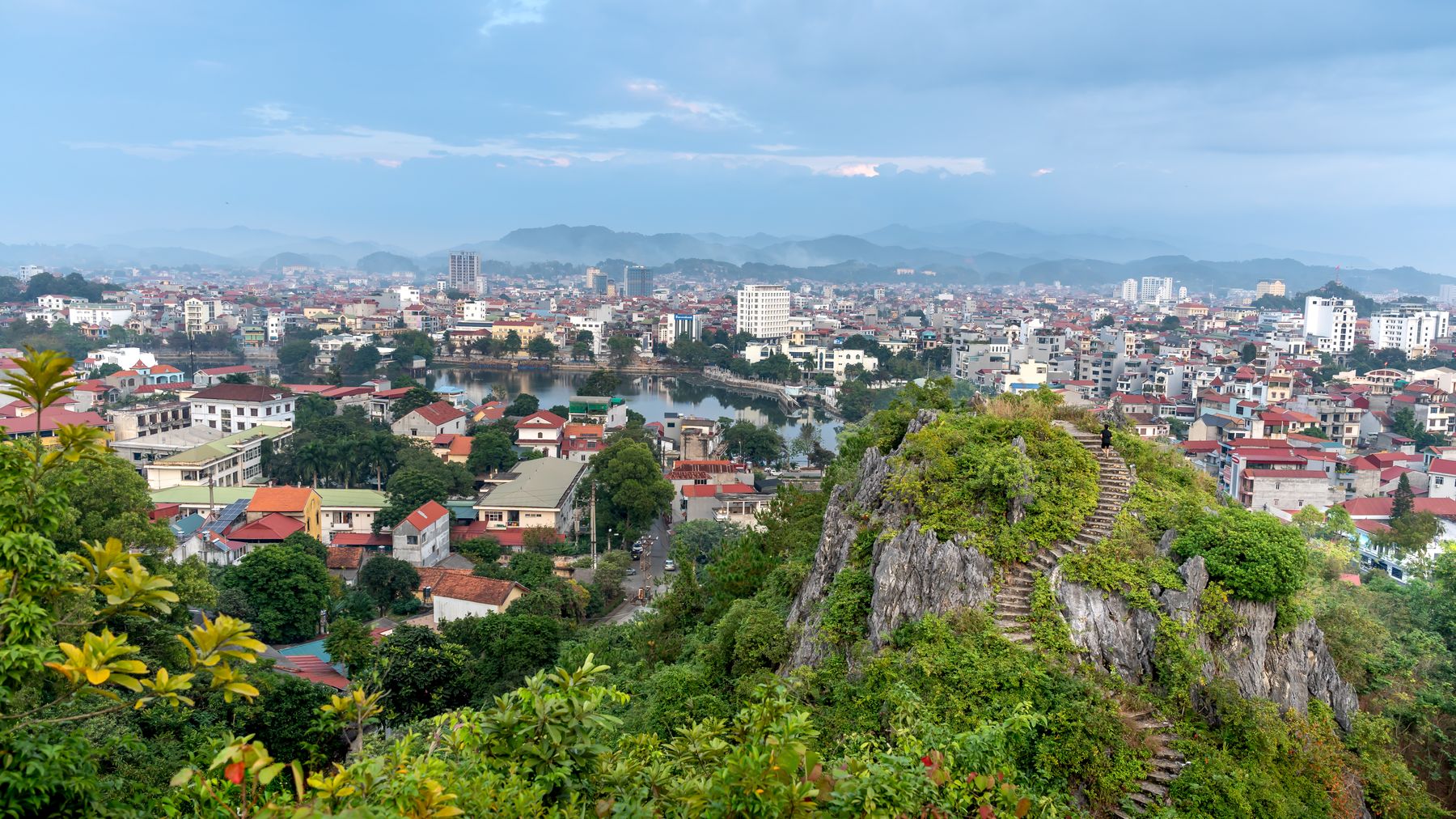
Photo by Quang Nguyen Vinh on Pexels
What to do
Walk the temple complex
Take your time with the different worship halls. The main shrine is the centerpiece, but the smaller side altars dedicated to individual goddesses and mountain spirits are worth attention. Look for the carved dragons and phoenix motifs on the roof ridges — they're distinctly northern Vietnamese in style.
Watch a ceremony
If you visit during the festival period or on the 1st and 15th days of the lunar month, you may catch a "len dong" ceremony. These are vivid, immersive affairs: practitioners in silk costumes, traditional instruments, offerings of food and spirit money. Photography is generally tolerated but ask first and keep your distance. This is worship, not performance.
Explore Dong Dang town
The town itself is small but interesting. The border gate area has a certain energy to it — trucks lined up, traders hauling goods, the bustle of cross-border commerce. Ky Lua market in Lang Son city (14 km south) is where locals buy Chinese-imported goods at border-town prices.
Combine with Nhi Thanh and Tam Thanh caves
Back in Lang Son city, these two caves are carved with centuries-old inscriptions and Buddhist carvings. They're an easy add-on and give more context to the region's spiritual landscape.
Hike the surrounding hills
The area around the temple has informal trails through pine and bamboo groves. Nothing marked or maintained, but a 30-minute walk uphill gives you a wide view over Dong Dang and the valley toward China.
Where to eat nearby
Lang Son province is known for a few dishes you won't easily find elsewhere. "Khau nhuc" — slow-braised pork belly with fermented bean curd — is the local specialty, rich and sticky, served over rice. You'll find it at most local restaurants ("quan com") in both Dong Dang and Lang Son city for 40,000-60,000 VND a plate.
Also try "pho chua" (sour noodle soup), a Lang Son twist on the more familiar pho — rice noodles in a tangy broth with pork, crispy shallots, and herbs. It's lighter than it sounds and perfect after a morning at the temple. Several stalls near Ky Lua market serve solid versions.
Where to stay
Dong Dang has very limited accommodation — a handful of basic guesthouses ("nha nghi") in the 150,000-250,000 VND range. They're clean enough for a night but don't expect much beyond a bed and hot water.
Most travelers stay in Lang Son city instead, where you'll find more options. Budget hotels along Tran Dang Ninh street run 250,000-400,000 VND per night. Mid-range places like Muong Thanh Lang Son go for 600,000-900,000 VND and are comfortable by provincial standards.

Photo by Valeria Drozdova on Pexels
Practical tips locals would tell you
- Dress modestly at the temple — covered shoulders and knees. This isn't strictly enforced, but it's respectful and locals notice.
- Bring small denomination cash. You'll want to buy incense and offerings at the temple entrance (10,000-30,000 VND) and tip isn't expected but small donations to the temple are appreciated.
- The temple grounds can be slippery after rain. Wear shoes with grip, not sandals.
- If you're visiting during the festival, arrive early — by 7 AM if possible. By mid-morning the temple is packed and parking becomes chaotic.
Common mistakes to avoid
- Treating it as a quick photo stop. Give yourself at least 1.5-2 hours. The temple rewards patience, especially if a ceremony is underway.
- Skipping Lang Son city entirely. The city has good food, the Nhi Thanh caves, and the old citadel ruins. Don't just pass through.
- Coming without cash. There are no ATMs in Dong Dang town itself. Withdraw money in Lang Son city before heading north.
- Expecting English signage. There's almost none at the temple or in Dong Dang. A few phrases of Vietnamese or a translation app will help considerably.
Practical notes
Den Mau Dong Dang is free to enter. The temple is open daily from roughly 6 AM to 6 PM, though hours can vary during festivals. The whole Lang Son trip — temple, caves, market, food — works well as an overnight from Hanoi, or as a stop on a longer route through the northeast toward Ha Giang.
Last updated · May 29, 2026 · independently researched, never sponsored.






