What it is
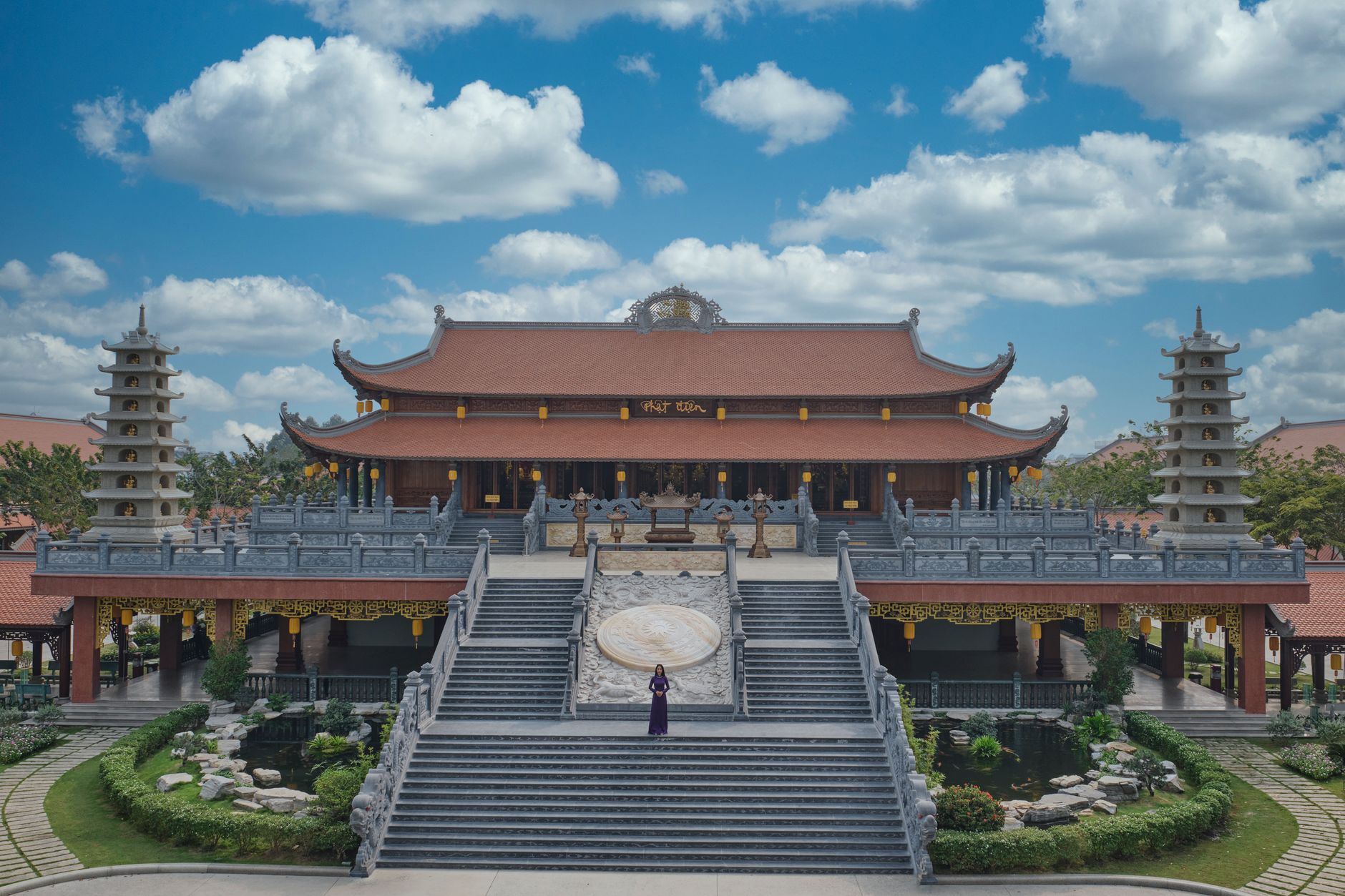
Den Mau Hung Yen is a 500-year-old temple dedicated to the worship of "Mau" — the Mother Goddess — located right in the heart of Hung Yen city, about 60 km southeast of Hanoi. The temple sits on the edge of Ban Nguyet Lake (Half-Moon Lake), a crescent-shaped body of water that was once part of the Red River's old course before the river shifted.
Built during the Le Dynasty (roughly 15th-16th century), the temple complex has been rebuilt and expanded multiple times. It's one of the key sites in northern Vietnam (베트남 / 越南 / ベトナム)'s Mother Goddess tradition, a spiritual practice recognized by UNESCO as intangible cultural heritage. The main hall enshrines Princess Lieu Hanh — considered one of Vietnam's "Four Immortals" — alongside other mother figures from the Taoist-Buddhist-animist blend that defines Vietnamese folk religion.
This isn't a tourist attraction in the conventional sense. It's an active place of worship where locals come for prayers, fortune-telling, and spirit medium ceremonies ("hau dong"). You'll see more incense smoke than selfie sticks.
Why travelers go
Most visitors are Vietnamese pilgrims, but the temple rewards anyone interested in Vietnamese folk religion and traditional architecture. The carved wooden beams, dragon motifs, and lacquerwork inside the prayer halls are genuinely impressive — detailed in a way that reveals centuries of skilled craftsmanship rather than recent restoration.
The lakeside setting is the other draw. Ban Nguyet Lake is small but photogenic, especially in early morning when mist sits on the water and elderly locals practice tai chi along the banks. The surrounding park area has old banyan trees and a pedestrian promenade that makes for a pleasant hour of walking.
For anyone doing a Red River Delta trip beyond the usual Hanoi–Ninh Binh (닌빈 / 宁平 / ニンビン) circuit, Hung Yen offers a slower, more local experience.
Best time to visit
The temple is open year-round, but timing matters.
March (lunar calendar: 1st-15th of the 3rd month) is festival season. The Den Mau festival draws thousands of pilgrims for "hau dong" ceremonies, processions, and traditional music. It's crowded but atmospheric — this is when the temple feels most alive.
September–November offers cooler weather, fewer crowds, and clear skies for photography. Weekday mornings are ideal if you want the place mostly to yourself.
Avoid major public holidays (Tet, April 30, September 2) unless you enjoy packed parking lots and hour-long waits for incense lighting.
How to get there from Hanoi
By motorbike or car: Take National Route 5 east, then turn south onto Route 39 toward Hung Yen city. Total distance is about 60 km; expect 1.5 hours by motorbike, slightly less by car. The road is flat delta terrain — straightforward riding.
By bus: Buses depart from Hanoi's Giap Bat or Gia Lam stations heading to Hung Yen city. Tickets run 50,000–70,000 VND one way. Journey takes about 1.5–2 hours depending on stops. From Hung Yen bus station, the temple is 2 km — a 30,000 VND xe om ride or a 15-minute walk through town.
By Grab car from Hanoi: Around 350,000–450,000 VND one way. Reasonable if you're splitting with travel partners.

Photo by Quang Nguyen Vinh on Pexels
What to do
Walk the temple complex
The complex has three main halls arranged front-to-back: the entrance gate ("tam quan"), the worship hall, and the inner sanctum. Take your time in the inner hall where the Mau statues sit behind heavy curtains and offerings of fruit, flowers, and paper votives pile up. Note the ceiling — the painted panels show scenes from Mother Goddess mythology.
Watch a hau dong ceremony (if timing allows)
Spirit medium rituals happen regularly, especially on the 1st and 15th of each lunar month. These involve costumed mediums channeling different spirits while musicians play "chau van" (a trance music tradition related to ca tru). You can observe respectfully from the sides. Don't photograph without asking.
Circle Ban Nguyet Lake
The full loop takes 20 minutes on foot. The south bank has a small garden with stone carvings and a view back toward the temple's tiled roofline reflected in the water. Early mornings and late afternoons give the best light.
Visit Pho Hien old trading quarter
Hung Yen city was historically known as Pho Hien — a major trading port in the 16th-17th centuries that rivaled Hoi An. A few old merchant houses and temples remain within walking distance of Den Mau. Look for Den Tran on Tran Hung Dao street (dedicated to the Tran Dynasty generals) about 800 m north.
Browse the local market
Hung Yen central market sits about 500 m from the temple. It's a proper wet market — good for watching daily commerce and picking up "nhan long" (longan fruit), the province's signature product, if you visit June–August.
Where to eat nearby
Hung Yen isn't a food destination on the level of Hanoi, but two things are worth seeking:
Bun thang — a delicate Hanoi-style noodle soup with shredded chicken, egg ribbons, and dried shrimp — has a local Hung Yen variation served at small shops along Nguyen Van Linh street near the lake. Expect 35,000–45,000 VND per bowl.
Banh cuon here uses a slightly thicker rice sheet than the Hanoi version, stuffed with minced pork and wood ear mushrooms. Several stalls operate mornings-only near the market. 25,000–35,000 VND.
Where to stay
Hung Yen city has limited accommodation. Options:
- Budget guesthouses (nha nghi): 200,000–350,000 VND/night. Basic but clean. Try the cluster near the bus station on Nguyen Van Linh.
- Mid-range hotels: 500,000–800,000 VND/night. Muong Thanh has a branch in Hung Yen with reliable rooms and breakfast included.
- Day trip from Hanoi: Most travelers do this. The 60 km distance makes it easy to visit and return the same day.

Photo by Valeria Drozdova on Pexels
Practical tips locals would tell you
- Dress modestly inside the temple. Covered shoulders and knees. This is enforced informally — you'll get looks, not kicked out, but respect the space.
- Bring small bills (10,000–20,000 VND notes) for offerings and donation boxes.
- Shoes off before entering the inner halls. Carry a plastic bag for your shoes rather than leaving them in the pile outside.
- The temple gets genuinely hot inside during summer months (May–August) due to incense smoke and enclosed spaces. Visit early morning.
- Photography is generally fine in the courtyard and outer halls. Ask before shooting inside the sanctum or during ceremonies.
Common mistakes to avoid
- Arriving midday: The temple closes for lunch (roughly 11:30–13:30). Plan around this.
- Skipping Pho Hien: The temple alone takes 30–45 minutes. Without exploring the surrounding old quarter, the trip feels thin for the travel time from Hanoi.
- Expecting English signage: There's almost none. Download Vietnamese phrases or use a translation app. Staff and monks speak Vietnamese only.
- Driving back via Highway 5 during rush hour: The Hanoi-bound stretch from Hung Yen gets clogged with trucks after 16:00. Leave by 15:00 or wait until after 18:30.
Practical notes
Den Mau works best as part of a half-day Red River Delta loop — combine it with the longan orchards (seasonal) or the old Pho Hien sites. It's not a place that needs a full day, but it rewards travelers who slow down enough to notice the details in the woodwork and the rhythm of local worship.
Last updated · May 29, 2026 · independently researched, never sponsored.