Den Vua Dinh Tien Hoang sits at the base of Ma Yen mountain in Hoa Lu, about 12 km northwest of Ninh Binh (닌빈 / 宁平 / ニンビン) city. It's the oldest and most significant temple in the ancient capital district, honoring the emperor who unified Vietnam's feudal states in 968 AD. If you're already headed to Ninh Binh for Tam Coc or Trang An, this is the historical anchor that gives those landscapes context.
What it is
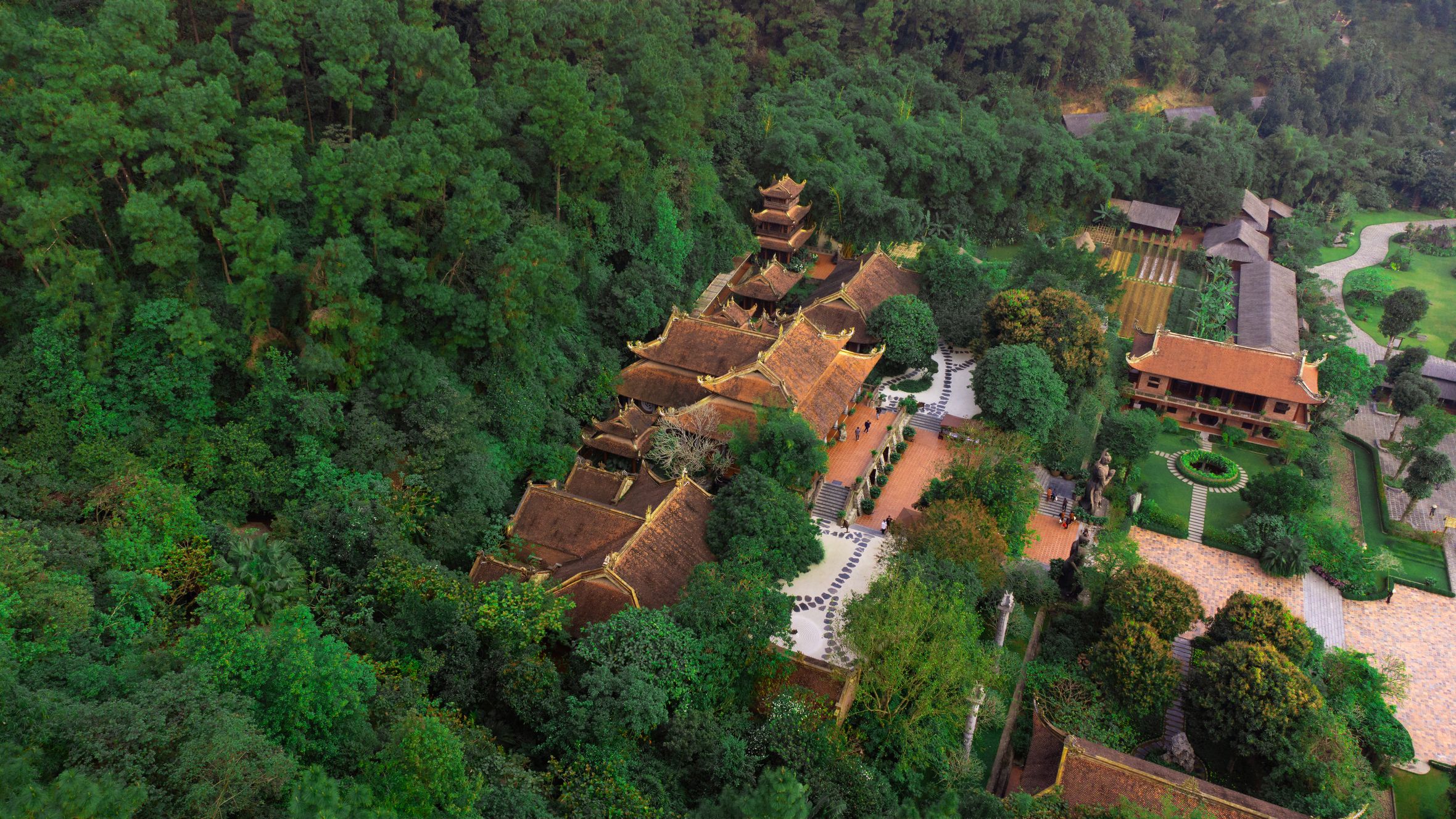
The temple complex dates to the 17th century, though it commemorates events from the 10th century. Dinh Tien Hoang (born Dinh Bo Linh) ended decades of warlord fragmentation and established the Dai Co Viet kingdom with Hoa Lu as its capital. The site includes a main gate, a courtyard with stone pillars, a dragon-flanked staircase, and three rear halls housing altars and statues of the emperor, his sons, and court officials.
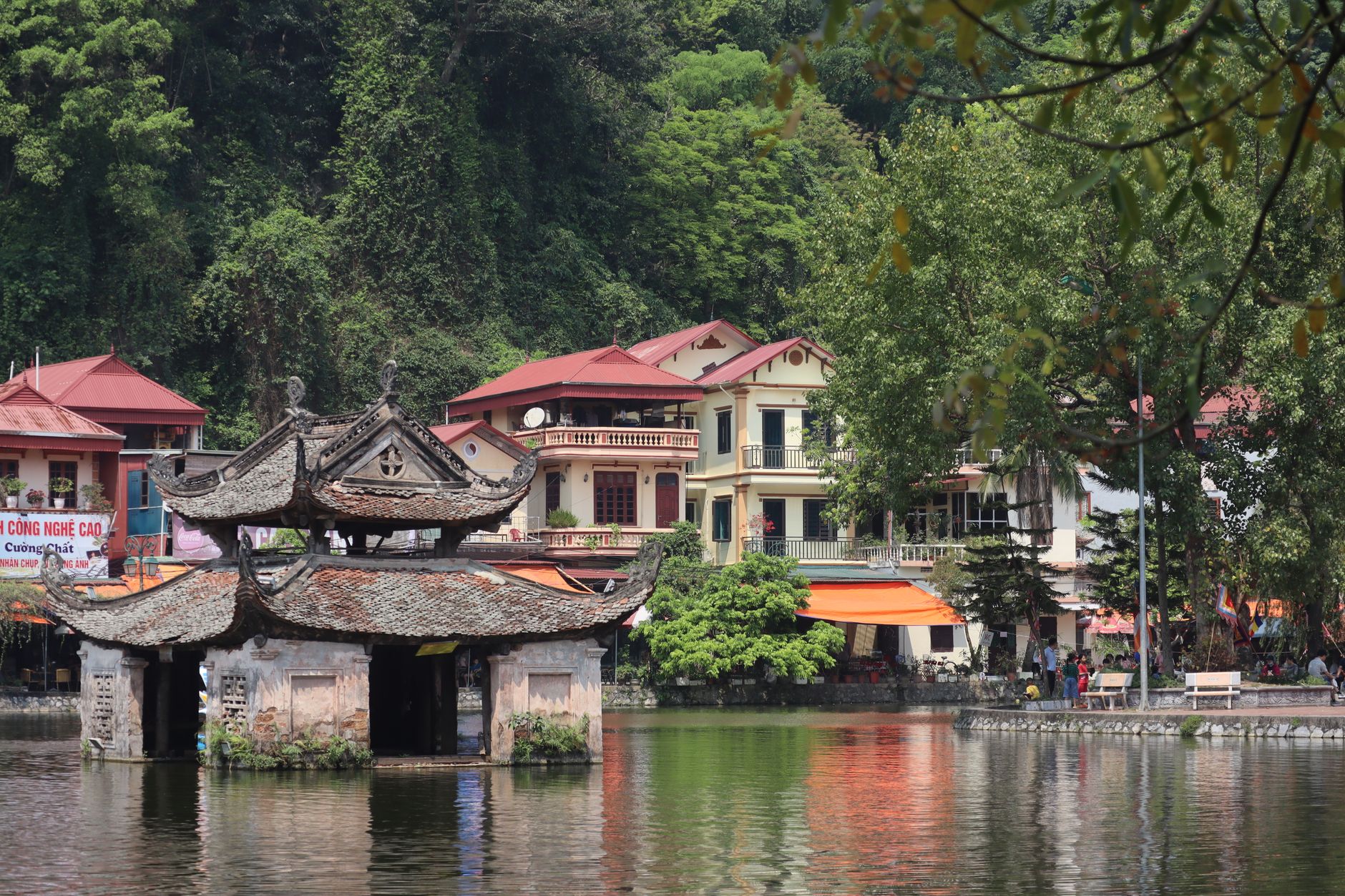
The architecture is classic northern Vietnamese temple style — low-slung timber halls with heavy tile roofs, set against limestone cliffs that served as natural fortress walls a thousand years ago. It's not a large complex. You can walk through in 30-40 minutes if you're just looking, or spend over an hour reading plaques and exploring the surrounding grounds.
Why travelers go
Hoa Lu was Vietnam (베트남 / 越南 / ベトナム)'s capital before Thang Long (modern Hanoi) took over in 1010. That makes Den Vua Dinh Tien Hoang one of the country's earliest political-historical sites. People come here for the combination of imperial history and karst scenery — the temple sits in a valley ringed by the same limestone formations you'd see on a Tam Coc boat ride, just without the water.
It also connects well with nearby Hoa Lu sites. Den Vua Le Dai Hanh, honoring the successor dynasty, is a 500-meter walk north. Together they form the Hoa Lu Ancient Capital complex, which sees far fewer crowds than Trang An or Tam Coc.
Best time to visit
The Truong Yen festival runs in March (lunar calendar, usually falling in April), and the temple grounds come alive with processions, traditional games, and ceremonies. That's the most atmospheric time but also the busiest.
For a quieter visit, October through December offers cool, dry weather and soft light that works well in the courtyards. Avoid July-August: the heat in Ninh Binh is oppressive and the courtyards offer minimal shade. Early mornings (before 8:30 AM) are best year-round — tour groups from Hanoi typically arrive between 9:30 and 11:00.

Photo by Karolina on Pexels
How to get there
From Hanoi, the most practical route is a Limousine van from My Dinh or Giap Bat bus stations to Ninh Binh city (about 2 hours, 120,000-150,000 VND). From Ninh Binh city, you have a few options:
- Motorbike/scooter rental: 120,000-150,000 VND/day from most guesthouses. The ride to Hoa Lu takes 20 minutes on flat roads through rice paddies.
- Grab car: Around 80,000-100,000 VND one way from the train station.
- Bicycle: Many hotels rent bikes for 30,000-50,000 VND/day. It's a flat 12 km ride, entirely doable if you're reasonably fit.
Entrance fee to the Hoa Lu complex (covering both Dinh and Le temples) is 20,000 VND.
What to do
Walk the full temple axis
Don't skip the outer courtyard. Most visitors rush to the main halls, but the approach — through the Ngoai gate, past the dragon balustrades, and into the shaded courtyard — is where the architecture breathes. Notice the carved stone pillars; some date to the original 17th-century construction.
Climb the path behind the temple
A short trail leads up the hillside behind the rear hall. It's maybe 10 minutes of steep steps. At the top, you get a wide view over the Hoa Lu valley and surrounding karsts. Not a difficult climb, but wear proper shoes — the stone gets slippery after rain.
Visit Den Vua Le Dai Hanh
The sister temple is a short walk north and shares the same ticket. It's smaller and quieter, with an intimate courtyard and some well-preserved woodcarvings. Together, the two temples take 90 minutes to two hours.
Cycle to Tam Coc or Trang An after
Hoa Lu sits midway between Ninh Binh city and both Tam Coc (4 km south) and Trang An (3 km east). The roads are flat and scenic. Doing the temple first, then a boat ride in the afternoon, makes for a full day.
Look for the stone inscription
In the main hall's inner chamber, there's a carved stele with historical text about Dinh Tien Hoang's unification. It's easy to miss because the lighting is dim, but it's one of the oldest historical markers in the north.
Where to eat nearby
Hoa Lu's signature dish is "com chay" — scorched rice. Restaurants along the road between the temple and Tam Coc serve it pressed into crisped patties and topped with stir-fried goat meat or vegetables. A full plate runs 60,000-80,000 VND.
Goat meat ("thit de") is the other local specialty. Ninh Binh province raises goats on the karst hillsides, and you'll find it grilled, stewed, or steamed at family restaurants within 1-2 km of the temple. A goat hotpot for two people costs around 250,000-350,000 VND.

Photo by Hồng Quang Official on Pexels
Where to stay
- Budget (300,000-500,000 VND/night): Guesthouses in Ninh Binh city or along the Tam Coc road. Basic rooms, motorbike parking, often free bicycle use.
- Mid-range (800,000-1,500,000 VND/night): Homestays and small hotels in Tam Coc village. Some have rice-paddy views and pools. Tam Coc Garden and Mua Caves Ecolodge are in this range.
- Higher-end (2,000,000+ VND/night): Ninh Binh Hidden Charm and Tam Coc Boutique Resort offer more polish, though nothing in the area is truly luxury.
Staying near Tam Coc rather than in Ninh Binh city puts you closer to the temple and the boat rides, and the village roads are quieter at night.
Practical tips
- Dress modestly — shoulders covered, no short shorts. It's an active place of worship, especially around festival season.
- Bring water. There are drink vendors outside the gate, but nothing inside the complex.
- If you're cycling, lock your bike at the parking area (5,000 VND). Don't leave bags in the basket.
- A local guide at the entrance offers tours for 50,000-100,000 VND. Worth it if you want historical context beyond what the plaques provide (most signage is Vietnamese-only).
Common mistakes
- Rushing through on a group tour: Many Hanoi day-tour operators give you 20 minutes here, which is barely enough to walk the courtyard. If history interests you at all, visit independently.
- Skipping it entirely for Tam Coc: The boat ride is great, but without Hoa Lu you miss why this valley matters. The landscape was chosen as a capital for strategic reasons — seeing the temple makes the geography click.
- Coming midday: The courtyards face west and get direct sun from 11 AM onward. Morning is more comfortable and more photogenic.
- Confusing Hoa Lu with Bai Dinh: Tour packages often bundle these together, but Bai Dinh is a modern mega-pagoda 5 km away — impressive in scale but completely different in character. Don't mistake one for the other when planning.
Last updated · May 29, 2026 · independently researched, never sponsored.