Khanh Hoa is often shorthand for Nha Trang (냐짱 / 芽庄 / ニャチャン) — the beach city that draws package tourists by the thousand. But the province sprawls inland and up the coast, and if you step outside the main resort strip, you'll find limestone scenery that rivals Ha Long Bay, village life untouched by cruise ships, and some genuinely underrated eating.
This is a guide to what's actually worth your time in Khanh Hoa, and what you can safely skip.
The Nha Trang Strip — What to See, What to Skip
Nha Trang city itself is a working port and beach resort, not a heritage site. The beachfront boulevard (Tran Phu Street) is where hotels, restaurants, and tour operators cluster. Most tourists never leave it.
Worth seeing:
Nha Trang Cathedral (corner of Thai Nguyen and Nguyen Trai, near the market) is a French colonial structure from 1928, built with local gray stone. It's active, quiet in the mornings, and sits in a neighborhood that feels less touristy than the beach strip. No admission fee; dress respectfully.
Dong Xuan Market (a few blocks inland from the beachfront) is the working fish and produce market where locals buy groceries. It's loud, wet, and smells like the sea — which is the point. Go early (6–7 a.m.). You'll see squid drying on lines, fresh "banh hoai" (a Nha Trang specialty: crispy round cakes filled with shrimp), and street-food vendors setting up. It's free to walk through; don't photograph fishmongers without asking.
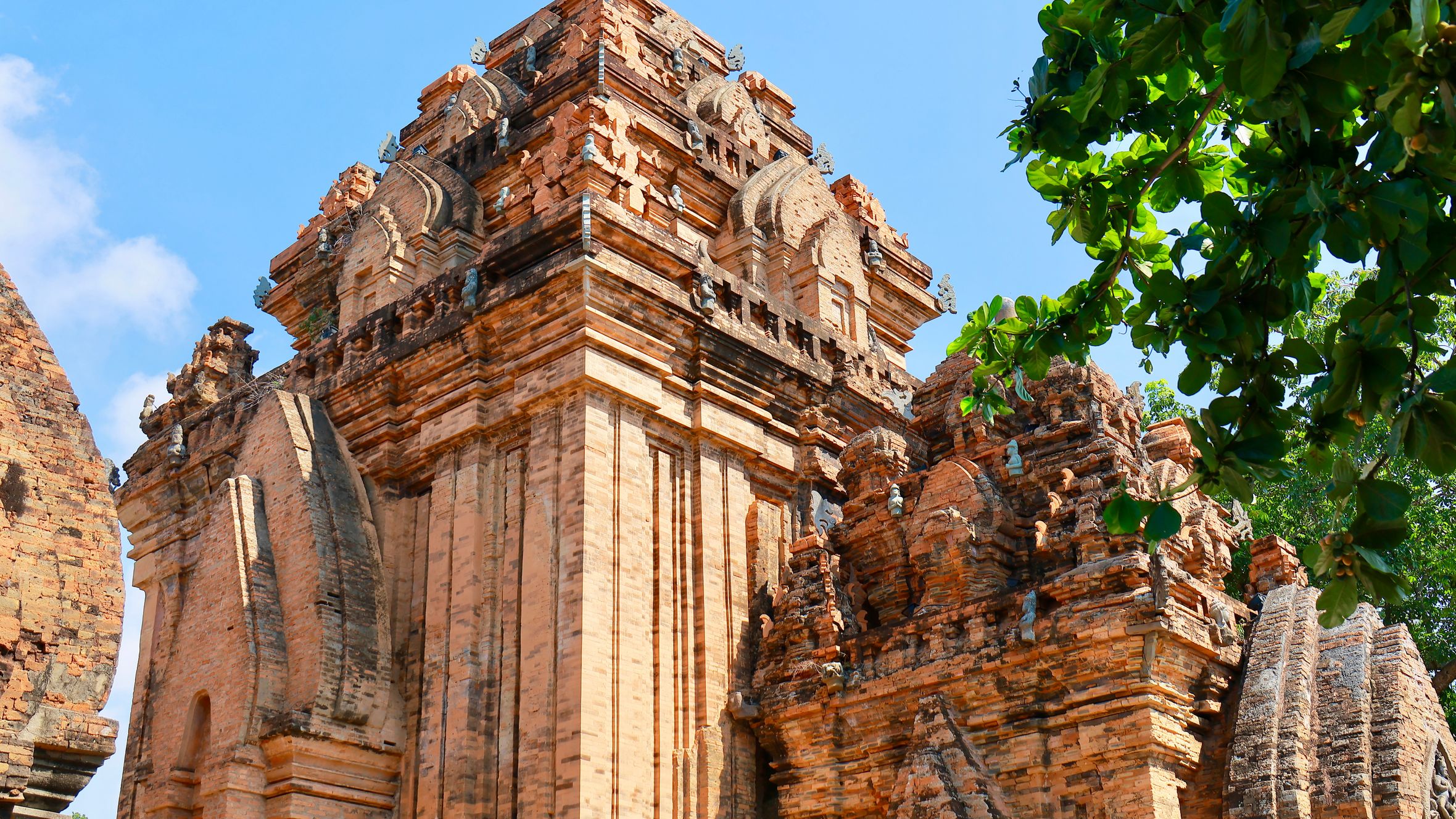
Po Nagar Towers (four km north of the beachfront, off Yersin Street) are Cham Hindu temple ruins from the 7th–12th centuries, perched on a hill overlooking the city. The main tower is about 23 meters tall; there are six ruins total. Climb up (no elevator), pay 22,000 VND admission, and you'll see the port below and get a sense of Nha Trang as a historical trade hub, not just a resort. The site is less crowded than the beach. Dress conservatively; it's still an active spiritual site.
What to skip:
The beachfront itself (Nha Trang Beach, Tran Phu Street) is a caricature of a tropical resort: sunbeds, jet skis, party boats, inflated prices, and heavy tour-operator saturation. If you want a beach day, go to Ninh Van Bay (see below). The"ba ba" (beach bars) are overpriced and aimed at foreign tourists.
Island tours sold by every hotel lobby are mediocre. Snorkeling is overhyped; visibility is poor, and you'll share a boat with 40 other tourists. Skip the organized dive-tour premium pricing.
Hidden Gems — Where to Actually Spend Your Time
Ninh Van Bay (about 50 km south of Nha Trang city, 45–60 minutes by car) is a cove of crystalline water, white sand, and low hills. There are a few bungalow resorts here, but the bay itself is not developed like Nha Trang Beach. You can rent a motorbike from the entrance (250,000 VND per day), park at a family-run beachside cafe, swim, and eat fresh fish without the noise. A taxi from Nha Trang town costs about 400,000 VND one-way; splitting a car with others is cheaper.
Phu Loc Village and Vinh Hy Bay (about 70 km northeast of Nha Trang, two hours by motorbike or car) is a fishing village on a limestone-backed beach. The settlement is tiny—a handful of fish vendors, a few small restaurants, no resorts. This is where locals come for the weekend. Swim in the bay, order grilled fish at one of the family restaurants (pay what feels fair: usually 150,000–250,000 VND per person with rice and beer), and watch fishermen repair nets in the late afternoon. No organized tours; just drive or take a minibus from Nha Trang and ask your driver to drop you at the beach.
Nui Chua National Park (about 60 km north of Nha Trang, near the small town of Ninh Hai) protects a 10,000-hectare area of coastal dry forest, limestone hills, and mangroves. There are hiking trails (some marked, some not), camping options, and a visitor center. Entrance is 20,000 VND. This is a real park, not a tourist attraction; very few English speakers, minimal facilities. Go with a guide if you want structured hikes; otherwise, it's a quiet retreat where you can walk for hours and see almost no other tourists.
Tam Huong Valley (in the highlands west of Khanh Hoa, near the border with Dak Lak) is a mountain valley with minority villages, coffee plantations, and dense forest. It's a long day-trip (four hours each way from Nha Trang) or overnight stay. You'll need a guide or a trusted local driver. The landscape here is nothing like the coast—misty mornings, pine forests, cooler air. Few foreign tourists come here.

Photo by Quang Nguyen Vinh on Pexels
Cultural and Outdoor Activities
Diving and Snorkeling — If you're serious about diving, Hon Mun Underwater Park (five km offshore) has better visibility than the main beach tours. Operators like Rainbow Divers and Sailing Club Nha Trang organize small-group dives (1.5–2 million VND per person for a two-tank dive). Book directly rather than through your hotel; prices are the same, and you'll avoid middleman markup.
Trekking and Climbing — Khanh Hoa's limestone hills are ideal for rock climbing and scrambling. Operators in Nha Trang arrange half-day and full-day climbs on lesser-known crags away from the beachfront. Expect 2–3 million VND for a guided climb (2–4 climbers). Go with a licensed guide; loose rock is common.
Fishing Village Tours — Several family-run enterprises in Nha Trang arrange early-morning boat trips to working fishing villages. This isn't a cruise-ship performance; you'll meet actual fishermen, watch nets being hauled, and eat breakfast on a small boat. About 1–1.5 million VND per person, 3–4 hours. Much better than the big island-tour boats.
Pottery and Crafts — Khanh Hoa is not a major craft hub like Hoi An or Bat Trang, but small-scale pottery workshops exist in the rural areas outside Nha Trang. Ask your hotel or a local guide to arrange a half-day visit. It's intimate, not touristic.
Day Trips from Nha Trang
To Da Lat (150 km northwest, 4–5 hours by minibus or car) — The mountain town of Da Lat is cool, misty, colonial, and a world away from the coast. Waterfalls, flower gardens, a central market, and excellent coffee. Many people overnight here rather than day-trip. Minibus from Nha Trang: 150,000–200,000 VND.
To Nha Trang-Khanh Hoa border towns (Ninh Hoa, Khanh Son) — These small towns are 30–50 km from Nha Trang and have local markets, cave sites, and riverside scenery. Less visited than the coast. Half-day trip by motorbike.
To Hon Ba (a small island, 20 km off the coast) — Less crowded than the day-trip islands; clear water, basic accommodation. Book a night at a fisherman's homestay via a local operator.

Photo by Thang Nguyen on Pexels
Eating in Khanh Hoa
Banh hoai (the crispy, round shrimp cake unique to Nha Trang) is sold at Dong Xuan Market and by street vendors along Yersin Street. Cost: 15,000–25,000 VND each. Eat it warm, right off the griddle.
Fresh fish — Order at any beachside village restaurant: grilled whole fish (ca nuong), fish cakes (cha ca), or fish soup (canh ca). Prices vary; expect 200,000–400,000 VND for a meal with rice, salad, and beer at a family place. Tourist restaurants on the beachfront charge 2–3 times more.
Oc Hen soup (tiny clam broth) is a Khanh Hoa specialty, available at small restaurants in the Old Town near Dong Xuan Market. About 50,000 VND a bowl.
Com tam (broken-rice with grilled meat or egg) is cheap and ubiquitous. 35,000–50,000 VND. Every neighborhood has a com tam vendor.
Practical Notes
Nha Trang is easy to reach by bus, train, or flight from Hanoi, Saigon, and Da Nang. A rented motorbike (100,000–150,000 VND per day) gives you freedom to explore beyond the beach strip. Taxis are metered and reliable; ride-hailing apps (Grab) work here. Most tourist-facing places speak English; rural areas do not. Best months to visit: October to April (dry season). May to September is hot and wet, but crowds thin out and hotels drop prices.
Last updated · May 29, 2026 · independently researched, never sponsored.





