Ha Long Bay gets a lot of attention for what's on the water. The food on land is a different story — one that splits sharply between what cruise operators charge and what people who actually live here pay.
The Markup Problem (And Why It Exists)
If you've eaten on a cruise boat or at a waterfront restaurant near Bai Chay pier, you've likely paid 200,000–400,000 VND for a plate of grilled prawns that costs a quarter of that two kilometers inland. That's not necessarily corruption — it's real estate, captive audiences, and the fact that most visitors never leave the tourist corridor. The restaurants near the Novotel stretch know exactly who's walking through the door.
The good news: Ha Long is a working city of nearly 250,000 people, and those people eat seafood every single day without paying tourist prices.
Halong Night Market — Go In, Eyes Open
The Ha Long Night Market on Halong (하롱 / 下龙 / ハロン) Road in Bai Chay gets a bad reputation, and some of it is deserved. The souvenir rows are forgettable, a few stalls push hard on foreign faces, and the signage switches to English mid-sentence in ways that should raise your eyebrows.
But buried inside, especially toward the back of the market away from the main entrance, there are stalls selling "banh mi" stuffed with pate and pickled daikon for 25,000–35,000 VND, grilled corn with chili butter, and fresh sugarcane juice that costs the same regardless of your passport. The trick is to walk through once without buying, note which stalls are busy with Vietnamese customers, and come back to those.
Stalls packed with locals after 7 p.m. are almost always priced honestly. Empty stalls with English menus propped at the front are not.
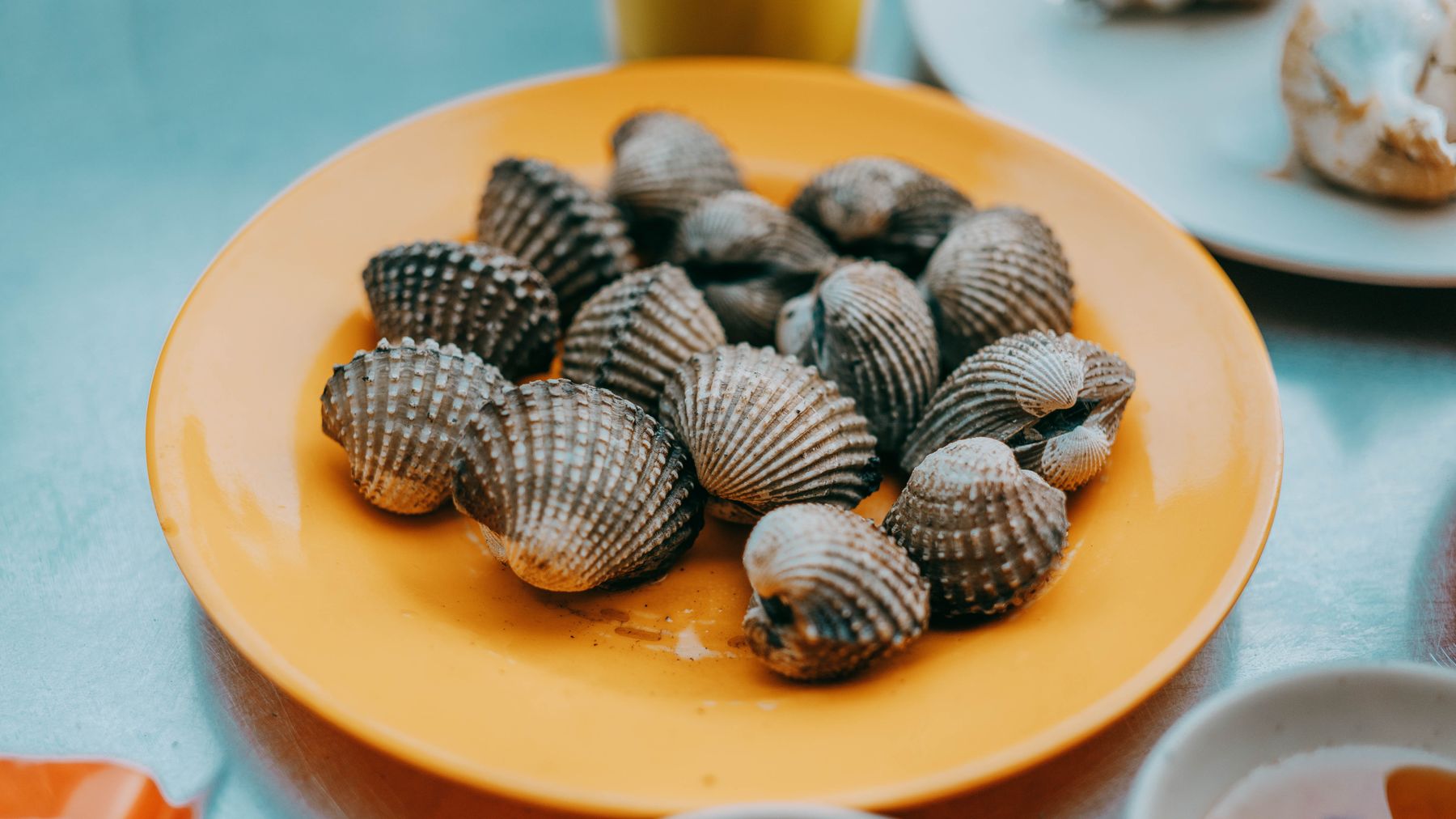
Photo by FOX ^.ᆽ.^= ∫ on Pexels
Hon Gai Side: Where Residents Actually Eat
The most useful thing you can know about Ha Long food: the city is split by the bay into two districts — Bai Chay (tourist-facing, western side) and Hon Gai (the residential and commercial core, eastern side). Most visitors never cross to Hon Gai. That is a significant mistake.
Take the Bai Chay Bridge — it's a 10-minute walk or a quick xe om (motorbike taxi) ride for around 30,000 VND — and you land in a neighborhood where the restaurants cater almost entirely to locals. Seafood prices on Hon Gai's back streets near Tran Hung Dao and Le Thanh Tong run roughly 40–60% cheaper than equivalent dishes in Bai Chay.
Cho Ha Long (Ha Long Market)
The covered wet market in Hon Gai is the city's actual food engine. Come in the morning — between 6 and 9 a.m. — and the seafood section is extraordinary: live squid, clams by the kilo, mantis shrimp still moving. You're not buying to cook here (unless you have a kitchen), but the cooked-food section just inside the entrance has women selling "banh cuon" — soft steamed rice rolls — and hot bowls of "bun rieu" with crab paste and tomato broth for 40,000–50,000 VND. It's busy, it's loud, it's exactly what Ha Long residents eat for breakfast.
What to Order — And What It Should Cost
Ha Long's position on Quang Ninh Bay means the seafood quality is genuinely high. The issue is pricing, not product. Here's a rough guide to what fair looks like:
- Oc (snails), various types, stir-fried with lemongrass and chili: 80,000–120,000 VND per plate at a local spot. If a menu says 250,000 VND, walk.
- Tom tit (mantis shrimp), steamed or grilled: 150,000–200,000 VND per 500g at Hon Gai restaurants. A reasonable tourist-area premium is 50,000 VND on top of that; double is a rip-off.
- Muc (squid), grilled whole: 100,000–150,000 VND at honest stalls.
- Com (rice) with two or three side dishes at a com binh dan (budget rice shop): 50,000–70,000 VND total, and these exist all over Hon Gai.
For drinks, Ha Long has a solid "bia hoi" culture — draft beer served cold in plastic chairs on the pavement runs 10,000–15,000 VND per glass. Look for the blue Hanoi Bia signs on side streets in both districts.

Photo by LUC PH@M on Pexels
A Note on the Cruise Dinner
If you're doing an overnight cruise on the bay — and many visitors are — the onboard meals are usually included and priced into the package. They're fine. Don't skip them in search of something better, because there is no better option mid-bay. The local food advice here applies to your evenings before departure and after return, when you have actual access to the city.
Practical Notes
Hon Gai is about 4 km from the main Bai Chay tourist cluster; a grab car runs 60,000–80,000 VND each way. Most local restaurants in Hon Gai don't have English menus — pointing at neighboring tables and using Google Translate camera mode gets you through fine. Cash only at market stalls and smaller spots; bring small bills.
Last updated · May 26, 2026 · independently researched, never sponsored.