Vietnam Wayfarer
Food & DrinkDestinationsItinerariesTravel Tips
Newsletter
Home/Food & Drink
Food & Drink

Banh Mi: How Vietnam Turned the French Baguette Into Something Better

From French colonial bakeries to global street food icon, "banh mi" is a 20cm lesson in culinary adaptation. Here's how Vietnam made the baguette its own.

May 4, 2026·4 min read
#Banh Mi#Street Food#Vietnamese Cuisine#French Influence#Sandwich#History
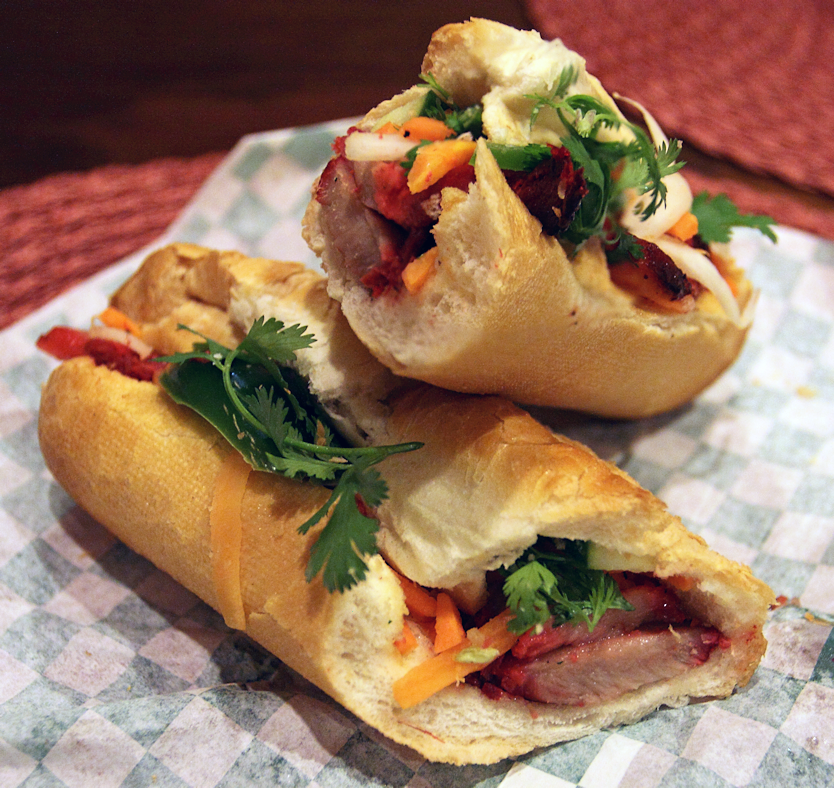
a person holding a sandwich
Photo by Rondell Chaz Mabunga on Unsplash?utm_source=decode_vietnam&utm_medium=referral

What Banh Mi Actually Is

Banh mi is a Vietnamese sandwich built on a baguette with a crispy crust and airy, almost hollow interior. The standard build: pate, mayonnaise, pickled daikon and carrot, fresh cilantro, cucumber, chili, and Vietnamese cold cuts ("cha lua" being the most common). Variations include grilled pork ("thit nuong"), sardines, "xiu mai" (pork meatballs), or eggs. Vegetarian versions swap the meat for tofu or mushrooms.

You'll find it everywhere in Vietnam — street carts, family-run shops, markets. Price ranges from 15,000–35,000 VND depending on fillings and location. Hanoi and Ho Chi Minh City have the densest concentration of vendors, but every town has at least one banh mi lady.

It's breakfast food, snack food, lunch food. The portability and price point made it Vietnam's original fast food, decades before McDonald's showed up.

The French Brought Bread, Vietnam Made It Useful

The baguette arrived in Southern Vietnam in the late 1850s with French colonizers. By the 1870s, it reached Hanoi (then called Tonkin) and Hue (Annam). The French built brick bakeries to serve their own population — local Vietnamese and Chinese workers did the actual baking but stayed in the back, out of sight.

Early bakeries had a three-tier system: the master baker (highest paid, controlled the process), the dough divider (portioned and shaped), and the dough mixer (lowest paid). The bread was pure French technique — wheat flour, salt, yeast, water. No fillings, no local ingredients.

Wheat didn't grow in Vietnam, so imported flour was expensive. For the first 50 years, baguettes were luxury items. The French ate them the classic way: sliced, served on a plate with ham, pate, cheese, butter. The Vietnamese upper class adopted this style.

In 1861, poet Nguyen Dinh Chieu mentioned banh mi in an elegy, the first known literary reference. At that time, the North called it "banh tay" (Western bread); the South and Central regions used banh mi.

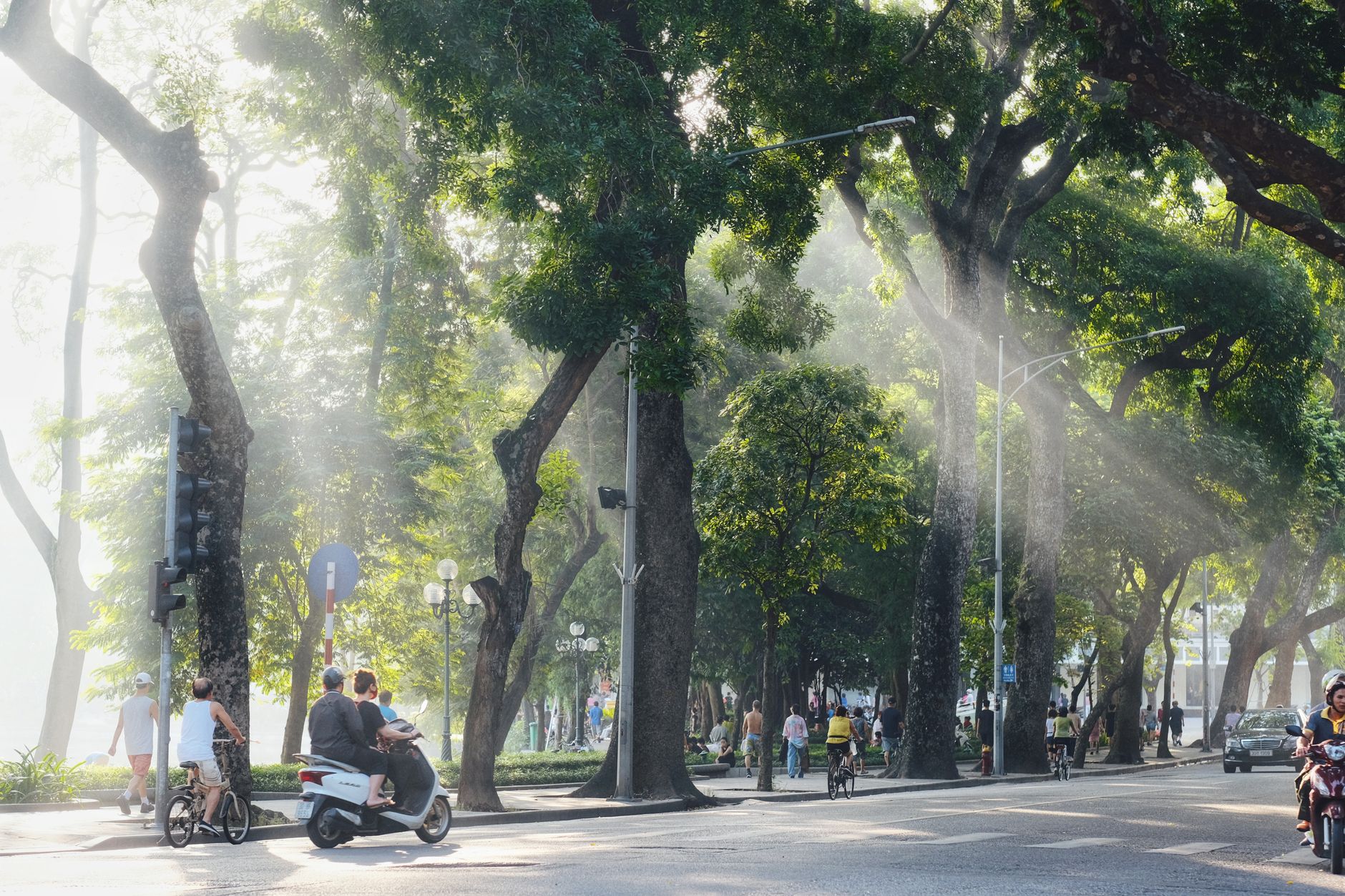
Hanoi Montage

Image by Cheong. Original uploader was Cheong Kok Chun at en.wikipedi via Wikimedia Commons (CC BY-SA)

World War I Changed Everything

When WWI started in 1914, the French colonial government seized German-owned import warehouses full of European goods. Thousands of French soldiers and officials returned home to fight. The market flooded with surplus wheat and European staples at cheap prices.

Simultaneously, wheat imports were disrupted. Vietnamese bakers started cutting flour with rice flour to stretch supplies. The result: "pain de riz", a softer, lighter baguette that adapted better to Vietnam's heat and humidity. Bread spoiled fast in tropical weather, so shops baked twice daily.

By 1920, ordinary Vietnamese could afford banh mi. Street vendors sold small loaves ("petit pain") for breakfast. People ate them with butter and sugar, dipped them in soup, or paired them with omelets and coffee. The imperial court in Hue served banh mi during the Bao Dai era.

How It Became Vietnamese

After the French left in 1954, Southern Vietnamese cooks adapted the sandwich using local ingredients. Butter became mayonnaise (cheaper, more stable in heat). Pate stayed but was spread thin. Pickled vegetables ("do chua") and fresh herbs replaced lettuce. Chili added heat. Cold cuts were sliced thinner to reduce cost.

The baguette itself changed — shorter (20–40 cm), more hollow inside to hold fillings, crust thinner and crispier than the French original. Vietnamese bakers used a blend of wheat and rice flour, plus a secret: brushing the loaves with water during baking to create that signature crackle.

By the 1960s, banh mi was fully Vietnamese. The name banh tay disappeared. Every city had its own style: Hanoi favored grilled pork and pate; Saigon added more pickles and mayo; Hue used spicier chili paste.

Hanoi Vietnam The-omnipresent-plastic-chairs-01

Image by CEphoto, Uwe Aranas via Wikimedia Commons (CC BY-SA)

Banh Mi Goes Global

After 1975, waves of Vietnamese emigration brought banh mi to the U.S., Australia, France, and Canada. Overseas Vietnamese communities opened shops in Little Saigon neighborhoods. The sandwich adapted again — sometimes with jalapenos instead of Vietnamese chili, or coleslaw instead of pickled daikon.

In the 2000s, Western food media discovered it. The Guardian listed it among the world's best sandwiches. American cities from New York to Portland saw banh mi festivals and specialty shops. The Anglicized spelling "banh mi" (no diacritics) became standard in English.

Today, you can find banh mi in almost every country with a Vietnamese diaspora. Some are authentic; many are not. The best ones are still in Vietnam, made by vendors who've been doing it for 30 years.

Where to Eat It in Vietnam

Hanoi: Banh Mi 25 (25 Hang Ca, Hoan Kiem) — pork, pate, egg, 25,000 VND. Opens 6 a.m., sells out by 10 a.m.

Ho Chi Minh City: Banh Mi Huynh Hoa (26 Le Thi Rieng, District 1) — overstuffed with cold cuts and pate, 45,000 VND. Expect a line.

Hoi An: Banh Mi Phuong (2B Phan Chau Trinh) — the one Anthony Bourdain ate on No Reservations. Grilled pork or pork meatball, 20,000–30,000 VND.

Avoid tourist traps near Ben Thanh Market in Saigon or the Old Quarter in Hanoi that charge 60,000+ VND for a smaller sandwich. The best banh mi are from carts with a crowd of locals and a price board in Vietnamese only.

You might also like
Imexpharm đồng hành hội nghị dược sĩ nhà thuốc tại Đà Nẵng - Báo VnExpress Sức khỏe
Travel Tips

Vietnam Pharmacy Guide: What to Buy, What to Skip, and How to Ask

May 5, 2026 · 4 min
Hanoi skyline with Ba Vi Mountain in the distance
Travel Tips

Dress Code in Vietnam: What to Wear at Temples, Beaches, and Restaurants

May 5, 2026 · 4 min

Going to Vietnam? Eat and travel smarter.

Monthly: new dishes, off-the-beaten-path destinations, and itineraries — straight to your inbox. No spam. Unsubscribe anytime.

Join 0 expats. (We just launched.)

More from Hanoi

Other articles covering this city.

Hoi An Old Town lanterns over the Thu Bon River
Travel Tips

Drinking Water in Vietnam: What's Safe, What Isn't, and Why

Tap water isn't safe to drink straight from the tap in Vietnam. Here's what you need to know about bottled water, ice, brushing teeth, and hot drinks.

May 5, 2026·4 min read
Sapa terraced rice fields and waterfall
Travel Tips

Eating with Food Allergies in Vietnam: Peanuts, MSG, Fish Sauce & Gluten

Peanuts hide in desserts and sauces, MSG seasons nearly everything, and fish sauce is in almost every savory dish. Here's how to navigate Vietnamese food safely.

May 5, 2026·5 min read
Hanoi skyline with Ba Vi Mountain in the distance
Travel Tips

Wifi and Internet in Vietnam: What to Expect and How to Stay Connected

Free wifi is nearly everywhere in Vietnamese cities, but speeds drop in rural areas. Here's what works, where to find it, and what to pay.

May 5, 2026·3 min read

More from All of Vietnam

Other articles covering the same region.

Hoi An Old Town lanterns over the Thu Bon River
Travel Tips

Vietnam Vaccinations: What You Actually Need Before You Go

No shots are legally required to enter Vietnam. But a few are smart, depending on where you're going and how long you'll stay.

May 5, 2026·3 min read
Ho Chi Minh City panorama at dusk
Travel Tips

Vietnam Currency Guide: VND Notes, Colors & How to Avoid Common Scams

A breakdown of Vietnamese dong notes, their colors, and the change scams that catch travelers. Learn how to spot fake notes and protect yourself at markets and street food stalls.

May 5, 2026·4 min read
Hanoi skyline with Ba Vi Mountain in the distance
Travel Tips

Airport to City: Getting from Tan Son Nhat, Noi Bai & Da Nang into Town

Skip the touts and overpriced taxis. Here's what Grab costs, which buses actually run, and how to avoid the classic arrival scams at Vietnam's three busiest airports.

May 5, 2026·5 min read

More in Food & Drink

More articles from the same category.

View all in Food & Drink →
Ruou can
Food & Drink

Ruou Can: Vietnam's Communal Rice Wine Ritual

Ruou can is a fermented rice wine shared through cane tubes from a single earthenware jar—a ritual drink of Vietnam's ethnic minorities in the Central Highlands and Northwest, where hospitality and community are sipped together.

May 5, 2026·2 min read
Ruou nep
Food & Drink

Ruou Nep: Vietnam's Fermented Glutinous Rice Pudding

Ruou nep is a mildly alcoholic pudding or drink made from fermented glutinous rice, particularly beloved in northern Vietnam. Learn how it's made, its regional varieties, and where to find it.

May 5, 2026·2 min read
Nuoc mia
Food & Drink

Nuoc Mia: Vietnam's Ice-Cold Sugarcane Juice

Sugarcane juice, or "nuoc mia," is the sound and smell of every Vietnamese street. Fresh stalks crushed through a motorized press, poured over ice, sometimes with a squeeze of kumquat—it's one of the cheapest, most refreshing drinks you'll find, available everywhere from Hanoi's Old Quarter to a rural roadside stall.

May 5, 2026·3 min read
Vietnamese tea
Food & Drink

Vietnamese Tea: A Guide to Green, Lotus, and Heritage Brews

From thousand-year-old trees to delicate lotus-scented leaves, Vietnamese tea reflects centuries of tradition. Learn where to find the best teas, how to brew them, and why green tea dominates the culture.

May 5, 2026·4 min read
Lotus tea
Food & Drink

Lotus Tea: Six Ways to Drink Vietnam's National Flower

Lotus tea takes many forms in Vietnam—from flower-scented green tea to seed brews and root infusions. Each preparation honors the lotus plant's delicate flavors and deep cultural roots.

May 5, 2026·3 min read
Vietnamese iced coffee
Food & Drink

Vietnamese Iced Coffee: From Phin to Egg Coffee

"Ca phe sua da" — Vietnamese iced coffee — is built on three pillars: dark robusta beans, a metal phin filter, and sweetened condensed milk. Learn how to brew it and explore nine regional variations from egg coffee to salt coffee.

May 5, 2026·4 min read
View all in Food & Drink →
← Older
Namia River Retreat: Herbology, Banh Mi Classes, and Thu Bon Sunsets
Newer →
Pho: Vietnam's National Noodle Soup — Origins, Broth Secrets, Nutrition

Popular this week

  1. 1
    Itineraries
    2 Weeks in Vietnam: The Perfect First-Timer's Itinerary
    Apr 21, 2026 · 16 min
  2. 2
    Food & Drink
    Saigon Street Food Tour: 12 Dishes You Must Try in Ho Chi Minh City
    Apr 17, 2026 · 10 min
  3. 3
    Food & Drink
    Pho in Hanoi: The 7 Bowls That Are Actually Worth Lining Up For
    Apr 25, 2026 · 11 min
  4. 4
    Itineraries
    3 Days in Hoi An: The Complete Itinerary (With Where to Eat)
    Apr 4, 2026 · 12 min
  5. 5
    Destinations
    The Ha Giang Loop: A Complete 4-Day Motorbike Adventure Guide
    Apr 29, 2026 · 14 min
Get the monthly digest

New dishes, destinations, and itineraries — once a month.

Subscribe →
Vietnam Wayfarer

Insider guides to Vietnam — food, travel, and regional specialties most foreigners never find. Independent, no sponsored content without disclosure.

Topics

  • Food & Drink
  • Destinations
  • Itineraries
  • Travel Tips

Resources

  • Newsletter
  • Contact
  • Affiliate Disclosure
  • Privacy
  • Search

Get the Newsletter

Monthly: dishes, destinations, itineraries — straight to your inbox.

© 2026 Vietnam Wayfarer. All rights reserved.

We use minimal analytics + ads (no personal tracking). See our privacy policy.