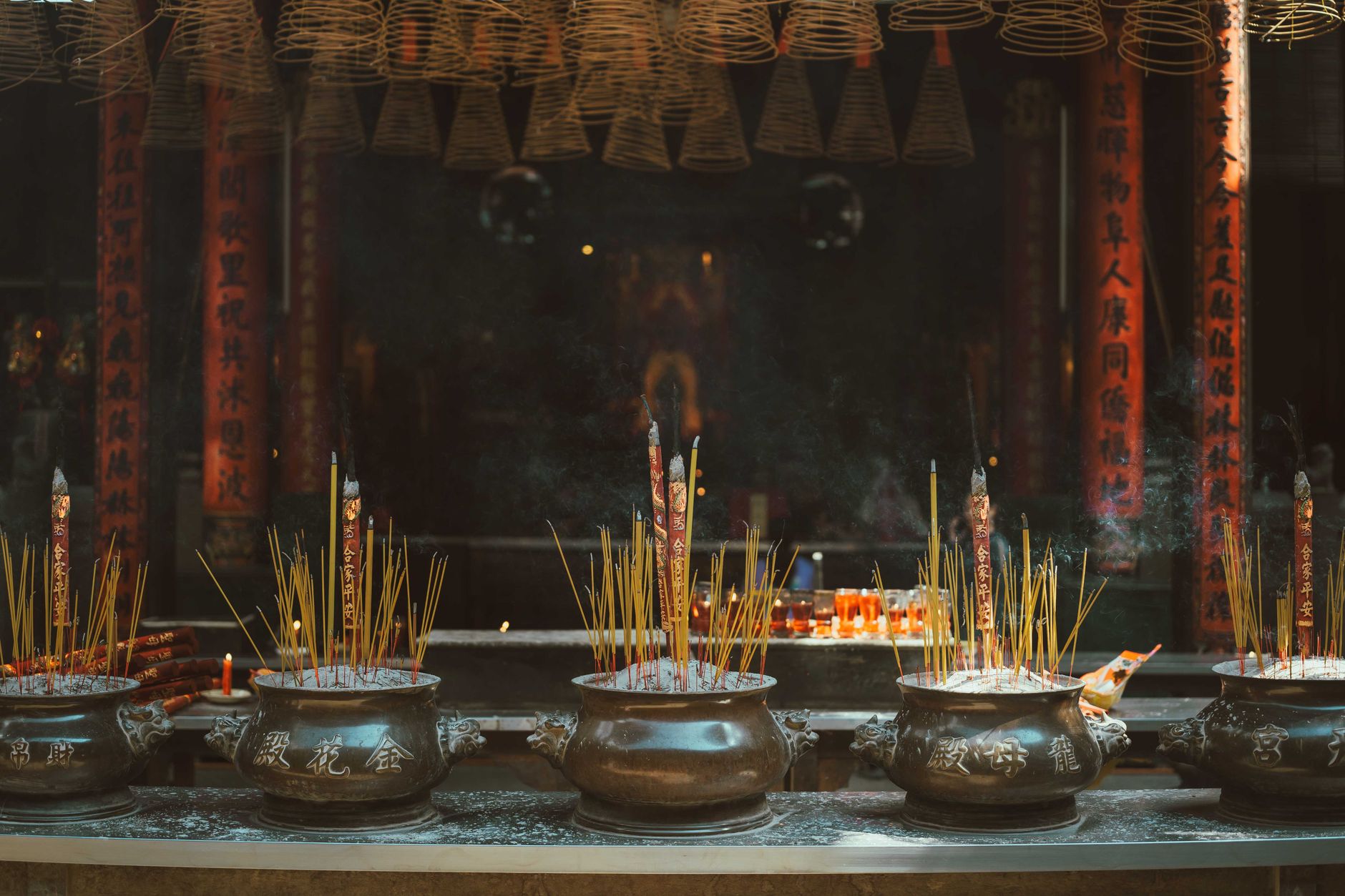
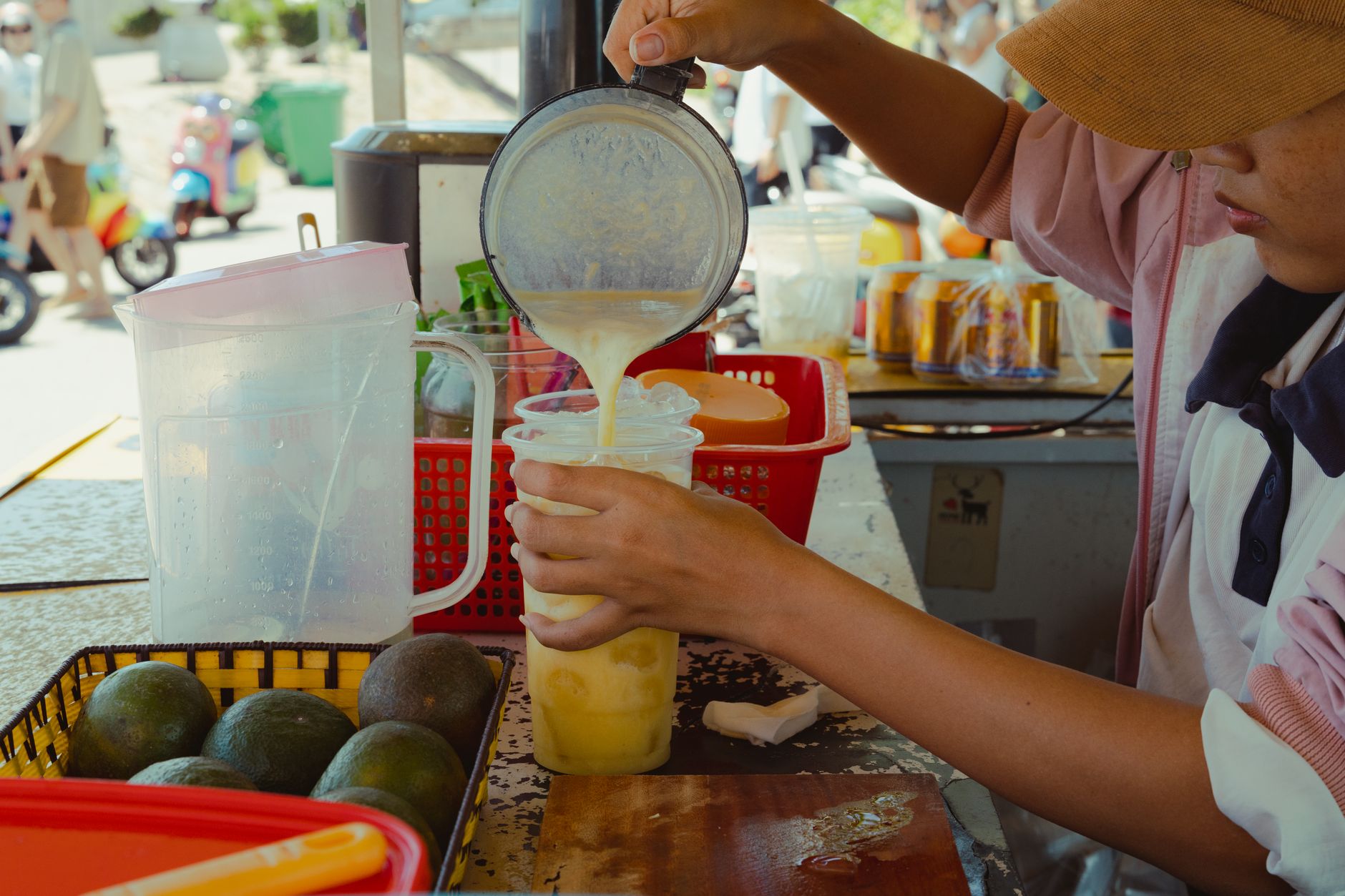
Hanoi has a serious Buddhist vegetarian scene, and most visitors walk right past it. It lives inside pagoda canteens, tucked-away "com chay" restaurants, and a handful of alley kitchens that cook exclusively on the lunar calendar's meat-free days.
What Buddhist Vegetarian Actually Means Here
Vietnamese Buddhist cuisine — called "an chay" — is not just vegetarian in the Western sense. It follows a stricter rule set borrowed from Mahayana tradition: no meat, no fish, no eggs, and crucially, no "ngu vi tan" — the five pungent roots. That means no garlic, no onion, no shallots, no leeks, and no chives. This is the detail that surprises most people. An chay food is built without the aromatics that form the backbone of almost every other Vietnamese dish, which makes the cooking genuinely technically demanding.
The reason for the restriction is doctrinal: those five roots are believed to agitate the mind and stir desire when cooked, and stimulate aggression when eaten raw. Whether or not you find that persuasive, the culinary constraint is real — and the best an chay cooks work around it with fermented black bean paste, mushroom-based broths, dried shiitake, and a heavy hand with fresh herbs and pickled vegetables.
The Mock-Meat Tradition
One thing that confuses first-timers is the presence of food that looks exactly like duck, pork belly, or shrimp — shaped, colored, and sometimes textured to match — sitting inside a clearly Buddhist restaurant. This is "do chay gia man" or simply "gia" food — imitation meat — and it has been part of Vietnamese Buddhist cooking for centuries.
The logic is compassionate rather than contradictory. The idea is to ease lay practitioners and new devotees into plant-based eating by giving them familiar textures and flavors. The base ingredients are typically pressed tofu, wheat gluten (seitan), taro, jackfruit, or sweet potato starch. The craftsmanship varies wildly. A good "cha gio" chay — the vegetarian version of the crispy fried rolls — uses taro and glass noodles and tastes nothing like a compromise. A lazy one tastes like damp cardboard shaped into a cylinder.
Not everyone in the community loves the tradition. More austere practitioners argue that eating food designed to resemble meat is missing the point. You'll sometimes see restaurants that explicitly label themselves "an chay thuan tuy" — pure vegetarian, no imitation meat — which signals a more minimalist, ingredient-forward approach.
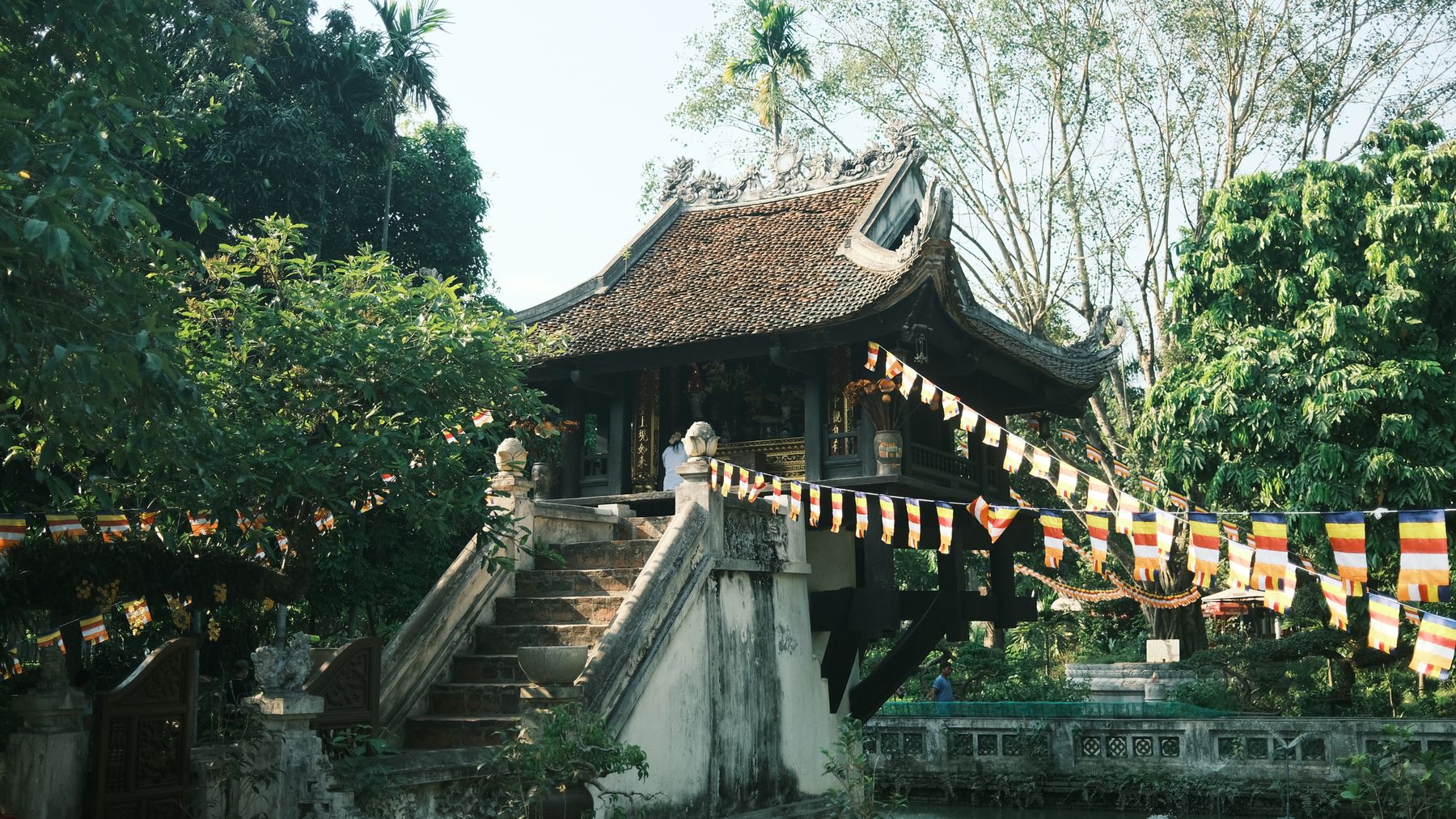
Photo by Quý Nguyễn on Pexels
When to Go
The busiest an chay days follow the lunar calendar: the 1st and 15th of each lunar month, plus the lead-up to Tet and the full weeks of certain Buddhist observances. On those days, restaurants that might otherwise serve both vegetarian and regular food will go fully chay. Some pagoda canteens only open on those specific days. If you're not tracking the lunar calendar, the app "Lich Van Nien" is the fastest way to check.

Photo by Nguyen Huy on Pexels
Where to Eat in Hanoi
Pagoda Canteens
Tran Quoc Pagoda, on the western shore of Ho Tay lake in Tay Ho district, is the oldest pagoda in Hanoi and draws serious lay practitioners, not just tourists. On the 1st and 15th, volunteer cooks set up a free communal lunch in the courtyard — simple dishes, eaten quickly, and genuinely good. There's no menu and no charge. A small donation to the temple fund is customary but not enforced. Arrive before 11:00 or the food runs out.
Bai Dinh, technically outside the city toward Ninh Binh (닌빈 / 宁平 / ニンビン), has a larger pagoda complex with more formal vegetarian catering, but for Hanoi residents the smaller neighborhood pagodas — Phu Tay Ho near the lake, Quan Su on Quan Su street in the Old Quarter — often have informal kitchen setups worth exploring.
Dedicated An Chay Restaurants
Com Chay Nang Tam, on Tran Hung Dao street, is the name that comes up most often among Hanoi (하노이 / 河内 / ハノイ) vegetarians. It's been running for decades, serves a full menu at lunch and dinner, and prices stay reasonable — most sets run 60,000–90,000 VND per person. The "bun rieu chay" — a vegetarian version of the sour tomato-and-crab noodle soup — is worth ordering specifically. They achieve the tartness with tamarind and tomato and a shiitake-heavy broth that actually holds up.
Chay Garden, near Hoan Kiem, aims at a slightly more polished crowd and charges accordingly — expect 120,000–180,000 VND per dish — but the kitchen is consistent and the menu is wide enough to bring non-vegetarian guests without causing a diplomatic incident.
For something cheaper and faster, the an chay stalls inside Dong Xuan Market operate daily and serve rice plate lunches for under 40,000 VND. The food is functional rather than revelatory, but it gives a clear picture of everyday an chay eating rather than the restaurant version.
What to Order
Beyond bun rieu chay, look for "banh cuon chay" — the steamed rice rolls filled with mushroom and wood ear instead of pork — which hold up surprisingly well under the no-garlic rule because the dipping sauce leans on mushroom broth and lime. "Pho chay" exists at several spots but the broth is the hardest thing to get right without bones; the better versions use roasted ginger, cinnamon, star anise, and charred shallot substitutes to approximate the depth. Results vary.
If you see "mi quang chay" on a menu, order it. The turmeric noodle dish from central Vietnam translates unusually well to plant-based cooking — the shrimp and pork get replaced with tofu and roasted peanuts, and the broth is lighter by design anyway.
Practical Notes
Most pagoda canteens do not have English menus; pointing and gesturing works fine, and staff are generally patient. Dress modestly if you're eating inside or near an active temple — shoulders and knees covered is the baseline. Budget 40,000–90,000 VND for a full pagoda-style meal; dedicated restaurants run higher but rarely above 200,000 VND per person.
Last updated · May 29, 2026 · independently researched, never sponsored.