Vietnam (베트남 / 越南 / ベトナム) rewards patient eaters, but if you are traveling halal, patience needs to come with a plan. Pork is the backbone of Vietnamese cooking, lard turns up in unexpected places, and most street vendors have never heard the word "halal" — but the country has a real Muslim community, dedicated halal restaurants in every major city, and enough rice, seafood, and vegetable dishes that you will not go hungry.
The Halal Landscape, Region by Region
Hanoi
Hanoi has a small but established Muslim community clustered around Hoan Kiem and the Old Quarter. The Al Noor Mosque on Hang Luoc Street and the Jam-E Mosque on Hang Luoc are both easy to find on foot. Around these mosques you will find a handful of halal-certified restaurants serving Malaysian, Indonesian, and Middle Eastern food alongside Vietnamese dishes. Bac Qua Lane off Hang Luoc has become an informal halal food strip — not a tourist destination, just where the community eats.
For Vietnamese food specifically, look for "com chay" (vegetarian rice) restaurants, which avoid pork by definition, though not all avoid lard in cooking. Ask directly: "Khong co thit lon?" (No pork?) is understood. Seafood "pho" and beef pho are easier to navigate than pork-based broths, but confirm the stock is not mixed.
Saigon (Ho Chi Minh City)
Saigon has the largest halal food scene in the country. District 1 has several certified halal restaurants near the Ben Thanh Market area. District 5 (Cholon) has a Chinese-Muslim community with a longer history. The most practical zone for halal travelers is along Nguyen An Ninh Street and the surrounding blocks in District 1, where you will find certified restaurants, halal-labeled grocery shops, and the Masjid Al-Rahim mosque.
Saigon (사이공 / 西贡 / サイゴン) is also where you are most likely to find "banh mi" shops that will make a pork-free version on request — filled with eggs, tofu, or grilled chicken rather than cha lua (Vietnamese pork sausage). It takes about thirty seconds to confirm: point at what you want, skip what you do not.
Da Nang and Hoi An
Da Nang has a mosque on Nguyen Truong To Street that also functions as a community center with information about local halal food options. The halal restaurant scene is thin compared to Hanoi or Saigon, but the city's strong seafood culture helps — grilled fish, steamed clams, and prawn dishes from the Han River area are generally safe if you specify no pork sauce.
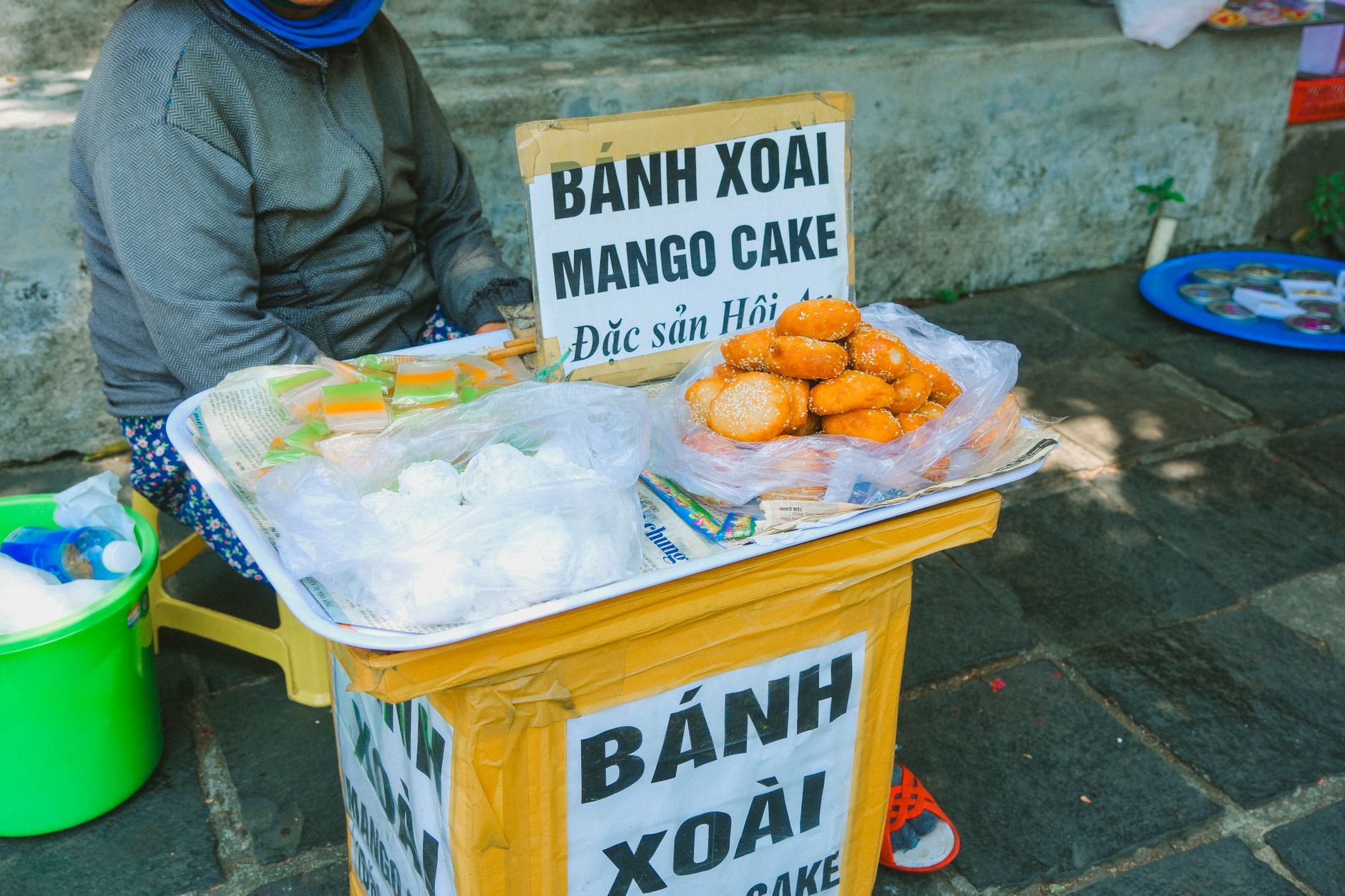
Hoi An is trickier. The cuisine here leans heavily on pork — "cao lau" is made with pork slices, "mi quang" often comes with pork ribs, and the famous white rose dumplings are sometimes sealed with lard. There are a handful of halal-certified restaurants near the Cham Islands ferry terminal catering to Malaysian and Indonesian tourists. Outside those, stick to seafood grilled simply, or eat before you wander the Ancient Town.
Hue
Hue surprises Muslim visitors. The city has a Cham Muslim community — descendants of the historic Champa kingdom — and their presence has created a small but genuine halal ecosystem. Masjid Jamiul Azhar on Nguyen Hue Street is the main mosque, and the surrounding neighborhood has a few halal-labeled shops. "Bun bo Hue" can sometimes be made without the pork components if ordered at places that cater to this community, though you need to confirm explicitly.
Phu Quoc, Mui Ne, and the South
Mui Ne and the surrounding Binh Thuan province have a substantial Cham Muslim population, and you will find halal food more naturally available here than almost anywhere else in the country — small roadside stalls with handwritten "halal" signs, mosques on the main road through Phu Hai village. Phu Quoc island has less halal infrastructure but abundant seafood and a growing number of restaurants that label themselves halal for the Malaysian tourist market.
What Is Generally Safe at Standard Restaurants
Even without halal certification, several categories of Vietnamese food are workable:
- Seafood dishes grilled or steamed without pork-based sauces. Ask for nuoc cham (dipping sauce) on the side and check whether it contains shrimp paste.
- Egg dishes — fried eggs on rice, omelettes at com binh dan (everyday rice) spots.
- Plain rice with vegetables — com trang rau xao is cheap, everywhere, and almost always safe.
- Fresh spring rolls — "goi cuon" made with shrimp instead of pork, though confirm at each spot.
- Vegetarian restaurants — Vietnam has a strong Buddhist vegetarian tradition called "an chay". These restaurants serve no meat at all, which means no pork. Check that the cooking oil is vegetable-based, not lard.
Dishes to approach with caution: pho (stock may be mixed), "banh cuon" (often contains pork filling), "com tam" (broken rice typically topped with grilled pork), and anything described as "thap cam" (mixed).

Photo by Crab Lens on Pexels
Prayer Rooms and Mosques
Major mosques operate in Hanoi, Saigon, Da Nang, Hoi An, Hue, Can Tho, and several Mekong Delta towns. Outside these cities, prayer rooms are rare — plan accordingly if you are traveling through the highlands or rural north. The IslamicFinder app and HalalTrip both have reasonably current listings for Vietnam. Friday prayers draw large congregations at city mosques; arrive early.
Airports in Hanoi (Noi Bai) and Saigon (Tan Son Nhat) have dedicated prayer rooms in the international terminals.

Photo by Loifotos on Pexels
Useful Phrases
- "Khong co thit lon" — No pork
- "Khong co mo lon" — No lard
- "An Hoi Giao" — Muslim / I eat halal (literally, "I eat Islam-style")
- "Co thit bo khong?" — Do you have beef?
Writing these on your phone to show vendors works better than speaking them.
Practical Notes
Halal certification in Vietnam is issued by the Halal Certification Agency Vietnam (HCA) and a few international bodies — look for a certificate displayed at the register, not just a sign on the door. In Saigon and Hanoi, the HalalTrip app lists certified restaurants with recent reviews from other Muslim travelers, which is more reliable than Google Maps labels. Budget around 80,000–150,000 VND per meal at certified halal restaurants; street food workarounds can be cheaper if you know what to look for.
Last updated · May 29, 2026 · independently researched, never sponsored.