What it is
Phat Diem Stone Cathedral (Nha Tho Da Phat Diem) sits in Kim Son district, about 28 km southeast of Ninh Binh (닌빈 / 宁平 / ニンビン) city. Built between 1875 and 1898 under the direction of Father Tran Luc (known as Father Sau), the complex is one of the most architecturally distinctive Catholic churches in Southeast Asia. What makes it unusual: the whole thing looks more like a Vietnamese temple than a European cathedral. Curved roofs, dragon carvings, lotus motifs — all rendered in stone and ironwood, all serving a Catholic function.
The complex covers roughly 22 hectares and includes the main cathedral, a bell tower ("phuong dinh"), five smaller chapels, three artificial grottoes, and a lake. The main cathedral's columns are single blocks of stone, some weighing 20 tonnes, hauled from Thanh Hoa province without modern machinery. Father Sau spent six years just laying the foundation — sinking bamboo and mud into marshland until the ground could hold the weight.
Why travelers go
Most visitors to Ninh Binh head straight to Tam Coc or Trang An and skip everything south. That's a mistake if you care about architecture or history. Phat Diem is the rare place where East-meets-West isn't a cliche — it's literal. The stone carvings mix Biblical scenes with Vietnamese folk art. The layout follows feng shui principles. The bell tower borrows its silhouette from a communal house, not a steeple.
Graham Greene visited in 1951 and wrote the cathedral into "The Quiet American." The scene where Fowler watches a battle from the bell tower? That's here.
It's also refreshingly uncrowded. On a weekday, you might share the grounds with a handful of local parishioners and zero tour buses.
Best time to visit
October through December gives you dry weather and comfortable temperatures (20-25°C). The complex photographs well in soft winter light.
Christmas week is worth noting — the parish holds large celebrations, the grounds are decorated, and the atmosphere is genuinely festive. Expect crowds during Christmas Eve mass, but the energy is worth it if you don't mind company.
Avoid June through August: heat, humidity, and occasional flooding in Kim Son's low-lying terrain make the trip less pleasant.
How to get there
From Ninh Binh city, the most practical option is motorbike or hired car. The road runs southeast through flat rice country — straightforward riding, about 28 km, 40-45 minutes.
By motorbike: Rent in Ninh Binh city for 120,000-150,000 VND/day. Head south on DT477 toward Kim Son. The road is paved and flat, easy for inexperienced riders.
By Grab car: Around 200,000-250,000 VND one way from Ninh Binh city center. Availability can be spotty — better to arrange a round trip with waiting time (negotiate 500,000-600,000 VND for the whole excursion, 2-3 hours total).
By local bus: Bus 11 runs from Ninh Binh bus station toward Kim Son. About 30,000 VND. Departures roughly every 30 minutes, but the drop-off point is still 2 km from the cathedral. You'll walk or flag a xe om.
From Hanoi, the fastest route is to take a bus to Ninh Binh (2-2.5 hours, 100,000-120,000 VND from Giap Bat station) and continue from there.

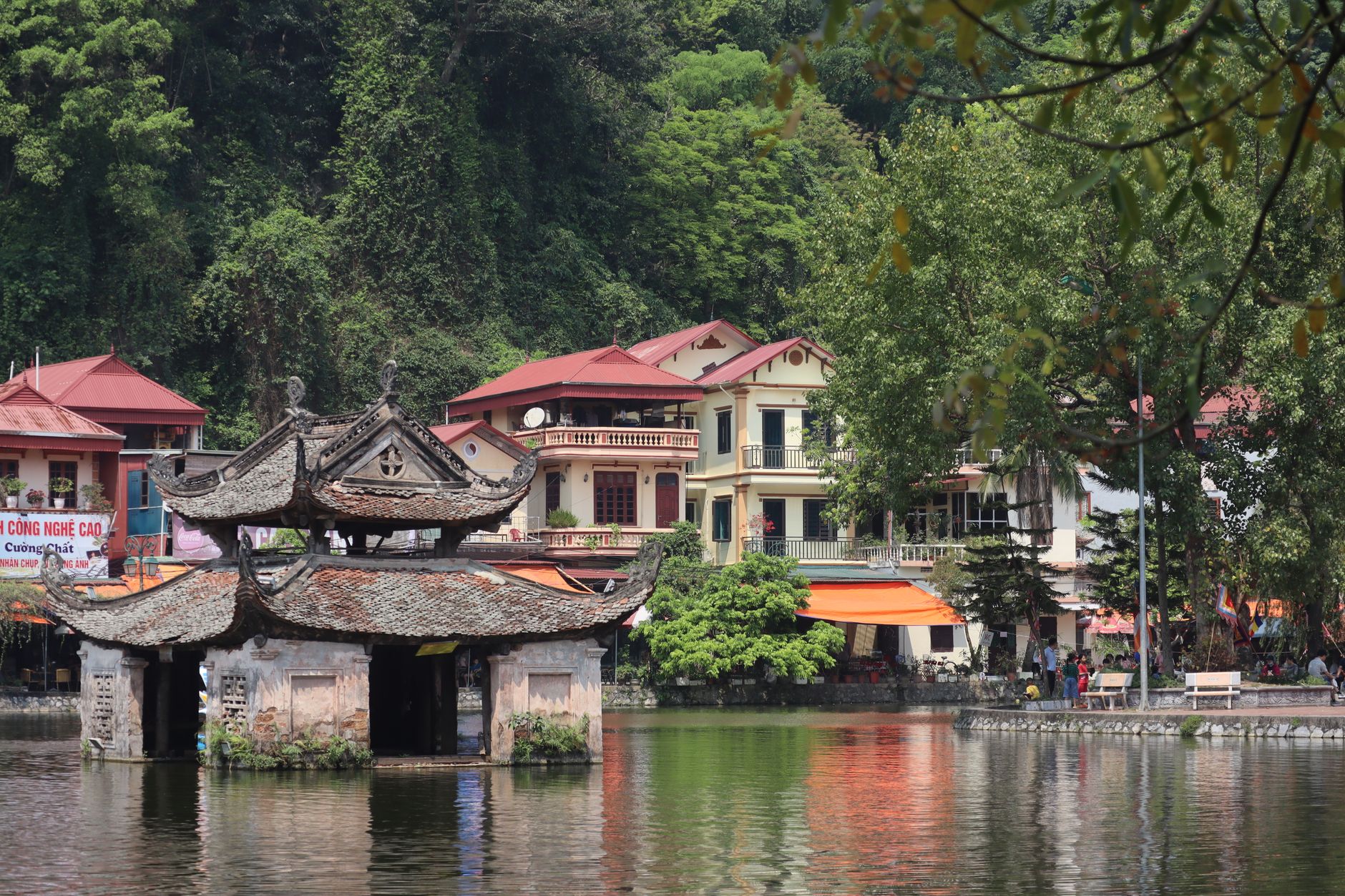
Photo by Karolina on Pexels
What to do
Climb the bell tower (Phuong Dinh)
The massive stone bell tower at the entrance predates the cathedral — it was built first, in 1875. Climb the narrow stairs to the top for a view over the lake, the cathedral complex, and the surrounding rice paddies. The bell inside weighs nearly 2,000 kg.
Walk the five chapels
Each of the smaller chapels uses a different primary material — stone, wood, or a combination — and each has a distinct character. The Stone Chapel (Nha Tho Da) is carved entirely from blocks of greenish-grey stone. The Wooden Chapel uses ironwood columns with carvings that could pass for temple decoration.
Examine the main cathedral interior
The nave uses 52 ironwood columns, each 11 meters tall, carved with Vietnamese floral patterns. The altar area mixes Catholic iconography with lacquer-and-gilt finishing techniques you'd normally see in a pagoda. Look up — the vaulted ceiling is wood, not stone, assembled without nails.
Circle the lake
The artificial lake in front of the complex has a small island with a statue. The lake was part of Father Sau's original design — both decorative and practical (drainage for the marshy ground). Early morning, locals fish here. It's a quiet spot to sit.
Visit during an active mass
Sunday morning mass (usually 5:00 and 9:00) lets you see the building doing what it was designed for. The congregation sings hymns in Vietnamese inside a space that acoustically functions like a wooden drum. Visitors are welcome; sit in the back, stay quiet, dress modestly.
Where to eat nearby
Kim Son district isn't a food destination, but two things are worth seeking:
"Com chay" (vegetarian rice sets) — Several small restaurants near the cathedral serve Buddhist-style vegetarian meals for 30,000-40,000 VND. Simple, filling, and common in this heavily Catholic-but-also-Buddhist area.
Goat meat ("thit de") — Ninh Binh province is famous for it. On the road back toward Ninh Binh city, look for restaurants advertising "de tai chanh" (goat with lime) or "de nuong" (grilled goat). A meal runs 150,000-250,000 VND per person with rice and sides. Pair it with a cold [bia hoi](/posts/bia-hoi-hanoi (하노이 / 河内 / ハノイ)-street-beer) if you're not riding back.
Where to stay
Most travelers base themselves in Ninh Binh city or Tam Coc village and visit Phat Diem as a half-day trip.
Budget (Tam Coc area): 200,000-400,000 VND/night — homestays and guesthouses along the main road. Basic but clean.
Mid-range (Ninh Binh city or Tam Coc): 600,000-1,200,000 VND/night — proper hotels with air-con, breakfast, and motorbike rental arranged at reception.
Upscale (Trang An area): 1,500,000-3,000,000 VND/night — a few boutique resorts have opened in recent years, set among the karst landscape.
There's no real reason to sleep in Kim Son unless you're attending Christmas celebrations.

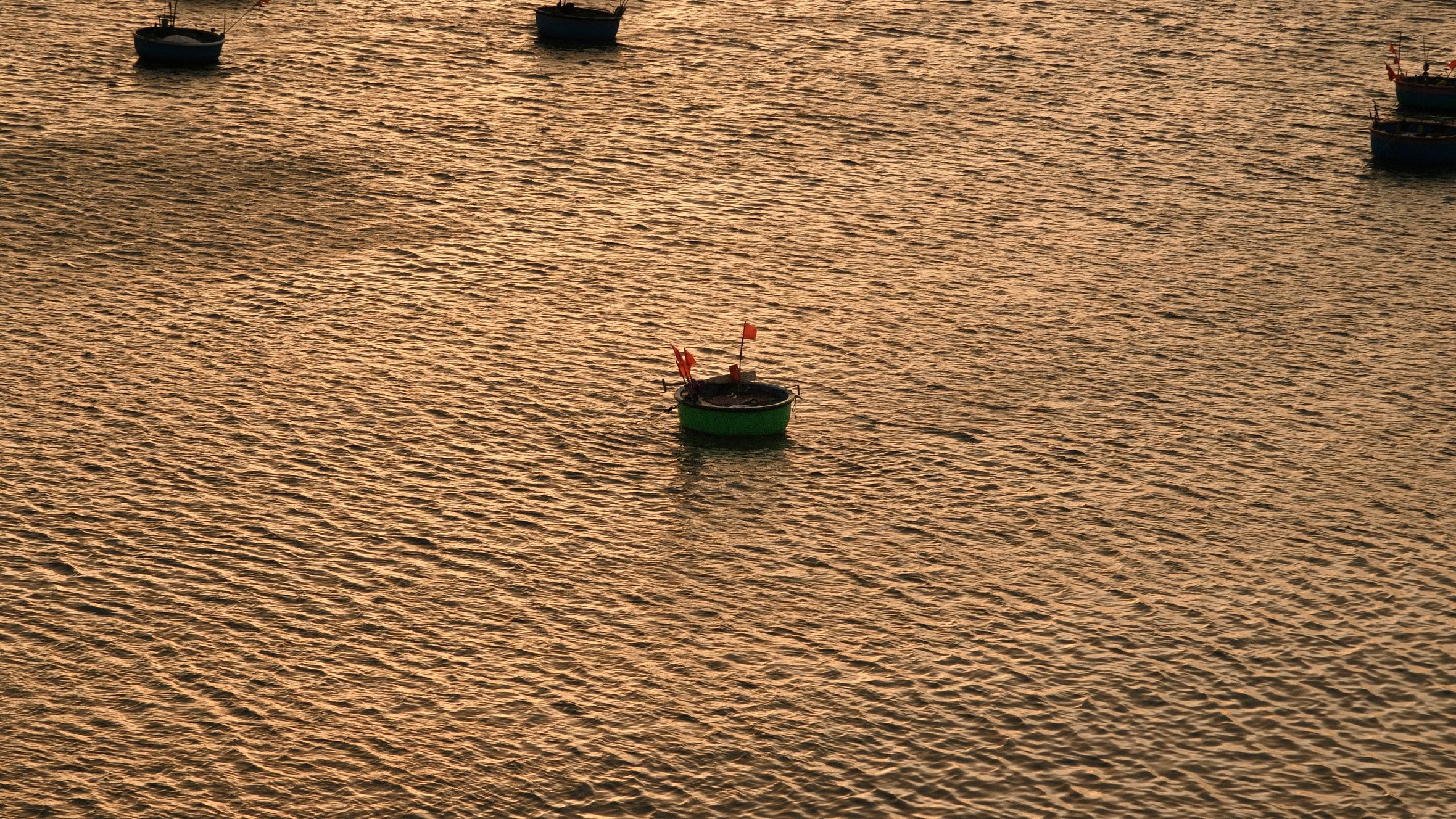
Photo by Lặng Lẽ Si Mê on Pexels
Practical tips locals would tell you
- Dress code matters. Shoulders and knees covered — this is an active parish, not a museum. Staff will turn you away in tank tops.
- Free entry. No ticket required, though there's a donation box near the main entrance.
- Bring your own water. The single shop outside sells warm drinks and instant coffee. Nothing else for 500 meters.
- The complex is best explored slowly. Budget 1.5-2 hours to walk everything without rushing.
- If you're combining this with Tam Coc or Hoa Lu, do Phat Diem in the morning and the boats in the afternoon — the cathedral complex has almost no shade.
Common mistakes to avoid
- Treating it as a 20-minute photo stop. The complex is large. People who rush through miss the chapels and the interior details.
- Skipping it because "I'm not religious." This is an architecture visit. You don't need to be Catholic to appreciate what Father Sau built with 19th-century technology.
- Coming by bus without a plan back. Return buses from Kim Son thin out after 4 PM. If you took public transport, confirm your return timing before exploring.
- Visiting only the front. Walk behind the main cathedral. The grottoes and rear gardens are where the crowds (such as they are) disappear entirely.
Practical notes
Phat Diem pairs naturally with a day exploring Ninh Binh's other sites — Tam Coc, Trang An, or Bai Dinh pagoda. Budget a half-day for the cathedral and the ride out. It's one of those places that rewards you for going slightly off the obvious tourist circuit.
Last updated · May 26, 2026 · independently researched, never sponsored.