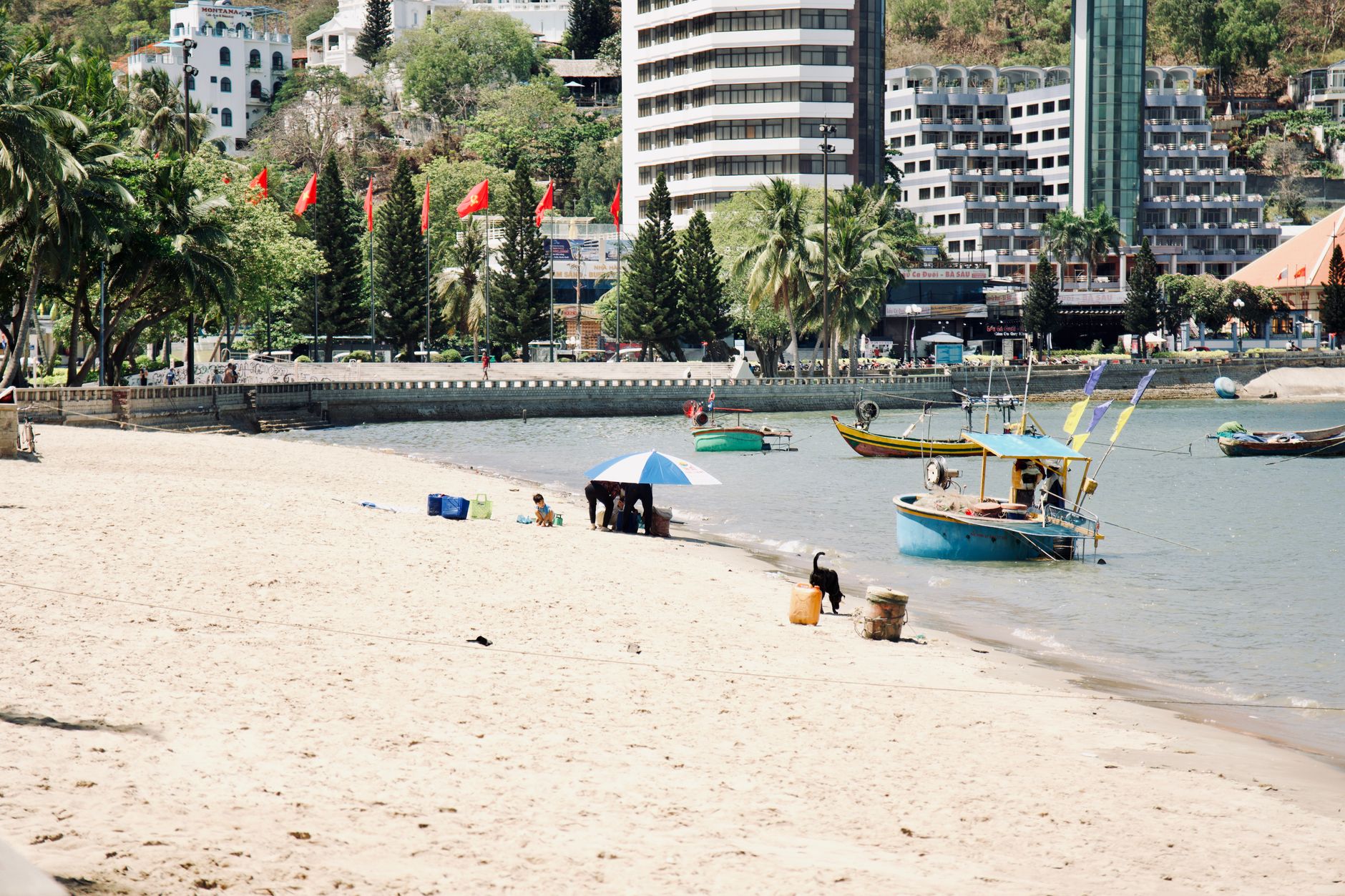
Vung Tau is two hours from Saigon by ferry and about forty years behind it in pace — which is exactly why the food here rewards anyone willing to wander off Tran Phu and follow their nose.
The Local-vs-Tourist Split You Need to Know
Front Beach (Bai Truoc) is where the seafood restaurants face the water and price menus accordingly. A platter of grilled clams here can run 250,000–350,000 VND, the service is aimed at Saigonese weekenders, and the fish is fine but rarely exceptional. That's not where this article is pointing you.
One block inland — along Hoang Hoa Tham and the perpendicular laneways off Le Loi — is where Vung Tau (붕따우 / 头顿 / ブンタウ) residents actually eat. Same catch, lower markup, plastic stools, overhead fans. The difference between eating on the waterfront esplanade and eating half a block back is roughly 40 percent off your bill and twice the flavor, because the kitchens are cooking for people who grew up here.
Banh Khot — Vung Tau's Real Claim to Fame
"Banh khot" — those small, round, turmeric-yellow rice flour cups filled with shrimp and topped with a scrape of coconut cream — are made across southern Vietnam (베트남 / 越南 / ベトナム), but Vung Tau does them differently. The batter here is thinner and crispier at the edge, almost lace-like, and the shrimp tend to be fresher because the boats are local.
The best stretch is Nguyen Truong To street, which locals call the "banh khot lane." A dozen or so family-run spots line both sides, open from around 3 PM until they sell out, usually by 8 PM. A portion of ten pieces runs 40,000–55,000 VND. You eat them wrapped in mustard leaf with mint, dipped in nuoc cham that's sharper and more citrus-forward than the Saigon version. Go early — by 7 PM the best spots have sold out their shrimp and are coasting on the smaller, less interesting frozen backup stock.
The Fish Market at Night
Co Giang market, near the southern end of Front Beach, does double duty. During the day it's a wet market selling produce and dried goods. After 5 PM, the seafood vendors take over the outer perimeter and things get more interesting. You'll find mud crabs priced by the kilo (around 180,000–250,000 VND/kg depending on size and season), live mantis shrimp, cockles, blood clams, and whatever the morning catch brought in.
The drill here is simple: pick your seafood at the stall, agree on weight and price before it goes to the scale, and tell them how you want it cooked — "nuong mo hanh" (grilled with scallion oil) or "hap sa" (steamed with lemongrass) are the most reliable preparations. They cook it on the spot on portable gas burners. Bring cash, bring patience, and don't expect menus.
For blood clams specifically — "so huyet" — Vung Tau is one of the better places in the south to eat them. They come flash-blanched so they're barely cooked, still slightly bloody inside, dressed with lime and chili. It's an acquired texture but the flavor is clean and briny in a way that the overcooked versions in Saigon markets never are.

Photo by Theodore Nguyen on Pexels
Where to Drink After
"Bia hoi" culture exists here but it's quieter than Hanoi's Old Quarter version. A few spots on Ly Thuong Kiet and around the roundabout near the post office pour draught beer from 10,000–15,000 VND a glass, and the clientele is mostly older local men who've been coming since the 1990s. You're welcome to pull up a stool. Nobody's going to hand you an English menu because there isn't one, but pointing at whatever the next table ordered has never failed.
If you want something less austere, the cafes on Quang Trung that run up toward Nui Nho (Small Mountain) do decent "ca phe sua da" and stay open late. The mountain views from the upper road at dusk are the kind of thing Vung Tau residents take completely for granted, which is a reliable sign you should pay attention.
A Few Dishes Worth Tracking Down
Beyond banh khot and grilled seafood, look for "banh canh Vung Tau" — a thick tapioca noodle soup with crab or fish cake that's specific enough to this area that you won't find a convincing version in Saigon. Several spots on Nam Ky Khoi Nghia open from 6 AM and do brisk business until around 10 AM, then again in the evening.
"Bun rieu" here also leans heavily on fresh crab rather than the tomato-forward paste version common further north — worth a try if you're around for breakfast.

Photo by Charles Chen on Pexels
Getting Oriented
Front Beach runs roughly north–south along Tran Phu. The banh khot lane (Nguyen Truong To) is about 600 meters northeast of the beach road. Co Giang market is at the southern end of Front Beach near the ferry pier area. None of this requires a motorbike — it's all walkable from the main hotel strip, though renting a xe om for 30,000–50,000 VND to cover the full circuit after dark is more comfortable in the heat.
Weekends get crowded with Saigon day-trippers and prices at the tourist-facing spots nudge up accordingly. If you're coming specifically to eat, Tuesday through Thursday is a noticeably quieter experience.
Practical Notes
Bring small bills — 10,000 and 20,000 VND notes — for market stalls and bia hoi. Most seafood vendors at Co Giang do not take cards. The banh khot lane spots are cash only and portions sell out fast, so aim to arrive by 5:30 PM if you want first pick.
Last updated · May 29, 2026 · independently researched, never sponsored.