什么是 Banh Xeo?
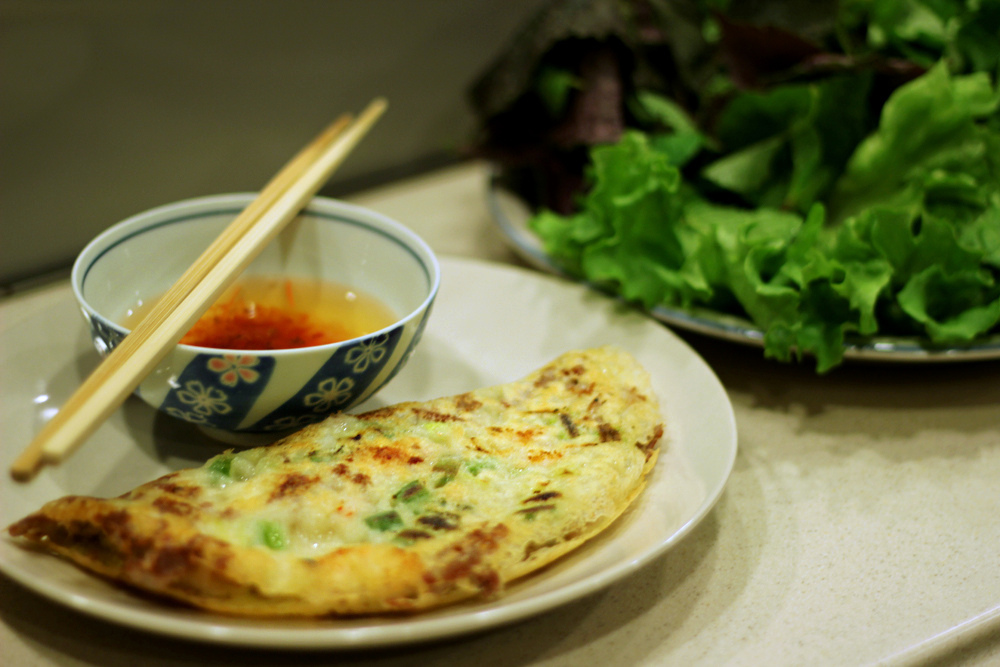
“Banh Xeo(반세오 / 越南煎饼 / バインセオ)”得名于米糊接触滚烫平底锅时发出的滋滋声——xeo。这是一种咸味的可丽饼,呈现姜黄色,里面塞满了虾、猪肉和豆芽,然后折成半月形,煎至边缘酥脆。你可以撕下一块,用生菜和香草包起来,然后蘸着鱼露吃。在整个越南,这种吃法都是一样的,但煎饼本身——面糊、馅料、酱汁、香草——则会因你所在的地区而大不相同。
越南中部:Hue 的 Banh Khoai 和 Phan Thiet 的茶杯煎饼
在 Hue,Banh Xeo 被称为“banh khoai”,里面配的是烤猪肉而不是水煮猪肉。它的标志性元素是“nuoc leo”,这是一种由发酵豆瓣酱、猪肝和花生碎制成的浓稠铁锈色蘸酱。它比你在南方吃到的酸甜鱼露更浓郁、更鲜美。香草拼盘里除了常见的生菜和薄荷,还有酸杨桃和未成熟的无花果。
banh khoai 这个名字很可能来源于 banh khoi——烟熏饼。当你把面糊倒入涂有油的热锅中时,会升起阵阵烟雾。在 Hue 的口音中,khoi 听起来像 khoai。要把它做得恰到好处——轻薄、酥脆、带有烟熏香气——需要不断地练习。
Phan Thiet 的做法则完全不同。这里的煎饼很小,大约只有茶杯那么大,而且不用生菜包着吃。相反,你会直接把它们扔进一碗“nuoc mam chin”中——这是一种混合了大蒜和辣椒的熟鱼露。Phan Thiet 的 Tuyen Quang 街上林立着卖这种煎饼的摊位,因此赢得了“Banh Xeo 街”的绰号。
越南南部:大块、酥脆、香草丰富
在湄公河三角洲(메콩 델타 / 湄公河三角洲 / メコンデルタ),Banh Xeo 更大、更脆,并配有极其丰富的香草拼盘。面糊中通常含有鸡蛋,蘸酱是酸甜鱼露——比 Hue 的 nuoc leo 更清淡、更清爽。香草的选择因省份而异。在 Can Tho,你会吃到“la chiet”(一种味道辛辣的叶子)。在 Dong Thap,有“la bang lang”。Vinh Long 提供嫩芒果叶。Bac Lieu 会加入“la cach”。其中一些香草甚至没有英文名字——你只管吃,自己去体会。
在 Saigon,像 Banh Xeo A Phu 和 Banh Xeo Dinh Cong Trang 这样的老字号已经供应相同的配方二十多年了。最近的一项创新是由手工艺人 Muoi Xiem 创造的“莲子 Banh Xeo”,它将莲子、莲茎和莲藕融入了馅料中。

图片由 CEphoto, Uwe Aranas 通过 Wikimedia Commons 提供 (CC BY-SA)
越南北部:豆薯和芋头
在北部,除了标准的虾和猪肉外,馅料通常还包括切成薄片的豆薯或芋头。这里的煎饼不如南方的酥脆——有时更接近柔软的可丽饼。
制作方法
传统的 Banh Xeo 首先要将大米浸泡至饱满,然后与新鲜姜黄(比姜黄粉更受欢迎,因为颜色和味道更好)一起研磨,再加水稀释面糊。有些厨师会加入椰奶,这会使煎饼呈现淡棕黄色,而不是明亮的姜黄色。将干椰奶(用温水挤压磨碎的干椰子肉制成)搅拌进去,面糊静置30分钟。就在烹饪之前,加入切碎的葱花。
现在市面上随处可见预拌好的 Banh Xeo 面粉——只需加水即可。
馅料:水煮五花肉,切成薄片,加少许盐烹制。虾,加盐和味精稍微煸炒。去皮绿豆,煮至变软。豆芽,焯水。在某些地区,馅料是生腌的,直接在煎饼里煮熟。
烹饪方法:在平底大锅中加热少量油。倒入一勺面糊,倾斜平底锅使其铺薄,盖上锅盖直到半熟。在中间加入馅料,再次盖上锅盖直到煎至酥脆。在 Hue,厨师们使用平底的小圆模具,而不是倾斜平底锅。

图片由 CEphoto, Uwe Aranas 通过 Wikimedia Commons 提供 (CC BY-SA)
香草拼盘与蘸酱
Banh Xeo 总是配有一盘新鲜的绿叶蔬菜:生菜、芥菜、鱼腥草(“rau ram”)、紫苏、罗勒,有时还有嫩“com nguyen”叶。蘸酱各不相同。在南方:鱼露、水、青柠汁(不用醋——青柠味道更好)、糖、少许味精、胡萝卜丝、辣椒碎。在 Hue:nuoc leo,用发酵豆瓣酱和猪肝制成,浓稠而鲜美。
韩国和日本也有自己的版本
韩国的煎饼被称为“jeon”(煎)。例如:“baechujeon”(白菜煎饼)、“dongnaepajeon”(东莱葱饼)、“buchujeon”(韭菜煎饼)。Buchujeon 通常搭配“makgeolli”(马格利酒),这是一种香甜的乳白色米酒,装在小茶壶或带有长柄勺的木碗中供应。韩国煎饼的面糊比越南的更稀。海鲜在加入白葡萄酒的水中焯烫,与5厘米长的葱段和韭菜混合,然后与由面粉、糖、大蒜、醋和盐制成的面糊混合。在煎炸之前,将打散的蛋液倒在馅料上。
日本的版本是“okonomiyaki”(御好烧)——这个名字的意思是“随心所欲地烤”。它是关西和广岛的特产,但你在全日本都能找到它。面糊由面粉、水和鸡蛋组成,混合了虾、猪肉、切成薄片的卷心菜、红姜和葱。预拌好的御好烧面粉通常包含调味料。两面煎炸(每面约5分钟)后,淋上御好烧酱和蛋黄酱,然后撒上木鱼花,木鱼花在热气中会卷曲舞动。
这三者——越南的 Banh Xeo、韩国的 jeon、日本的 okonomiyaki——都有着相同的基本理念:咸味煎饼、热锅、酥脆的边缘、丰富的配料。但细节——面糊、香草、酱汁、吃法——却截然不同。
最后更新 · May 26, 2026 · 独立调研,无任何赞助。