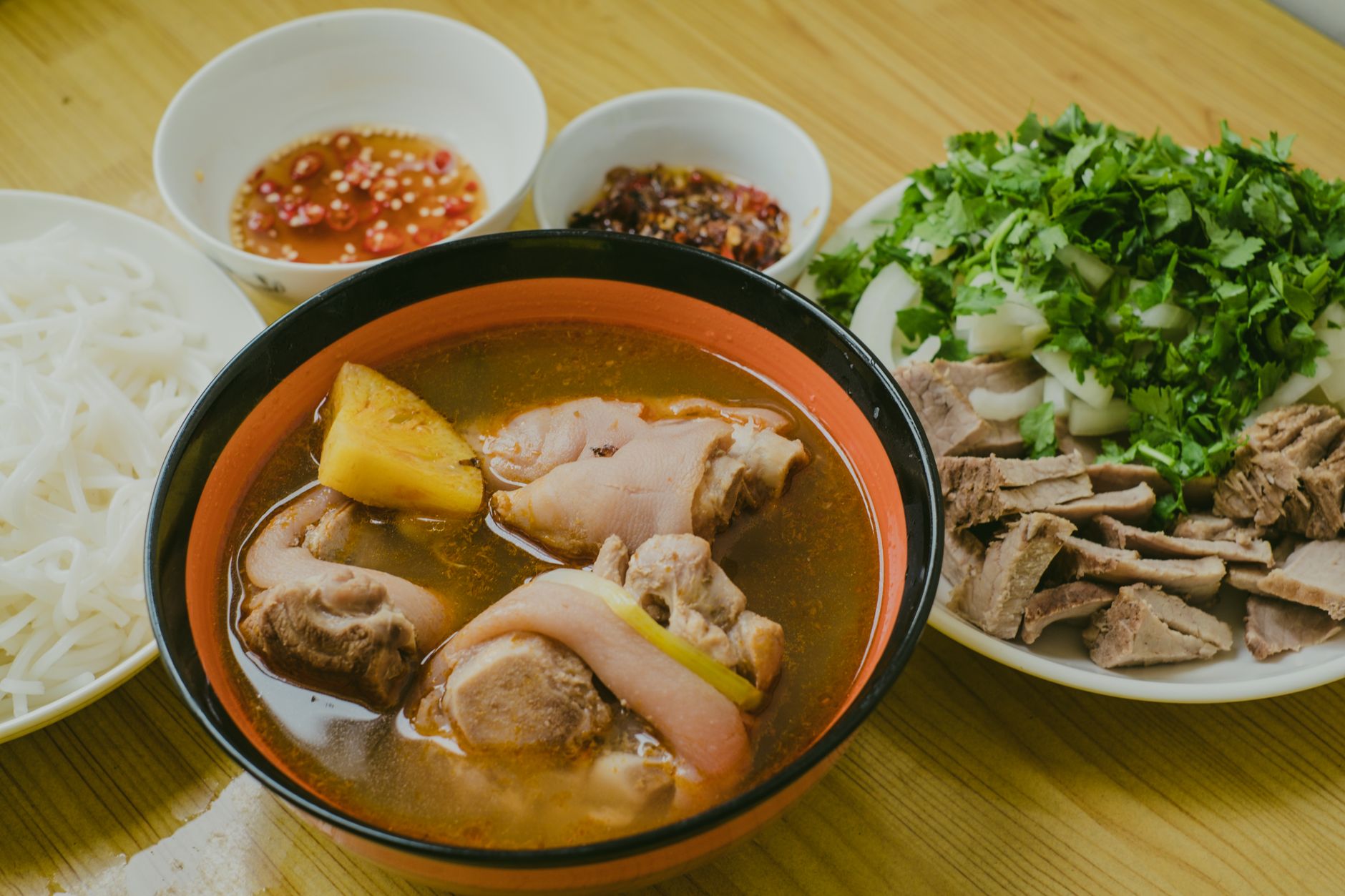
"Che Hue" 绝不同于你在 Vietnam (베트남 / 越南 / ベトナム) 其他地方可能找到的绿豆或芋头甜汤。它是一种咸甜口味的猪肉汤,冷热皆宜,里面点缀着内脏和香草,味道在全国独一无二。在 Hue,它可以是早餐、午餐,或是深夜的慰藉美食——而其风味的深度完全取决于汤底。
Che Hue 有何不同
Che Hue (후에 / 顺化 / フエ) 源自 Nguyen 王朝的宫廷厨房。它本质上是一种精致的“汤”(尽管“che”传统上指的是甜品,但这种咸味版本模糊了界限),由猪骨高汤与猪排骨、猪肝,有时还有猪心或猪舌一起熬制而成。真正的标志性特征是最后加入的香草——新鲜薄荷、香菜、葱花,以及一撮黑胡椒粉。有些版本会加入少许冰糖或鱼露来平衡咸甜味。它的味道充满皇家风范,因为它确实曾是宫廷御膳——这是一款有着高贵血统的慰藉美食。
为什么它在这里的味道与 Da Nang 或 Saigon 不同?Hue 的版本往往更甜,内脏较少(排骨肉更多,肝脏较少)。汤底通常也熬制得更久,因此口感更丝滑。当地人认为这是“正宗”的版本,因为这道菜就发源于这座城市。
去哪里吃 Che Hue(当地人常去的店)
1. Quan Che Hue(靠近 Dong Ba Market)
地址:87 Nguyen Trai,靠近 Dong Ba Market 北侧边缘。 价格:每碗 25,000–35,000 VND。 营业时间:6:30 AM–11 AM(仅限早餐)。
在这里,你会看到建筑工人、三轮车夫和退休老人在早上 7 点排起长队。汤底是绝对的主角——呈淡金色,不会太油腻,带有淡淡的八角香味。他们使用猪排骨和适量的猪肝;肉炖得非常软烂,用勺子就能切开。小碗足以垫肚子;大碗绝对能当一顿正餐。点一份“mot tho lon”(一大碗),然后在塑料凳上找个位置坐下。调料会装在小碟子里端上来:薄荷、香菜、辣椒片和一瓶鱼露。你可以根据自己的口味随意混合。
2. Che Hue Thom(Hung Vuong Street)
地址:32 Hung Vuong,靠近与 Tran Cao Van 的交叉路口。 价格:每碗 30,000–40,000 VND。 营业时间:6 AM–1 PM(下午早些时候关门)。
比 Quan Che Hue 稍微高档一点,有一个小店面,大概有六张桌子。老板提供牛肉或鸡肉汤底作为选择(虽然不是传统的,但很受游客欢迎)。建议坚持选择猪肉版本。这里的决定性特征是肉的质地——几乎像奶油一样绵密——因为它炖了几个小时。分量很足。这家店在早上 8–9 点和午餐时间(11 AM–12 PM)会很忙。清晨时分比较安静。
3. Che Hue Ba Xuyen(Tran Hung Dao Street)
地址:78 Tran Hung Dao,在主街旁的一条狭窄小巷里。 价格:每碗 28,000–38,000 VND。 营业时间:6:30 AM–10 AM,然后 4 PM–7 PM。
这位摊主经营着一个由手推车改造而成的店面。这里的汤底是你所能找到的最深、最浓郁的——几乎呈深金色——一些当地人说这就是“老派”的 Hue 做法。肉的分量较小,但味道非常浓缩。如果你想品尝宫廷厨房的传承,这里是个好去处;它重在鲜味,而非分量。老板 Ba Xuyen 本人通常会亲自为你盛汤,如果你愿意尝试,她还会向你推销加了额外猪肝的“特别版”。她经营这家店已经 25 年了。
4. Che Hue Nam(靠近 Trang Tien Bridge)
地址:2 Ngo Tat To,在距离 Trang Tien Bridge 不远的一家街角小店里。 价格:每碗 32,000–42,000 VND。 营业时间:6:30 AM–9:30 AM(早餐);5 PM–8 PM(晚餐)。
这里的营业时间分为两段:早餐人群和晚餐人群(当地人把它当作睡前的清淡夜宵)。下午的休息时间很长——他们从 10 AM 到 4 PM 关门。这里的汤底很平衡:不会太甜,也不会太咸,表面有一层可见的油脂(这是好高汤的标志)。分量里包含可见的肉块,这吸引了那些想要吃点实实在在东西的人。环境很简陋:凳子、不锈钢柜台和一台小电视。建议在 6:30 AM 或 5 PM 来,以避免空腹等待。
照片由 Pexels 上的 Vietnam Tri Duong Photographer 拍摄
如何点餐
指着锅说“mot tho”(一碗)或“hai tho”(两碗)。具体说明大小:“nho”(小)、“vua”(中,标准)或“lon”(大)。如果你对肉有具体要求,可以说“thi nhieu”(多肉)或“gan nhieu”(多肝)。这里没有菜单;吃完后付款。通常点餐只需要 1–2 分钟;他们会将热汤舀入碗中,然后从柜台后面的锅里加入提前煮好的肉。
调料是自助的:根据自己的喜好拿取香草和辣椒。这种汤本来就是让你边吃边调味的,所以别害羞。
什么时候去
早餐(6:30–9 AM):这是最繁忙、最地道的时间。汤底最新鲜,你将和当地人肩并肩地坐在一起吃。大多数摊位在 10 AM 之前就会关门或准备打烊。
午餐后期(11 AM–12 PM):少数几家店还在营业。人比较少,但汤底可能已经熬了较长时间。
晚餐(5–7 PM):只有第 4 家店和少数其他店提供晚餐服务。不太常见,但从小吃着这种慰藉美食长大的当地人会在晚上吃它。
避开中午(1–4 PM)。摊位都关门了,而且天气太热,也不适合喝热汤。
照片由 Pexels 上的 Vietnam Tri Duong Photographer 拍摄
搭配什么吃
Che Hue 本身已经足够浓郁,可以直接单吃。如果你想来点小配菜,可以从附近的烘焙店买一个“Banh Mi”,或者从市场的摊贩那里买一个糯米糕(“[banh chung](/posts/banh-chung-tet (뗏 (베트남 설날) / 越南春节 / テト (ベトナム旧正月))-sticky-rice-cake)”)。饭后喝咖啡很常见;当地人通常会在吃完 che 之后喝一小杯越南咖啡。
实用提示
空腹来吃——一大碗的分量很足。带上现金(大多数摊位不接受刷卡)。汤是趁热端上来的,所以喝第一口之前先吹一吹。如果你在夏天游览 Hue,清晨是唯一适合喝热汤的理智时间;在 6:30 AM 感觉很惬意;到了 11 AM,这就会变成一次大汗淋漓的体验。
最后更新 · May 29, 2026 · 独立调研,无任何赞助。