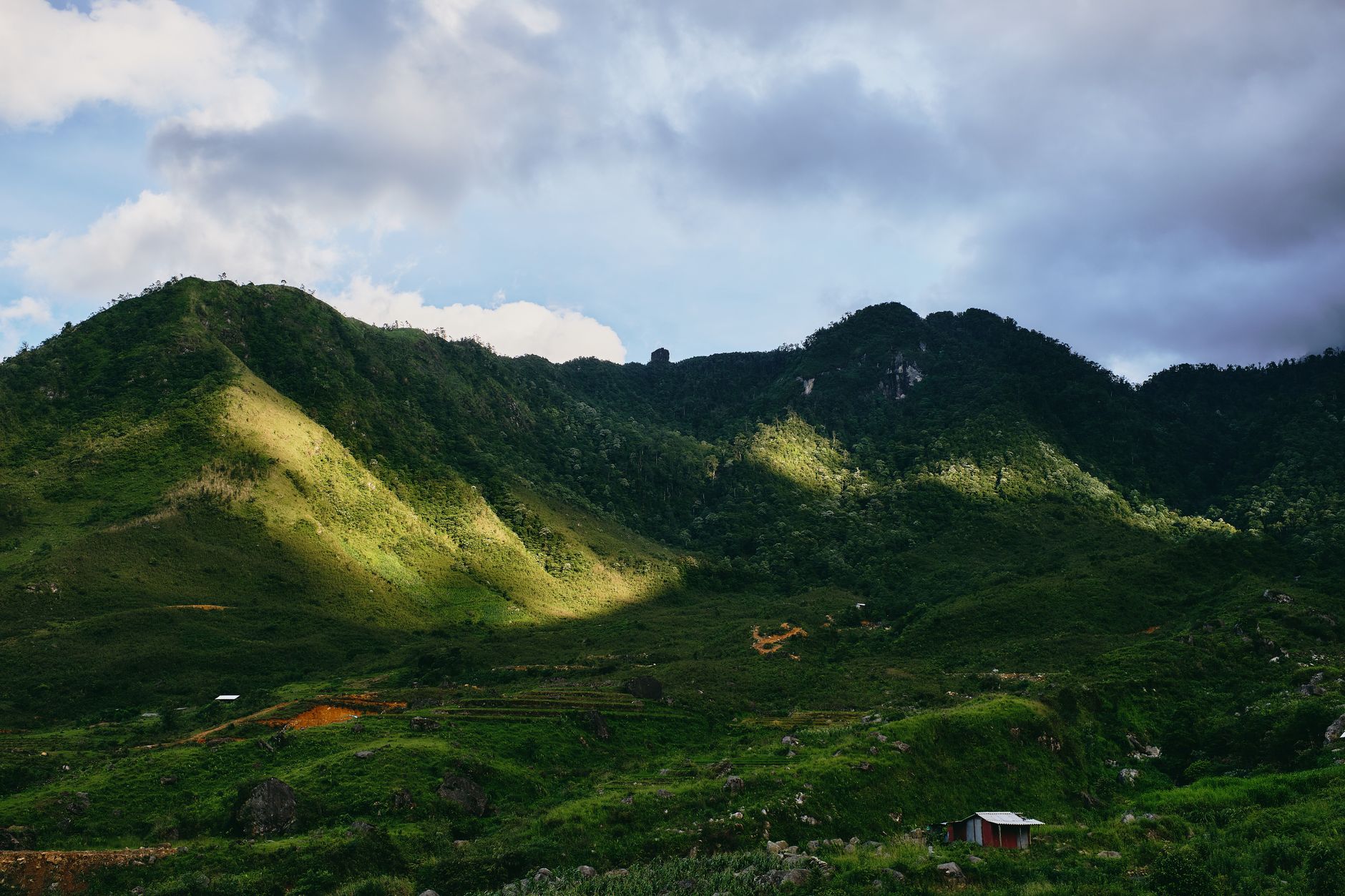
A Pa Chai is the westernmost geographic point of Vietnam (베트남 / 越南 / ベトナム), sitting at 1,864 metres above sea level in Muong Nhe district, Dien Bien province. If you're the kind of traveler who collects extreme points on maps, this is one of the four cardinal markers — and the hardest to reach.
What it is and why people go
The marker at A Pa Chai (also written "A Pa Chai") sits on a ridge where three countries share a border. A concrete GPS pillar — coordinates 22°23'53"N, 102°8'52"E — marks the spot. There's a small monument, a Vietnamese flag, and a clearing with views over layered green ridges stretching into Laos and China.
Most visitors come for the bragging rights and the road. The journey through Muong Nhe is the real draw: terraced rice fields cut into steep slopes, H'mong and Ha Nhi villages strung along dirt tracks, and some of the emptiest mountain roads in northern Vietnam. The marker itself takes about five minutes to look at. The ride takes two days.
This is not a destination for casual tourists. It's remote, the infrastructure is thin, and the scenery — while genuinely impressive — demands effort. People who enjoy Ha Giang's Dong Van plateau or the back roads around Sapa will understand the appeal.
Best time to visit
September to November is ideal. The rains taper off by mid-September, the terraced rice turns gold before harvest, and the air is clear enough for long views from the monument. Temperatures at altitude sit around 15-22°C during the day.
March to May also works — drier roads, warmer days — but the landscape is brown and less photogenic before the rice gets planted.
Avoid June to August. The roads to A Pa Chai are partially unpaved, and heavy rain turns sections into mud. Landslides can block the route for days. December to February brings fog and cold (below 5°C at night), which limits visibility and makes camping miserable.
How to get there
The nearest city with regular transport links is Dien Bien Phu, roughly 200 km southeast of A Pa Chai.
Dien Bien Phu to Muong Nhe
Take a local bus from Dien Bien Phu bus station to Muong Nhe town. Buses depart in the morning (usually 5:30-6:00 AM), cost around 120,000-150,000 VND, and take 5-6 hours on winding mountain roads. The road is paved but narrow.
Muong Nhe to A Pa Chai
From Muong Nhe town, A Pa Chai is another 30 km west. There's no public transport on this stretch. Options:
- Hire a local motorbike driver in Muong Nhe — around 300,000-500,000 VND round trip. This is the most common method.
- Ride your own motorbike if you're experienced with mountain roads. The final 10 km is rough dirt track; a semi-automatic (Honda XR150 or similar) handles it better than a scooter.
- Arrange a xe om through your guesthouse in Muong Nhe. Most places know drivers who do the route regularly.
The full journey from Dien Bien Phu takes a minimum of one very long day, but two days is more realistic and far less exhausting.
Getting to Dien Bien Phu
Flights from Hanoi to Dien Bien Phu run daily on Vietnam Airlines and Bamboo Airways (around 800,000-1,500,000 VND one way). Alternatively, overnight buses from Hanoi's My Dinh station take 10-12 hours and cost 280,000-350,000 VND.

Photo by Sk4ter bol on Pexels
What to do
1. The marker itself
The GPS pillar and monument sit on a cleared hilltop. You sign a logbook, take photos with the concrete post, and look out over three countries. It's a short stop but oddly satisfying if you've spent two days getting here.
2. Walk through Ha Nhi and H'mong villages
The villages along the Muong Nhe–A Pa Chai road are among the most traditional in the northwest. The Ha Nhi communities near Sin Thau wear distinctive black indigo-dyed clothing. Don't barge into homes — ask your driver to help with introductions if you want to visit. A small gift of fruit or snacks from Muong Nhe market goes further than money.
3. Ride the border road
The stretch from Muong Nhe to A Pa Chai follows a ridge with drops into deep valleys on both sides. Even if the destination marker doesn't thrill you, this road will. It's one of the most isolated rideable routes in Vietnam.
4. Visit Muong Nhe Nature Reserve
The reserve covers over 45,000 hectares of subtropical forest surrounding the area. If you have an extra day, hire a local guide in Muong Nhe to trek into the lower valleys. Birdwatching is surprisingly good — the reserve is home to several species you won't spot elsewhere in northern Vietnam.
5. Dien Bien Phu stopover
On your way in or out, Dien Bien Phu itself is worth half a day. The former battlefield site and museum document the 1954 battle in detail — a significant piece of Vietnamese history regardless of your perspective.
Where to eat
Don't expect restaurants near A Pa Chai. Muong Nhe town has a handful of "com binh dan" (everyday rice shops) along the main road serving rice plates with stir-fried pork, greens, and broth for 30,000-40,000 VND.
Look for "thang co" — a hearty offal and bone soup that's a staple of highland markets in the northwest. It's an acquired taste (the smell is strong), but it's the real local dish here. In Dien Bien Phu, try grilled stream fish ("ca suoi nuong") at the evening food stalls near the market — around 80,000-120,000 VND per fish.
Where to stay
In Muong Nhe, basic guesthouses ("nha nghi") run 150,000-250,000 VND per night. Expect a hard bed, a fan, and a squat toilet. Hot water is not guaranteed. There's no booking platform — just show up or have your bus driver call ahead.
In Dien Bien Phu, options range from budget guesthouses (200,000-350,000 VND) to mid-range hotels like Him Lam Resort (600,000-900,000 VND) with proper amenities.
There's no accommodation at A Pa Chai itself.

Photo by Flavio Vallone on Pexels
Practical tips locals would tell you
- Carry cash. There are no ATMs past Dien Bien Phu. Muong Nhe has no banks.
- Fuel up in Muong Nhe. The last petrol station is in town. Running dry on the road to A Pa Chai means a long push.
- Bring layers. Even in October, mornings at altitude are cold. A rain jacket doubles as a windbreaker on the ridge.
- Charge everything in Dien Bien Phu. Power in Muong Nhe guesthouses can be unreliable, and there's nothing at the marker.
- A border permit may be required. The area near A Pa Chai is a border zone. Check with your guesthouse in Muong Nhe or the local police station — requirements change. Carrying your passport is non-negotiable.
Common mistakes
- Trying to do it as a day trip from Dien Bien Phu. The 400 km round trip on mountain roads will wreck you. Plan for at least one night in Muong Nhe.
- Riding a Honda Wave scooter on the final dirt section. It's doable in dry season if you're skilled, but a flat tire or a slide in loose gravel leaves you stranded with no phone signal.
- Expecting a dramatic landmark. The monument is a concrete pillar on a hill. If you need a payoff beyond the journey itself, you'll be disappointed.
- Skipping Dien Bien Phu entirely. The city has decent food, comfortable beds, and historical weight. Use it as a proper base, not just a transit point.
Practical notes
A Pa Chai rewards a specific kind of traveler — one who finds satisfaction in remote roads and quiet border ridges rather than polished attractions. Budget around 2-3 days from Dien Bien Phu, carry more cash than you think you need, and treat the journey as the point. The marker is just where you turn around.
Last updated · Jul 10, 2026 · independently researched, never sponsored.