Nghia Trang Liet Si A1 — A1 Martyrs' Cemetery — sits on the slope of A1 Hill in Dien Bien city, about 600 meters from the old French command bunker. It's one of the most visited historical sites in the northwest, and even if military history isn't your thing, the quiet weight of the place tends to leave an impression.
What it is
A1 Cemetery is a war cemetery holding the graves of Vietnamese soldiers who died during the Battle of Dien Bien Phu in 1954. The site contains over 600 individual graves arranged in concentric rows across a terraced hillside, along with a large central monument. Many headstones are marked "Liet Si Vo Danh" — unknown martyrs — because identification wasn't possible after the battle.
The cemetery was built in 1958 and has been expanded and renovated several times since. It's maintained by the local government and is always open. There's no entrance fee.
Why travelers go
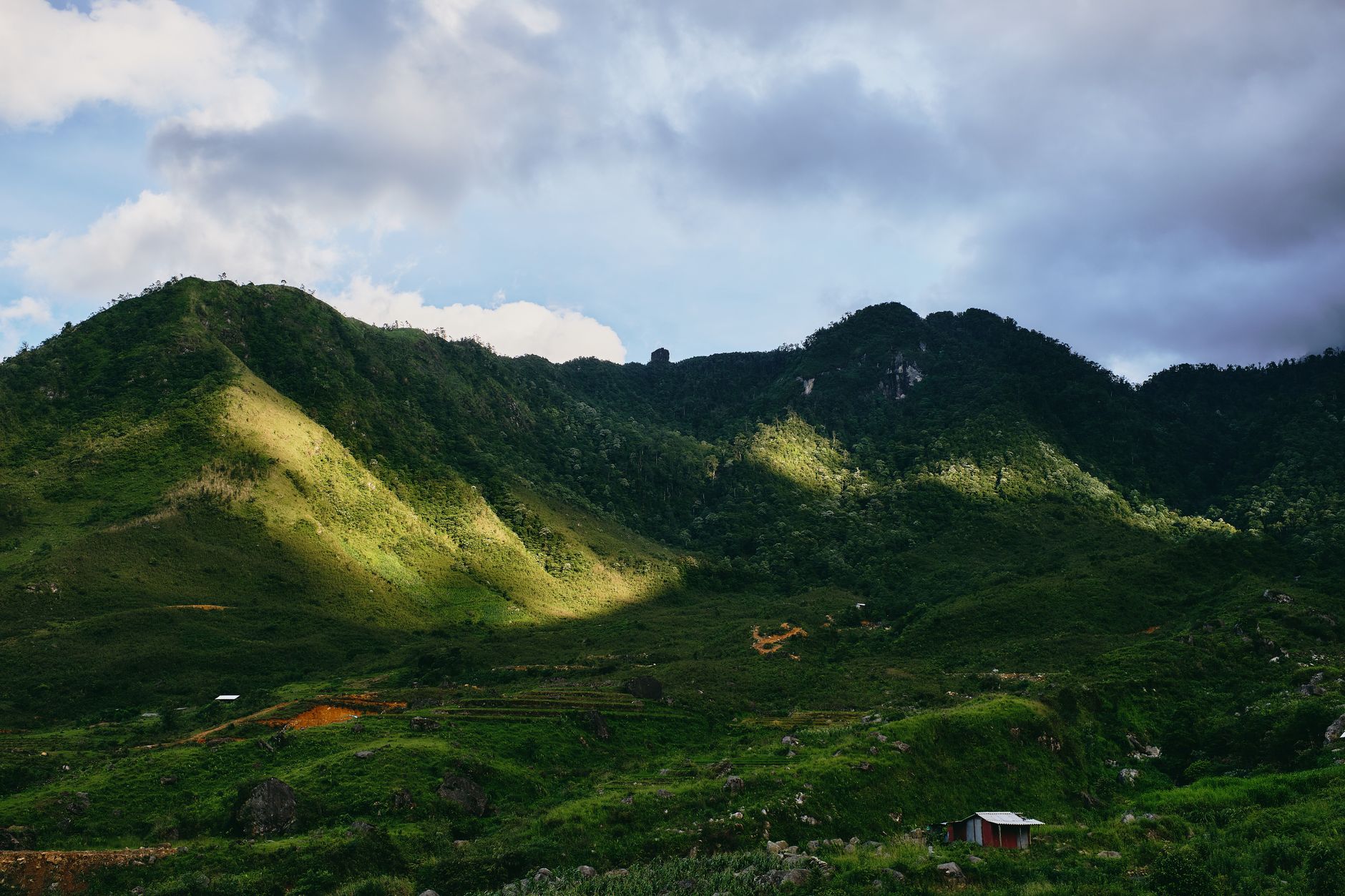
Dien Bien draws visitors who want to understand a turning point in 20th-century Southeast Asian history. A1 Cemetery is the emotional anchor of that visit. It's not a museum with exhibits or multimedia — it's rows of white headstones on a green hillside with the mountains behind them. Domestic Vietnamese visitors come here in large numbers, especially around anniversaries. Foreign travelers are less common but welcome, and the atmosphere is respectful without being restrictive.
Combined with A1 Hill (the actual battlefield, directly adjacent) and the Dien Bien Phu Museum about 1.5 km away, the cemetery forms part of a half-day circuit that covers the key historical sites in the valley.
Best time to visit
The most comfortable months are October through March, when temperatures in the valley sit around 15–25°C and humidity drops. Mornings are often cool and slightly misty, which gives the cemetery a particular atmosphere.
Avoid the anniversary week around May 7 unless you specifically want to see the commemorations — the town fills up, hotel prices spike, and the cemetery gets crowded with official delegations. The rainy season (May–September) brings afternoon downpours and muddy paths on A1 Hill next door, though the cemetery itself is paved.
How to get there
Dien Bien is remote. That's part of its character.
From Hanoi by bus
Sleeper buses run daily from My Dinh bus station, taking 9–11 hours via Son La on Highway 6 and QL279. Tickets cost 250,000–350,000 VND one way. Hai Van and Hung Thanh are the main operators. The road is mountain driving — winding, slow, scenic if you're awake for it.
From Hanoi by air
Vietnam (베트남 / 越南 / ベトナム) Airlines and VASCO operate flights from Noi Bai to Dien Bien Phu Airport (1 hour). Prices vary wildly — 800,000 to 2,500,000 VND depending on how far ahead you book. The airport is only 2 km from the cemetery; a taxi into town costs around 40,000 VND.
Getting around Dien Bien
The historical sites are spread across the valley floor within a 3 km radius. Rent a motorbike from your hotel (100,000–150,000 VND/day) or hire a "xe om" (motorbike taxi) for short hops at 15,000–20,000 VND per trip. A1 Cemetery is on Vo Nguyen Giap Street, well-signposted.

Photo by Du Tử Mộng on Pexels
What to do
Walk the cemetery grounds
Give yourself at least 30–40 minutes. Start at the main gate, walk up the central staircase to the monument, then loop through the rows of graves. Read the names and dates on the headstones that have them — some soldiers were teenagers. The landscaping is simple: frangipani trees, trimmed hedges, red earth between the rows.
Climb A1 Hill
The entrance to A1 Hill is directly adjacent to the cemetery's east side. This was the single most contested position in the entire battle — the hilltop changed hands several times over 36 days. Today you can see trenches, a reconstructed bunker, and the massive crater left by a tunnel mine detonated on May 6, 1954. The hill takes about 20 minutes to walk. Entry is 20,000 VND.
Visit the Dien Bien Phu Museum
About 1.5 km southwest on Highway 279, the museum has maps, photographs, weapons, and a large diorama of the valley during the battle. Captions are in Vietnamese and English. Budget an hour. Entry is 20,000 VND.
See the De Castries Bunker
The reconstructed command bunker of the French garrison commander is 800 meters from the cemetery, near the city center. It's small — you'll spend 10 minutes — but it contextualizes the geography when you realize how close the positions were to each other.
Drive to Muong Phang
If you have a half-day extra, ride 30 km east to Muong Phang, where the Vietnamese command headquarters were hidden in the forest. The jungle has partly reclaimed the site, and the drive through upland villages is worth the trip on its own.
Where to eat nearby
Dien Bien city isn't a food destination, but the local specialties are worth seeking out. Look for "pho" served Dien Bien-style — the broth here uses black cardamom and has a smokier flavor than what you'll find in Hanoi. Stalls along Hoang Cong Chat Street serve bowls for 25,000–35,000 VND.
The other dish to try is "com lam" — sticky rice cooked inside bamboo tubes over charcoal, usually served with grilled pork or dried buffalo meat. Market stalls near Dien Bien Phu Market sell portions for 15,000–30,000 VND. It's a Thai ethnic-minority staple that you won't easily find elsewhere.
Where to stay
Dien Bien has a limited hotel scene. Options:
- Budget guesthouses (nha nghi) along Highway 279: 150,000–250,000 VND/night. Basic rooms, hot water, Wi-Fi. Clean enough.
- Mid-range hotels like Him Lam Resort or Muong Thanh Dien Bien Phu: 400,000–800,000 VND/night. Air conditioning, breakfast included, decent beds.
- Homestays in nearby Thai villages (Ban Mong, Ban Co): 200,000–350,000 VND/night including dinner. A good option if you want to spend time in the valley beyond the historical sites.
Book ahead if visiting in late April or early May — rooms sell out for the anniversary.

Photo by Quang Nguyen Vinh on Pexels
Practical tips locals would tell you
- Dress modestly. The cemetery is a place of mourning. Shorts and tank tops aren't forbidden, but long pants and covered shoulders show respect and match what Vietnamese visitors wear.
- Bring incense if you want. Small bundles are sold at shops near the gate for a few thousand dong. Lighting incense at the main monument is common and welcomed.
- Mornings are best. The cemetery faces east and gets direct sun by mid-morning. Visit before 8 AM or after 3 PM to avoid the heat, especially March through May.
- Combine sites in one loop. Cemetery → A1 Hill → De Castries Bunker → Museum is a logical half-day route, all within 2 km of each other.
Common mistakes to avoid
- Rushing through. Some visitors treat the cemetery as a photo stop between A1 Hill and the museum. Give it real time. The scale only registers when you walk the rows.
- Skipping Muong Phang. Most travelers stick to the valley floor. The command headquarters at Muong Phang adds depth and gets you into the surrounding countryside.
- Not bringing cash. Dien Bien city has ATMs, but they're unreliable on weekends. Bring enough VND from Hanoi (하노이 / 河内 / ハノイ) or Son La to cover your stay.
- Expecting English signage everywhere. The museum has English captions; the cemetery and hill have minimal English. Download a translation app or read up before you go.
Practical notes
A1 Cemetery is free to enter and open daily from roughly 6 AM to 6 PM, though there are no gates — you can walk in anytime. The site is wheelchair-accessible on the main paths but not on the upper terraces. Allow a full day in Dien Bien to see the cemetery, A1 Hill, the museum, and the bunker without rushing.
Last updated · Sep 17, 2026 · independently researched, never sponsored.