What is Ban Sin Suoi Ho?
Ban Sin Suoi Ho is a Black Hmong village sitting at roughly 1,500 meters above sea level in Tam Duong District, Lai Chau Province. About 130 households live here, spread across a valley where orchids grow on nearly every fence post and doorframe. The village made a deliberate turn toward sustainable tourism in the early 2010s, when community leaders decided to ban alcohol, opium cultivation, and deforestation — a set of rules the residents still enforce. That decision reshaped the place. Where other highland villages in the northwest struggle with poverty and substance abuse, Sin Suoi Ho became a functioning example of community-based tourism, earning national recognition from Vietnam (베트남 / 越南 / ベトナム)'s Ministry of Culture.
The name loosely translates to "gold stream" in Hmong, a reference to the small creek running through the settlement. It's not a resort or an eco-lodge — it's a working village that happens to welcome overnight guests.
Why travelers go
Sin Suoi Ho draws a specific kind of visitor: people who've already done Sapa and want something quieter, less commercialized, and harder to reach. The village has none of Sapa's hotel towers or weekend crowds. What it has instead is a tight-knit Hmong community that still weaves its own indigo cloth, grows its own food, and tends thousands of orchid plants — not for export, but because it's become a point of local pride.
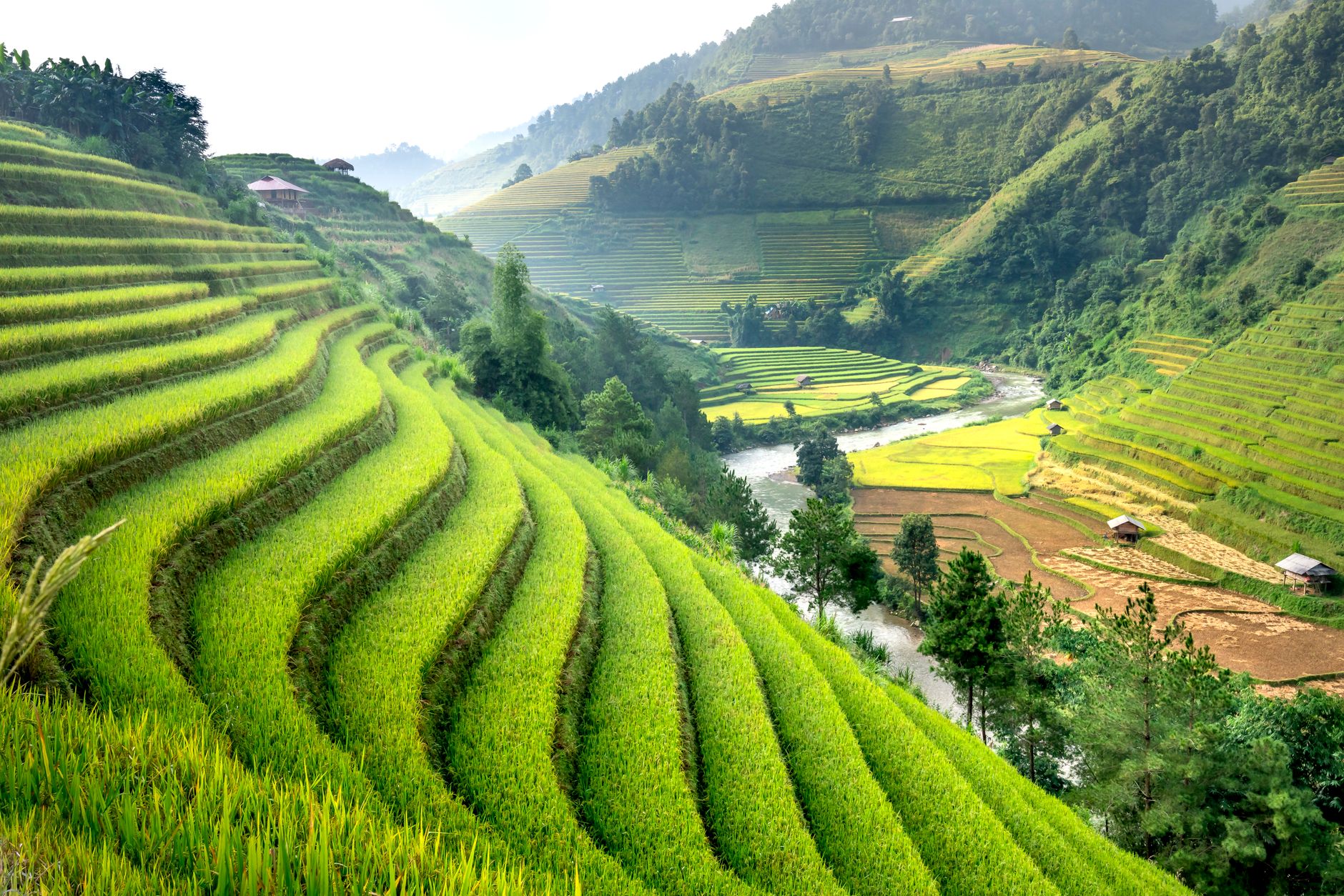
The mountain scenery helps. On clear mornings, the valley fills with cloud layers that sit below the village, and you're looking down at them from your homestay porch. But the real draw is the pace: slow, unhurried, and genuinely rural in a way that's getting harder to find in northern Vietnam's more popular trekking destinations.
Best time to visit
The orchid season runs from December through March, peaking in January and February. This is when the village looks its best — thousands of orchids bloom along walkways, fences, and front yards. The annual orchid festival usually falls in January, drawing Hmong communities from surrounding valleys.
Weather-wise, December to February is cold — expect 5-12°C at night, sometimes dipping near freezing. Bring layers. March through May warms up and stays relatively dry. June to September is monsoon season: the roads get slippery and fog can close in for days. October and November are pleasant but the orchids haven't bloomed yet.
If you only care about weather, go in March or April. If you want the orchids and the festival energy, aim for January.
How to get there
The nearest major hub is Lai Chau city, about 30 km southeast of the village.
From Hanoi to Lai Chau: Overnight sleeper buses run from My Dinh Bus Station. The ride takes 9-10 hours and costs around 350,000-450,000 VND. Several operators run this route nightly; Hung Thanh and Ha Son are common names on the tickets. You arrive in Lai Chau city early morning.
From Lai Chau city to Sin Suoi Ho: The village is about 30 km via a mountain road through Tam Duong town. You can hire a motorbike taxi ("xe om") for 150,000-200,000 VND one way, or rent your own motorbike in Lai Chau city for about 150,000 VND/day. The road is paved most of the way but the final stretch into the village is steep and narrow — manageable on a semi-automatic bike, but not ideal in rain.
From Sapa (사파 / 沙坝 / サパ): If you're coming from Sapa, the road via Tam Duong takes roughly 3-4 hours by motorbike (about 110 km). The route passes through some of the best mountain road scenery in the northwest, with fewer trucks than the highway to Ha Giang.

Photo by HONG SON on Pexels
What to do
Walk the orchid trail
The village maintains a walking loop that passes through orchid gardens, forest patches, and viewpoints over the valley. It takes about 1.5 hours at a slow pace. The orchid collection is genuinely impressive — several hundred varieties, all cultivated by village households. A local guide can walk you through and explain which species are native versus collected from surrounding forests. No entry fee, though a small donation (20,000-50,000 VND) to the community fund is appreciated.
Visit the indigo dyeing workshops
Several households in the village still process indigo from raw leaves — crushing, fermenting, and dyeing hemp cloth by hand. You can watch the process and buy finished textiles. A hand-stitched indigo scarf runs about 150,000-300,000 VND. This is real craft production, not factory goods labeled as handmade.
Hike to the waterfall
A trail from the village leads to a waterfall about 3 km into the forest. The path is clear but uneven — wear proper shoes. The waterfall is modest in dry season but worth the walk for the forest itself: dense, mossy, and noticeably cooler than the village. Ask your homestay host for directions or to arrange a guide (50,000-100,000 VND).
Attend a Hmong cooking session
Some homestays offer cooking sessions where you help prepare Hmong dishes — typically "thang co" (a sour, herb-heavy organ meat stew that's the signature dish of the northern highlands) and steamed rice in bamboo tubes. These aren't formal classes with printed menus; it's more like helping your host cook dinner. Expect to pay 100,000-150,000 VND per person if arranged in advance.
Catch the Sunday morning market at Tam Duong
If your visit falls on a Sunday, the weekly market in Tam Duong town (about 10 km from the village) is worth the early start. Hmong, Dao, and Thai communities from surrounding valleys come to trade livestock, vegetables, and textiles. It winds down by 10 AM, so leave by 6:30.
Where to eat
Most meals happen at your homestay, and honestly the homestay cooking is the best food you'll get here. Expect simple, hearty Hmong meals: sticky rice, stir-fried greens, grilled pork, and "thang co" if you're lucky. Dinner and breakfast at a homestay typically costs 100,000-150,000 VND per meal.
In Tam Duong town, look for "pho" stalls near the market — the local version uses river fish broth, a regional variation you won't find in Hanoi. A bowl runs 30,000-40,000 VND.
Where to stay
The village has around 10-15 registered homestays. These are wooden Hmong houses with shared sleeping areas on raised platforms, mattresses, and blankets. Expect basic conditions: squat toilets, cold or lukewarm water, limited electricity. A night's stay including dinner and breakfast costs 200,000-350,000 VND per person.
There's no hotel in the village. If you need more comfort, book a guesthouse in Tam Duong town (300,000-500,000 VND/night) and visit Sin Suoi Ho as a day trip, though you'll miss the evening atmosphere.

Photo by Travelwithme on Pexels
Practical tips locals would tell you
- Bring cash. There are no ATMs in the village and no card payment. The nearest ATM is in Tam Duong or Lai Chau city.
- Pack warm layers. Even in spring, nights above 1,500 meters get cold. Homestay blankets are thick but the houses are drafty.
- Learn three Hmong phrases. "Nyob zoo" (hello), "ua tsaug" (thank you), and "noj mov" (eat rice / let's eat). Your hosts will light up.
- Don't fly a drone without asking the village head first. Some households are uncomfortable with cameras pointed at their homes.
- Carry a headlamp. The village has electricity but it cuts out, and the paths between homestays are unlit at night.
Common mistakes to avoid
Don't show up without booking a homestay in advance — especially during orchid festival season in January. The village is small and fills up fast. Ask your accommodation in Lai Chau city or Sapa to call ahead for you.
Don't treat the village like a photo set. People live here. Ask before photographing someone's home or children. The community's alcohol ban is real and enforced — don't bring beer or liquor into the village.
Don't attempt the road from Lai Chau on a motorbike at night. The final section has no guardrails and limited visibility. Plan to arrive before dark.
Practical notes
Sin Suoi Ho works best as a two-night stop on a longer northwest loop — combine it with Lai Chau city, Tam Duong, and the road toward Sapa or Mu Cang Chai. Mobile signal (Viettel) is patchy but present in the village center. The community tourism board can arrange English-speaking guides with a few days' notice — ask when you book your homestay.
Last updated · May 29, 2026 · independently researched, never sponsored.