
What is "lon cap nach" anyway?
"Lon cap nach" — literally "pig intestine mixed hotpot" — is a northern Vietnam (베트남 / 越南 / ベトナム) offal dish that straddles the line between soup and stew. It's pork liver, kidneys, intestines, and tripe simmered in a broth that's often dark and mineral-tasting, served bubbling in a clay pot over a tabletop burner. You cook the meat as it cooks, tear it with chopsticks, and dip it in shrimp paste or lime.
In Sapa, it's rougher and more robust than what you'll find in Hanoi or Ha Giang. The broth is heavier; the organ meat less fussed-over. If you're squeamish about offal, this isn't your dish. If you're not, it's worth hunting down.
Why Sapa's version tastes different
Sapa (사파 / 沙坝 / サパ) sits at 1,600 meters elevation in the mountains. Locals here raise smaller pigs, and the meat is leaner, denser. The water is colder; cook times are longer. The broth tends to concentrate more intensely — you taste the liver and bone marrow more directly than in lowland versions. There's less sugar, less coaxing. It's functional food, eaten for warmth and protein, not refinement.
Like much mountain cuisine in northern Vietnam, it's built on what survives the cold and what doesn't spoil quickly.
Where locals actually eat it
Nhà hàng A Phu (Market area)
A Phu sits just below Sapa Central Market, on the small lane where vegetable sellers set up at dawn. The storefront is unmarked except for a hand-painted sign; the dining room is four plastic tables and a gas burner shared between two. A Phu himself — a man in his sixties who wears a blue apron — does the cooking.
His "lon cap nach" arrives in a clay pot, broth already simmering. The offal is pre-blanched but still has texture; the liver is soft but not mushy. One pot costs 85,000 VND and feeds two people easily. Open 6 a.m.–11 a.m., closed by noon. Go early; he sells out.
Com tam Sapa (Fansipan Street)
Despite the name, this isn't just broken-rice place. The owner, Mrs. Huong, cooks "lon cap nach" most mornings for construction workers and hotel staff. The broth here is peppery — she uses white pepper heavily and sometimes adds lemongrass. One pot, 80,000 VND. The shop opens at 5:30 a.m. and closes around 10:30 a.m. Tell her you want "lon cap nach" the day before if you're coming in an organized group; she'll prepare extra.
The room is loud, cramped, and smells intensely of intestines. That's how you know it's right.
Quán Tiem (Stone Church area)
This is a family-run lunch spot that opens at 11 a.m. and serves until stock runs out (usually 1:30 p.m.). They make "lon cap nach" only on Friday, Saturday, and Sunday — it's not a daily dish here. One pot costs 90,000 VND and includes more kidney than most places, which some prefer, others find too strong.
The setting is nicer than the other two — wooden tables, cloth napkins — but it's still a local spot. You won't find it on Google Maps or TripAdvisor. Ask your hotel; they know it.
Xe Co market stalls (early morning only)
If you're staying in Sapa for more than two days, wake up at 5:30 a.m. and walk to Xe Co market on the edge of town. Two or three vendors set up mobile carts with clay pots of "lon cap nach" that they've been simmering since 4 a.m. It's the cheapest option — 60,000–70,000 VND per pot — and the most local. You'll eat standing or perched on a plastic stool while farmers and hotel staff stand around you.
No menu, no choice. You point, they ladle. This is where Sapa mountain guides eat breakfast.
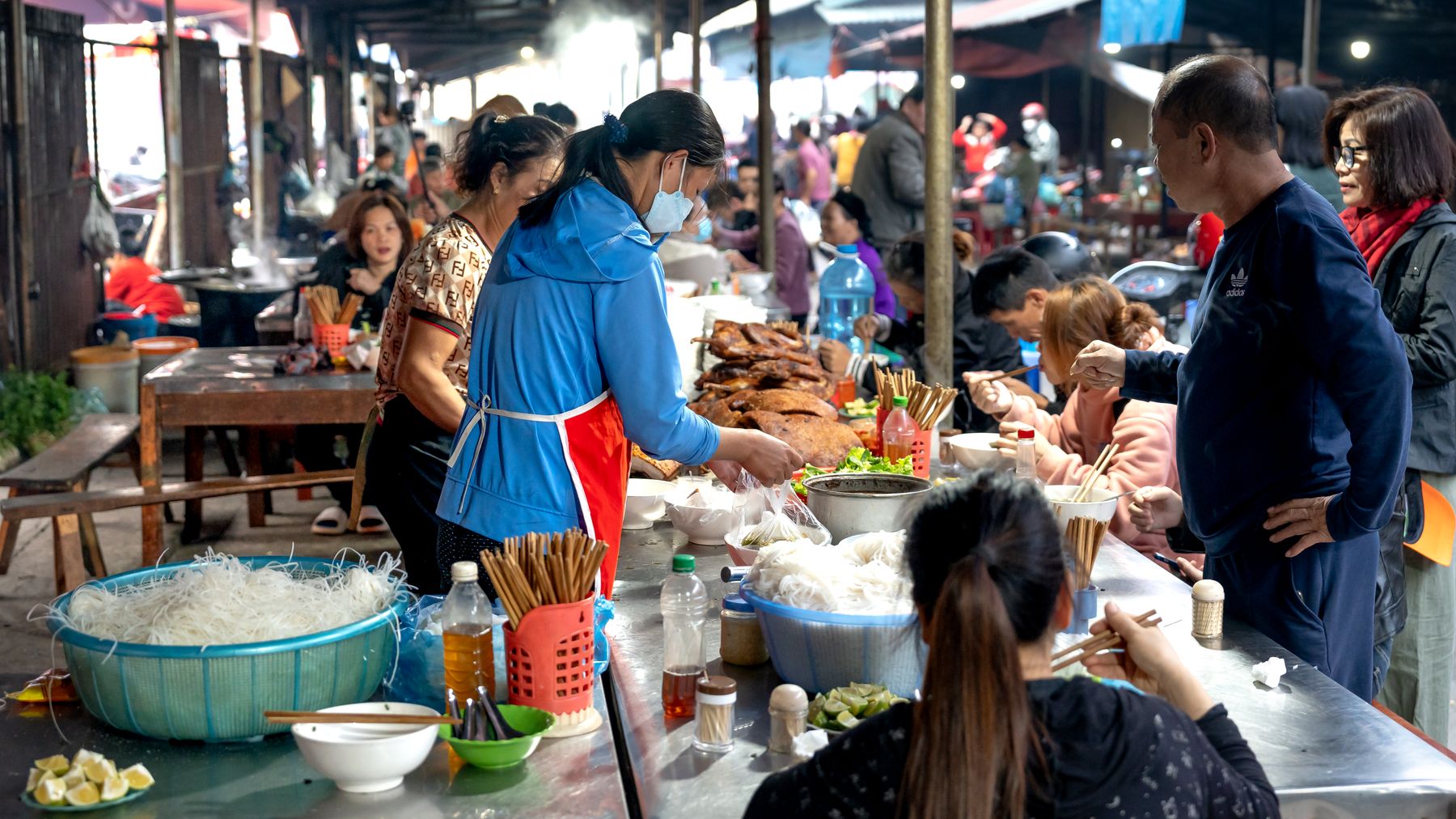
Photo by Quang Nguyen Vinh on Pexels
How to order (if you don't speak Vietnamese)
Point to the pot and say "lon cap nach," then hold up fingers for how many pots (mot = 1, hai = 2). They'll ask "co cai goi?" (do you want the pickled mustard greens on the side?) — nod yes. You'll get a small plate of "cai chua" (pickled vegetables), a saucer of salt mixed with lime, and sometimes "mam tom" (shrimp paste). Tear the offal with chopsticks, dip it in whatever sauce appeals to you, eat.
If you're worried about the organ meat, you can ask for "nhung lon cap nach khong can gan" (lon cap nach without liver), but that defeats half the point. The liver is the best part.
When to go
Breakfast (5:30–7:30 a.m.): The Xe Co market stalls are open. Broth is hottest, meat is freshest, and the energy is peak-local.
Morning (8–11 a.m.): A Phu and Com tam Sapa are open and not yet sold out. If you're not an early riser, this is your window.
Lunch (11:30 a.m.–1:30 p.m.): Only Quán Tiem reliably serves, and only on weekends. Evenings: "lon cap nach" is almost never served at dinner in Sapa. It's a breakfast and early-lunch dish.

Photo by Sea Man on Pexels
Cost
Expect 60,000–90,000 VND (USD 2.50–3.80) per pot. One pot easily feeds two people if you're sharing, three if you're light eaters. No tourist markup; these are working-person prices.
A note on cleanliness
All of these spots are clean by local standards but raw by Western health-code standards. The water is cold mountain water; utensils are hand-washed. If you have a sensitive stomach or have never eaten street food in Vietnam, start with a smaller portion or eat alongside someone local.
Practical notes
"Lon cap nach" is a seasonal and time-bound dish in Sapa — you're chasing it on the locals' schedule, not your own. Bring cash (none of these places take cards). If you arrive in Sapa for only a day or two, prioritize the Xe Co market stalls at dawn; it's the truest version of how the dish fits into mountain life.
Last updated · May 26, 2026 · independently researched, never sponsored.



