Hanoi people are particular about their "pho bo". Clear, golden bone broth. Wide, silky rice noodles. A few slices of beef, some scallion, and a single small plate of chili and lime on the side. No bean sprouts, no hoisin sauce, no negotiation. The version you get in the south is a different dish. What follows is a street-level guide to the bowls worth eating in the city — and one or two worth skipping.
What Makes Hanoi Pho Different
The broth in a good Hanoi (하노이 / 河内 / ハノイ) pho bo is clear, not cloudy. It takes hours of slow-simmering beef bones with charred ginger and onion, with spices kept subtle — star anise and cinnamon in the background, not the foreground. The fat floats in small, distinct droplets rather than a slick. The noodles are wider and softer than the southern style. Beef is typically either "chin" (well-done brisket), "tai" (rare slices laid across the top), or a combination. You do not add anything to the broth at the table. You adjust with a little chili, maybe a squeeze of lime. That's it.
The Old Quarter debates — Bat Dan vs. Ly Quoc Su vs. Thin vs. a dozen smaller shops on side streets — are genuinely contested among people who eat pho (쌀국수 / 越南河粉 / フォー) three times a week. There is no single correct answer. But some bowls are clearly better than others.
Pho Bo Bat Dan — 49 Bat Dan, Hoan Kiem
This is the one that comes up first in every conversation for a reason. The broth is clean and precise, the brisket is sliced thin and falls apart correctly. Queues start forming before 6am. You will stand at a metal counter, and the woman at the front will not acknowledge you until she is ready. There is no menu. You say "chin" or "tai" or "chin tai", you pay around 70,000–80,000 VND, and you sit where there is space.
The bowl itself is not dramatically large, but it is balanced in a way that takes decades to calibrate. Opening hours are roughly 6am–10am and 6pm–9pm, but sell-out before close is common. Come before 8am if you want a seat without stress.
Skip note: The evening session is good but noticeably different — some regulars say the morning broth has more depth. Don't treat the evening visit as equivalent.
Pho Thin — 13 Lo Duc, Hai Ba Trung
Pho Thin has a loyal following and the broth is solid, but what actually distinguishes it is the beef: the rare slices are stir-fried briefly in a hot pan before going into the bowl, giving the meat a lightly caramelized edge you don't get elsewhere. It sounds like a gimmick but it works. The fat is rendered properly and the noodles hold their texture longer than most.
Prices run 60,000–75,000 VND. Opens around 6am, closed by 10am typically. The shop on Lo Duc is the original — avoid the franchise spin-offs that have opened around the city using the same name. They are not the same.

Photo by Nguyễn Hưng on Pexels
Pho Gia Truyen — 49 Bat Dan (Second Counter)
This is sometimes listed separately from Bat Dan proper and sometimes lumped in with it. The address overlaps and the confusion is real. What you need to know: this stall operates out of the same building cluster and draws a slightly different crowd — more locals from the Ba Dinh and Dong Da districts who walk over early. The broth leans slightly sweeter, which some people prefer. Price is comparable: 70,000 VND for a standard bowl.
Pho Ly Quoc Su — 10 Ly Quoc Su, Hoan Kiem
Ly Quoc Su is calmer than Bat Dan, which makes it a reasonable option if you want to eat before 9am without standing in a crowd. The broth is well-made, the service moves efficiently, and the brisket-to-noodle ratio is generous. It won't win an argument against Bat Dan among hardcore pho people, but it's the honest choice when you want a dependable bowl without the theatre.
Open from around 6am to 2pm. Expect to pay 65,000–80,000 VND depending on the cut.
Pho Suong — 24b Trung Yen Lane, Hoan Kiem
Trung Yen is a narrow lane off Dinh Liet, and Pho Suong sits inside it in the way that only long-standing Hanoi food shops do — no sign you'd notice from the street, plastic stools, strip lighting. The broth here has more depth of spice than some of the Old Quarter shops, and the portions are larger. It draws a mixed crowd of office workers and older Hoan Kiem residents.
This is probably the most approachable shop on this list for first-timers — the staff are used to people arriving confused. Open from 6am, closes around noon. Price: 60,000–70,000 VND.
Skip this: Pho Suong has nothing to do with a similarly named shop that has appeared in the Tay Ho area. Different ownership, notably different quality.
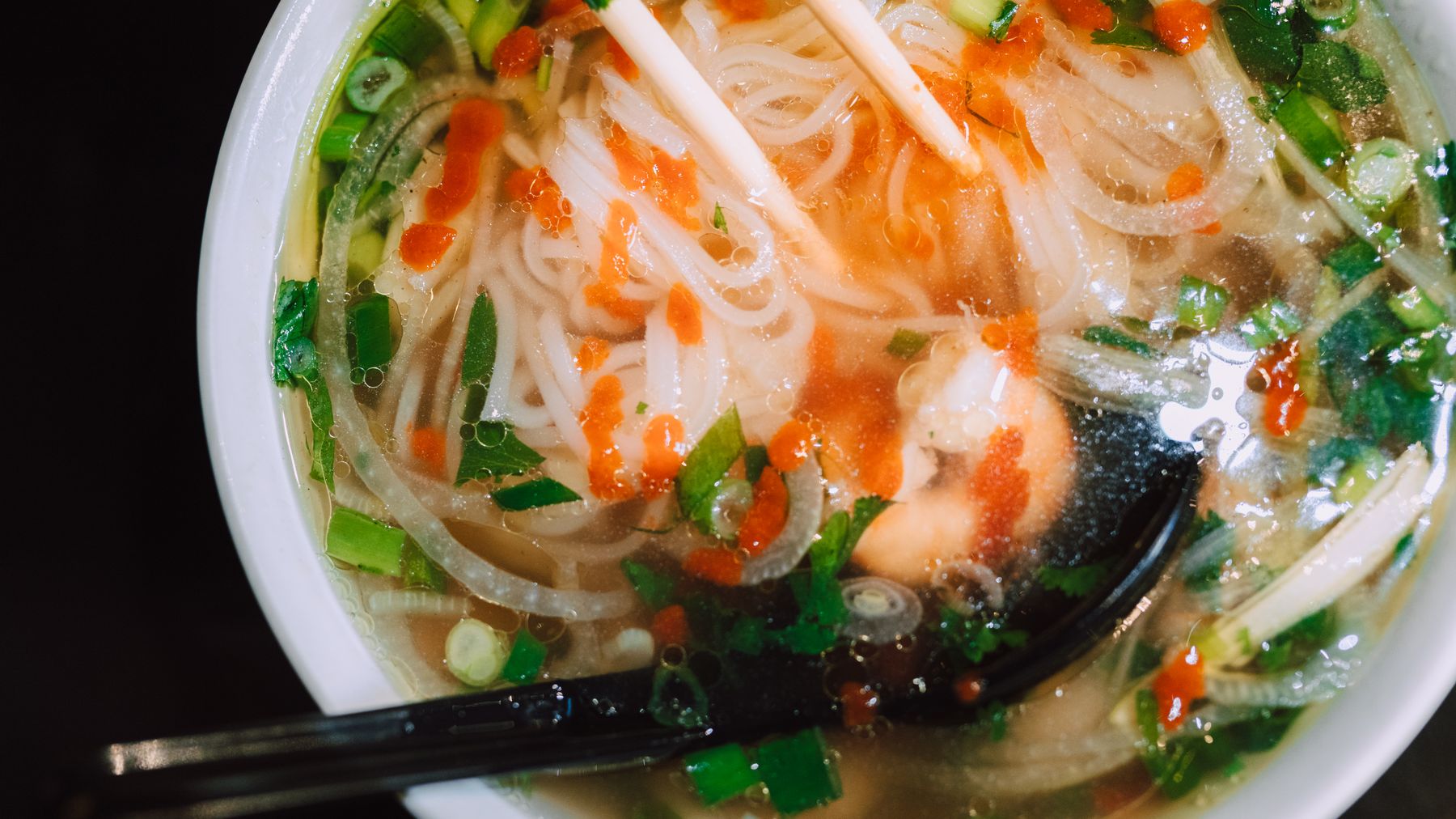
Photo by RDNE Stock project on Pexels
Pho 10 Ly Quoc Su vs. Tourist-Adjacent Shops on Ma May
If you are staying in the Old Quarter and wander onto Ma May looking for pho, you will find it. You will also pay 100,000–140,000 VND for a bowl that is technically acceptable and strategically positioned for foot traffic. The broth will be fine. There is nothing wrong with eating there if you are tired. But you're paying for convenience and a translated menu, not for a better bowl.
A Note on Ordering
Hanoi pho shops expect you to know what you want. "Pho bo" is beef pho. "Chin" is brisket. "Tai" is rare beef. "Nam" is flank. "Gan" is tendon. "Sach" is tripe. Most shops do a combination bowl — "dac biet" — which gets you a mix. The chili and lime on the side are there to use, but go carefully. A good bowl of pho bo doesn't need much help.
Practical Notes
Most of these shops open at 6am and run dry by mid-morning — pho in Hanoi is a breakfast and early-lunch food, not a dinner dish (though Bat Dan does an evening service). Budget 60,000–80,000 VND per bowl at any shop on this list. Grab-bike access is easy for all locations, and parking on a motorbike is straightforward outside rush hour.
Last updated · Sep 8, 2026 · independently researched, never sponsored.