Strong, sweet, and poured over enough ice to survive a Saigon afternoon, "ca phe sua da" is the drink that keeps Vietnam (베트남 / 越南 / ベトナム) moving. It's not complicated, but there's more to it than meets the eye.
The Coffee Itself: Robusta Rules Here
Most cafes across Vietnam — from street-side plastic stools to mid-range sit-down spots — brew with robusta beans. Vietnam is the world's second-largest coffee producer, and robusta dominates domestic production, grown primarily in the Central Highlands (중부 고원 / 中部高原 / 中部高原) around Buon Ma Thuot.
Robusta has roughly twice the caffeine of arabica and a heavier, more bitter flavor profile — earthy, sometimes chocolatey, occasionally with a slight rubbery edge that sounds unappealing but reads as depth once you're used to it. It's why Vietnamese coffee hits so differently from a Western latte. The condensed milk isn't just sweetener; it's structural. Without enough fat and sugar to balance the robusta's bitterness, the drink falls apart.
Some specialty cafes now offer arabica-based ca phe sua da, particularly in Da Lat (where arabica grows at altitude) and in third-wave spots in Hanoi and Saigon. It's lighter, more acidic, and honestly less interesting in this format. Robusta is the correct choice here.
The Phin Filter
Ca phe sua da is almost always brewed with a "phin", a small stainless-steel drip filter that sits directly on top of the glass. There's no paper filter, no pressure — just hot water slowly percolating through coarsely ground coffee at its own pace. A full brew takes four to six minutes.
The phin has four parts: the chamber (where grounds go), a perforated press plate that sits on top of the grounds, a lid, and a base plate that lets it balance on the glass rim. Grounds go in first, then the press plate, then a small amount of hot water to bloom for thirty seconds, then the rest of the water. Leave it alone. Don't press down harder or rush it — the weight of the press plate is calibrated.
At street stalls, the vendor does all of this for you. At many cafes, the phin arrives at your table still dripping. Either way, the condensed milk is already pooled at the bottom of the glass before the coffee hits it. You stir, pour over ice, and drink.
The Condensed Milk Ratio
The standard ratio at most local spots is roughly one to two tablespoons of sweetened condensed milk per glass. Ong Tho (the blue-and-white tin) is the dominant brand and has been for decades — it's what most places use.
If you want it less sweet, ask for "it duong" (less sweet). If you want it stronger on coffee, you won't get more robusta — the phin is pre-loaded — but you can ask for less condensed milk. Some places let you adjust; most street stalls work from a set recipe and it's not worth complicating things.
Full sweetness, as served by default, is genuinely sweet. That's not a flaw. After an hour on a motorbike in 35-degree heat, you'll understand why.

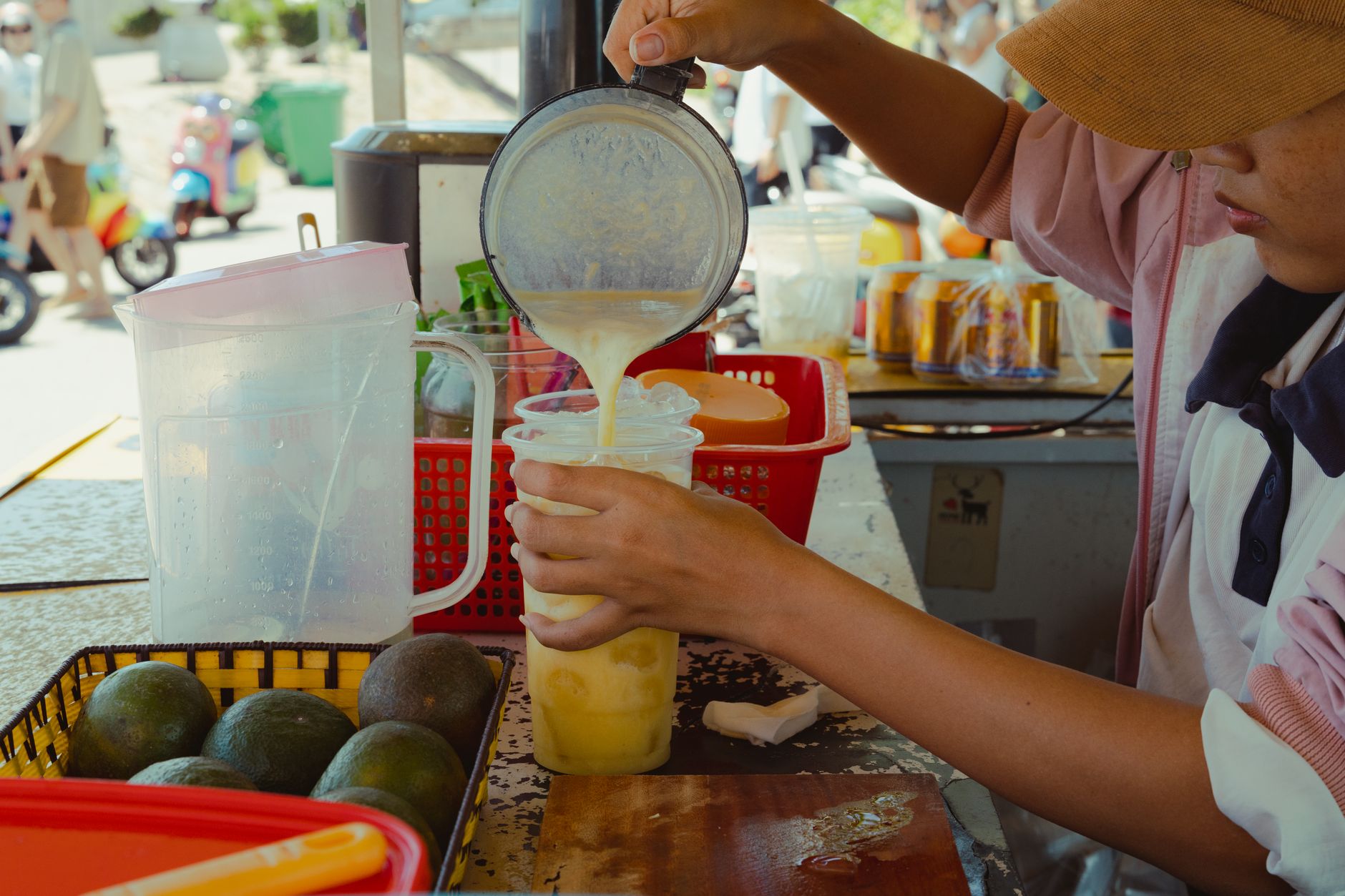
Photo by Theodore Nguyen on Pexels
How to Order
At any cafe or street stall in Vietnam:
- Ca phe sua da — iced milk coffee (what this whole guide is about)
- Ca phe sua nong — hot milk coffee, same drink without ice
- Ca phe den da — iced black coffee, no milk
- Ca phe den nong — hot black coffee
Pronunciation note: "ca phe" sounds like "gah feh" in the south and closer to "kah feh" in the north. Neither is wrong. Just say it with confidence and point at your neighbor's cup if needed.
Price range: 15,000–25,000 VND at street stalls and local-style cafes. Specialty or tourist-facing spots charge 40,000–65,000 VND. Anything above that and you're paying for atmosphere.
Where to Drink It in Hanoi
Hanoi's coffee culture leans older and more atmospheric. Look for the narrow shophouse cafes in the Old Quarter and around Hoan Kiem Lake, where ceiling fans and wooden furniture haven't changed since the 1990s.
Giang Cafe on Nguyen Huu Huan Street is better known for "egg coffee" but their ca phe sua da is solid and the two-floor space is genuinely pleasant.
Cafe Pho Co (also spelled Cafe Pho Cu) on Hang Gai, accessed through a ceramic shop, opens onto a terrace overlooking Hoan Kiem. The coffee is good; the view justifies a slower pace.
For no-frills ca phe sua da at street level, the stalls along Dinh Le Street near the lake charge 15,000–18,000 VND and have the plastic-stool setup that defines the experience.
Hanoi also has a dedicated "ca phe trung" (egg coffee) scene, but that's a separate guide.

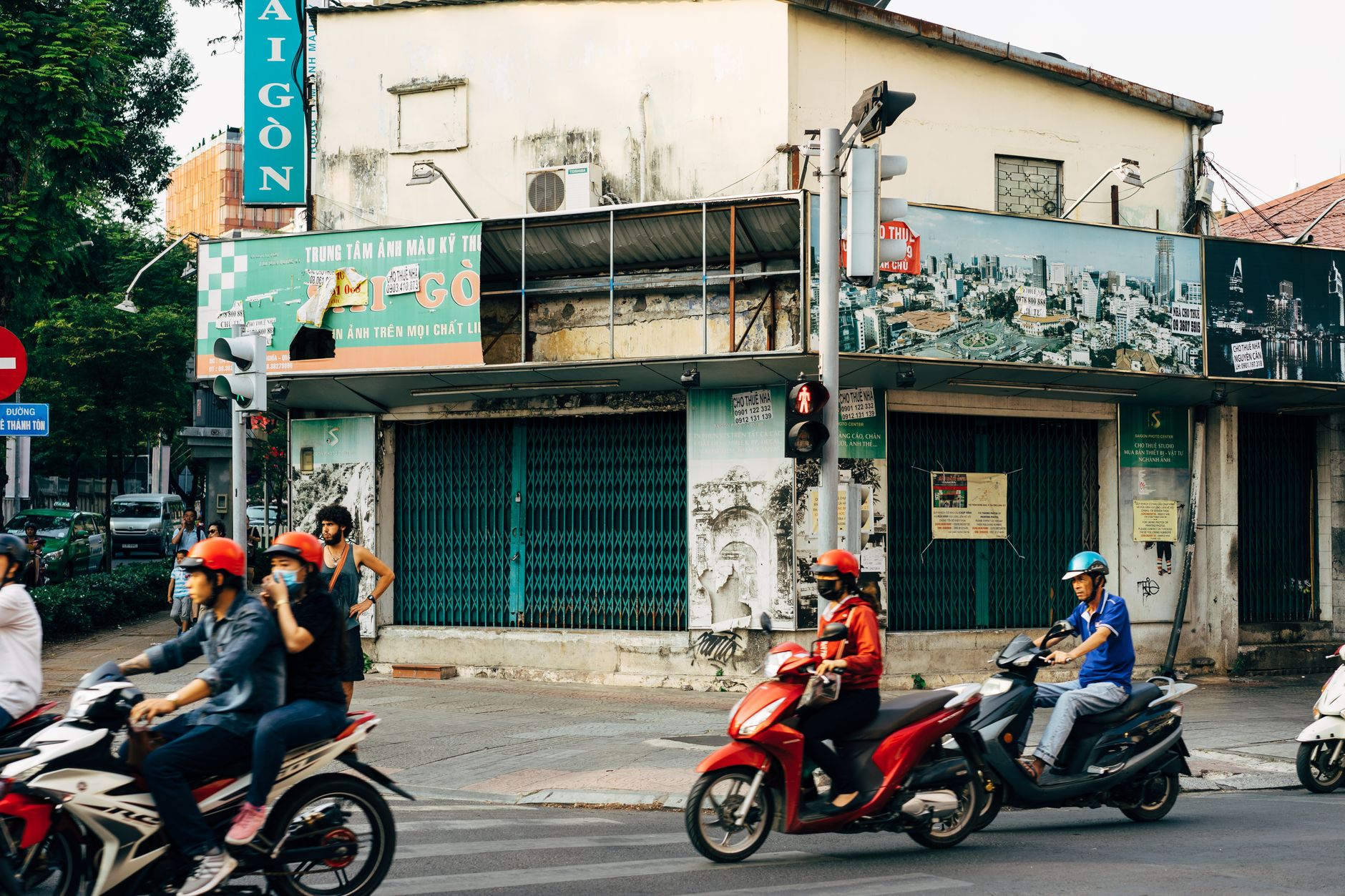
Photo by Nimit N on Pexels
Where to Drink It in Saigon
Saigon's coffee scene is faster, louder, and runs longer hours. The drink is colder (more ice, always) and the pace of the phin feels out of step with the city — which is why many local spots pre-brew in batches and pour from a thermos.
Trung Nguyen Legend Cafe on Nguyen Dinh Chieu in District 3 is the flagship of Vietnam's biggest domestic coffee brand. Worth visiting once to understand the scale of the industry, even if the coffee itself is corporate.
For the real thing at street level, wander the alleys off Bui Vien in District 1 in the morning before the tourist bars wake up, or head to the Ben Thanh Market area where vendors set up on the footpath from 6am.
District 1's Pham Ngu Lao neighborhood has dozens of local-style cafes open from sunrise — look for the ones with handwritten menus on chalkboards and no English translations. That's your best signal.
A Few Practical Notes
Ca phe sua da contains significantly more caffeine than it looks. Two glasses before noon and first-time visitors occasionally report a mild cardiac event. Start with one. The condensed milk also means it's not a low-sugar option — treat it as the daily indulgence it's meant to be. Lastly, if you're buying beans to take home, ask specifically for "ca phe rang xay" (roasted and ground coffee) suitable for a phin, and pick up a phin itself — they cost 20,000–40,000 VND at any market and weigh almost nothing in a bag.
Last updated · May 29, 2026 · independently researched, never sponsored.