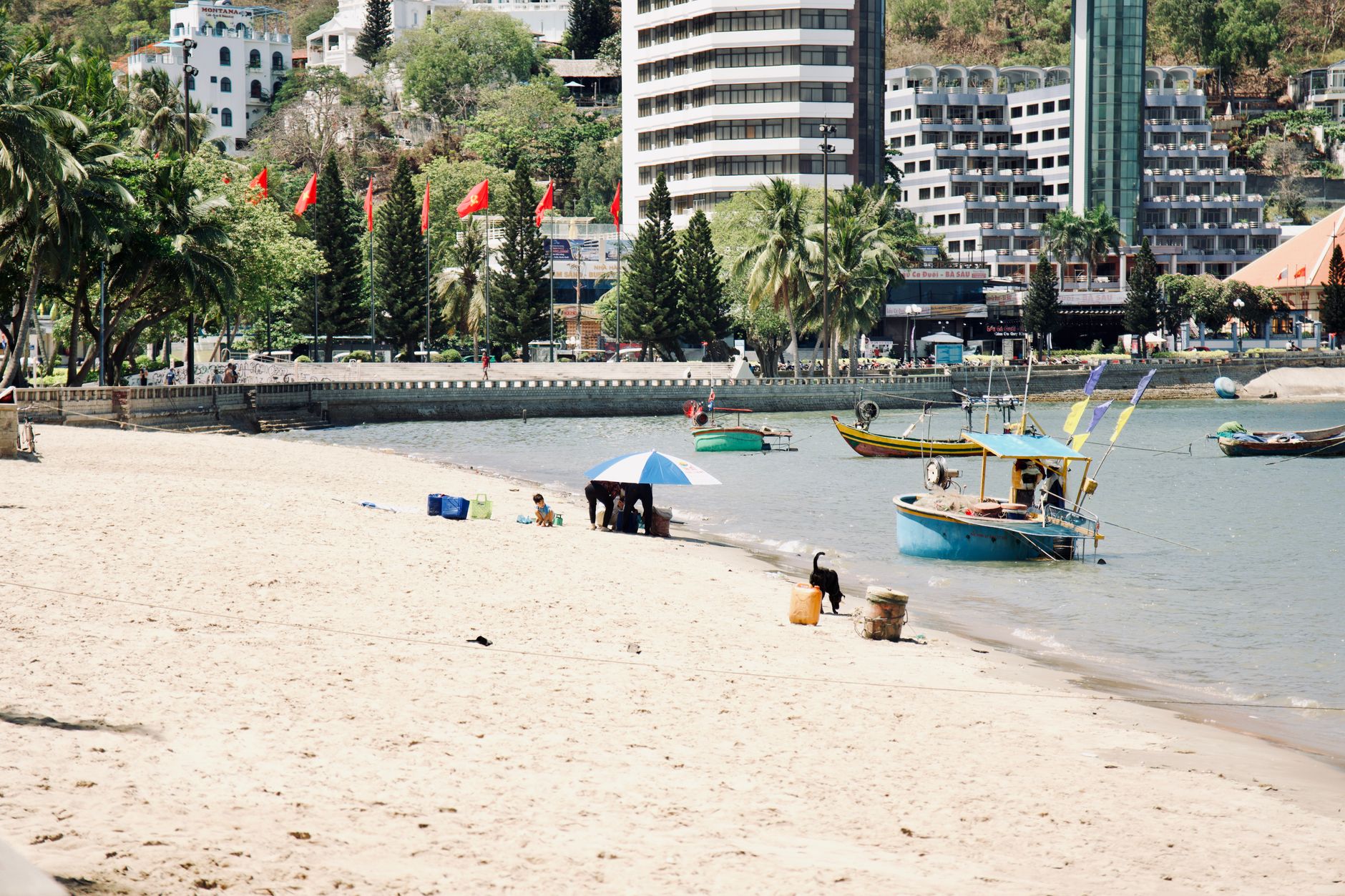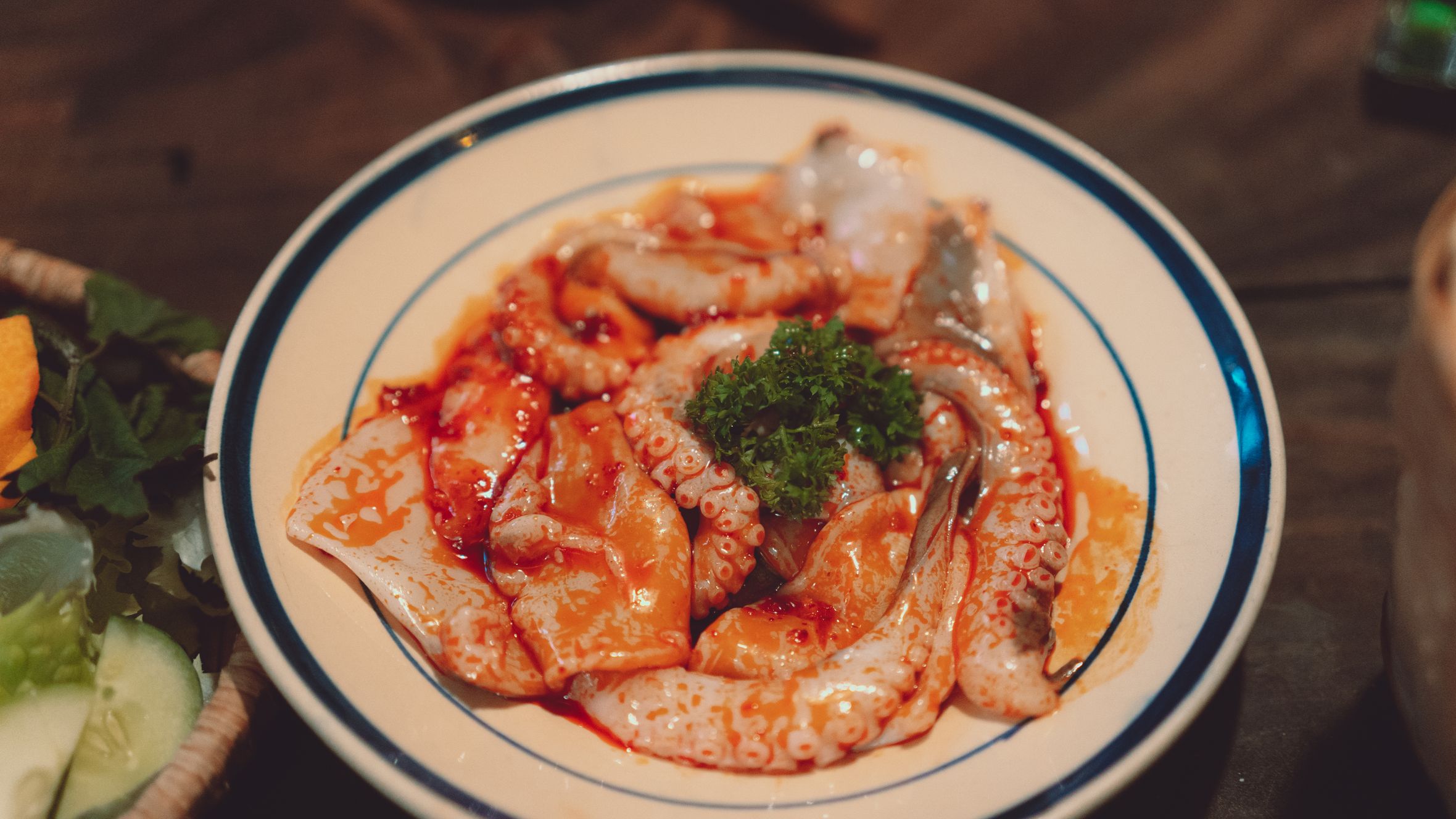
Vung Tau moves fast in the morning. By 6am the streets near the fish market on Tran Phu are already busy, carts are lit up, and the best bowls of soup are half gone by 7:30. If you sleep past 8am thinking breakfast can wait, it mostly already has.
What the Morning Actually Looks Like
The city's breakfast culture is concentrated in a few pockets: the stretch of Ba Cu Street between the roundabout and the market, the lanes behind Bach Dinh villa, and the waterfront promenade on Ha Long Street where the coffee cart crowd gathers before the sea breeze picks up. These are not tourist setups — they are neighborhood routines, and you are welcome to join if you show up at the right time and know what to order.
Banh Canh — The Bowl Locals Actually Start With
"Banh canh" is probably the most eaten breakfast soup in Vung Tau (붕따우 / 头顿 / ブンタウ), which surprises visitors who expect pho. The broth here is made with pork bones and often crab or shrimp paste, and the noodles are thick, slightly chewy, and made from tapioca flour. It lands heavier than pho, which is exactly why fishermen and market workers eat it — they need something that holds. A solid bowl at a cart on Ba Cu Street runs 30,000 to 40,000 VND. Ask for it with "cha" (fish cake) on top if you want the full local version.
There are dedicated banh canh (반깐 / 粗米粉汤 / バインカイン) spots that have been operating since before most visitors were born. Look for the ones with three or four plastic stools and a pot that has been simmering since 5am. The broth will be darker and more complex than anything ladled out of a newer, cleaner setup.
Bun Rieu — The Crab Tomato Option
If banh canh feels too heavy, "bun rieu" is the other major breakfast soup in town. The base is a tomato and freshwater crab broth with rice vermicelli, tofu, and a tangle of morning glory on the side. It reads lighter but still has real depth. Vung Tau versions tend to be slightly sweeter than Saigon interpretations — a southern habit. Prices sit around 30,000 to 35,000 VND at market-adjacent stalls.

Photo by Pham Huan on Pexels
Xoi — Sticky Rice That Works as a Full Meal
"Xoi" carts appear at dawn and are mostly gone by 8am. This is not a snack — a proper portion of xoi with "lap xuong" (Chinese sausage), shredded pork floss, and a fried egg is a complete breakfast for under 25,000 VND. The sticky rice is glutinous and dense, packed into a banana leaf or a plastic bag depending on how hurried the vendor is.
The carts near the residential lanes off Ly Thuong Kiet tend to be the most stocked early on. Regulars point to what they want without speaking much. Follow that lead.
Banh Mi — Fast, Reliable, Everywhere
"Banh mi" in Vung Tau is less of a revelation and more of a constant. The bread is baked fresh and the crusts are good here — the coastal humidity does something to the crumb that you do not get inland. A banh mi op la (with fried eggs) from a cart is about 15,000 to 20,000 VND. The ones loaded with pate, cold cuts, and pickled daikon run 25,000 to 35,000 VND depending on what you add. There are permanent banh mi shops along Nguyen Thai Hoc that open at 5:30am and do serious volume before most guesthouses serve their first guest.

Photo by Vietnam Tri Duong Photographer on Pexels
Coffee — Where the Morning Sits Down
Vung Tau has its own coffee identity. The city has been a coffee-drinking town for generations, and the Vietnamese coffee culture here leans toward strong, slow, and social. "Ca phe sua da" — iced coffee with condensed milk — is the standard order at plastic-stool setups along Ha Long and Tran Phu. A glass costs 15,000 to 20,000 VND.
For something calmer, look for the older-style ca phe shops tucked into residential blocks — the kind with wooden chairs, a small altar in the corner, and a radio playing softly. These spots rarely have signs, but they are full of people who have been coming every morning for twenty years. That is usually recommendation enough.
Egg coffee exists here too, though it is less ubiquitous than in Hanoi. A handful of cafes near the central market area have added it to their menus for the weekend tourist crowd. Worth trying if you are curious, but it is not the native morning order — most locals stick with their sua da.
Where to Start If You Have One Morning
Walk to Ba Cu Street by 6:15am. Get a bowl of banh canh from whichever cart has the most locals around it. Then follow the street toward the market, pick up a banh mi op la from one of the permanent shops, and find a plastic stool with a view somewhere on Ha Long. Order a ca phe sua da and drink it slowly. You will have eaten a complete Vung Tau morning for under 80,000 VND total.
Practical Notes
Most of these carts and stalls operate roughly 5:30am to 8:30am and close once the food runs out — which happens earlier than you expect. Arrive late and your options narrow quickly. Cash only, small bills preferred; 50,000 VND notes are fine, anything larger will earn a mildly pained look.
Last updated · May 29, 2026 · independently researched, never sponsored.