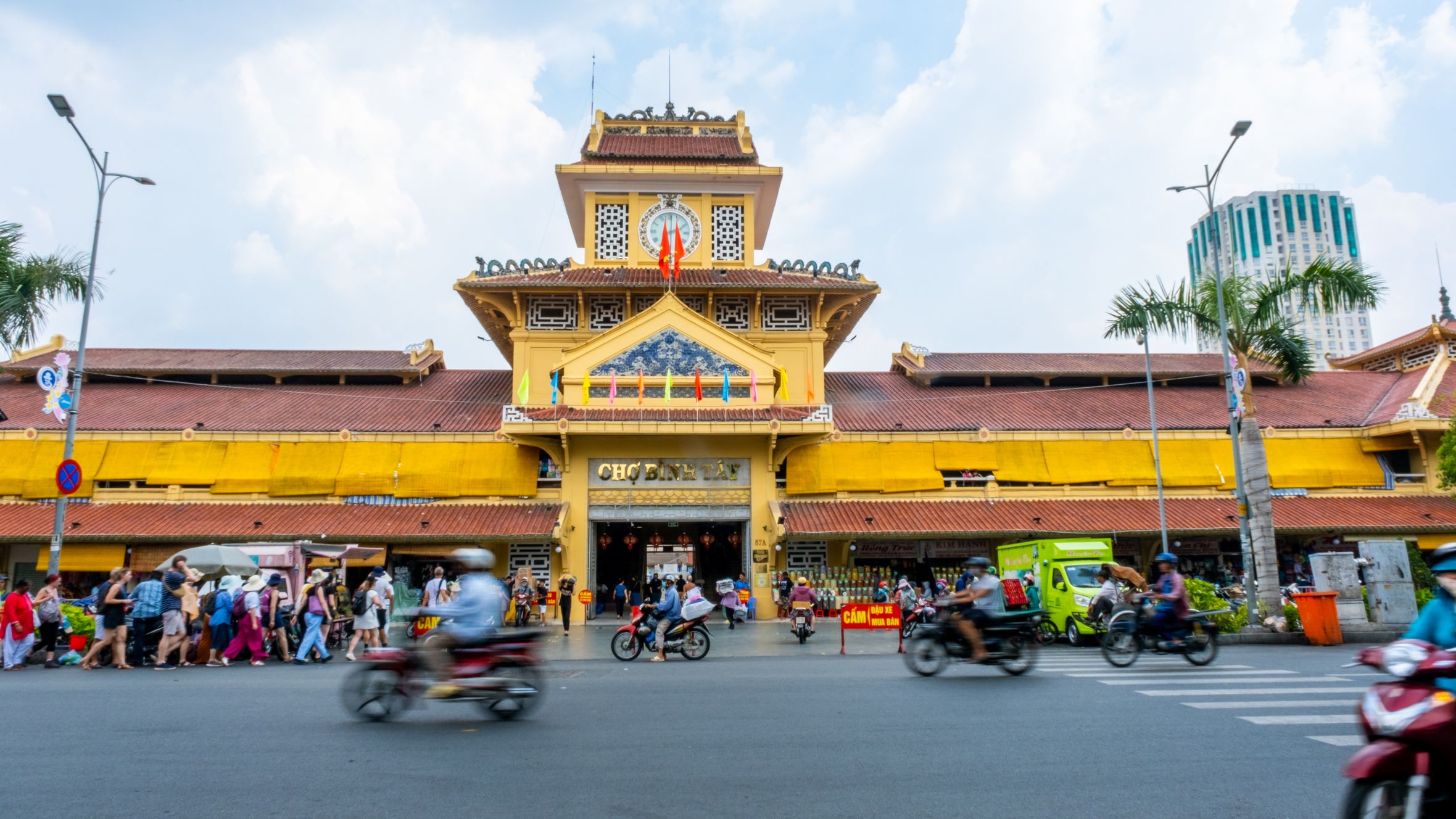
Binh Tay Market sits in the middle of Cho Lon, Saigon's historic Chinatown district, and most visitors walk through it too fast. They photograph the yellow colonial facade, glance at the wholesale stalls stacked floor-to-ceiling with dried goods and medicinal herbs, then leave. That's a mistake — the food around this market is some of the most distinctly Cantonese-Vietnamese eating left in the city.
What Binh Tay Actually Is
This is a wholesale market first. The ground floor is dominated by traders buying dried seafood, spices, preserved vegetables, and Chinese medicinal ingredients by the kilo. Retail tourists are tolerated but not catered to. That dynamic keeps prices honest and the atmosphere from tipping into souvenir-shop territory. Expect to navigate narrow aisles beside women pulling carts loaded with sacks of star anise and dried shrimp.
The food options cluster in three zones: the market's own internal food court on the upper level, the dense cluster of street stalls along Thap Muoi and Phan Van Khoe streets flanking the building, and the sit-down Cantonese restaurants a few blocks deeper into Cho Lon proper.
The Market Food Court
The upper-level food court is open from roughly 6am to 2pm, catering almost entirely to the traders and wholesale buyers downstairs. Tables are plastic, ventilation is minimal, and the menus are usually handwritten in Vietnamese and Chinese. No English translations, no pictures. Point at what your neighbor is eating if you're uncertain.
"Banh cuon" here tends to be the Cantonese-inflected version — thicker rice sheets, sometimes pan-fried rather than steamed, stuffed with dried shrimp and pork rather than the leaner Hanoi style. A plate runs 25,000–35,000 VND. Congee ("chao") is the other anchor of the morning — thick, very slow-cooked, and available with century egg and salted pork, pork and offal, or plain with a side of "quay" (the Chinese fried dough stick, what you'd call you tiao). A bowl with toppings costs around 30,000–40,000 VND.
If you arrive before 8am on a weekend you'll find a short window of dim sum-adjacent snacks: steamed rice rolls with XO-style sauce, sticky rice wrapped in lotus leaves, and the occasional vendor selling warm "banh bao" (steamed buns) from a cart parked just inside the entrance. These sell out; don't count on them after 9am.

Photo by Vietnam Tri Duong Photographer on Pexels
Street Stalls on Thap Muoi
The stretch of Thap Muoi between Binh Tay and the canal is worth more time than the market itself. This is where the permanent food stalls set up, many of them run by families who've been in the same spot for decades.
Look for "hu tieu Nam Vang" here — the Phnom Penh-style noodle soup that's a Cho Lon signature. It's lighter than "pho", with a cleaner pork-and-dried-squid broth, thinner rice noodles, and a garnish of fried shallots and fresh herbs. You eat it either as a soup or "kho" (dry, with broth on the side for dipping). Prices are 45,000–60,000 VND. The stalls typically open around 6am and are done by noon.
Further along, several vendors sell "com tam" with a distinctly Cho Lon slant — the char siu pork is a Chinese-style addition you won't find at most Saigon "com tam" counters. A plate with broken rice, char siu, a fried egg, and pickled vegetables costs 50,000–65,000 VND.
Cantonese Restaurants in Cho Lon Proper
For a sit-down meal, walk five minutes northwest from Binh Tay toward Nguyen Trai Street and Lao Tu Street. This is the older core of Cho Lon, where Cantonese-Vietnamese restaurants operate out of narrow shophouses, some with family association plaques still on the walls.
These places serve proper dim sum on weekend mornings — har gow, siu mai, turnip cake, steamed chicken feet — alongside Vietnamese-adapted versions like "cha gio (짜조 / 炸春卷 / チャーゾー)" wrapped in rice paper rather than wheat dough. A full dim sum spread for two costs 200,000–350,000 VND depending on how many baskets you order.
For drinks, "ca phe sua da (연유커피 / 越南冰咖啡 / ベトナムアイスコーヒー)" is everywhere, but Cho Lon also has older coffee shops serving "kho qua" tea (bitter melon tea, chilled) and chrysanthemum tea, which are more characteristic of the neighborhood than the ubiquitous Vietnamese iced coffee chain branches nearby.
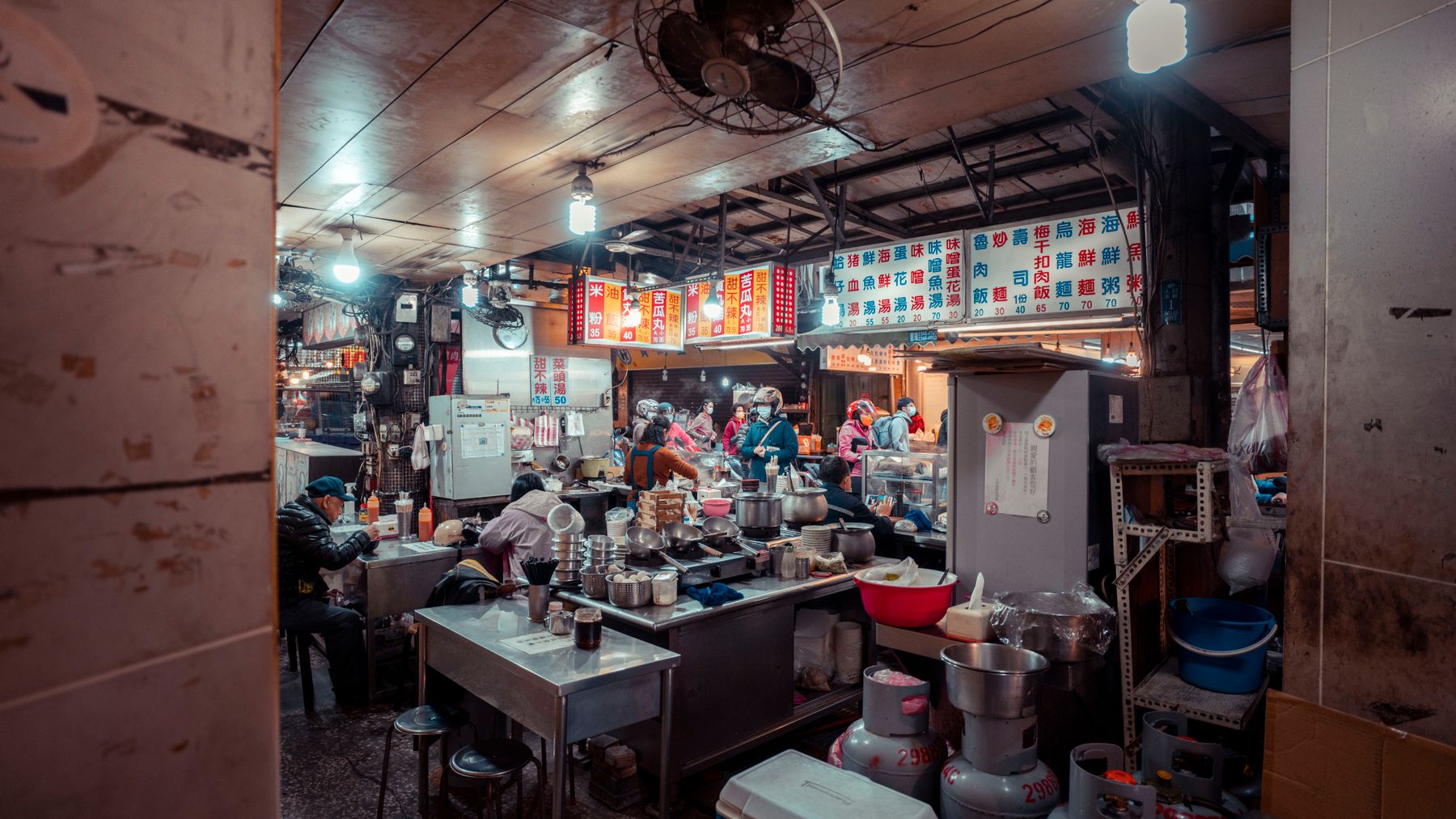
Photo by Jimmy Liao on Pexels
Getting There and Timing
Binh Tay Market is at 57A Thap Muoi, District 6 — about 5km from Ben Thanh Market in District 1. A Grab bike from District 1 costs roughly 30,000–40,000 VND. The wholesale market opens around 4am but the food stalls are at their best between 6am and 11am. By early afternoon, many vendors pack up and the upper food court goes quiet.
Weekend mornings are busier with dim sum vendors but also more crowded. Weekdays before 9am feel more local, less observed.
Practical Notes
Bring cash — 200,000–300,000 VND covers a thorough food morning including breakfast, snacks, and a second coffee. The market stalls are not set up for cards or QR payments at the food court level. Some Vietnamese is useful; a few market-side restaurants have staff who speak basic Mandarin, which occasionally bridges the gap better than English.
Last updated · May 26, 2026 · independently researched, never sponsored.