
Phu Quoc has no shortage of seafood dishes people write home about, but "bun ken" — a thick, coconut-milk fish curry served over round rice noodles — is the one that locals actually eat for breakfast, and the one most visitors walk straight past.
What Bun Ken Actually Is
The bowl is deceptively simple. A rich, orange-tinged broth made from pounded fish (usually snakehead or mackerel), coconut milk, lemongrass, turmeric, and fermented shrimp paste sits over a tangle of soft, round rice noodles — thicker than the strands in pho, closer to the width used in "banh canh". On top: a few slices of fried tofu, shredded banana blossom, and a hard-boiled quail egg if the cook is generous that day.
What separates it from every other noodle soup in the south is texture. The broth isn't watery. It coats the back of a spoon. The fish is blended into the liquid rather than served as a separate fillet, so the flavor is evenly distributed and intense from the first mouthful. It's closer in spirit to a Cambodian "nom banh chok" curry than to anything in the Vietnamese mainland canon — which makes sense, given Phu Quoc's history as a cultural crossroads between the Mekong Delta (메콩 델타 / 湄公河三角洲 / メコンデルタ) and Khmer communities.
Why It Barely Exists Outside Phu Quoc
You'll find faint cousins of bun ken in a handful of Khmer-Mekong towns — parts of Kien Giang and An Giang provinces — but the Phu Quoc (푸꾸옥 / 富国岛 / フーコック) version is distinct enough to be its own dish. The island's fish sauce (made here for generations) deepens the broth in a way that mainland versions don't replicate. The coconut milk is fresher — often pressed the same morning — and the banana blossom garnish is added raw rather than blanched, giving the bowl a clean, slightly bitter crunch that cuts through the richness.
In Saigon you'll occasionally see bun ken listed on menus in districts with large southern migrant populations, but the broth is thinner, the fermented shrimp paste is often swapped out, and it rarely tastes like the real thing. If you want bun ken, you come to Phu Quoc.

Photo by Hoàng Giang on Pexels
Where to Eat It on the Island
Quan Bun Ken Co Ut — Duong Dong Town
This is the reference point. Co Ut has been selling bun ken from the same shophouse on Tran Hung Dao Street (near the central market) for over two decades. She opens around 6:30 AM and is usually sold out by 10:00 AM, sometimes earlier on weekends. A bowl runs 35,000–40,000 VND. The broth here is darker and more intensely flavored than most — she uses a higher ratio of fermented shrimp paste and doesn't shy away from turmeric. Sit at the plastic tables on the footpath, order an iced Vietnamese coffee from the cart next door, and you'll understand why the island's fishermen eat this before heading out.
Quan Bun Ken Hoa — Ham Ninh Village
Ham Ninh, about 12 km east of Duong Dong, is worth visiting for its stilted fishing village alone, but the bun ken stall near the village entrance is a legitimate reason to make the trip. Hoa's version is slightly sweeter — more coconut milk, less fermented paste — which makes it more approachable if you're new to the dish. Opens around 7:00 AM, closes when the pot is empty (usually around noon). Prices are similar: 35,000 VND a bowl.
Cho Duong Dong Morning Market
The central morning market in Duong Dong has two or three rotating bun ken vendors who set up between 6:00 and 9:00 AM near the wet market entrance on Bach Dang Street. Quality varies by vendor and by day, but the prices are the lowest on the island — around 25,000–30,000 VND — and the chaos of the market at that hour is worth experiencing regardless.
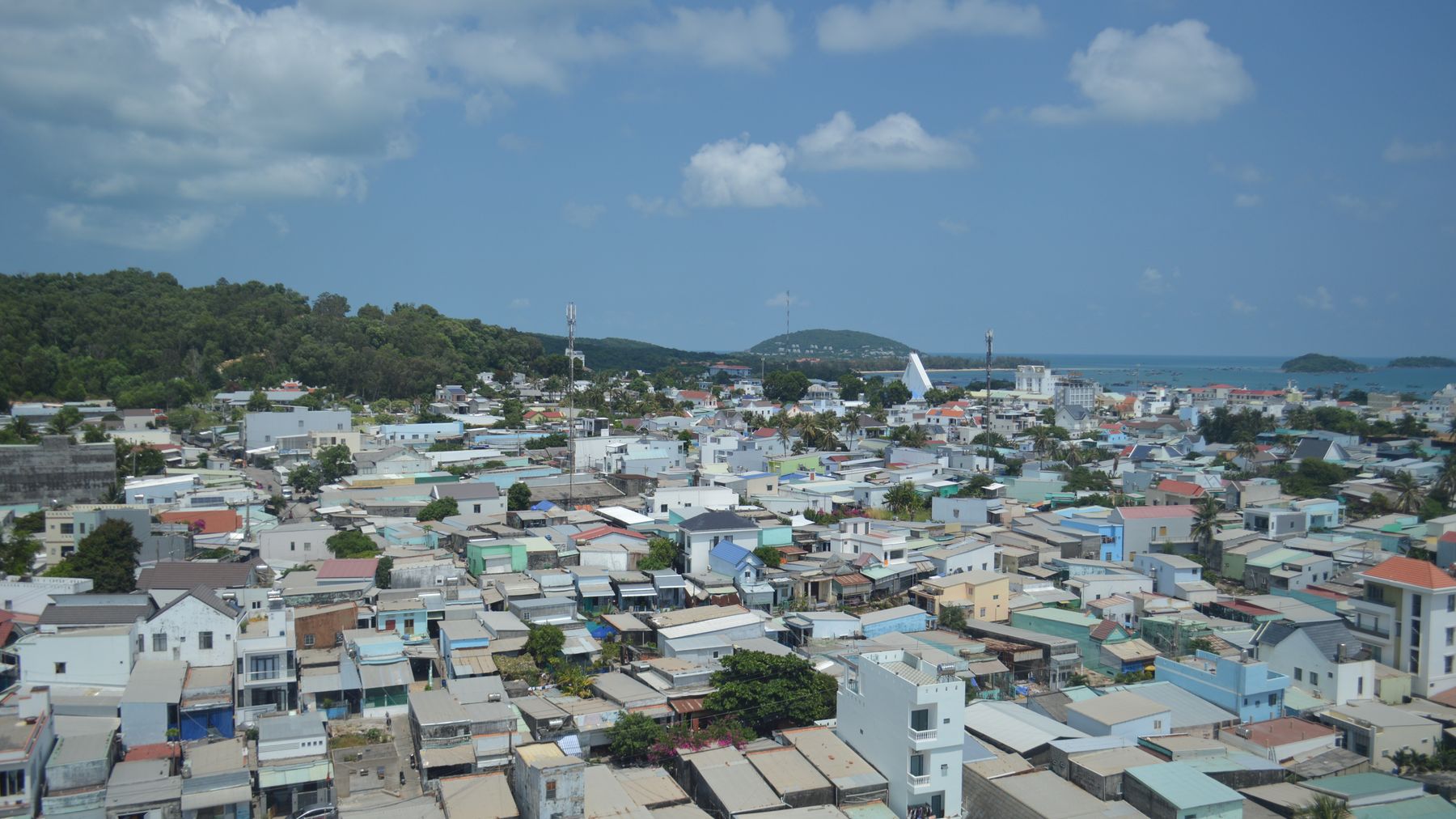
Photo by Valeria Drozdova on Pexels
How to Eat It
Don't add the garnishes all at once. Place the banana blossom and herbs in gradually so they don't go limp in the hot broth. A squeeze of lime sharpens the coconut milk. Most vendors put a small dish of sliced fresh chilies on the table — add them late, not early. The fermented shrimp paste in the broth is already salty, so taste before reaching for the fish sauce.
Bun ken is a breakfast dish. Ordering it at dinner would be like asking for congee at a steakhouse — technically possible, but you'd be fighting the grain of how the island actually works.
Practical Notes
All three spots listed above are cash only; carry small bills (20,000–50,000 VND notes). If you're staying in the resort corridor along Long Beach, it's a 10–15 minute motorbike ride or a 200,000 VND grab to Duong Dong town — worth it. Go early: bun ken waits for no one.
Last updated · Sep 19, 2026 · independently researched, never sponsored.






