Hanoi has a lot of soups, but "bun oc" — rice vermicelli with freshwater snails — is the one locals are most likely to be eating at 7am on a plastic stool, slightly hunched, quietly focused. It is not the city's most famous export, but it might be its most honest bowl.
What Bun Oc Actually Is
At its core, bun oc is a bowl of thin rice vermicelli noodles served in a broth built from pork bones and tomato, topped with cooked freshwater snails pulled from their shells, fresh herbs, fried tofu, and a hit of mam tom — fermented shrimp paste — on the side. The broth is sour, lightly sweet from the tomato, and carries a faint mineral note from the snails themselves. It is nothing like pho. The texture is chewier, the flavor more aggressive, the smell more divisive.
The dish is considered Hanoi (하노이 / 河内 / ハノイ)-origin. You find it across the north — in Hai Phong, in Nam Dinh — but the version that has a documented culinary identity, the one women have been selling from shoulder baskets and then from fixed stalls for generations, is Hanoian.
A Brief History
Bun oc has working-class roots. Snails were cheap protein in the Red River Delta, easy to harvest from rice paddies and ponds, easy to cook fast. The women who sold it were typically itinerant vendors — dong hang rong, wandering sellers — who carried their entire operation in two baskets balanced on a don ganh (carrying pole): broth in one pot, noodles and toppings in the other. Fixed stalls came later. The dish did not need a restaurant. It thrived in alleys.
Its positioning as a distinctly female food culture is worth noting. The cooks, the sellers, and traditionally the primary customers were women. Men ate pho (쌀국수 / 越南河粉 / フォー). Women ate bun oc. That distinction has blurred today, but many of the best shops in Hanoi are still run by women in their 50s and 60s who learned from their mothers.
The Broth Question: Tomato vs. Vinegar
This is where opinions harden. There are two main broth schools, and regulars feel strongly about which is correct.
Tomato broth is the more common Hanoi style. Ripe tomatoes are sauteed in oil until they break down, then added to a pork bone stock that has been simmering for hours. The acidity is round and gentle. The color is a warm orange-red. This is the version most visitors encounter first.
Vinegar broth — or more accurately, broth soured with giam bong (rice vinegar) rather than tomato — is older and increasingly rare. The sourness is sharper, thinner, more transparent. Some shops use a combination: tomato for color and body, a splash of vinegar for brightness right at the end. If you ask an older Hanoian which is authentic, they will probably say vinegar. If you ask someone under 40, they will probably say tomato.
A third variation adds dau hu (fried tofu puffs) directly into the broth rather than floating them on top, which soaks up the sourness and changes the texture of the whole bowl. Worth seeking out.
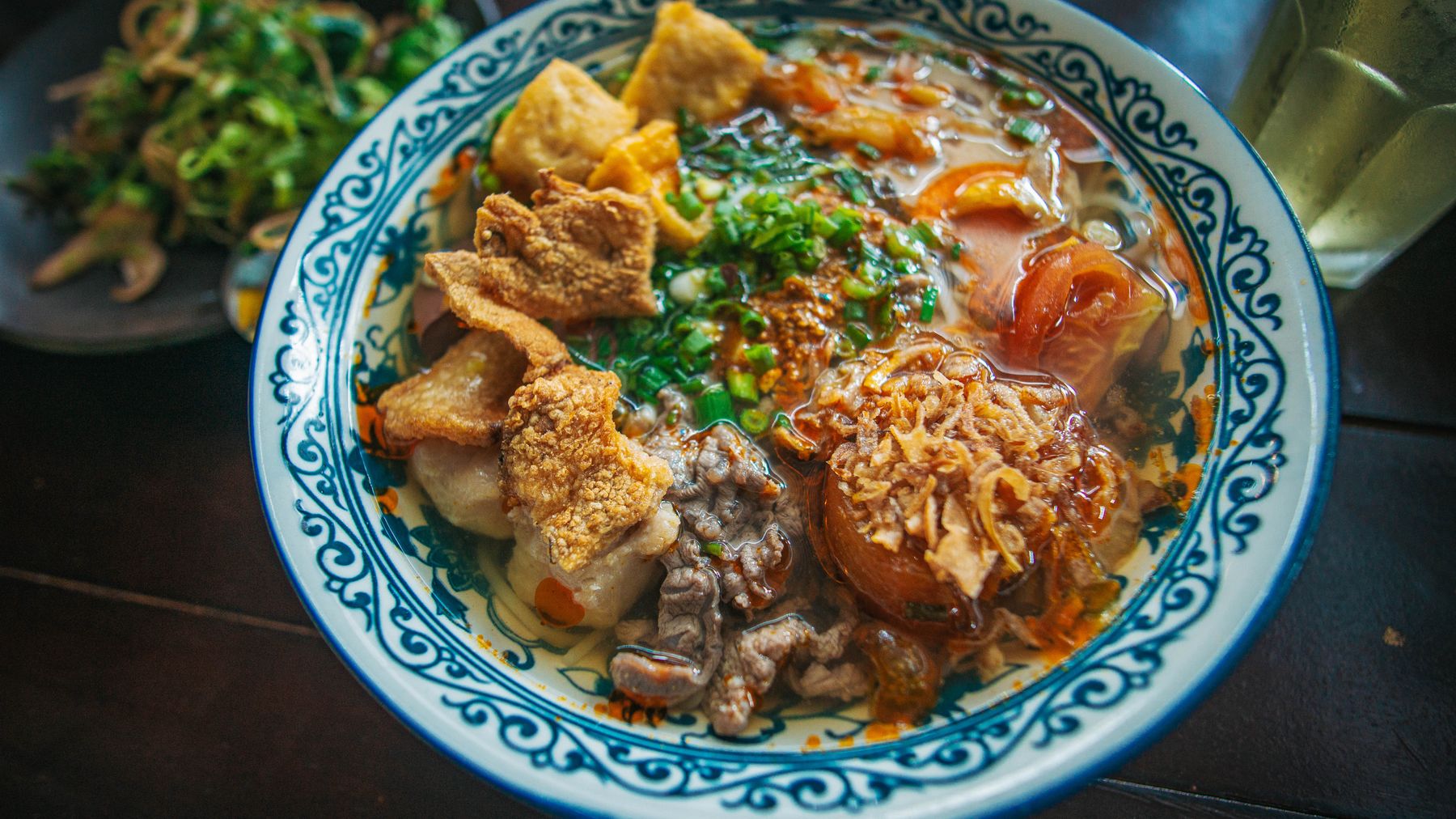
Photo by FOX ^.ᆽ.^= ∫ on Pexels
Types of Snails Used
Not all oc are the same, and the type of snail matters significantly to the flavor and chew of the dish.
- Oc buou (apple snails): Large, meaty, slightly chewy. Common in southern adaptations of the dish but increasingly available in Hanoi. Satisfying to eat but can overwhelm a delicate broth.
- Oc nho (small field snails): The traditional choice for Hanoi bun oc. Tiny, sweet, with a clean mineral flavor. They cook fast and are usually served still in the shell, which means you either suck them out or use a toothpick. This is part of the ritual.
- Oc huong: A sea snail, more fragrant, sometimes used in coastal adaptations. Less common in inland Hanoi shops.
The best bun oc shops source their oc nho locally and cook them daily. Snails that have been sitting too long develop a muddy, bitter edge that no amount of broth can fix.
How to Order and Eat It
Sit down. The server will ask you one or two questions: size (a bowl is typically 35,000–50,000 VND depending on the shop and toppings), and whether you want extra tofu, extra snails, or a cha (pork sausage) added on top.
When the bowl arrives, mam tom comes on the side — a purple-grey fermented shrimp paste that smells alarming if you are new to it. Add a small amount to the broth and stir. It deepens everything. Don't skip it. Fresh herbs — usually rau kinh gioi (Vietnamese balm) and rau ram (Vietnamese coriander) — go in next. A squeeze of lime, a few sliced fresh chilies from the communal dish on the table.
For the small snails still in the shell: hold the shell to your lips and suck firmly. If it does not come out, use the toothpick usually provided. Do not try to bite the shell. You will know immediately why this is bad advice.

Photo by Quang Nguyen Vinh on Pexels
Where to Try It
Hanoi — Bun Oc Ba Beo, Phu Doan Street
This is the canonical reference point. A cramped, cash-only shopfront near Hoan Kiem Lake that has been operating for decades. The broth leans tomato-forward but retains a good vinegar sharpness. Oc nho are the main snail. Opens from around 6:30am and sells out by late morning. Expect to share a table.
Hanoi — Co Lan's Cart, Hang Giay Area
A semi-fixed vendor operating near the northern edge of Hanoi's Old Quarter. Vinegar-dominant broth, older style. Hours are unpredictable — aim for 7–9am on weekdays. This is the version closest to the itinerant-vendor tradition.
Saigon — Quan Bun Oc Hanoi, District 1
Saigon's version of bun oc is adapted — typically uses larger oc buou, the broth is slightly sweeter, and mam tom is often replaced with mam ruoc (a different fermented shrimp paste). This shop on Nguyen Thi Minh Khai explicitly positions itself as the northern-style version and does a reasonable job of it, for around 45,000–55,000 VND a bowl. A useful reference if you are in the south and curious.
Practical Notes
Bun oc is a breakfast-to-lunch food in Hanoi — most dedicated shops close by noon or 1pm. If you arrive after 11am at a popular stall, the snails may be gone and the broth thin. Go early. Bring cash; most small shops do not accept cards or QR payment from foreign wallets.
Last updated · Apr 16, 2026 · independently researched, never sponsored.