Few dishes in Hanoi demand as much of the cook — or as much planning from the eater — as "bun thang". It's a morning-only soup, sold by a shrinking number of cooks who still bother to make it properly, and it disappears by 9 or 10am. Sleep in and you've missed it.
What's Actually in the Bowl
Bun thang is a Hanoi (하노이 / 河内 / ハノイ) original, historically tied to the days after Tet when households would reassemble leftovers — cold chicken, gio lua, egg — into something worth eating. That origin explains its logic: every component is cooked separately, then layered with surgical care into the bowl before the broth goes in.
The base is thin rice vermicelli, the same noodle used in "bun cha" but cut shorter. On top goes shredded poached chicken (white meat, pulled fine), thin-sliced "gio lua" (Vietnamese pork sausage, the silky steamed kind), and strips of a paper-thin fried egg omelette that's been rolled and cut into ribbons. Then come the aromatics — and this is where bun thang earns its reputation for being difficult. A proper bowl involves at least a dozen: dried shrimp, cu cai (pickled radish), "ca tru"-grade attention to detail in the garnish tray, shredded perilla, spring onion, a dab of "mam tom" (fermented shrimp paste) on the side that you stir in at your own risk, and a few drops of "tinh dau ca cuong" — the essence of a water bug called ca cuong, which smells faintly of citrus and licorice and is now nearly impossible to source authentically.
The broth is the slowest part. It's made from chicken bones and dried shrimp, simmered long enough to turn pale gold and clean-tasting. Not rich. Not oily. The whole bowl is deliberately light — almost delicate — which is what separates it from Hanoi's other morning noodle, "pho".
Why So Few Places Do It Well
The honest answer is that it's not profitable at scale. The prep starts the night before: the broth needs hours, the egg sheets take patience, the gio lua has to be sourced fresh. A cook can sell bun thang for maybe two or three hours before it's gone. The bowls go for 40,000–70,000 VND, which sounds reasonable until you factor in the labour.
The younger generation largely hasn't picked it up. A few family-run spots in Hanoi's Old Quarter and the streets around Hoan Kiem have been running the same recipe for decades, passing it between family members. But the list of places genuinely worth going to is short.
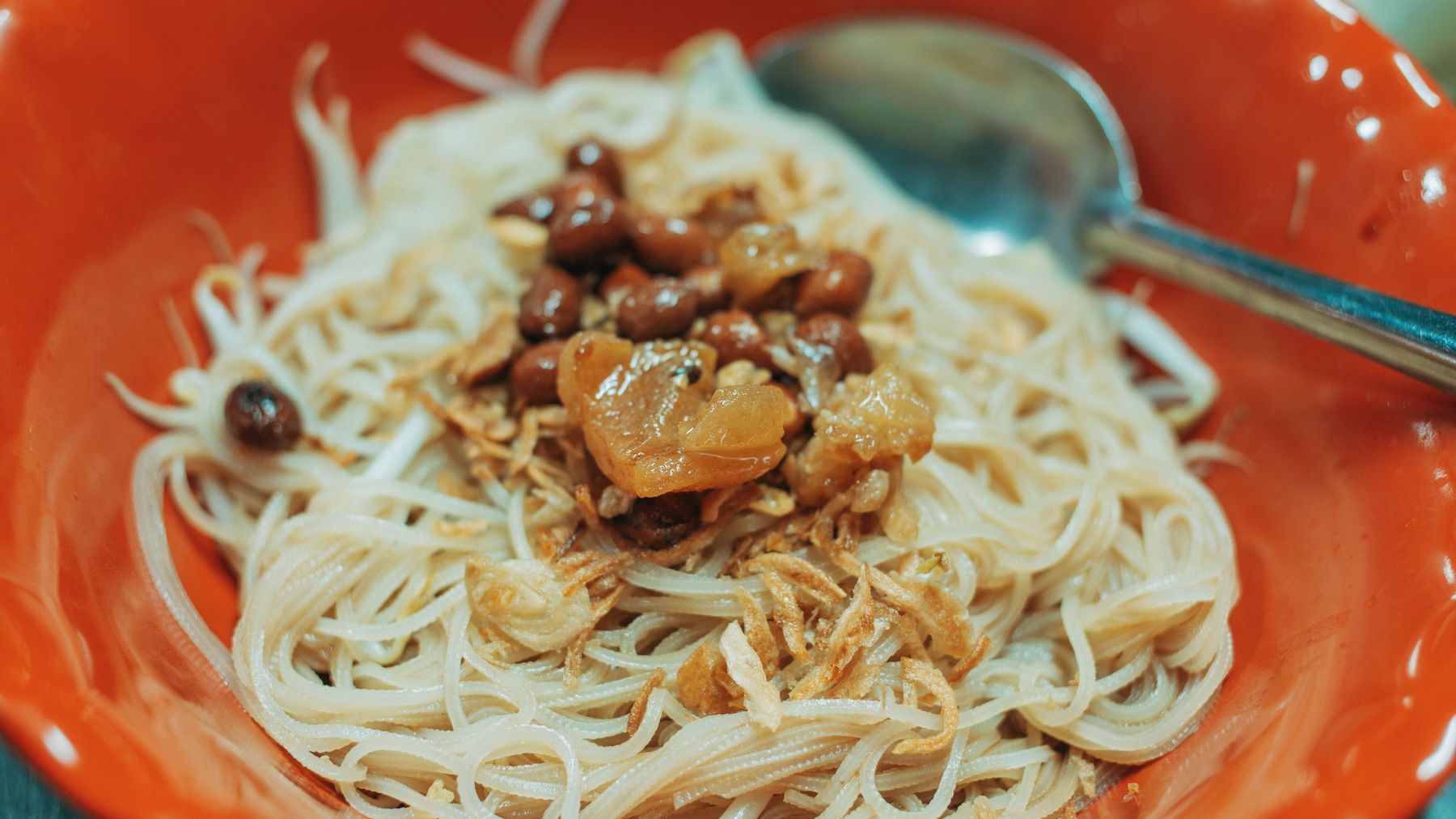
Photo by FOX ^.ᆽ.^= ∫ on Pexels
Where to Go
Bun Thang Ba Be — 48 Cau Go
This is the name most Hanoians point to first. The shop occupies a narrow front room off Cau Go, a short walk from Hoan Kiem Lake. The owner has been at this for years and is strict about the process — ca cuong essence is still used here, though she'll tell you the supply is getting harder. Bowls are 55,000 VND. Open from around 6:30am; usually sold out by 9:30am. Go before 8am on weekends.
Bun Thang on Hang Hom
Hang Hom, in the Old Quarter, has a small stall — no formal signage worth noting — that sets up near the middle of the block. This one leans slightly saltier, the broth a touch darker. The mam tom on the side here is particularly good if you're into fermented funk. Closes by 9am. Bowls around 45,000–50,000 VND.
Bun Thang Nguyen Sieu
Nguyen Sieu is a quiet street that connects to the Old Quarter's eastern edge. The spot here is popular with older Hanoians who've been coming since the 1980s, which is usually a reliable signal. The egg ribbons are thinner here than anywhere else in the city — closer to the old standard. Around 60,000 VND a bowl.

Photo by Nguyễn Hưng on Pexels
How to Eat It
Let the cook assemble the bowl. Don't rush it — the layering is intentional and the order matters for how the heat from the broth distributes across the toppings. Add mam tom in small amounts, not a full spoonful. The ca cuong essence, if it's offered, goes in as a drop or two, not more. Stir gently and eat while it's hot. Bun thang waits for no one.
If you're coming from a pho (쌀국수 / 越南河粉 / フォー) background, the adjustment is mostly mental: bun thang is quieter, more composed. It rewards attention rather than appetite.
Practical Notes
All three spots above are within walking distance of Hoan Kiem Lake and the Dong Xuan Market area, so it's easy to combine a bun thang breakfast with an early morning walk through the Old Quarter. Arrive before 8am to be safe — particularly on weekdays when the local office crowd clears out the pots fast. Cash only at every stall.
Last updated · May 26, 2026 · independently researched, never sponsored.