What Is Ca Tru?
"Ca tru" (also called "hat a dao") is a traditional Vietnamese musical storytelling genre that originated in northern Vietnam (베트남 / 越南 / ベトナム), likely during the Later Le dynasty (1428–1789). The name means "tally card songs" — historically, men would buy bamboo cards at ca tru inns and present them to performers as payment. Today, it's recognized by UNESCO as Intangible Cultural Heritage in need of Urgent Safeguarding.
The genre was originally entertainment for the royal court and wealthy elite. Over centuries, it expanded to inns, communal houses, and private residences throughout northern Vietnam. Artists often performed at significant events — births, contract signings, festivals — and operated outside traditional social hierarchies, allowing them to entertain even the most influential patrons.
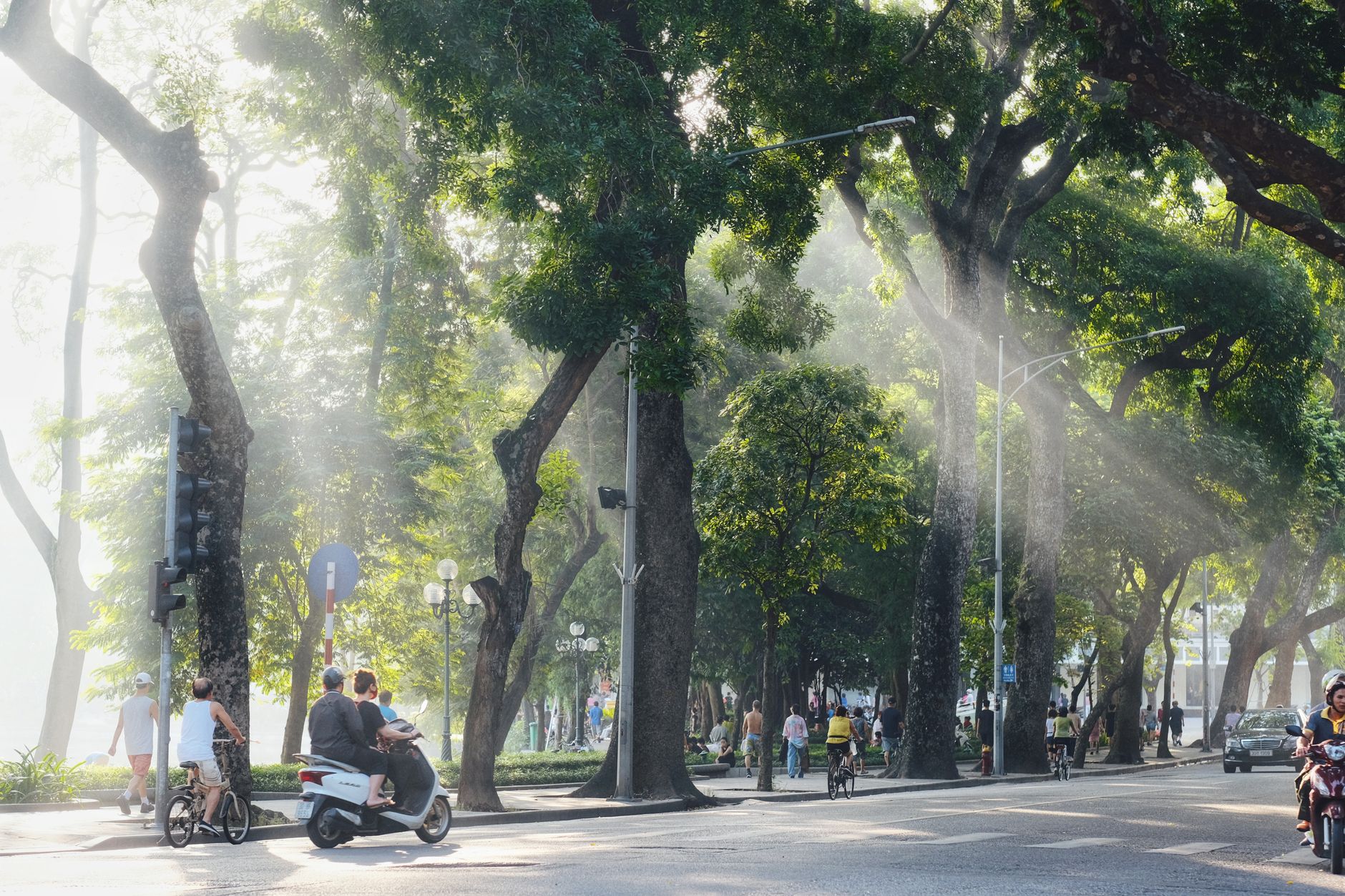
If you've spent time exploring the food and music scenes of Hanoi, you've probably noticed how deeply tradition runs through daily life here. "Pho" shops open at dawn following recipes passed down for generations. "Ca phe" stalls brew the same way they did decades ago. Ca tru fits into this same cultural fabric — an art form that refuses to disappear, kept alive not by institutions alone but by ordinary people who care enough to show up every week and practice.
The Near-Extinction and Revival
By the late 20th century, ca tru had nearly vanished. Following 1945, the genre was suppressed, associated with feudal romanticism, colonial decadence, and superstition. By 1976, only two professional artists remained: musician Nguyen Xuan Khoat and artisan Quach Thi Ho. Both played crucial roles in reviving the tradition.
Since 2009, when UNESCO granted it heritage status, significant revival efforts have taken root. Festivals, cultural events, and dedicated clubs now showcase ca tru. By 2011, 140 practitioners worked across 23 clubs. The Bich Cau Dao Quan Club in Hanoi, founded decades ago, maintains 90 members — 30 to 40 gather Saturday evenings — with the oldest artist still performing at 88. Director Nguyen Van Mai, 48, trains younger singers and notes the ongoing challenge: attracting youth to learn this demanding art form.
The revival is not just about preserving sound — it's about preserving a social ritual. Ca tru was never background music. It demanded active participation from everyone in the room, including the audience. Losing ca tru would mean losing one of the few traditional art forms where the listener's role is formally built into the performance itself.

Image by Kien1980v at vi.wikipedia. via Wikimedia Commons (CC BY-SA)
How Ca Tru Is Performed
A traditional performance involves three key participants:
The female vocalist is the central figure. She sings while simultaneously playing the "phach" — small wooden sticks beaten against a bamboo bar, providing percussion rhythm. The vocalist controls the pace and emotional arc of each piece, and her skill is measured not just by vocal ability but by how tightly she locks the phach rhythm to her sung phrases.
The lute player accompanies her on the "dan day," a three-stringed, long-necked instrument used almost exclusively for ca tru. The dan day has a distinctively deep, resonant tone — somewhere between a bass guitar and a banjo. Players pluck the strings with a buffalo-horn pick, producing a sound you won't hear in any other Vietnamese genre. A skilled dan day player doesn't simply follow the vocalist; he responds to her phrasing in real time, creating a musical conversation.
The spectator-drummer is often a scholar or connoisseur who strikes the "trong chau" (praise drum), a percussion instrument that expresses approval or criticism of the performance. Each drum strike conveys sentiment — always in rhythm with the vocalist's phach. A single tap signals appreciation. Silence from the drum can mean the performance hasn't earned it yet. This is what makes ca tru unlike almost any other music tradition in the world: the audience literally has a scored, percussive role.
Ca tru features 56 distinct melodic forms called "the cach." The vocal technique is strikingly unusual to untrained ears — heavy vibrato, nasal resonance, and sudden shifts between registers — but this unique style is fundamental to the genre's identity. Don't expect smooth, melodic lines. The beauty is in the tension, the rhythmic interplay, and the way a great vocalist can make a single syllable carry an entire emotional phrase.

Image by Arild Vågen via Wikimedia Commons (CC BY-SA)
Where to Experience Ca Tru in Hanoi
Most ca tru performances in Hanoi happen in the Old Quarter or in nearby heritage spaces. Here are the main options:
Kim Ngan Temple (42-44 Hang Bac Street, Hoan Kiem District) — This 15th-century temple, just steps from the weekend walking street around Hoan Kiem Lake, hosts ca tru performances on Friday and Saturday evenings, typically starting around 20:00. Tickets generally run 100,000–200,000 VND. The intimate setting — a narrow temple courtyard, maybe 30 chairs — puts you close enough to hear the phach sticks without amplification.
Bich Cau Dao Quan Club (Bich Cau Street, Dong Da District) — About 2 km west of Hoan Kiem Lake, this is one of the most established ca tru clubs in Hanoi (하노이 / 河内 / ハノイ). Saturday evening gatherings are the main event. The atmosphere here is less tourist-oriented and more like sitting in on a rehearsal among friends. Don't be surprised if members chat between songs or debate the finer points of a particular "the cach."
Thang Long Ca Tru Club — Performs periodically at various cultural venues in the Old Quarter. Check locally for schedules, as times shift seasonally.
A few practical notes: performances last 45 minutes to an hour. Arrive 10–15 minutes early — seating is first-come. Photography is usually allowed but keep your phone on silent. Some venues serve tea; none serve food, so eat beforehand. A bowl of bun cha or a plate of banh cuon from a nearby Old Quarter stall makes a good pre-show dinner.
If you're spending a few days in the capital, pairing a ca tru evening with a morning visit to the Temple of Literature — the 11th-century scholars' complex about 2 km southwest of Hoan Kiem — gives you a sense of the intellectual culture that originally sustained this music. Ca tru and Confucian scholarship grew up together.
What Surprises Foreigners About Ca Tru
It doesn't sound "pretty" at first. Western visitors expecting something like a classical concert or even a "quan ho" folk duet are often caught off guard. The vocal style is deliberately tense, nasal, and rhythmically complex. Give it 10 minutes. Once your ear adjusts to the interplay between voice, dan day, and phach, it clicks — or it doesn't, and that's fine too. Not every art form has to be immediately accessible.
The audience role is real. If there's a trong chau drummer in the room, they aren't decorative. Their drumming is a live critique. At traditional performances, an incompetent praise-drummer was considered worse than no drummer at all. Today, this role is mostly ceremonial, but at serious club sessions, the drummer still takes it personally.
Performances are short. Don't expect a two-hour show. Most sessions run under an hour, sometimes as short as 30 minutes. This is normal — historically, ca tru pieces were performed individually, not strung into long concerts.
Almost nobody under 30 performs. Despite revival efforts, the learning curve is steep. A vocalist typically needs years of training before performing publicly. You'll notice most practitioners are middle-aged or older. The clubs are aware of this problem and actively recruit, but mastering the phach rhythm alone can take months.
It's not a tourist product. Unlike water puppetry, which has been polished into a nightly show at Thang Long Theatre for 160,000 VND a ticket, ca tru hasn't been packaged for mass consumption. That's both its charm and its vulnerability. You're watching something real, supported by people doing it mostly for love of the form.
Ca Tru in Modern Vietnam
The tradition has woven itself into contemporary Vietnamese culture. In 1997, singer My Linh publicly performed "Tren dinh Phu Van," a ca tru-inspired song with challenging vocal range, signaling the genre's place in modern music. Numerous contemporary songs draw on ca tru aesthetics, composed by artists including Pho Duc Phuong, Phu Quang, and others.
Films featuring ca tru include Me thao: thoi vang bong, Tro doi, Trang to them lan, and Thuong nho o ai. In February 2020, Google honored Ca Tru's Founder Commemoration Day with a Google Doodle, raising global awareness of this unique art form.
You'll also hear ca tru's influence in unexpected places. Some Hanoi coffee shops — particularly around the Tay Ho and Ba Dinh districts — play ca tru recordings as ambient music. A few egg coffee spots near the Old Quarter lean into the traditional aesthetic, pairing "ca phe trung" with folk music playlists that include ca tru tracks. It's a small thing, but it signals that younger Vietnamese are at least aware of the genre, even if they aren't learning to perform it.
Quick Reference: Ca Tru at a Glance
- What: Traditional northern Vietnamese sung poetry with lute and percussion
- UNESCO status: Intangible Cultural Heritage in Need of Urgent Safeguarding (2009)
- Origin: Northern Vietnam, likely 15th century (Later Le dynasty)
- Key instruments: "dan day" (three-string lute), "phach" (bamboo percussion sticks), "trong chau" (praise drum)
- Where to see it in Hanoi: Kim Ngan Temple (Hang Bac St), Bich Cau Dao Quan Club (Bich Cau St)
- Typical performance time: Friday or Saturday evenings, around 20:00
- Duration: 30–60 minutes
- Cost: 100,000–200,000 VND (approx. $4–8 USD)
- Dress code: None, but smart casual is respectful
- Language barrier: High — lyrics are in classical Vietnamese. Focus on the music, not the words
- Best paired with: A visit to the Temple of Literature or an evening walk around Hoan Kiem Lake
Final Note
Ca tru is not easy listening, and it's not trying to be. It's one of those art forms that rewards patience and context — the more you understand about the roles, the instruments, and the history, the more a single performance reveals. If you're passing through Hanoi on a Friday or Saturday night with an hour to spare, find a seat at Kim Ngan Temple or the Bich Cau club. You'll be watching something that nearly disappeared entirely, held together now by a few dozen committed people who believe it matters.
Last updated · May 29, 2026 · independently researched, never sponsored.