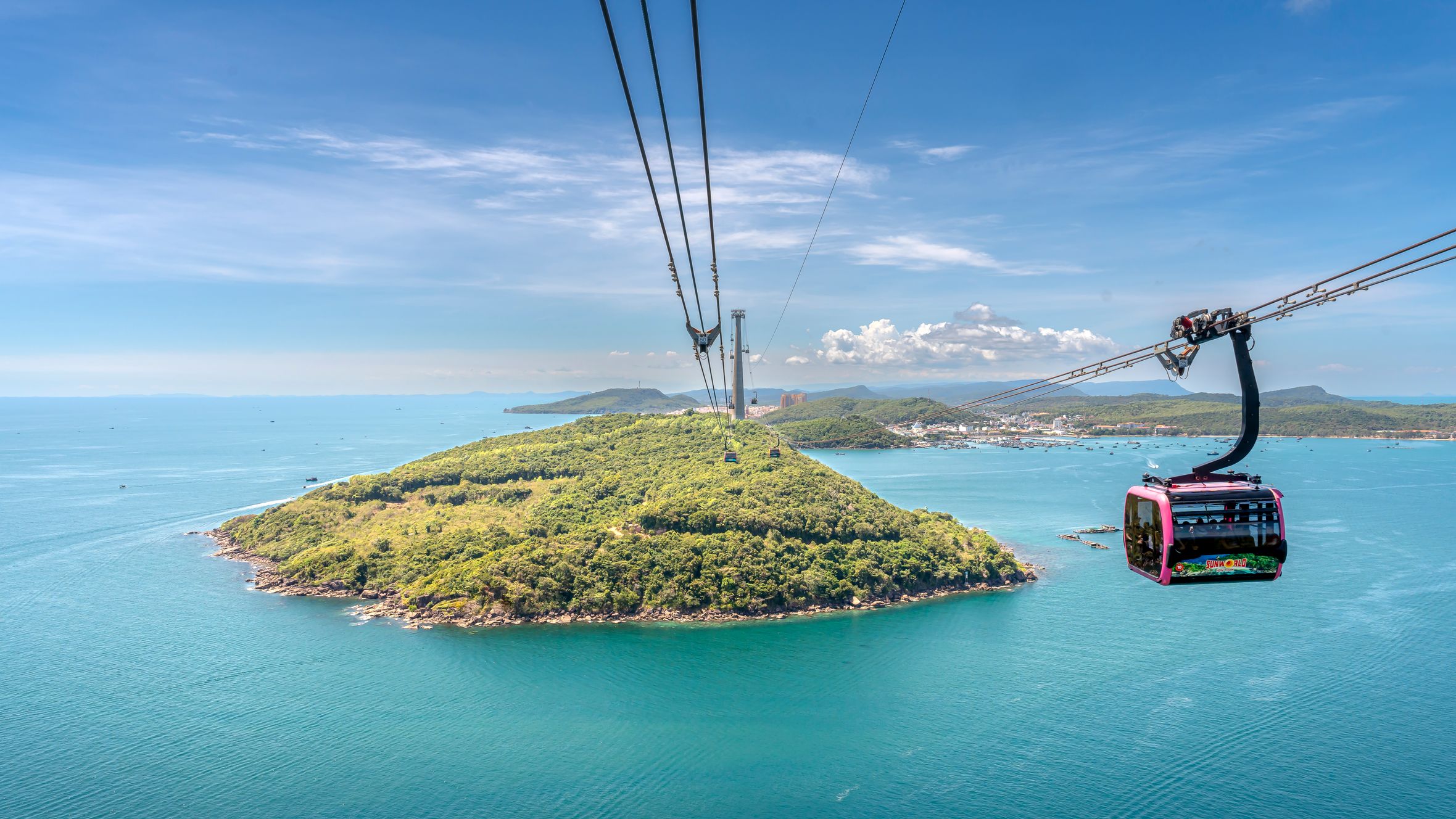
Nui Cam is the tallest peak in the Mekong Delta (메콩 델타 / 湄公河三角洲 / メコンデルタ), which isn't saying much at 710 meters — but in a region where the land is flat enough to watch your dog run away for three days, it feels like a proper mountain. The cable car that climbs it has turned what used to be a sweaty pilgrimage hike into a 10-minute aerial ride over rice paddies and jungle canopy.
What It Is and Why It Matters
Nui Cam (Cam Mountain) sits inside the Bay Nui — "Seven Mountains" — cluster near the town of Chau Doc in An Giang province. It's been a pilgrimage site for centuries, home to Buddhist pagodas, shrines carved into rock, and a microclimate cool enough that the French once considered building a hill station here.
The cable car, operated by Sun Group, opened in 2015. The lower station sits at the foot of the mountain near Nui Cam village, and the upper station drops you at around 535 meters elevation, from where you walk or take a secondary shuttle to the summit area. The system uses modern gondolas — each cabin holds about eight people — and the full line stretches just over 3 km.
For domestic tourists, especially from Can Tho and Saigon, Nui Cam is a weekend draw tied to Buddhist worship. For foreign travelers, it's a chance to see a side of the Mekong Delta that has nothing to do with floating markets.
Best Time to Visit
The sweet spot is December through April — dry season in the south. Skies are clearest, humidity drops to something tolerable, and the rice paddies below are either freshly planted green or harvest gold. Views from the cable car and summit are sharpest in the early morning, roughly 7:00–9:00 AM, before the haze thickens.
Avoid the weeks around Tet (뗏 (베트남 설날) / 越南春节 / テト) if you dislike crowds. Nui Cam is a major pilgrimage destination during the lunar new year period, and the cable car queue can stretch past an hour. The Mekong Delta rainy season (May–November) brings afternoon downpours and occasional fog that blocks the view entirely — you'll ride the cable car and see nothing but white.
How to Get There
The nearest major hub is Can Tho, about 120 km southeast. From Can Tho, you have a few options:
- Bus to Chau Doc: Buses run from Can Tho's central station to Chau Doc (roughly 3–3.5 hours, around 120,000–150,000 VND). From Chau Doc, hire a "xe om" (motorbike taxi) or grab a local bus to Nui Cam's cable car station, about 18 km southwest — expect 40,000–60,000 VND for the motorbike ride.
- Motorbike from Can Tho: If you're comfortable on two wheels, the ride takes about 2.5 hours on mostly flat delta roads. Rentals in Can Tho run 120,000–180,000 VND per day.
- From Saigon: Long-distance buses from Saigon to Chau Doc take 6–7 hours (around 200,000–280,000 VND). An overnight bus gets you there by morning.
The cable car lower station has a parking lot. If you're on a motorbike, parking is 10,000 VND.

Photo by ㅤ quang vinh ㅤ on Pexels
What to Do
Ride the Cable Car (Obviously)
A round-trip ticket costs around 200,000 VND for adults and 150,000 VND for children (prices as of early 2024 — check locally). The ride itself takes about 10 minutes each way. Sit on the left side going up for the better view over the patchwork rice fields stretching toward Cambodia.
Walk to the Summit
The cable car doesn't take you to the very top. From the upper station, it's a 20–30 minute walk uphill on paved paths and stone steps to the peak. The path passes through forest that's noticeably cooler than the lowlands — locals claim a 5–7 degree temperature difference, and it checks out. At the top, there's a large Buddha statue and a panoramic view across the delta flatlands.
Visit Phat Lon Pagoda
Halfway up the summit trail, Phat Lon is the main pagoda complex on Nui Cam. It's active, not a museum — monks live here, incense burns constantly, and on weekends the courtyards are full of families making offerings. The architecture mixes Khmer and Vietnamese styles, reflecting the region's cultural overlap.
Explore the Rock Formations
Scattered along the trails are granite boulders and small caves that have accumulated legends over the centuries. Some have small shrines tucked inside. The Van Son cave complex near the summit is worth a detour — it's cool, quiet, and gives you a break from the sun.
Wander the Base Area
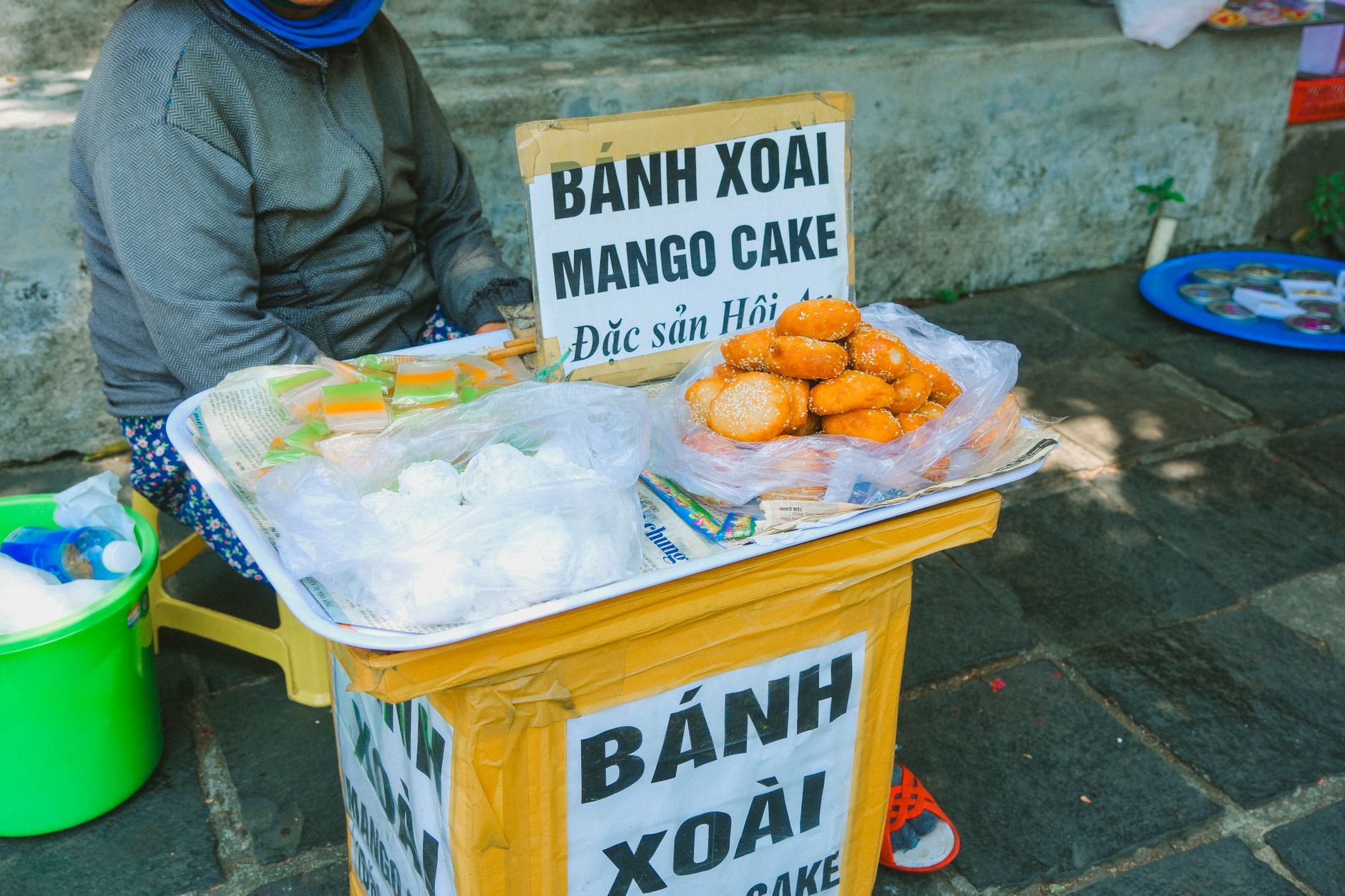
Don't rush straight to the cable car. The area around the lower station has a small market selling dried fruit, local snacks, and "mam" (fermented fish products) that An Giang is known for. It's more interesting than the typical tourist vendor strip.
Where to Eat Nearby
An Giang's food scene leans Khmer-influenced and river-heavy. Two things worth seeking:
- Bun Ca Chau Doc: A fish noodle soup specific to this area — freshwater fish simmered with turmeric, fermented fish paste, and herbs over rice vermicelli. Look for small shops along the main road in Chau Doc town. A bowl runs 30,000–40,000 VND.
- Banh Xeo: The Mekong Delta version is bigger and crispier than what you'll find in Saigon, stuffed with shrimp, pork, and bean sprouts. Street stalls near the Chau Doc market do solid versions for around 20,000–30,000 VND each.
Where to Stay
Most travelers base in Chau Doc, which has a decent range:
- Budget: Guesthouses and mini-hotels along the riverfront start around 200,000–350,000 VND per night. Basic but clean.
- Mid-range: Victoria Nui Sam Lodge, about 5 km from town, sits at the foot of neighboring Nui Sam and charges around 1,200,000–1,800,000 VND. It's the most comfortable option in the area.
- Homestays: A few rural homestays operate near the Seven Mountains area. Ask around in Chau Doc — they're not well-listed online but offer a genuine delta experience for 150,000–250,000 VND including dinner.

Photo by Dang vu hai on Pexels
Practical Tips Locals Would Tell You
- Go early. The cable car opens at 7:00 AM. First hour means shorter lines and better visibility. By noon the queue builds and the haze rolls in.
- Bring water and sunscreen. The summit walk is exposed in sections, and there's limited shade between the upper station and the peak.
- Wear proper shoes. The stone steps near the top get slippery, especially in the wet season. Flip-flops are a bad idea.
- Carry cash. No card terminals at the cable car station or the summit vendors. ATMs are back in Chau Doc.
- Combine with Chau Doc. Nui Cam alone is a half-day trip. Pair it with the Sam Mountain temples, the Chau Doc floating market, or a boat trip to the Cham villages along the Hau River for a full 2-day loop from Can Tho.
Common Mistakes to Avoid
- Skipping the walk to the summit. Some visitors ride the cable car up and down without leaving the upper station area. The actual peak and Phat Lon Pagoda are the whole point — budget 60–90 minutes up top.
- Coming on a major holiday. Tet, Vu Lan (ghost festival), and other Buddhist observance days pack the mountain. If you want photos without elbowing through crowds, pick a weekday.
- Expecting Ha Long Bay-level infrastructure. This is deep Mekong Delta — facilities are basic, English signage is minimal, and the food stalls at the summit are simple. That's part of the appeal, but set expectations accordingly.
Practical Notes
Nui Cam works best as part of a broader Mekong Delta loop — Can Tho for the floating markets, Chau Doc for the border-town atmosphere, and Nui Cam for a change of elevation. Budget a full day for the mountain if you want to ride the cable car, walk the summit, and eat lunch in Chau Doc before heading back.
Last updated · May 29, 2026 · independently researched, never sponsored.