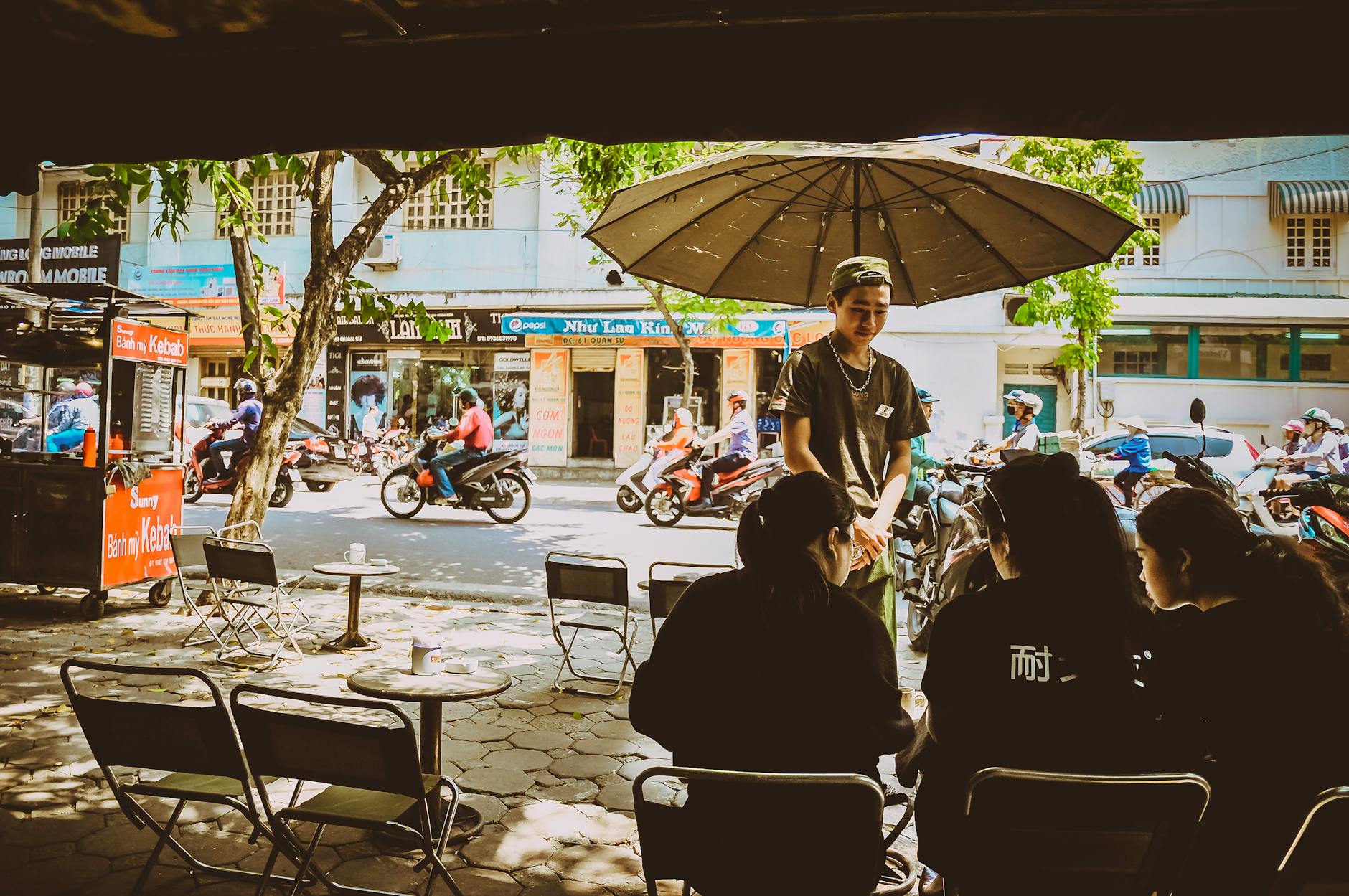
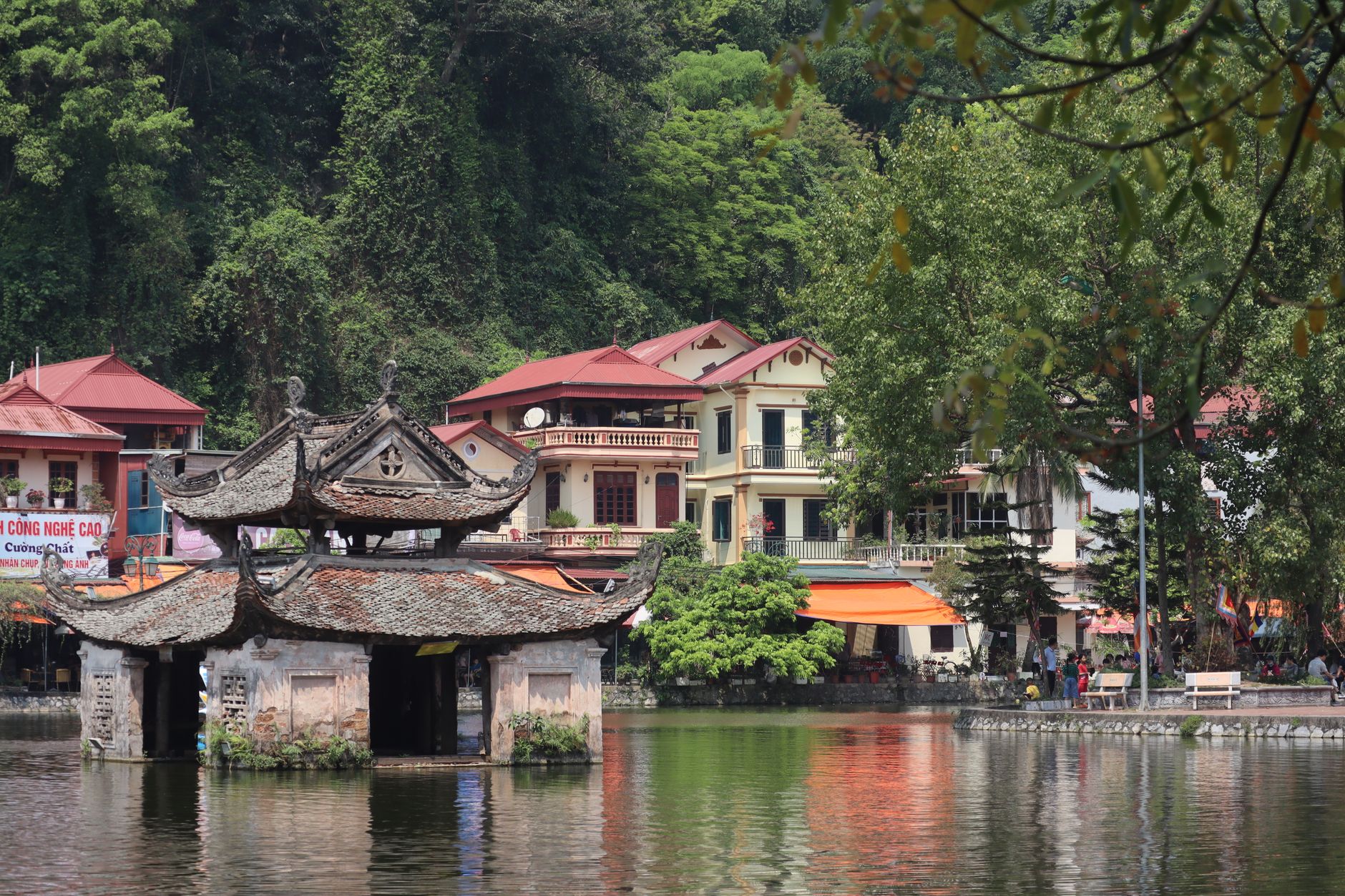
What is Cho Vieng?
Cho Vieng is a night market that operates for roughly 12 hours once per year — from the evening of the 7th to the early morning of the 8th day of the first lunar month. It sits in the area historically part of Nam Dinh province, now administered within the expanded Ninh Binh (닌빈 / 宁平 / ニンビン) province following the 2025 merger. The market has been running for several hundred years, rooted in the belief that buying something here on this single night brings luck and prosperity for the entire year ahead.
This isn't a tourist market. It's a cultural event where Vietnamese families come to trade symbolic goods — farm tools, seedlings, salt, incense, small clay figurines — as a form of spiritual commerce. The transaction itself is the point: exchanging money is believed to circulate fortune. Sellers don't haggle hard, and buyers don't expect bargains. The whole exchange is ritual.
Why travelers go
Cho Vieng offers something you won't find at any other market in Vietnam (베트남 / 越南 / ベトナム): a living folk tradition that hasn't been packaged for visitors. There are no admission tickets, no tour buses parked outside, and no English signage. You go because you want to see how rural northern Vietnamese communities mark the start of the lunar year with commerce as ceremony.
The atmosphere alone is worth the trip. Thousands of people move through narrow lanes lit by bare bulbs and phone flashlights, buying copper coins, ceramic animals, bundles of betel leaves, or live goldfish. The air smells like incense and "banh chung" being grilled over charcoal. It's chaotic, crowded, and genuinely local.
Best time to visit
The market only happens once a year, so your window is fixed: the night of the 7th day of the first lunar month. In practice, this falls in February or early March on the Western calendar — check the lunar date conversion for the specific year you're planning.
People start arriving around 7-8 PM and the market runs until 4-5 AM. The peak crowd hits between 10 PM and midnight. If you want to actually move through the stalls without being carried by the crowd, arrive early (before 9 PM) or late (after 1 AM). The late shift is quieter and you'll see vendors starting to pack up, but there's a certain calm to the predawn hours.
Weather in early lunar new year means cold — expect 10-16°C at night with possible drizzle. Bring a jacket and wear shoes you don't mind getting muddy.
How to get there
From Ninh Binh city center, Cho Vieng is approximately 30 km north, reachable in about 40 minutes by motorbike or car. On the night of the market, traffic backs up significantly on the approach roads, so add 20-30 minutes to your estimate.
- Motorbike: The most flexible option. Rental in Ninh Binh runs 120,000-150,000 VND/day. Follow the signage toward the market area — locals will be heading the same direction, so just follow the flow after dark.
- Grab car: Available from Ninh Binh city, expect 200,000-300,000 VND one way. Getting a return ride at 2 AM is harder — book in advance or arrange a wait.
- Xe om (motorbike taxi): Negotiate a round-trip with wait time. 300,000-400,000 VND is reasonable for the whole evening.
From Hanoi (about 90 km), you can drive down in under 2 hours via the Cao toc Cau Gie - Ninh Binh expressway. Some Hanoi-based groups organize van trips for the night — check local Facebook groups in January.
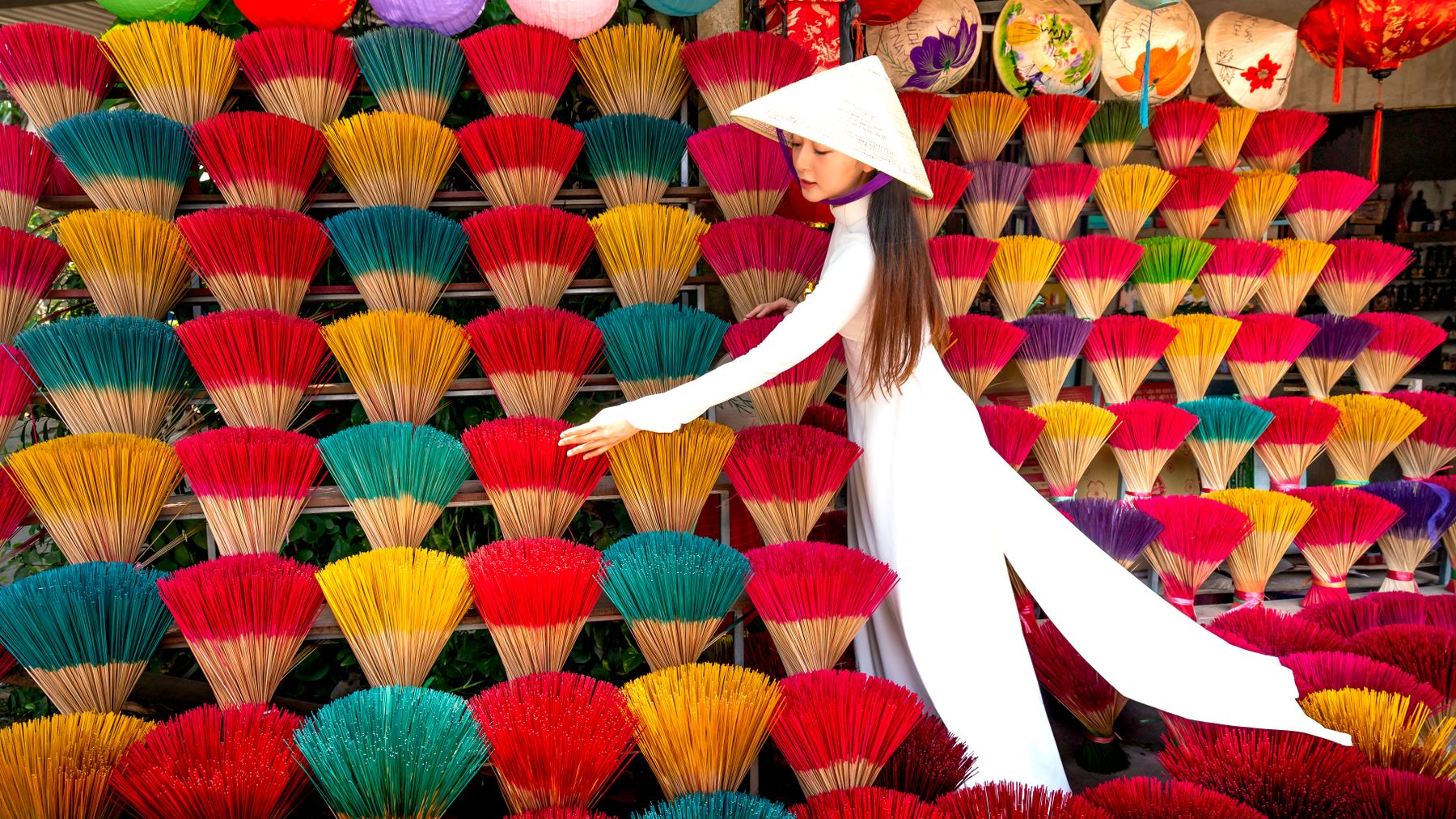
Photo by Quang Nguyen Vinh on Pexels
What to do
Buy something for luck
This is the whole point. Pick up a small item — a bundle of salt (for flavor in life), a hoe or sickle (for productive work), a ceramic toad (for wealth), or a packet of seeds (for growth). Prices are nominal: 10,000-50,000 VND for most symbolic items. The act of purchasing is what matters.
Visit the Phu Day temple complex
The market sits adjacent to Phu Day, a temple complex dedicated to the worship of the Mother Goddesses — a distinctly northern Vietnamese folk religion. The temples are open through the night during Cho Vieng, with devotees performing "ca tru"-influenced chanting rituals. Worth walking through even if you don't follow the religious practice.
Eat at the food stalls
Street food vendors set up along every approach road. Look for "banh cuon" — thin rice-flour crepes filled with minced pork and mushroom, served with fried shallots and dipping sauce. The versions here are made fresh on cloth-stretched steamers. Also try grilled "banh chung" — the sticky rice cakes associated with Tet, sliced and charred over coals until the outside crisps.
Watch the crowd
Seriously. Find a tea stall, order a cup for 5,000 VND, and watch the human river pass. Families with sleeping toddlers on shoulders, elderly women carrying bundles of incense taller than themselves, teenagers taking selfies with ceramic roosters. It's the best people-watching in northern Vietnam for one night of the year.
Browse the plant market
A section of Cho Vieng is dedicated to ornamental plants and fruit trees — kumquat trees, peach blossoms, orchids. These aren't symbolic purchases; people genuinely buy trees here to decorate their homes for the remaining Tet / 越南春节 / テト) period. The quality is good and prices are lower than Hanoi flower markets.
Where to eat nearby
Beyond the market stalls, the Ninh Binh area has its own food worth seeking:
- "Com chay" (scorched rice): Ninh Binh's signature dish — crispy rice crackers topped with stir-fried meat and vegetables in a savory sauce. Find it at any local restaurant in Ninh Binh city the next day. 50,000-80,000 VND per portion.
- "Bun moc": Pork ball noodle soup, common at breakfast joints near the market area. Light, clean-flavored, and exactly what you want at 5 AM after a night on your feet.
Where to stay
Most visitors either do a same-night return to Hanoi or Ninh Binh city, or book a room in advance:
- Budget: Guesthouses ("nha nghi") around Ninh Binh city or Tam Coc area: 200,000-400,000 VND/night.
- Mid-range: Hotels in Ninh Binh city center with decent beds and hot water: 500,000-900,000 VND.
- Comfortable: Tam Coc or Trang An homestays with garden views: 800,000-1,500,000 VND. Book early — rooms fill up during the market night.
Staying in Ninh Binh also gives you access to Tam Coc, Trang An, Hoa Lu, and Bai Dinh the following day.

Photo by Karolina on Pexels
Practical tips locals would tell you
- Bring cash. There are no ATMs at the market and no one accepts cards.
- Wear a crossbody bag and keep your phone in a front pocket. Pickpocketing spikes in the crowd density.
- Don't buy the "antique" bronze items — they're factory-made reproductions sold at inflated prices.
- If you buy a live animal (goldfish, turtle), have a plan for it. Releasing them into rivers is the traditional practice, but think about whether you actually want to carry a bag of water around for three hours.
- Use the toilet before you arrive. Facilities at the market are dire.
Common mistakes to avoid
- Showing up on the wrong night. Triple-check the lunar calendar conversion. One day off and you'll find an empty field.
- Driving into the market zone. Park 1-2 km out and walk in. The roads closest to the market become pedestrian-only by default after 9 PM.
- Expecting an organized event. There's no map, no information booth, no schedule. It's organic and sprawling. Embrace the lack of structure.
- Haggling aggressively. The prices are already low and the cultural context is about exchanging luck, not getting a deal. Pushing hard on price misreads the situation entirely.
Practical notes
Cho Vieng pairs well with a broader Ninh Binh trip — spend the night at the market, sleep in, then explore Tam Coc or Trang An by boat the next afternoon. If you're coming from Hanoi, the whole overnight trip works as a 36-hour excursion without feeling rushed.
Last updated · May 29, 2026 · independently researched, never sponsored.