What it is
Chua Co Le is a Buddhist pagoda originally built in the 12th century during the Ly Dynasty, sitting in Co Le commune in what was formerly Nam Dinh province — now part of the expanded Ninh Binh (닌빈 / 宁平 / ニンビン) administrative area. What makes it unusual: the main structure is a 30-meter laterite and concrete tower built in the 1920s that looks like someone fused a French cathedral bell tower with a Vietnamese pagoda. The architect was a monk named Pham Quang Tuyen, who studied both Buddhist scripture and Western engineering. The result is something you won't see anywhere else in northern Vietnam.
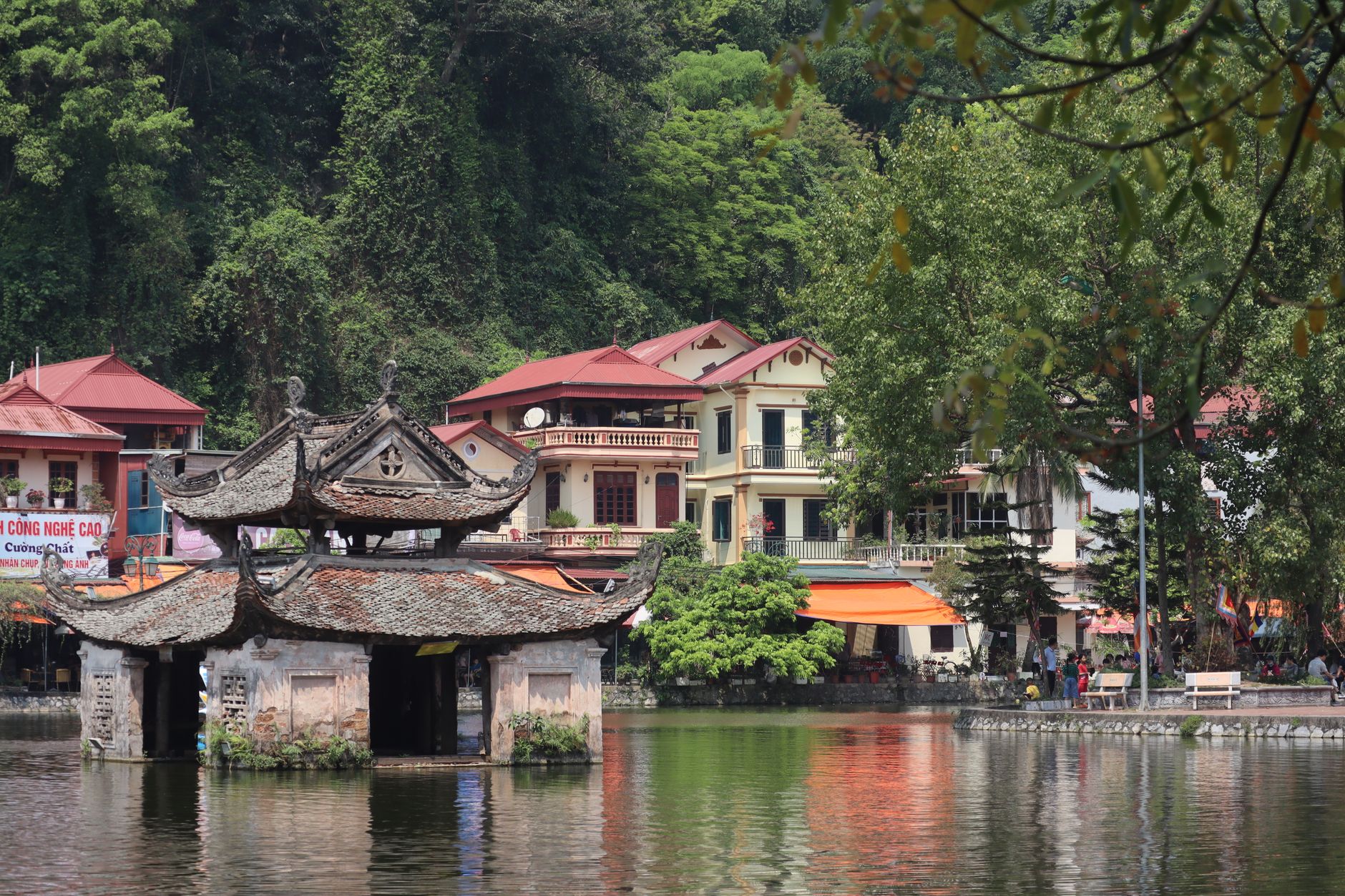
The complex sprawls across several hectares, with lotus ponds, a bell weighing over 9,000 kg, and a bronze Buddha statue cast in the 1930s that stands about 4 meters tall. The pagoda is still an active place of worship — monks live on-site, incense burns daily, and local families come for prayers on the 1st and 15th of each lunar month.
Why travelers go
Most visitors to Ninh Binh head straight for Tam Coc, Trang An, or Bai Dinh. Chua Co Le draws a different crowd: architecture nerds, people interested in Vietnamese Buddhism beyond the tourist-circuit temples, and photographers who want that strange Gothic-meets-Asian frame without fighting for space with tour groups.
The tower is genuinely impressive in person — not because of scale alone, but because of the detailing. Carved dragons wrap around Romanesque arches. Lotus motifs sit next to pointed Gothic windows. It's a physical record of early 20th-century Vietnam (베트남 / 越南 / ベトナム) trying to reconcile tradition with colonial modernity, and it does it with more grace than most buildings from that era.
Best time to visit
October through March gives you the driest weather and cooler temperatures — important because you'll be walking outdoors across a large complex with limited shade. The pagoda hosts its biggest festival around the 13th-15th of the 9th lunar month (usually October), with processions, dragon dances, and boat races on the surrounding waterways. If you want atmosphere, aim for that window. If you want quiet and good photos, go on a weekday morning in November or December.
Avoid July-August: the heat is oppressive and afternoon rains can trap you without shelter. Tet is lively but extremely crowded with local worshippers — you'll struggle to see the architecture through the incense smoke and human traffic.
How to get there
From Ninh Binh city center, Chua Co Le is roughly 30 km east. The most practical option:
- Motorbike: 40-45 minutes via QL10. Rental runs 120,000-150,000 VND/day from most guesthouses in Ninh Binh town. The road is flat and straightforward — rice paddies on both sides, minimal traffic outside rush hours.
- Grab/taxi: Around 200,000-250,000 VND one way. Ask the driver to wait (negotiate 50,000-70,000 VND/hour waiting fee) since return rides from Co Le are hard to hail.
- Local bus: Possible but slow. Buses run from Ninh Binh bus station toward Nam Dinh direction; ask for "Co Le" stop. Costs under 30,000 VND but takes 60-90 minutes with stops.
If you're based in Hanoi, it's about 110 km south — roughly 2 hours by car or bus to Ninh Binh, then onward from there. You could pair this with a day trip to Ninh Binh's better-known sites.

Photo by Lộc Nguyễn on Pexels
What to do
Climb the main tower
The central tower has interior stairs. The upper levels give you a view over the flat Red River Delta landscape — green and gold depending on the rice season. The staircase is narrow and uneven, so wear proper shoes.
Study the architectural details
Bring a camera with a zoom lens. The carvings on the tower's exterior mix Buddhist iconography (dharma wheels, lotus pedestals) with Gothic architectural grammar (pointed arches, ribbed vaulting hints). The fusion is deliberate and specific — spend 20 minutes on the exterior before going inside.
See the bell and bronze Buddha
The 9,000 kg bell is one of the largest in northern Vietnam. The bronze Buddha was cast on-site in the 1930s using community donations — the craftsmanship is notably fine for the period. Both are in the main worship hall behind the tower.
Walk the lotus ponds
The complex is surrounded by ponds that bloom June through August. Even outside bloom season, the grounds are peaceful and well-maintained. A full loop takes 20-30 minutes at a slow pace.
Attend a prayer session
If you're there early morning (around 5:30-6:00 AM) or late afternoon (4:30-5:00 PM), you can observe monks chanting. Sit quietly at the back, don't use flash, and remove shoes before entering any worship hall.
Where to eat nearby
Co Le town itself is small, but you'll find local rice shops ("com binh dan") along the main road serving lunch plates for 35,000-50,000 VND. The dish to look for here is "bun cha" — grilled pork patties with rice noodles and dipping broth. Northern-style, smoky, served with a plate of fresh herbs.
If you're heading back toward Ninh Binh town, stop for "com tam" — broken rice with grilled pork — at any of the roadside places along QL10. Also worth trying: "banh cuon" (steamed rice rolls) sold from carts in the morning near Ninh Binh market. Thin, delicate, filled with minced pork and wood ear mushroom.
Where to stay
There's no accommodation in Co Le commune worth recommending. Stay in Ninh Binh town or Tam Coc area:
- Budget: Guesthouses in Ninh Binh town, 200,000-400,000 VND/night. Basic but clean, most have motorbike rental.
- Mid-range: Tam Coc area homestays, 500,000-900,000 VND/night. Nicer setting among rice fields, breakfast often included.
- Upmarket: A few boutique hotels near Trang An, 1,200,000-2,500,000 VND/night. Pool, restaurant, tour booking.

Photo by Serg Alesenko on Pexels
Practical tips locals would tell you
- Dress modestly: cover shoulders and knees. This is an active monastery, not a museum.
- Bring cash. There's no ATM in Co Le and no card payment anywhere nearby.
- The pagoda is free to enter — no ticket, no donation requirement (though donation boxes exist).
- Mornings before 9:00 AM are best for photography. By midday the light is flat and harsh.
- If visiting during the lunar festival, arrive before 8:00 AM or you'll spend an hour finding parking.
Common mistakes to avoid
- Assuming it's near Bai Dinh or Trang An: It's in the opposite direction from Ninh Binh's main tourist cluster. Don't try to "add it on" to a Tam Coc boat trip — plan it as its own half-day.
- Not bringing water: There's one small drink shop outside the gate. In warm months, you'll want at least a liter for the visit.
- Using flash photography inside the worship halls: Monks will politely ask you to stop, and you'll feel bad. Just don't.
- Skipping the exterior for the interior: The outside of the tower is architecturally more interesting than the inside. Don't rush past it.
Practical notes
Chua Co Le rewards visitors who care about architecture and quiet observation more than checklist tourism. Budget 2-3 hours for the visit, combine it with a drive through the Red River Delta countryside, and you'll see a side of Ninh Binh that the boat-tour crowds miss entirely.
Last updated · May 29, 2026 · independently researched, never sponsored.