The legal question: do you need an IDP?
Yes and no. Vietnam (베트남 / 越南 / ベトナム)'s traffic police technically require an International Driving Permit (IDP) plus your home-country driving license if you're renting anything over 50cc. In practice, smaller "automatic" scooters under 50cc — the kind most tourists rent — operate in a gray zone. Police rarely stop tourists on these bikes, but technically you're meant to carry both documents anyway.
The risk isn't astronomical, but it's real: a minor accident or a checkpoint on a bad day could cost you 500k–2 million VND in fines, plus confiscation. Get an IDP before you leave home. It costs about €20 and takes 10 minutes at any auto club or DMV office. Bring it alongside your passport and home license.
Rental costs and what's included
Daily rates sit between 100k and 200k VND for a basic 50cc automatic, depending on the bike's condition and the shop's confidence in you. Mid-range 110–150cc semi-automatics run 150k–250k VND. Nicer manual bikes or larger cc machines cost 200k–400k VND per day.
Almost all rental shops include a helmet (usually two, if you need one for a passenger). Some throw in a basic phone holder, helmet lock, and maybe a thin rain poncho. Fuel is your responsibility — figure 50k–100k VND per 200 km, depending on traffic and how aggressively you ride.
Multi-day discounts are standard. Rent for a week and you'll pay 15–25% less per day. Monthly rentals drop even further.
Insurance: the missing piece
Here's where rental shops get slippery. Most won't sell you third-party insurance unless you ask directly and insist. If you hit something or someone, you're personally liable. Third-party coverage typically costs 30k–50k VND per day and covers damage to other vehicles or property — not your bike.
Comprehensive insurance (your bike + third-party) is rarer and more expensive; few shops offer it. Instead, many shops hold your passport as collateral and charge you a "damage deposit" of 2–5 million VND. If you return the bike scratch-free, you get it back. If you don't, they deduct repair costs. Read the damage agreement carefully — some shops are aggressive about claiming pre-existing damage.
If you're traveling on an international travel insurance policy (Worldnomads, SafetyWing, etc.), check whether it covers motorbike rental. Most mainstream policies exclude motorbikes over 125cc and exclude riders without a domestic license in that country. Your best bet is a specialist travel policy that explicitly covers bikes, or third-party Vietnamese insurance purchased at the rental shop.

Image by Mike via Wikimedia Commons (CC BY-SA)
Where to rent: by city
Hanoi
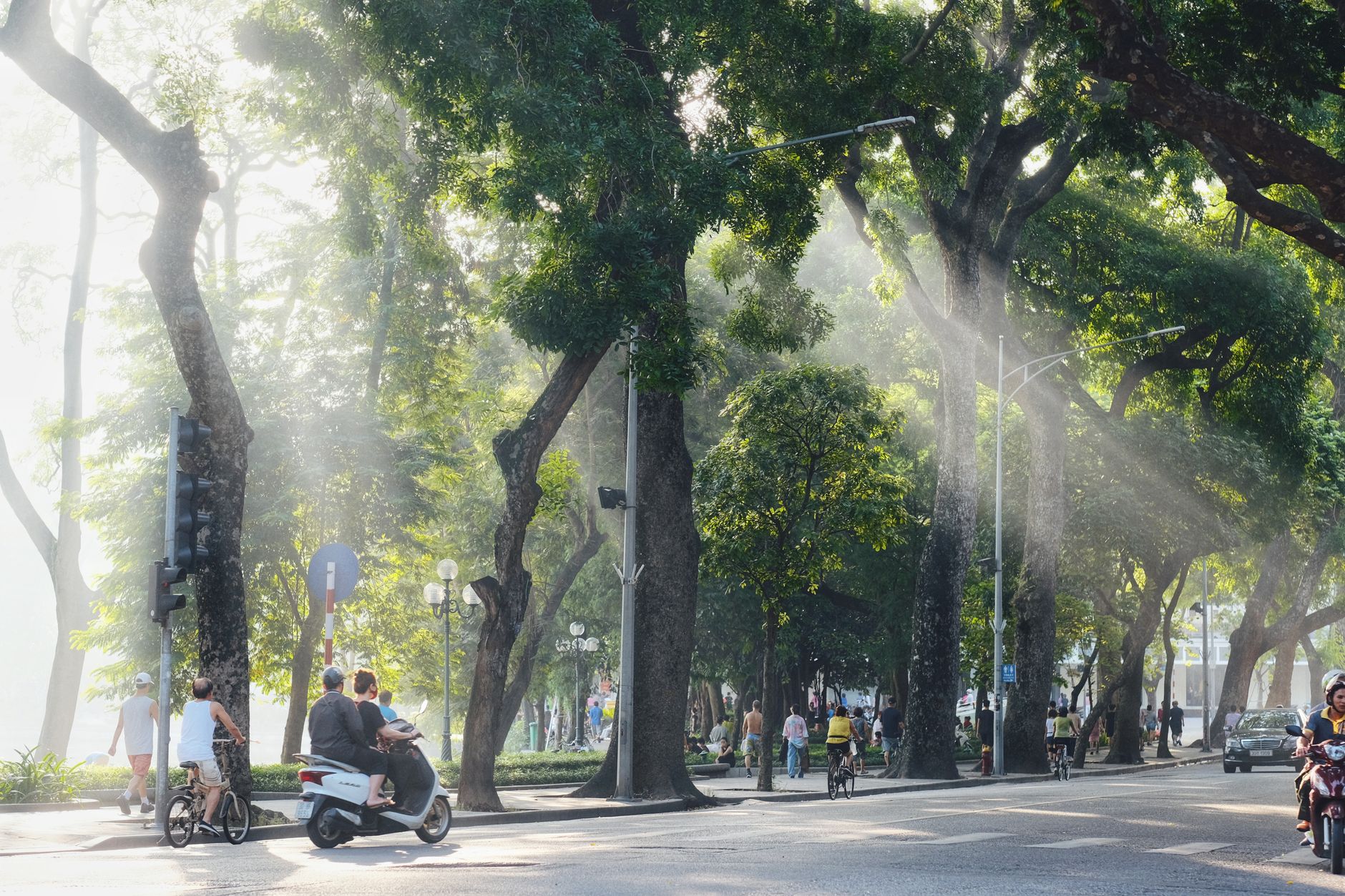
Hanoi Motorbike Rental (near Hoan Kiem Lake, on Ta Hien Street) is the oldest and most traveler-friendly operation in the Old Quarter. They rent 50–150cc bikes, provide decent maps and phone numbers, and won't hassle you about the IDP if you're polite. Rates: 120k–180k VND per day. They also rent scooters with side-cars if you're traveling with a non-rider.
Bike Hanoi (across the street) is newer and slightly pricier (150k–220k) but offers better-maintained bikes and actual printed route guides for popular loops (Sapa, Ha Giang, Phong Nha).
Saigon
Tiger Motorbike (District 1, near Ben Thanh Market) and Easyriders Saigon (same area) dominate the Saigon market. Both are bigger operations that also arrange guided tours and drop-offs in other cities. Expect to pay a premium: 150k–250k for a day rental, but bikes are reliably maintained and staff speak clear English. Both have satellite offices in Da Nang and Nha Trang (냐짱 / 芽庄 / ニャチャン) if you want to do a one-way rental down the coast.
Da Nang
Rent a Bike (near Dragon Bridge) and Motorbike Hanoi's Da Nang branch are the standard choices. Rates are slightly cheaper than Saigon (130k–200k) because competition is tighter. Quality varies; inspect the bike's brakes, mirrors, and tire pressure before handing over cash.
Hoi An
Most visitors rent in Da Nang and ride the 30 km south. If you want to rent locally, ask your guesthouse — nearly all have relationships with a shop nearby. Rates are identical (130k–200k), but independent shops are less professional. Always test the brakes and lights before accepting a bike.
The Ha Giang Loop: special notes
The Ha Giang Loop (the northern mountain pass circuit) is doable on a rental bike, but comes with rules. Many Hanoi shops refuse to let bikes leave the city without a signed agreement and deposit increase (extra 2–3 million VND). A few, like Hanoi Motorbike Rental, are accustomed to it and have bikes that can handle the rough roads.
For Ha Giang, rent a 110–150cc manual or semi-automatic. The passes are steep; underpowered 50cc bikes struggle. Budget 5–7 liters of fuel and expect to refuel in small towns — bring Vietnamese cash because ATMs are scarce up there. Hire a local guide if you're nervous about the passes; most tour operators in Hanoi (including the rental shops themselves) can arrange one for 400k–800k VND per day.

Image by Adam Jones from Kelowna, BC, Canada via Wikimedia Commons (CC BY-SA)
Safety gear and pre-rental checks
Wear the helmet. A lot. Full-face is safest; half-helmets are legal but offer less protection. Some shops offer gloves and jackets for a small fee (20k–30k VND) — take them if you're doing a long ride.
Before you leave the shop, walk around the bike and check:
- Both brakes (squeeze hard; they should feel firm, not spongy).
- Tire pressure (the bike should feel stable, not wobbly).
- Mirrors (adjust both to see behind clearly).
- Horn and lights (honk the horn; switch lights on).
- Fuel gauge (should read full if that's what was promised).
- Keys and lock (verify you have spares).
Take photos of the bike's condition — scratches, dents, rust, anything visible. Some shops are notorious for claiming pre-rental damage when you return the bike. Having timestamped photos protects you.
Practical notes
Rent from established shops with English-speaking staff and visible online reviews. Never rent from unlicensed individuals or tourist-touts on the street. Ride defensively: Vietnamese traffic is chaotic, and you have no protection if something goes wrong. Helmets, an IDP, and third-party insurance are non-negotiable. For the Ha Giang Loop or other remote areas, tell your guesthouse or hotel where you're going and when you expect to return.
Last updated · May 29, 2026 · independently researched, never sponsored.