What Ban Lac is — and why it matters
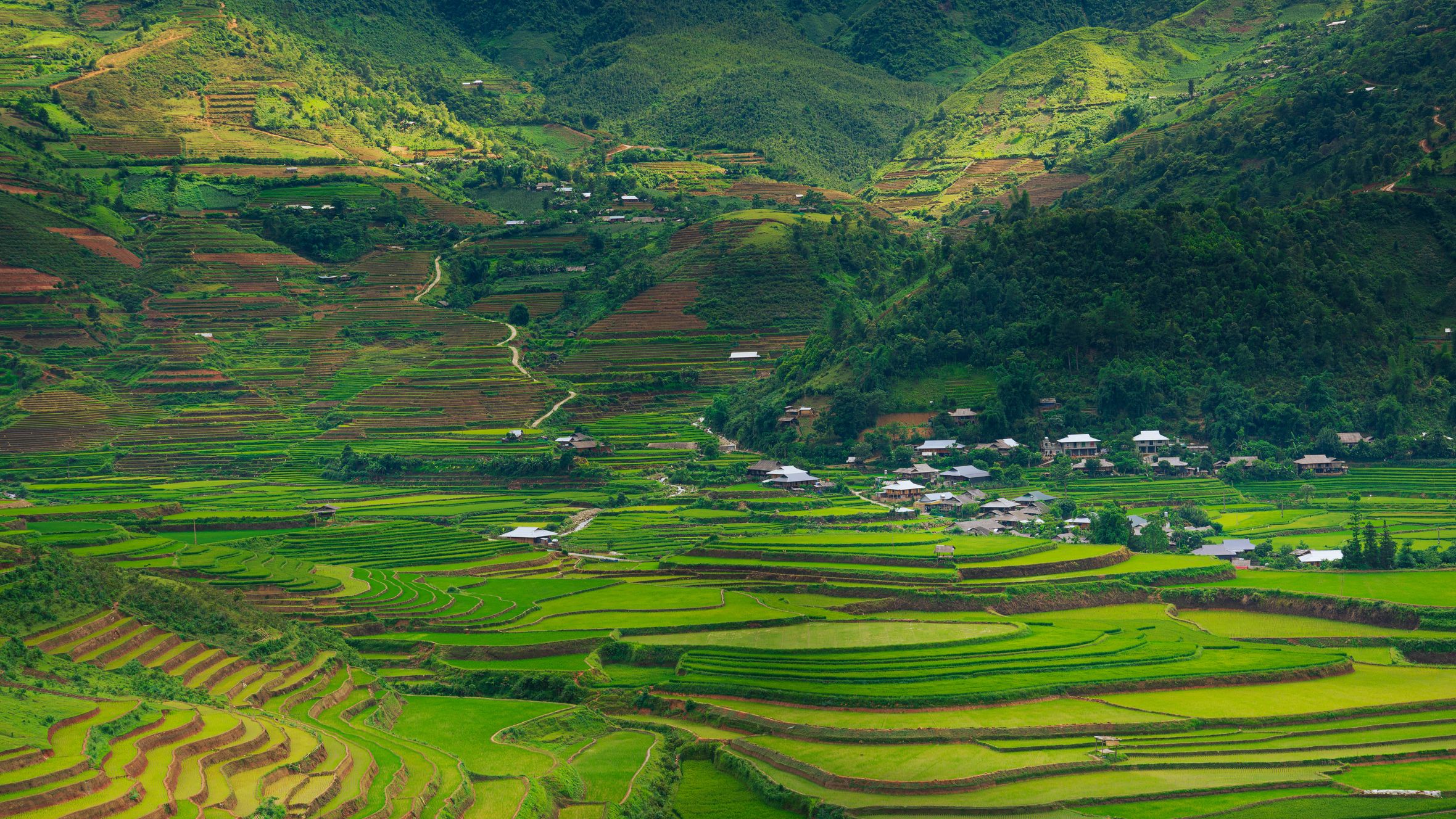
Ban Lac is a village of roughly 100 stilt houses belonging to the White Thai ethnic minority, sitting in the Mai Chau valley about 135 km southwest of Hanoi. The valley floor is flat — an unusual pocket of green paddy fields boxed in by limestone karst on all sides. People have lived here for centuries, and the village has been receiving visitors since the early 1990s, making it one of the longest-running community tourism operations in northern Vietnam (베트남 / 越南 / ベトナム).
This isn't a remote frontier. Ban Lac is well-trodden, and that's actually part of the appeal — the village has figured out how to host travelers without bulldozing its own culture. Families run their own homestays under their own stilt houses. Traditional weaving is a genuine daily activity, not a performance staged for buses. You'll hear "khap" singing in the evenings if you stay overnight, and the rice wine flows freely.
Why travelers go
Most people come for three reasons: the homestay experience, the cycling, and the proximity to Hanoi (하노이 / 河内 / ハノイ). Ban Lac gives you a real overnight in a minority village without requiring a multi-day trek or a flight to Sapa. The valley is genuinely peaceful during weekday mornings — just farmers, buffalo, and the sound of looms clicking. Weekend crowds from Hanoi are a different story (more on that below).
The setting also works as a soft introduction to Vietnam's ethnic diversity. The White Thai here maintain distinct textile traditions, cuisine, and architecture. If you're heading further into the northwest — toward Mai Chau's surrounding hills or eventually Ha Giang — Ban Lac is a useful first chapter.
Best time to visit
The two sweet spots are March to May and September to November.
Spring brings the rice paddies to their greenest, and temperatures sit around 20-28°C — warm days, cool nights. The valley can be misty in the mornings, which adds atmosphere without ruining plans.
Autumn, especially October, is harvest season. The paddies turn gold, the air is dry, and the light is good for photography. Avoid June through August if you can — it's monsoon season, the trails get muddy, and the humidity is intense. December to February is cool to cold (10-15°C at night), and the paddies are dormant brown stubble. Manageable, but less photogenic.
How to get there from Hanoi
By motorbike: Take Highway 6 (QL6) through Luong Son and Hoa Binh city, then continue west to Mai Chau. About 135 km, roughly 3.5-4 hours depending on traffic leaving Hanoi. The road is paved and in decent shape, with some mountain passes after Hoa Binh city that are scenic but demand attention.
By bus: Buses to Mai Chau leave from My Dinh bus station in Hanoi. A local bus costs around 80,000-120,000 VND and takes about 4 hours. You'll be dropped at Mai Chau town, from which Ban Lac is 2 km — a xe om (motorbike taxi) costs 20,000-30,000 VND.
By private car/tour: Hanoi travel agencies and hotels arrange day trips or overnights. A private car runs around 1,500,000-2,000,000 VND round trip. Group tours are cheaper but lock you into a fixed schedule.
Ban Lac doesn't have a bus station. You arrive in Mai Chau town and sort the last stretch locally.
Photo by Quang Nguyen Vinh on Pexels
What to do
Cycle the valley loop
Rent a bicycle from any homestay (30,000-50,000 VND/day) and ride the flat loop through the paddy fields connecting Ban Lac to neighboring villages like Pom Coong and Na Phon. The full circuit is about 10-12 km on dirt paths and village roads. It's flat, easy, and the best way to actually see the valley without a tour group breathing down your neck.
Watch textile weaving
White Thai women weave brocade cloth on traditional looms under and around their stilt houses. This is real production — they sell scarves, bags, and table runners to visitors, but the craft itself predates tourism by generations. Scarves go for 100,000-300,000 VND. If you're interested, sit and watch for a while; most weavers are happy to show you how the loom works.
Hike to surrounding villages
A half-day walk to the Hmong village of Xa Linh (about 5 km uphill from Ban Lac) takes you out of the tourist loop entirely. The trail climbs into the hills above the valley and the views back down are worth the sweat. Ask your homestay host for directions — no guide needed, but basic Vietnamese or gestures help.
Attend an evening cultural performance
Most homestays organize traditional music and dance in the evenings, performed by village residents. It's low-key — people gather on the floor of a stilt house, rice wine gets passed around, and a few musicians play traditional instruments while dancers perform. Not every night, so ask when you arrive.
Visit the weekly market
Mai Chau's morning market (in town, not in Ban Lac itself) runs daily but is liveliest on weekend mornings. Minority groups from surrounding villages come to trade produce, meat, and textiles. Get there before 8 AM.
Where to eat
Homestay meals are the default and honestly the best option. Your host family cooks — expect "com lam" (bamboo-tube rice), grilled chicken, stir-fried vegetables, and boiled greens from the garden. A full dinner with rice wine typically runs 150,000-250,000 VND per person.
Look for "ga doi" (hill chicken) — free-range birds that taste noticeably different from city poultry. The other local staple worth seeking is "canh mang" (bamboo shoot soup), which is simple but deeply flavored when made with fresh shoots.
In Mai Chau town, a couple of small restaurants on the main road serve "pho" and "com binh dan" (everyday rice plates) for 30,000-50,000 VND if you want something quick.
Where to stay
Almost all accommodation in Ban Lac is homestay-style: you sleep on a mat on the floor of a stilt house, mosquito net provided, shared bathroom. Rates are 100,000-200,000 VND per person per night, often including dinner and breakfast.
If you want more comfort, a few guesthouses and small resorts have opened on the edges of the valley. Mai Chau Ecolodge and similar places offer private rooms with hot water for 600,000-1,200,000 VND/night. They're fine, but you lose the point of being in Ban Lac.
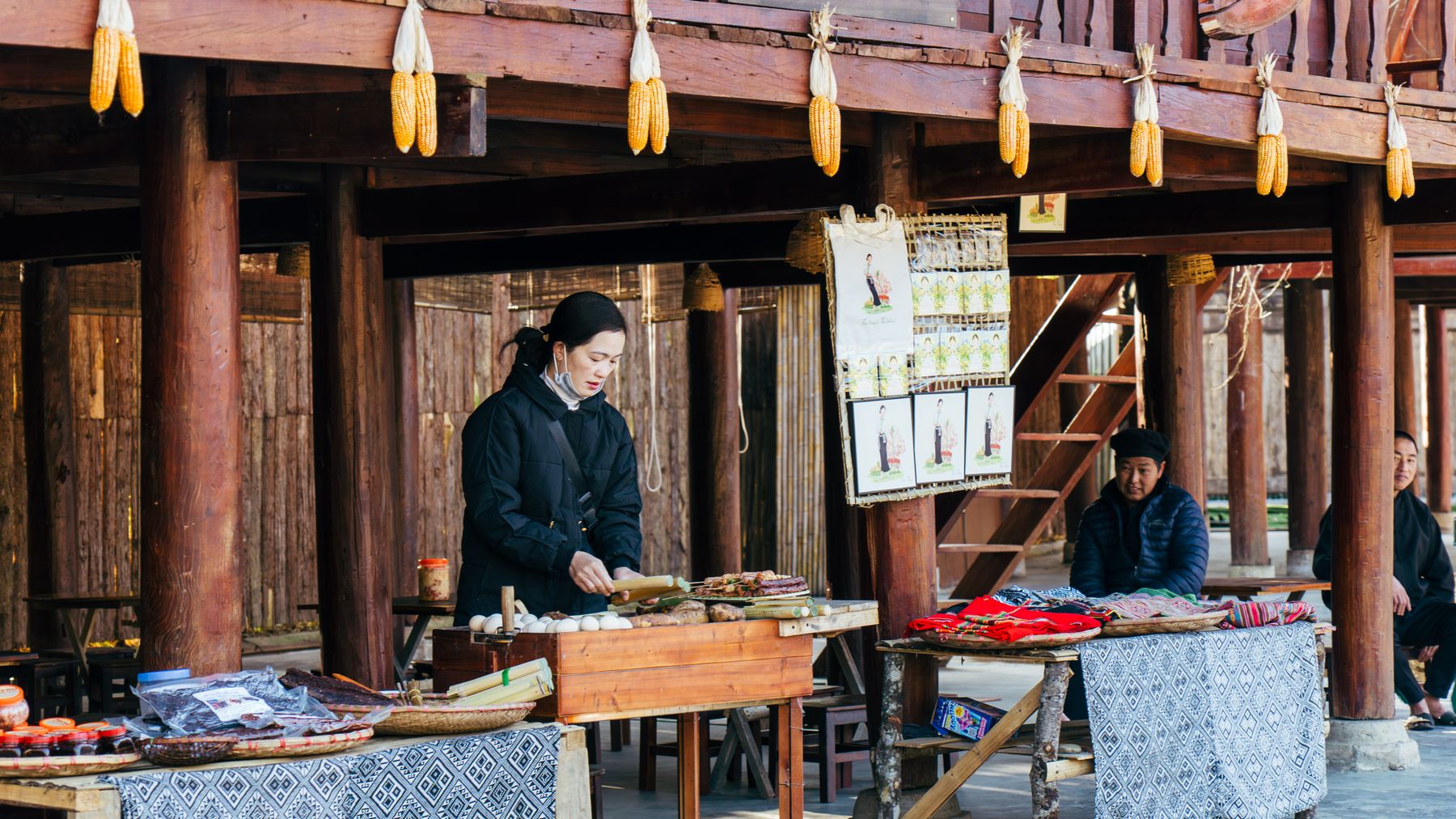
Photo by Gibson Chan on Pexels
Practical tips locals would tell you
- Bring cash. There are no ATMs in Ban Lac. The nearest is in Mai Chau town, and even that one is unreliable. Withdraw in Hanoi before you leave.
- Pack a light layer. Even in summer, evenings in the valley drop to 18-20°C. In winter, you'll want a proper jacket.
- Remove shoes before entering any stilt house. This is non-negotiable.
- Rice wine refills are constant. If you don't want more, turn your cup upside down. Politely declining verbally doesn't always register.
- The Hung Kings Festival period (around the 10th day of the 3rd lunar month) can affect transport and availability in the broader Phu Tho region, so check dates if you're traveling in March or April.
Common mistakes to avoid
Coming on a Saturday. Hanoi residents flood the valley on weekends, especially Saturday nights. The village goes from peaceful to packed. If possible, arrive Monday through Thursday.
Skipping the overnight. Day-trippers see the village for an hour and leave. The entire point of Ban Lac is the evening meal, the music, and waking up to morning mist over the paddies. One night minimum.
Expecting wilderness. Ban Lac is a functioning tourist village, not an untouched hamlet. There are souvenir stalls and the occasional karaoke speaker. Adjust expectations accordingly — the authenticity is in the people and the food, not in some fantasy of isolation.
Practical notes
Ban Lac works best as an overnight side trip from Hanoi — leave in the morning, arrive by lunch, spend the afternoon on a bike, eat with your hosts, sleep, and head back the next day. It pairs well with a longer northwest loop toward Ninh Binh or onward to Pu Luong if you have more time.
Last updated · May 29, 2026 · independently researched, never sponsored.