Ben Tre sits about 85 km southwest of Saigon on a cluster of islands braided by the Mekong River, and it has one defining crop: coconut. The province produces roughly a third of Vietnam (베트남 / 越南 / ベトナム)'s total coconut output, and the locals are not shy about it. Every road in and out of town is lined with palms, every market stall sells coconut candy, and the drink you will be handed at almost every stop — fresh, cold, straight from the shell — is some of the best coconut water you will find anywhere in the country.
Why Ben Tre Coconuts Taste Different
Soil and salinity. The Mekong Delta (메콩 델타 / 湄公河三角洲 / メコンデルタ)'s alluvial islands are laced with a network of tidal channels, and during the dry season (roughly December to April), saltwater intrusion from the sea pushes into the waterways around Ben Tre. Coconut palms are salt-tolerant, and growers here will tell you that a mild salt stress in the soil concentrates the sugars in the fruit. Whether that is folk wisdom or genuine agronomy, the result is coconut water that tastes noticeably sweeter and slightly more complex than the generic green coconuts sold in Saigon ice-cream stalls.
The other factor is freshness. In the city you are drinking a coconut that was harvested days ago and trucked in. In Ben Tre, vendors often pick fruit to order, or at most it has been off the tree for a few hours. The difference in flavour is significant — cleaner, lighter, with none of the faint fermented edge that older coconuts develop.
Types of Coconut Worth Seeking Out
Not all coconuts in Ben Tre are the same, and it pays to know what you are ordering.
Dua Xiem (Siamese coconut) is the one serious coconut drinkers ask for by name. These are smaller than the standard green coconuts, with a slightly yellow-green skin and a water content that is sweeter and more aromatic. Vendors at Ben Tre's markets sell them for around 15,000–20,000 VND each. You will sometimes see them called "dua xiem xanh" (the green Siamese variety) to distinguish them from a yellower-skinned cousin.
Dua Ta is the standard large green coconut, the workhorse of the delta. Less sweet than dua xiem but higher in water volume — good for pure hydration on a hot afternoon.
Dua Dua (young coconut, harvested very early) has almost translucent water with a very mild sweetness and almost no flesh. It is not commonly sold as a drink on its own but sometimes appears blended with ice and a little sugar.
If you want to drink the good stuff, ask specifically for dua xiem. Most vendors understand the request without explanation.

Photo by Vietnam Tri Duong Photographer on Pexels
Where to Drink It Fresh in Ben Tre
Ben Tre Central Market (Cho Ben Tre)
The covered market on Hai Ba Trung Street is the most convenient place to start. Coconut vendors set up along the outer edges of the market building, usually from around 6 am until early afternoon. Expect to pay 15,000–25,000 VND per coconut depending on variety and time of day. Bring your own straw or accept a plastic one — the market has not fully transitioned to alternatives.
Along the Coconut Island (Cu Lao Dua)
About 3 km from the Ben Tre town centre by boat, Phuoc Long Commune — commonly called Coconut Island by tour operators — is a strip of land given over almost entirely to coconut cultivation and small workshops producing "keo dua" (coconut candy). The boat ride takes around 10 minutes from the ferry landing near Ben Tre Bridge. Once on the island, vendors sell fresh coconuts directly from their yards, often chopped open on wooden blocks with a machete. Prices here are slightly cheaper (10,000–15,000 VND) and the fruit is genuinely just-picked. The candy workshops will also press you to taste coconut rice wine, which is a different experience altogether.
Ham Luong Riverside
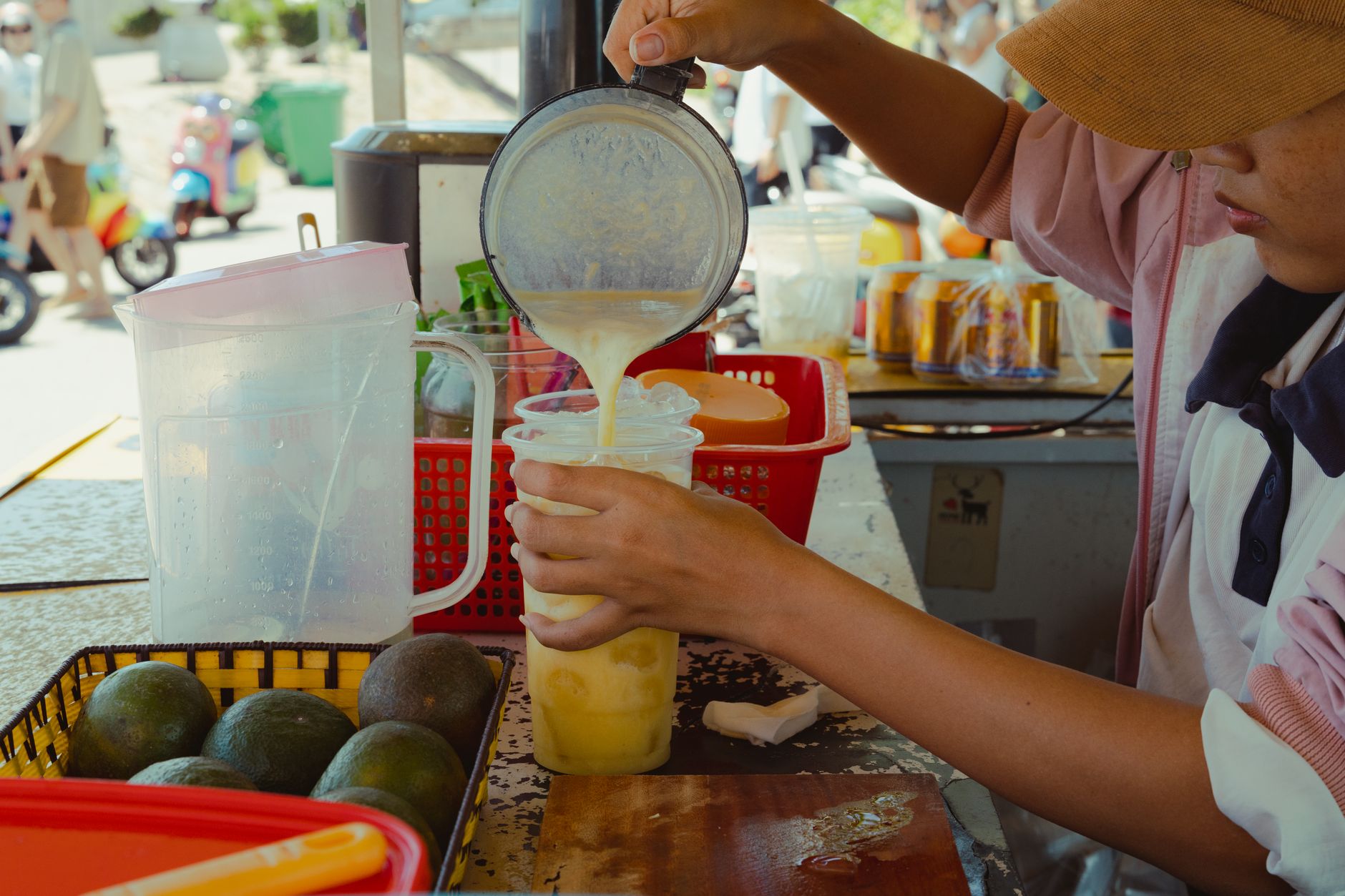
The promenade running along the Ham Luong River branch in the town centre has a strip of informal drink stalls that operate from late afternoon into the evening. These are the kind of places where locals sit on low plastic stools watching river traffic while drinking coconut water mixed with a scoop of shaved ice. A coconut with ice here runs about 20,000 VND. Some vendors also do "nuoc dua tran" — the water blended smooth with a little condensed milk — which sounds wrong but works.

Photo by Loifotos on Pexels
Drinking It Right
"Nuoc dua" is best drunk at close to room temperature or very lightly chilled, not drowned in ice. The ice dilutes the flavour quickly. If you are at a proper coconut stall rather than a roadside cart, ask for it "bot da" (less ice) or "khong da" (no ice) and drink it in the first ten minutes before the shell starts warming the water.
Once the water is gone, ask the vendor to split the shell open with a machete. The "com dua" (coconut flesh) inside a young dua xiem is thin, translucent, and soft enough to scoop with a spoon made from a sliver of the husk — which any experienced vendor will carve for you automatically.
Practical Notes
Ben Tre is an easy day trip from Saigon by bus (around 2.5 hours, 80,000–120,000 VND on Phuong Trang or Hoang Long from Mien Tay Bus Station) or a longer loop if you are making your way through the Mekong Delta via Can Tho. The coconut season is year-round, but dua xiem is at its sweetest during the dry months from December through March. Budget 50,000–80,000 VND for a leisurely morning drinking fresh coconuts at the market and the river walk combined.
Last updated · May 29, 2026 · independently researched, never sponsored.