"Com vong" — pounded young green sticky rice from Lang Vong village on Hanoi's western fringe — is one of those foods that exists for maybe six weeks a year and nowhere else on earth quite replicates it. The rice is harvested young, still milky, roasted over charcoal, then hand-pounded until it compresses into flat, jade-green sheets with a grassy, almost floral sweetness. Miss the window — roughly late September through early November when the autumn rice crop is in — and you wait another year.
What you're buying is almost embarrassingly simple: a thin layer of com pressed onto a ripe banana slice, folded into a small packet wrapped in dried lotus leaf. The contrast — cool, chewy, subtly sweet com against the soft banana — is the whole point. You can also find it folded into "xoi com", a sticky rice preparation layered with com, mung bean paste, and coconut milk, sold at dedicated xoi stalls. Both forms are correct. Both are worth tracking down.
Hanoi (하노이 / 河内 / ハノイ) has dozens of vendors claiming to sell the real thing. Most are fine. A few are genuinely excellent. One or two are coasting on location alone.
Hang Than — The Old Quarter Benchmark
Hang Than Street, Hoan Kiem District
This narrow street near Dong Xuan Market has been the de facto com vong corridor for decades. Several vendors cluster between house numbers 10 and 22, operating fold-out tables on the pavement from around 7am until they sell out — usually by noon on weekends, 2pm on weekdays. Expect to pay 15,000–20,000 VND for a four-piece banana-and-com packet. The com here is typically sourced from Vong village directly, and during peak season the aroma of freshly pounded rice hangs over the whole block. Go before 10am if you want the day's first batch, which has the cleanest, most vivid green color.
Co Lan — The Name Locals Drop
11 Hang Than, Hoan Kiem District
Ask a middle-aged Hanoian where they buy com vong and Co Lan's name comes up more than any other. She's been at this address for over thirty years. The com is pounded to order in small batches throughout the morning, which means the texture stays fresh rather than drying out. A small bag of loose com — for using at home in xoi com — runs 30,000–50,000 VND for 100g depending on the day's harvest quality. She's opinionated about what she sells and will tell you plainly if the morning's batch isn't up to standard. That kind of honesty is rarer than it sounds.
Hours: Roughly 7am–1pm, October–November only. Closed Sundays.
Lang Vong Village Itself — Worth the 8km
Lang Vong, Dich Vong Hau Ward, Cau Giay District
The village that gives com vong its name is now technically absorbed into Hanoi's urban sprawl, about 8km west of Hoan Kiem, but a handful of family producers still operate out of their ground-floor workshop-homes on the lane running off Nguyen Khanh Toan Street. You won't find a shop sign. You follow the smell of charcoal roasting and the rhythmic thud of wooden pestles. Buying directly from a producer costs the same as the Old Quarter — 15,000–20,000 VND per packet — but you're watching the full process, which changes how the food tastes, or at least how you think it tastes. Best combined with a morning bike ride through Cau Giay.
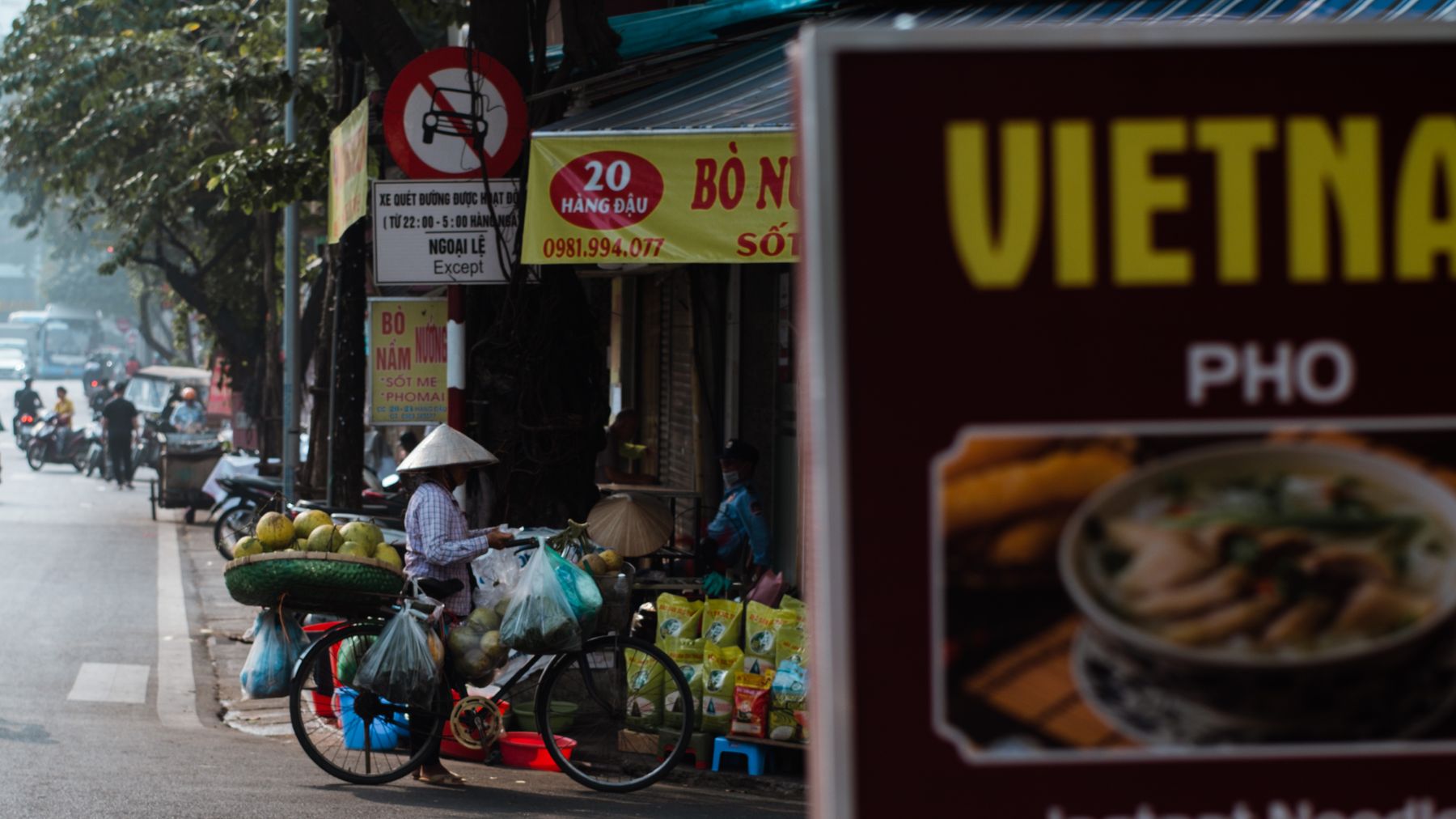
Photo by Hưng Phạm on Pexels
Xoi Yen — For the Xoi Com Version
35B Nguyen Huu Huan, Hoan Kiem District
Xoi Yen is Hanoi's most famous sticky rice institution and during com season they add "xoi com" to the menu — glutinous rice topped with a generous layer of fresh com, mung bean paste, and a drizzle of coconut cream. A portion runs 35,000–45,000 VND. It's richer and more filling than the banana packet version, closer to a proper breakfast. The com layer is applied fresh each morning, so the color is reliably bright. Go before 9am or after the lunch rush; the midmorning queue can stretch half a block.
Hours: 6am–10pm daily, but xoi com sells out by early afternoon.
Ba Thin — Dependable but Unremarkable
Hang Bong Street, Hoan Kiem District
A frequently photographed vendor on the tourist circuit between the Old Quarter and Hoan Kiem Lake. The com is fine — correctly made, properly wrapped, priced at 20,000–25,000 VND — but the sourcing feels less consistent than Hang Than or Co Lan, and the pitch toward foreign visitors means the experience is softer around the edges. Nothing wrong with stopping here if you're passing, but don't detour for it.
Skip-this note: Several vendors near the Weekend Night Market on Hang Dao sell pre-wrapped com packets that have been sitting out for hours. The dried-out texture is obvious once you know what fresh com feels like. If the green color has faded toward yellow-grey and the banana smells overripe, walk on.
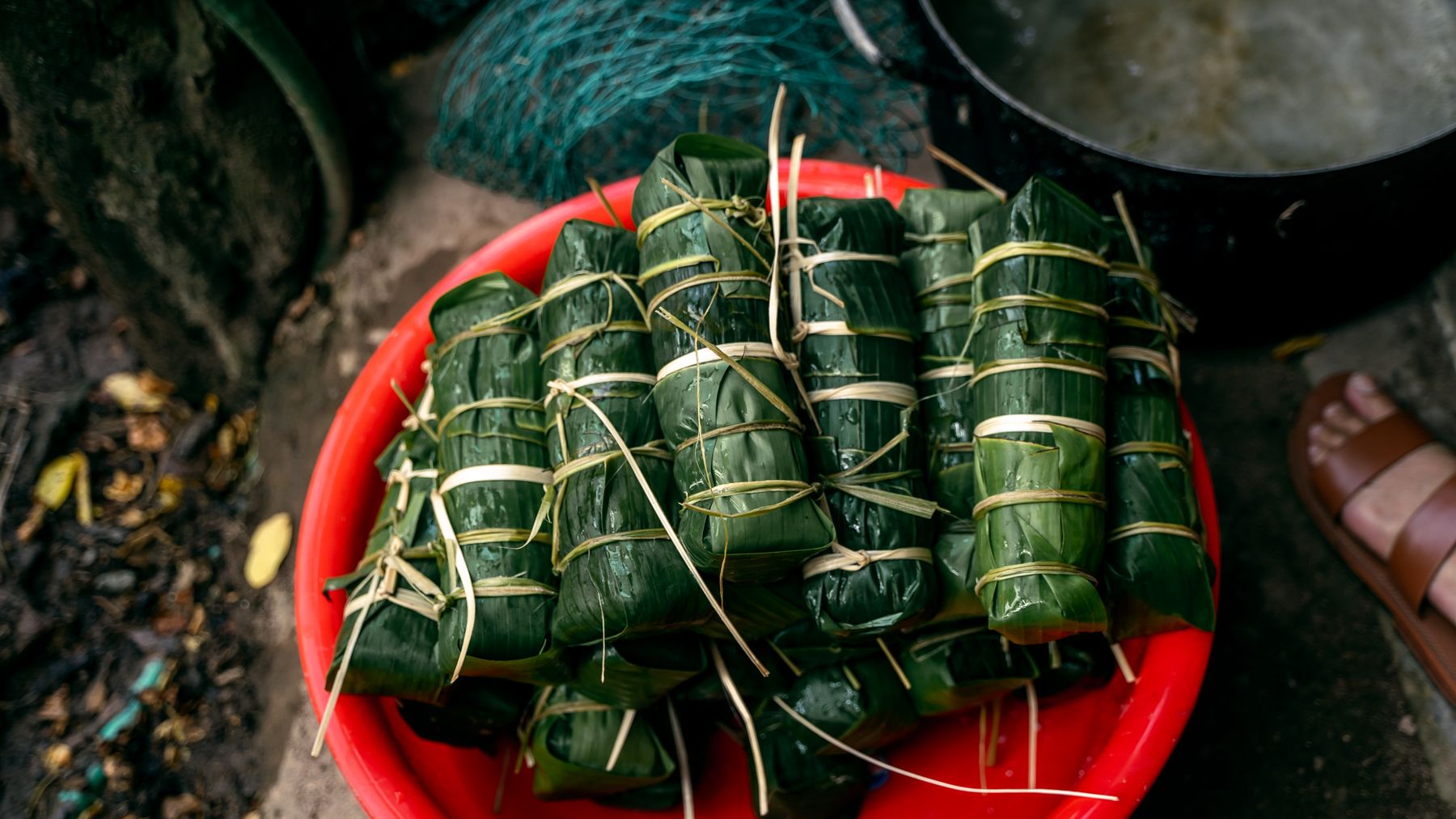
Photo by Vietnam Tri Duong Photographer on Pexels
What to Look For
Fresh com should be a deep, matte green — almost like compressed matcha powder compressed into a sheet. It should be slightly cool to the touch and yield under gentle pressure without crumbling. The fragrance is the clearest signal: roasted grain and fresh grass, faintly sweet. Anything that smells fermented or has a dull olive color has been sitting too long.
Com vong sits naturally alongside Hanoi's other slow, seasonal food rituals — it has the same quiet insistence as a bowl of pho on a cold morning or an egg coffee taken at a window table. It doesn't announce itself. You have to show up at the right time of year and know where to look.
Practical Notes
Com season in Hanoi runs approximately late September through early November; outside that window, most vendors don't operate at all. Cash only at every vendor listed here. If you're staying in the Old Quarter, Hang Than is a ten-minute walk and the easiest starting point.
Last updated · May 26, 2026 · independently researched, never sponsored.