What it is
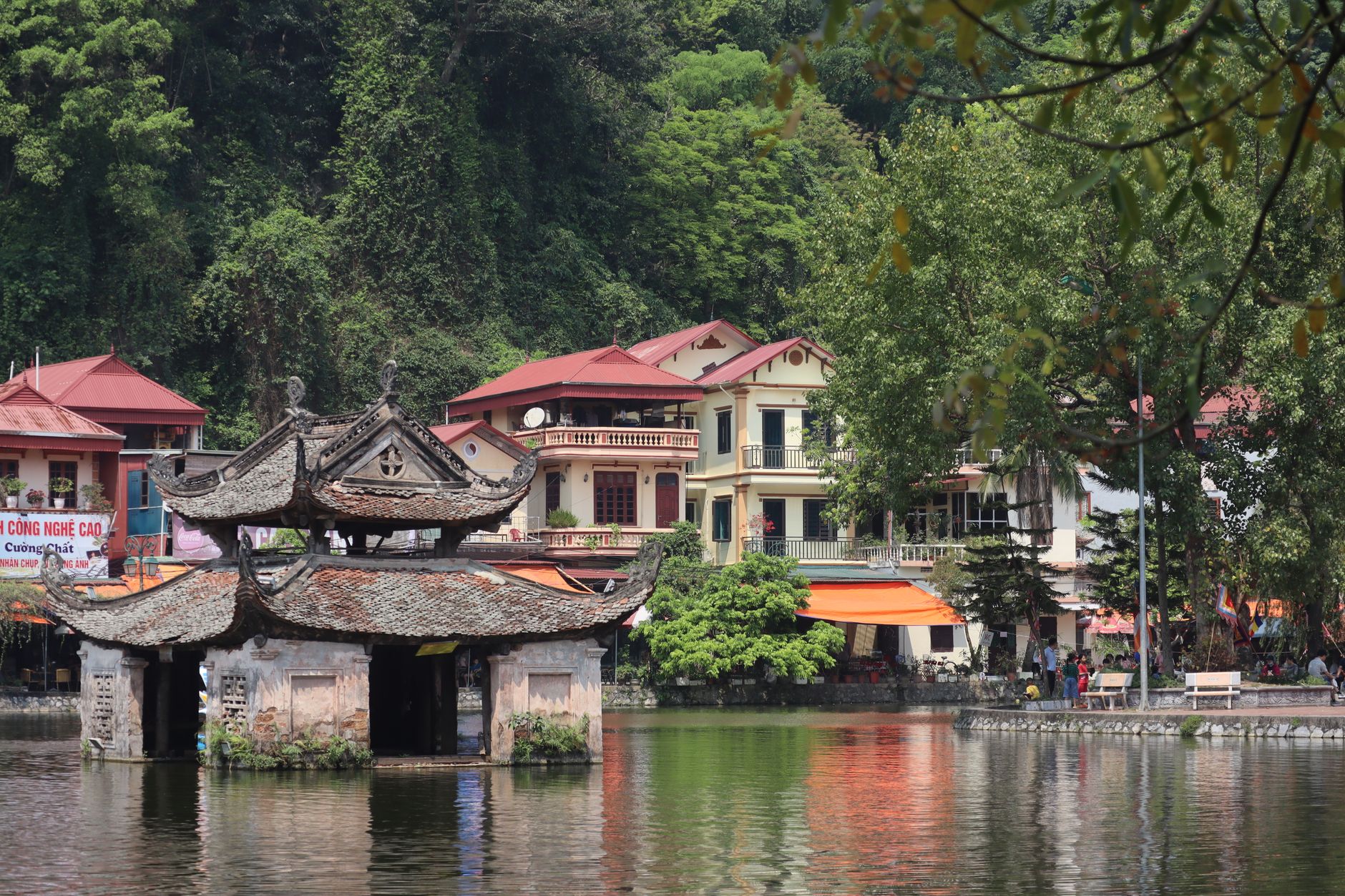
Den Vua Le Dai Hanh is a temple dedicated to Le Hoan (941–1005), the king who founded the Early Le dynasty and ruled Vietnam from the ancient capital of Hoa Lu. The temple sits within the Hoa Lu Ancient Capital complex in Ninh Binh (닌빈 / 宁平 / ニンビン) province, about 12 km northwest of Ninh Binh city center. It's smaller and quieter than the adjacent Den Vua Dinh Tien Hoang, but architecturally it's the more interesting of the two — older timbers, less restoration, more atmosphere.
Le Hoan came to power after the Dinh dynasty collapsed and spent his reign defending the country against Song dynasty incursions and expanding southward. The temple was originally built in the 11th century, rebuilt multiple times, and the current structure dates mostly to the 17th century with some later additions. The layout follows the "noi cong ngoai quoc" style — inner buildings connected by corridors forming a rectangular enclosure.
Why travelers go
Hoa Lu was Vietnam (베트남 / 越南 / ベトナム)'s capital before Thang Long (modern Hanoi) took over in 1010. Den Vua Le Dai Hanh gives you a sense of that pre-Hanoi era without the crowds that pack the Imperial Citadel Thang Long. The temple complex is compact — you can walk it in 30–40 minutes — but the carved dragons on the stone steps, the darkened interior halls with original wooden columns, and the surrounding lotus ponds make it worth the stop, especially if you're already visiting Hoa Lu or nearby Tam Coc.
Most visitors pair it with Den Vua Dinh Tien Hoang (a 5-minute walk away) and then head to the karst landscapes of Trang An or Tam Coc. It works as part of a half-day Ninh Binh cultural loop before you switch to boats and bicycles.
Best time to visit
The sweet spot is February through April and September through November. February and March bring the Hoa Lu Festival (around the 8th–10th of the third lunar month), when the temple fills with processions, incense, and local ceremony — worth seeing if you don't mind crowds. Outside festival time, mornings before 9 AM are reliably empty.
Avoid June through August if you dislike heat and humidity; the temple courtyards have limited shade. December and January can be grey and drizzly, though the mist over the surrounding limestone hills has its own appeal.
How to get there
From Hanoi (about 95 km):
- Bus: Giap Bat bus station to Ninh Binh city, ~2 hours, 80,000–100,000 VND. From Ninh Binh city, grab a Grab bike or local xe om to Hoa Lu (12 km), around 40,000–60,000 VND.
- Motorbike: Straight shot down QL1A or the newer expressway (Cao toc Cau Gie – Ninh Binh), toll around 40,000 VND for motorbikes. Takes 1.5–2 hours depending on traffic.
- Train: Hanoi to Ninh Binh station, 2–2.5 hours, 75,000–120,000 VND depending on seat class. Then taxi or Grab to Hoa Lu.
From Ninh Binh city center, you can also rent a bicycle and ride to Hoa Lu — relatively flat road, takes about 40 minutes, and you'll pass rice paddies and small villages the whole way.

Photo by Hugo Guillemard on Pexels
What to do
Walk the temple halls
The main hall (Bai Duong) is where ceremonies happen — look up at the roof beams, some of which are original 17th-century hardwood. The rear hall houses Le Hoan's altar and a statue of Queen Duong Van Nga, who was wife to both King Dinh Tien Hoang and later Le Hoan (Vietnamese history gets complicated). The stone carvings on the front steps showing dragons in the early Le style are some of the oldest surviving examples in northern Vietnam.
Compare with Den Vua Dinh Tien Hoang
The two temples are a 5-minute walk apart and share a ticket (free entry). Dinh Tien Hoang's temple is larger and more restored; Le Dai Hanh's is rougher, darker, more atmospheric. Seeing both gives you a sense of how the two dynasties overlapped in Hoa Lu.
Climb Ma Yen Mountain
Behind the Hoa Lu complex, a stone staircase leads up Ma Yen (Saddle Mountain) — about 260 steps. From the top you get a wide view over the ancient capital site, rice fields, and karst towers. Takes 15–20 minutes up. Bring water.
Visit during Hoa Lu Festival
If you time it for the festival (typically in April, check lunar calendar), you'll see traditional wrestling, "co nguoi" (human chess), boat races on the river, and a royal procession reenactment. It's one of the larger temple festivals in northern Vietnam and gives the site genuine energy.
Cycle to Tam Coc or Trang An afterward
Hoa Lu sits at the northern end of the Trang An Landscape Complex. After the temples, ride or drive south to Tam Coc (6 km) for the boat trip through rice-paddy karsts, or to Trang An (4 km) for the longer rowing route through caves.
Where to eat nearby
Ninh Binh's signature dish is "com chay" — burned rice scraped from the bottom of the pot, served crispy with stir-fried goat meat or dried shredded pork. You'll find it at small restaurants along the road between Hoa Lu and Tam Coc. A plate runs 50,000–80,000 VND.
Goat meat ("thit de") is the other local specialty — grilled, stewed, or in hotpot. The stretch of restaurants near Thung Nham and along Trang An road all serve it. Budget 150,000–250,000 VND per person for a proper goat spread with rice and sides.
Where to stay
- Budget: Homestays and guesthouses around Tam Coc village, 200,000–400,000 VND/night. Basic rooms, friendly hosts, bicycle rental usually included.
- Mid-range: Small hotels in Ninh Binh city or along the Tam Coc road, 500,000–900,000 VND. Air-con, decent beds, some with pools.
- Upscale: A few boutique resorts near Trang An and Tam Coc, 1,500,000–3,000,000 VND. Rice-paddy views, quiet setting.
Staying near Tam Coc gives you the best base for both Hoa Lu and the boat trips.

Photo by Hồng Quang Official on Pexels
Practical tips locals would tell you
- Entry to the Hoa Lu temples is free. No ticket booth, no ropes.
- Dress modestly — shoulders and knees covered. It's an active worship site, not just a tourist attraction.
- Bring incense if you want to pay respects (sold by vendors outside for 10,000 VND).
- The parking lot has motorbike and car parking for 10,000–20,000 VND. Don't leave valuables visible.
- A local guide at the site entrance will walk you through both temples for about 100,000–150,000 VND. Worth it if you want historical context — signage is minimal and mostly in Vietnamese.
Common mistakes to avoid
- Skipping Le Dai Hanh for Dinh Tien Hoang only. Most tour buses hit only the larger temple. Walk the extra 5 minutes — the older, less-polished Le Dai Hanh temple is the better one architecturally.
- Coming at midday. No shade, harsh light for photos, and any tour groups will be there between 10 AM and 2 PM.
- Not combining with Tam Coc or Trang An. Hoa Lu alone takes 45 minutes to an hour. It works best as the cultural opener before a half-day of karst scenery.
- Expecting English signage. There's almost none. Download a translation app or grab the local guide.
Practical notes
Den Vua Le Dai Hanh is a quick, rewarding stop if you're spending time in Ninh Binh — pair it with the karst boat trips and you get both history and landscape in a single day. The temple is never crowded outside festival season, which is part of what makes it worth your time.
Last updated · May 29, 2026 · independently researched, never sponsored.