
Bidoup Nui Ba National Park is the largest protected forest in the southern highlands, and one of the few places in Vietnam (베트남 / 越南 / ベトナム) where you can hike through genuine montane cloud forest without sharing the trail with a crowd. It sits about 50 km north of Da Lat, straddling what is now part of the expanded Lam Dong province, and if you're already in the area for the cool weather and coffee, this park is worth the detour.
What it is
Established in 2004, Bidoup Nui Ba covers roughly 70,000 hectares of evergreen and mixed forest across the Langbian Plateau. The park's namesake peaks — Bidoup (2,287 m) and Nui Ba (2,167 m) — are among the highest in southern Vietnam. UNESCO designated the larger Langbian area as a World Biosphere Reserve in 2015, and the national park forms its core zone.
The biodiversity here is genuinely impressive without needing to oversell it. Researchers have cataloged over 1,900 plant species and around 400 bird species. It's one of the last habitats for several endemic animals, including the black-shanked douc langur. You probably won't spot one, but knowing they're out there somewhere in the canopy adds a certain weight to the quiet.
Why travelers go
Most visitors come for trekking and birding. The park offers something Da Lat (달랏 / 大叻 / ダラット) proper doesn't — actual solitude in dense highland forest. The trails range from easy half-day loops to multi-day routes that require a guide and basic camping gear. Birdwatchers come specifically for Langbian endemics, and serious birders sometimes spend several days here working through their lists.
The other draw is the K'Ho minority communities living around the park's buffer zone. Some homestay and cultural tourism programs operate through the park management board, offering a less staged version of ethnic minority tourism than you'll find in Sapa.
Best time to visit
The dry season from November to April is your best window. December through February is coolest — expect daytime temperatures around 18-22°C at the park's lower elevations, dropping to 8-12°C at higher points overnight. Mornings are often clear, with clouds rolling in by afternoon.
Avoid June through September. The trails get slippery, leeches are aggressive, and some routes close entirely during heavy rain periods. October is transitional — workable but muddy.
How to get there from Da Lat
From central Da Lat, drive north on National Road 723) for about 50 km. The park headquarters and main entrance sit near the road, roughly 1.5 hours by motorbike or car.
By motorbike: The most common option for independent travelers. Rental bikes in Da Lat run 120,000-180,000 VND/day for a semi-automatic. The road is paved the whole way and in decent condition, though watch for fog patches in the early morning.
By car/taxi: A private car from Da Lat costs around 800,000-1,200,000 VND round trip with waiting time. Grab isn't reliable for the return journey — arrange a round trip or have the driver wait.
By tour: Several Da Lat operators run day trips for 500,000-900,000 VND per person including transport, guide, and entry fees. Quality varies — ask specifically whether the itinerary includes actual trekking or just a drive-through with photo stops.
Park entry fee is 60,000 VND per person.
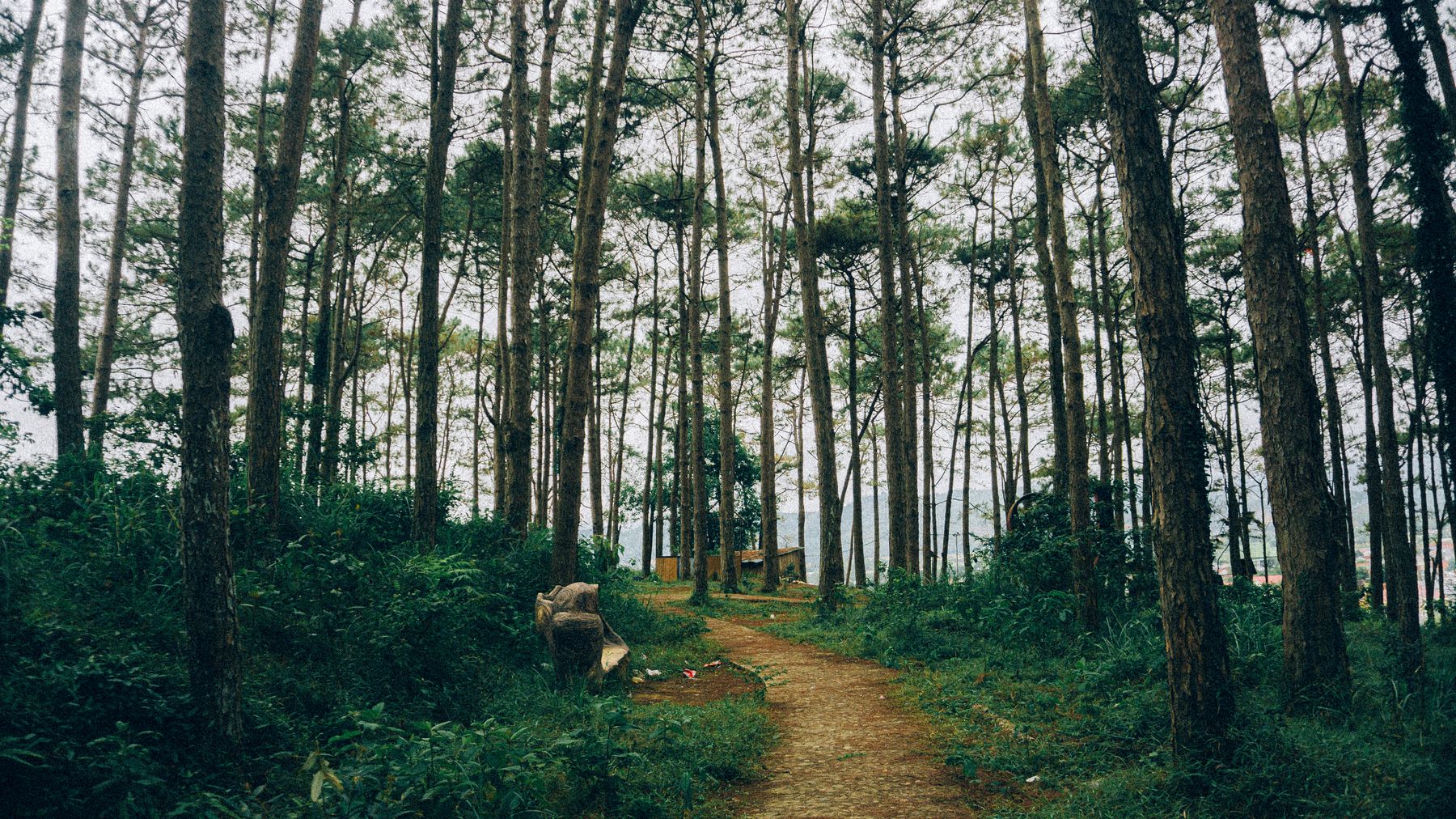
Photo by Tài Nguyễn Văn on Pexels
What to do
Hike the Bidoup Summit Trail
The main event. This is a full-day trek — roughly 9 km one way through three distinct forest zones, starting in pine-oak woodland and climbing into mossy cloud forest near the summit. A park-assigned guide is mandatory (around 500,000-700,000 VND for a group). Start early, ideally by 6:00 AM, to reach the summit before clouds close in. The trail is well-marked but steep in sections.
Walk the Giang Ly Waterfall Trail
A shorter option — about 4 km round trip on a mostly flat, boardwalk-assisted trail through old-growth forest. Good for birding in the early morning. The waterfall itself is modest, but the forest along the way is dense and atmospheric.
Visit a K'Ho village
The park office can arrange visits to nearby K'Ho communities. Some families produce "can" wine (rice wine fermented in jars and drunk through bamboo straws) and weave traditional textiles. These visits feel low-key and un-touristic, partly because not many people come here.
Night walk for wildlife
Ask at park headquarters about guided night walks. These aren't always available, but when they run, you have a chance of spotting civets, flying squirrels, and various frogs. Expect to pay around 300,000-400,000 VND per person.
Drive the 723 scenic route
Even if you skip the trekking, the road itself between Da Lat and the park passes through some of the best highland scenery in the region — pine forests, small coffee plantations, and K'Ho hamlets. Stop wherever looks interesting. There's no need to rush.
Where to eat nearby
Food options near the park are limited. Pack lunch if you're spending the day on trails.
Back in Da Lat, seek out "lau ga la e" — chicken hotpot with "e" leaves, an aromatic herb that grows in the highlands. It's a local comfort dish and available at small restaurants along Phan Dinh Phung street for around 150,000-200,000 VND per pot. Da Lat's night market also has cheap "banh trang nuong" (grilled rice paper with egg and toppings, sometimes called Da Lat pizza) for 20,000-30,000 VND.
If you're spending time in Da Lat, the city's coffee culture is worth exploring — Da Lat grows some of Vietnam's best arabica, and local cafes serve it far better than the robusta-heavy vietnamese coffee you'll find in the lowlands.
Where to stay
There's no accommodation inside the park itself. Your options:
- Da Lat (50 km south): Full range from 200,000 VND dorm beds to 3,000,000+ VND boutique hotels. Most travelers base here.
- Homestays near the park entrance: A handful of K'Ho family homestays operate in the buffer zone. Basic but genuine. Expect 150,000-300,000 VND per night including a simple meal. Book through the park office — don't expect online listings.
- Lac Duong town (12 km south of the park): A few guesthouses in the 250,000-500,000 VND range. Useful if you want an early start without the long drive from Da Lat.

Photo by Quang Nguyen Vinh on Pexels
Practical tips
- Bring layers. Temperatures drop fast at elevation, especially on the summit trail. A light down jacket or fleece is worth carrying even in the dry season.
- Leech socks matter if visiting during shoulder months (October, early November). Tuck your pants into your socks, or buy proper leech socks at outdoor shops in Da Lat.
- Guides are mandatory for the summit trail and recommended elsewhere. Don't try to negotiate your way around this — the rule exists partly for conservation enforcement.
- Cash only. No ATMs near the park. Withdraw in Da Lat before heading out.
- Charge your phone. There's limited mobile signal on trails, and no charging points once you leave the headquarters area.
Common mistakes to avoid
Showing up without a plan is the biggest one. The park isn't set up for drop-in visitors the way more developed Vietnamese national parks are. Contact the park management board in advance (or go through a Da Lat tour operator) to confirm trail availability and guide bookings, especially for the summit route.
Underestimating the summit hike is the other classic error. It's not technical, but it's long and the elevation gain is real. Bring at least 2 liters of water, snacks, and rain gear regardless of the forecast. Weather at 2,200 m doesn't care what it looked like in Da Lat that morning.
Practical notes
Bidoup Nui Ba pairs well with a longer Da Lat stay — spend two or three days in the city exploring the market, the coffee scene, and the French-colonial architecture, then dedicate a full day to the park. If you're heading onward toward the coast, Highway 723 continues east to Nha Trang, making a scenic but winding 4-5 hour ride down to sea level.
Last updated · May 29, 2026 · independently researched, never sponsored.








