What Diep Son actually is
Diep Son is a cluster of three small islands — Hon Bip, Hon Giua, and Hon Duoc — sitting in Van Phong Bay off the coast of Khanh Hoa province. What draws people here is a roughly 700-meter sandbar that connects the islands at low tide. When the water recedes, a pale sandy path emerges just above the surface, creating the illusion of walking through the sea. Locals call it "con duong giua bien" — the road in the middle of the ocean.
The islands were a quiet fishing settlement for decades. Around 2015-2016, photos of the sandbar started circulating on Vietnamese social media, and Diep Son went from unknown to weekend-trip staple almost overnight. It's still relatively low-key compared to places like Phu Quoc or Ha Long Bay, but it's no longer a secret.
Why travelers actually go
The sandbar is the draw, full stop. There's something genuinely strange about standing knee-deep in turquoise water with nothing but ocean in every direction, walking a path that disappears a few hours later. It photographs well, but it's also just an odd, pleasant experience — the kind of thing that doesn't really have an equivalent elsewhere in Vietnam (베트남 / 越南 / ベトナム).
Beyond the sandbar, the islands themselves are small and quiet. No resorts, no cocktail bars, no jet skis. If you want a night away from noise with basic accommodation and fresh seafood, Diep Son delivers. If you want activities and nightlife, you'll be bored by 7 PM.
Best time to visit
Aim for March through September. The sea is calmest, skies are mostly clear, and the sandbar is reliably exposed during low tide windows.
The sandbar's visibility depends entirely on tides. Check a tide chart before booking — you want to arrive on a day with a low tide during daylight hours, ideally late morning or early afternoon for the best light. Vietnamese tide apps or the "Thuy trieu" website give daily predictions for Van Phong Bay.
October through January brings rougher seas and occasional storms. Boat operators may cancel trips, and even if you get out there, overcast skies and choppy water take the shine off. February is transitional — possible but not ideal.
How to get there
The jumping-off point is Van Gia port in Van Ninh district, Khanh Hoa province.
From Nha Trang (nearest major hub)
Nha Trang (냐짱 / 芽庄 / ニャチャン) to Van Gia is about 80 km north, roughly 1.5-2 hours by road.
- Motorbike: The most flexible option. Rentals in Nha Trang run 120,000-150,000 VND/day for a semi-auto. Head north on the QL1A, then cut east toward Van Gia. The coastal stretch past Ninh Hoa is pleasant riding.
- Bus: Catch a north-bound bus from Nha Trang's Phia Bac bus station heading toward Van Ninh. Fare is around 40,000-60,000 VND. Ask the driver to drop you at the Van Gia turnoff, then grab a xe om (motorbike taxi) the remaining 5-6 km to the port for 20,000-30,000 VND.
- Private car/taxi: Around 500,000-700,000 VND one way. Worth it if you're splitting with others.
From Van Gia port to Diep Son
Wooden boats depart when they have enough passengers, usually between 8:00-9:00 AM. Round-trip boat fare is 60,000-80,000 VND per person. The crossing takes about 30-40 minutes. Boats return in the late afternoon, typically 3:00-4:00 PM, though times shift with demand and tides.
If you're staying overnight, confirm the next day's return schedule with the boat operator before they leave.
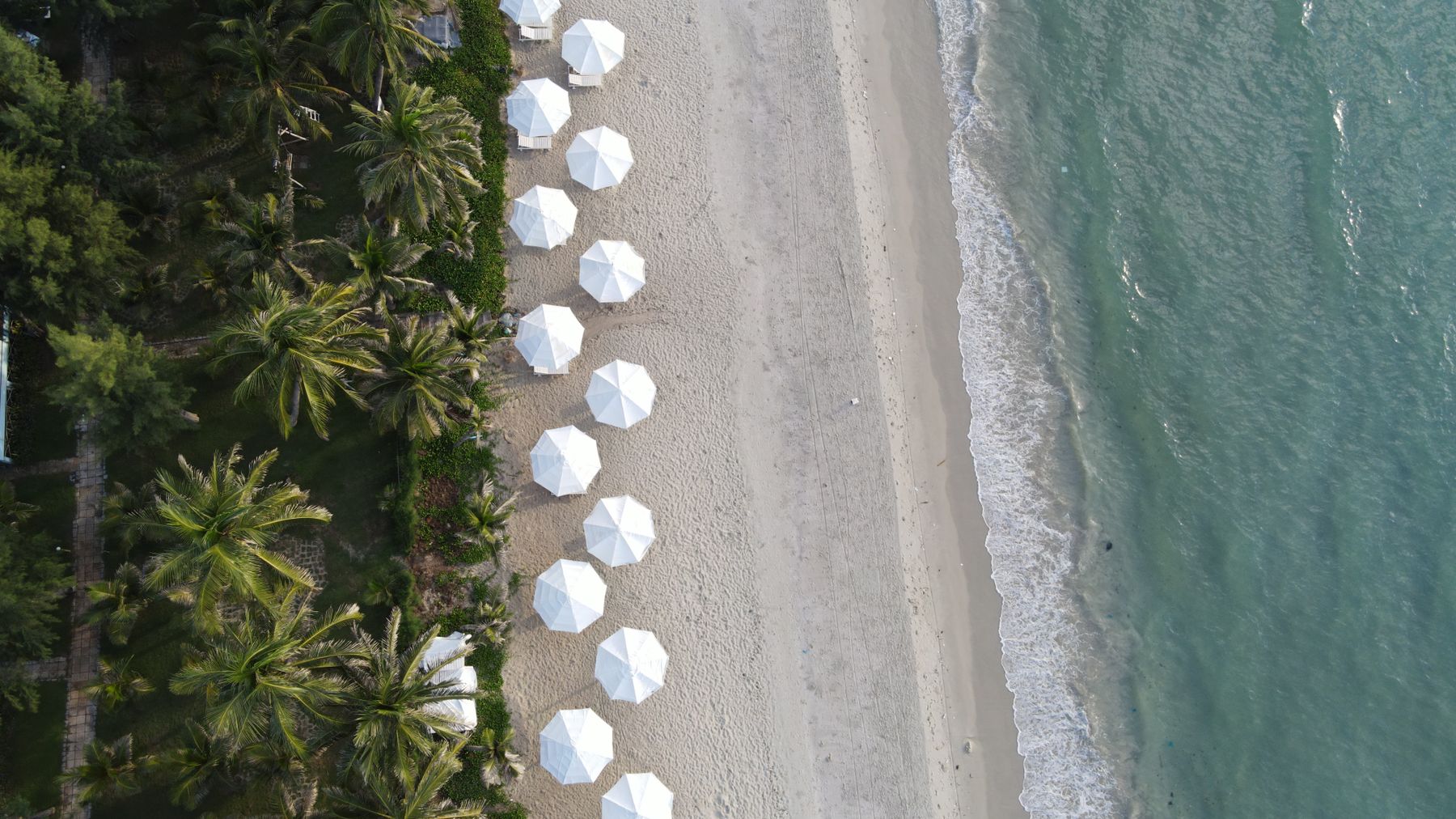
Photo by Quang Nguyen Vinh on Pexels
What to do on Diep Son
Walk the sandbar at low tide
This is why you came. The path between Hon Bip and Hon Giua is the main one — widest, longest, and most photogenic. Water on either side ranges from ankle to thigh depth depending on the tide stage. Wear shoes you don't mind getting wet. The sand is firm but there are occasional patches of broken shell.
Swim and snorkel off Hon Giua
The water around the middle island is clear enough for casual snorkeling. Don't expect coral reefs — it's mostly sandy bottom with scattered rock formations and small fish. Bring your own mask and snorkel; there's nowhere to rent gear on the island.
Hike to the Hon Bip viewpoint
A short scramble up the hill on Hon Bip (maybe 20 minutes) gives you an elevated view of the sandbar and surrounding bay. The trail is informal — just follow the worn path. Go in the morning before it gets hot.
Watch the fishing boats come in
Diep Son still has a small resident fishing community. Late afternoon, the day boats return with their catch. It's low-key, but if you're staying overnight, wandering down to the water when the boats come in is the closest thing to evening entertainment.
Camp on the beach
Some visitors bring tents and camp on Hon Giua's beach. The island is quiet enough at night that you can hear the water from anywhere. No permit needed — just don't leave trash.
Where to eat
There are a handful of family-run kitchens on Hon Bip that cook whatever's fresh. Expect grilled fish, steamed clams, and simple rice plates. A seafood meal runs about 80,000-150,000 VND per person depending on what's available.
Ask for "goi ca" — raw fish salad tossed with herbs, peanuts, and rice paper. It's a central coast staple and the fish here is about as fresh as it gets. "Banh canh" with fish broth is another solid option if someone's making it that day.
Back on the mainland, Van Gia town has cheap "com binh dan" (everyday rice) shops near the port. Nothing remarkable, but filling and under 40,000 VND.
Where to stay
- Homestays on Hon Bip: Basic rooms with fans, shared bathrooms. Expect to pay 200,000-350,000 VND/night per person, sometimes including dinner and breakfast. Mattress-on-floor situations are common. Book ahead on weekends.
- Tents/hammocks: Some homestay owners rent hammocks or tent space for 50,000-100,000 VND. Bring a sleeping bag if you run cold — ocean breeze picks up at night.
- Back in Van Gia/Nha Trang: If roughing it isn't your thing, base yourself in Nha Trang and do Diep Son as a day trip. Plenty of hotels from 300,000 VND (basic) to 2,000,000+ VND (beachfront) in Nha Trang.

Photo by Sóc Năng Động on Pexels
Practical tips locals would tell you
- Bring cash. There are no ATMs on the islands and no card payment anywhere. Bring enough for boat fare, food, accommodation, and a buffer.
- Pack light but pack smart. Sunscreen, a hat, water (at least 2 liters per person), snacks, reef-safe footwear, and a dry bag for electronics. There's one small shop on Hon Bip with limited supplies at marked-up prices.
- Trash goes with you. The islands have no waste management. Whatever you bring, you carry out.
- Check tides before you book anything. Showing up on a high-tide day means no sandbar. The whole point of the trip disappears.
Common mistakes to avoid
- Arriving at midday without shade planning. The sandbar has zero shade. Walking it at noon in July is genuinely punishing. Time your walk for early morning or late afternoon.
- Assuming there's a set boat schedule. Boats run informally. If you show up at Van Gia at 2 PM expecting a departure, you'll likely wait until the next morning.
- Weekend visits during Vietnamese holidays. Diep Son is small. During Tet or summer long weekends, the sandbar gets crowded and homestays fill up days in advance. Weekdays are dramatically quieter.
- Expecting Phu Quoc-level infrastructure. This is a fishing island with basic facilities. No hot water, intermittent electricity in some homestays, no wifi worth counting on. That's the point — but set expectations accordingly.
Practical notes
Diep Son works best as an overnight trip from Nha Trang, giving you time to catch the sandbar at its best and actually unwind. Day trips are possible but tight. The whole experience hinges on tides and weather — check both before committing, and you'll have a good time.
Last updated · May 29, 2026 · independently researched, never sponsored.