What Dinh Cau actually is
Dinh Cau is a small shrine built into the rocky promontory at the mouth of Duong Dong's fishing harbor on Phu Quoc. The structure — part lighthouse, part temple — sits on volcanic rock above the waterline, dedicated to Thien Hau (the sea goddess) and meant to protect fishermen heading out into open water. It dates to 1937 in its current form, though locals say some version of a shrine has stood here much longer.
The name literally means "Cau Temple," and it functions as both a place of worship for the island's fishing community and an informal landmark for travelers orienting themselves around Duong Dong town. It's compact — you can walk the whole site in ten minutes — but its position on the headland gives it an outsized visual presence, especially at dusk.
Why travelers go
Three reasons, really:
-
Sunsets. The west-facing rock shelf is arguably the best free sunset viewpoint on Phu Quoc (푸꾸옥 / 富国岛 / フーコック). No admission fee, no resort gate, no cocktail minimum. Just limestone, salt air, and an unobstructed horizon.
-
The night market. Dinh Cau Night Market begins directly behind the shrine, stretching along Bach Dang and Vo Thi Sau streets. It's the island's main street-food corridor — grilled scallops, "hu tieu" soup, sea urchin with lime, and fresh coconut for 30,000–50,000 VND.
-
A sense of place. Phu Quoc has gone resort-heavy in the south, but Duong Dong still feels like a fishing town. Dinh Cau is the physical anchor of that identity — incense smoke, painted dragons, fishing boats tied up twenty meters away.
Best time to visit
Dry season runs November through April. Sunsets are clearest December to March; humidity drops and you get those sharp orange-to-purple gradients over the Gulf of Thailand.
For the shrine itself, arrive around 4:30–5:00 PM. You'll have time to explore before the crowd builds for sunset (which hits around 5:45–6:15 PM depending on the month). The night market fires up around 5:00 PM and runs until 10:00–10:30 PM.
Avoid rainy season afternoons (June–September) — the rocks get slippery and the sky tends to cloud over by 4 PM.
How to get there
Dinh Cau sits at the western end of Bach Dang Street in Duong Dong, Phu Quoc's main town.
- From Phu Quoc International Airport: 10 km, about 20 minutes by taxi or Grab. Expect 80,000–120,000 VND.
- From Long Beach hotel strip: 3–5 km north, 10 minutes by motorbike. Parking is free along the harbor road.
- From the southern resorts (An Thoi area): 25 km, 35–40 minutes. Most visitors combine it with a Duong Dong evening.
Renting a motorbike (150,000–200,000 VND/day) is the standard move on Phu Quoc. Roads around Duong Dong are paved and flat.

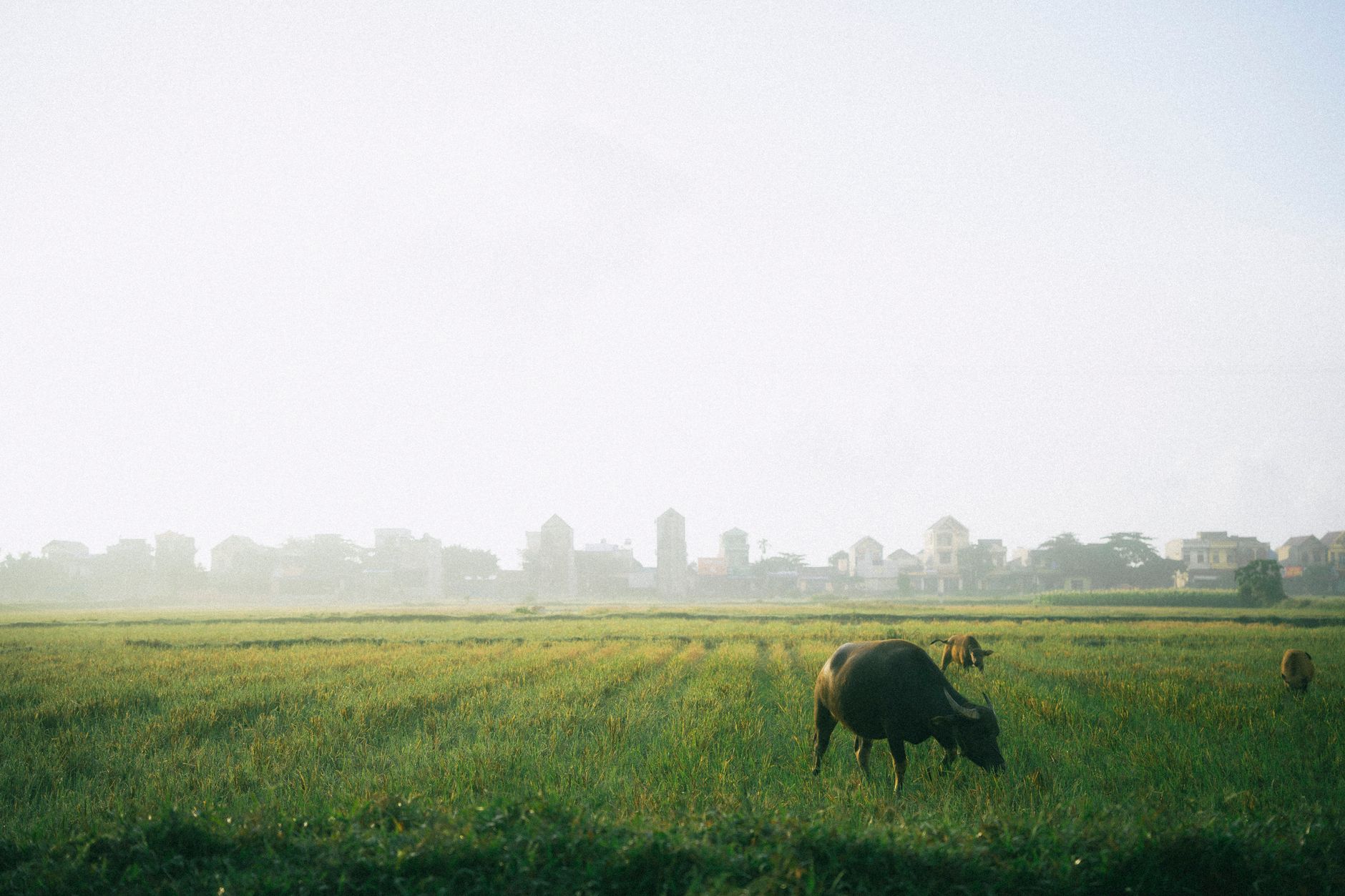
Photo by Luke Dang on Pexels
What to do
Walk the shrine
Climb the short staircase cut into the rock. The shrine interior is tiny — a single room with altars, offerings of fruit and incense, and faded murals of sea scenes. The exterior terrace is where everyone lingers, watching fishing boats motor past.
Photograph the harbor
The north side of the headland overlooks Duong Dong's working harbor. Blue and red wooden boats stacked gunwale to gunwale. Best light: early morning (6:00–7:00 AM) or the golden hour before sunset.
Hit the night market
Dinh Cau Night Market is a 500-meter strip of seafood stalls, souvenir shops, and fruit smoothie carts. Highlights:
- Grilled "muc" (squid) on skewers — 60,000 VND
- Steamed "oc" (snails) with lemongrass — 80,000–100,000 VND
- Fresh spring rolls ("goi cuon") — 30,000 VND for a plate of four
- Phu Quoc fish sauce ice cream at a few stalls — sounds weird, tastes like salted caramel. 25,000 VND.
Watch the fishing fleet depart
If you're up early, the harbor is active from 5:00 AM. Boats head out with ice and nets; others return with the night catch. It's uncommercialized and real.
Where to eat nearby
- Quan Bui (Bach Dang Street): Solid "com tam" and grilled pork over rice. 55,000–75,000 VND per plate.
- Night market stall row 2 (unnamed, look for the longest queue near the middle): Crab hotpot for two, around 250,000 VND.
- Xin Chao Restaurant (Tran Hung Dao): A step up in price, good "banh xeo" — crispy turmeric crepes stuffed with shrimp. 90,000 VND.
For Vietnamese coffee, there are a handful of sidewalk cafes on Bach Dang. Order "ca phe sua da (연유커피 / 越南冰咖啡 / ベトナムアイスコーヒー)" for 25,000–35,000 VND and watch the harbor traffic.
Where to stay
Duong Dong has the widest range of accommodation on Phu Quoc:
- Budget: Guesthouses on Tran Hung Dao or Nguyen Trung Truc streets. 300,000–500,000 VND/night for a clean room with A/C.
- Mid-range: Boutique hotels along Bach Dang with harbor views. 800,000–1,200,000 VND/night.
- Upscale: The resort strips are south (Long Beach) or north (Ong Lang). Budget 2,000,000+ VND if you want a pool and beach access, then ride to Dinh Cau for the evening.
Staying in Duong Dong puts you within walking distance of Dinh Cau, the night market, and the day market (Cho Duong Dong) — which is worth a morning visit for dried seafood and fresh fruit.

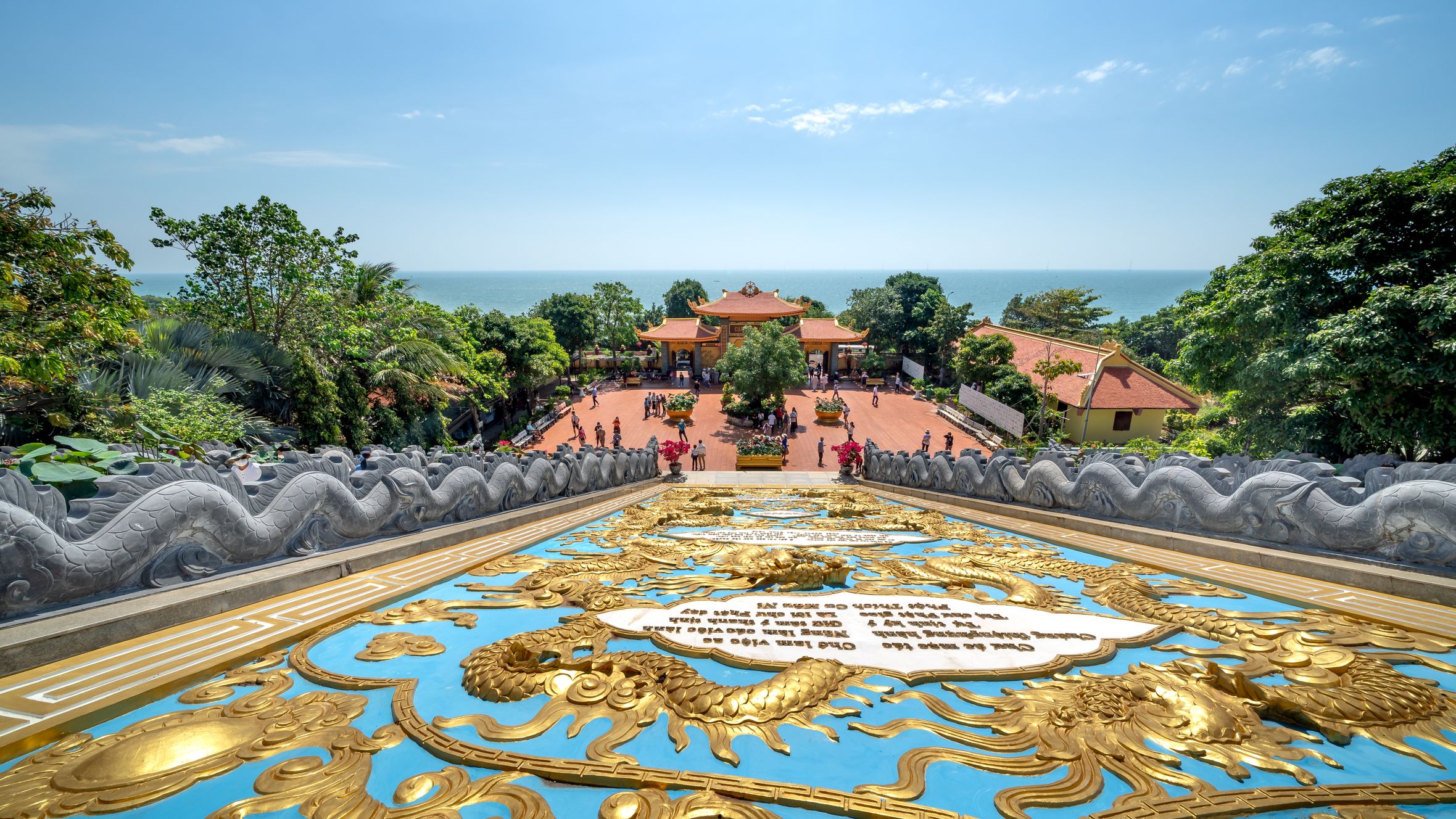
Photo by HONG SON on Pexels
Practical tips
- Footwear: The rocks around the shrine are uneven and can be wet from spray. Skip the flip-flops; sandals with a heel strap work better.
- Crowds: Sunset draws 100+ people on peak-season weekends. If you want a photo without heads in frame, arrive 30 minutes before golden hour.
- Respect: It's an active place of worship. Don't climb on the altar furniture or pose with the incense urns. Remove shoes if entering the inner shrine room.
- Money: The night market is mostly cash. ATMs are on Nguyen Trung Truc Street, 200 meters away.
Common mistakes
- Skipping the morning. Most travelers only come for sunset. The shrine at 6 AM — empty, quiet, good light — is a different experience.
- Eating only at the night market. The market is fun but tourist-priced. For better "hu tieu" and cheaper seafood, walk 10 minutes east to the local day market area.
- Confusing Dinh Cau with Dinh Ba. Dinh Ba is a separate, larger temple in town. They're 800 meters apart. Dinh Cau is the one on the rocks at the harbor mouth.
Final note
Dinh Cau isn't a half-day destination — it's a 90-minute stop that anchors an evening in Duong Dong. Come for the light, stay for grilled squid and a slow walk through the night market. It's one of the few spots on Phu Quoc that still feels like it belongs to the island rather than the resorts.
Last updated · May 29, 2026 · independently researched, never sponsored.