Nha Trang (냐짱 / 芽庄 / ニャチャン) does a lot of things with fish, but "banh canh cha ca" — thick tapioca noodles in a fish-cake broth — might be the most honest expression of what this coastal city actually eats on a Tuesday morning.
What You're Actually Eating
The bowl starts with the noodles. "Banh canh (반깐 / 粗米粉汤 / バインカイン)" noodles are thick, round, and slightly chewy — closer in texture to udon than to the thin rice noodles most visitors associate with Vietnamese food. In Nha Trang, they're made from tapioca starch rather than rice flour, which gives them a translucent, almost glassy look and a dense, slippery bite that holds up well in a hot broth.
The broth is the thing. It's made from fish bones — typically "ca thu" (mackerel) or "ca ngat" (catfish) — simmered with shrimp paste and a small amount of annatto oil that turns the surface a faint orange. It's thicker than pho broth, somewhere between a clear soup and a light stew, with a salinity that reads as ocean rather than stock pot. On top: sliced "cha ca" fish cakes, either steamed or lightly fried, a tangle of green onion, a scattering of crispy fried shallots, and sometimes a spoonful of shrimp paste stirred in at the table.
How It Differs from the Rest of Vietnam
Banh canh appears across the country, but it shifts significantly by region. In the south — Saigon, the Mekong Delta — you'll find "hu tieu"-adjacent versions that use pork bones in the broth and top the bowl with quail eggs or sliced pork. In Hue, "banh canh" runs toward a murkier, fermented shrimp paste base with crab or pork hock, which is rich and funky in a completely different direction. Da Lat has its own version built around pork and mushrooms.
Nha Trang's is the most seafood-forward of the lot. The cha ca here is made from fresh white-fleshed fish caught just offshore — it has a firmness and mild sweetness that the frozen or processed fish cake in city versions simply doesn't match. The broth is also notably cleaner in flavor than Hue's version, less funky, more directly marine. It's a bowl that makes sense geographically: you're a kilometer from the water, and the ingredients reflect that.
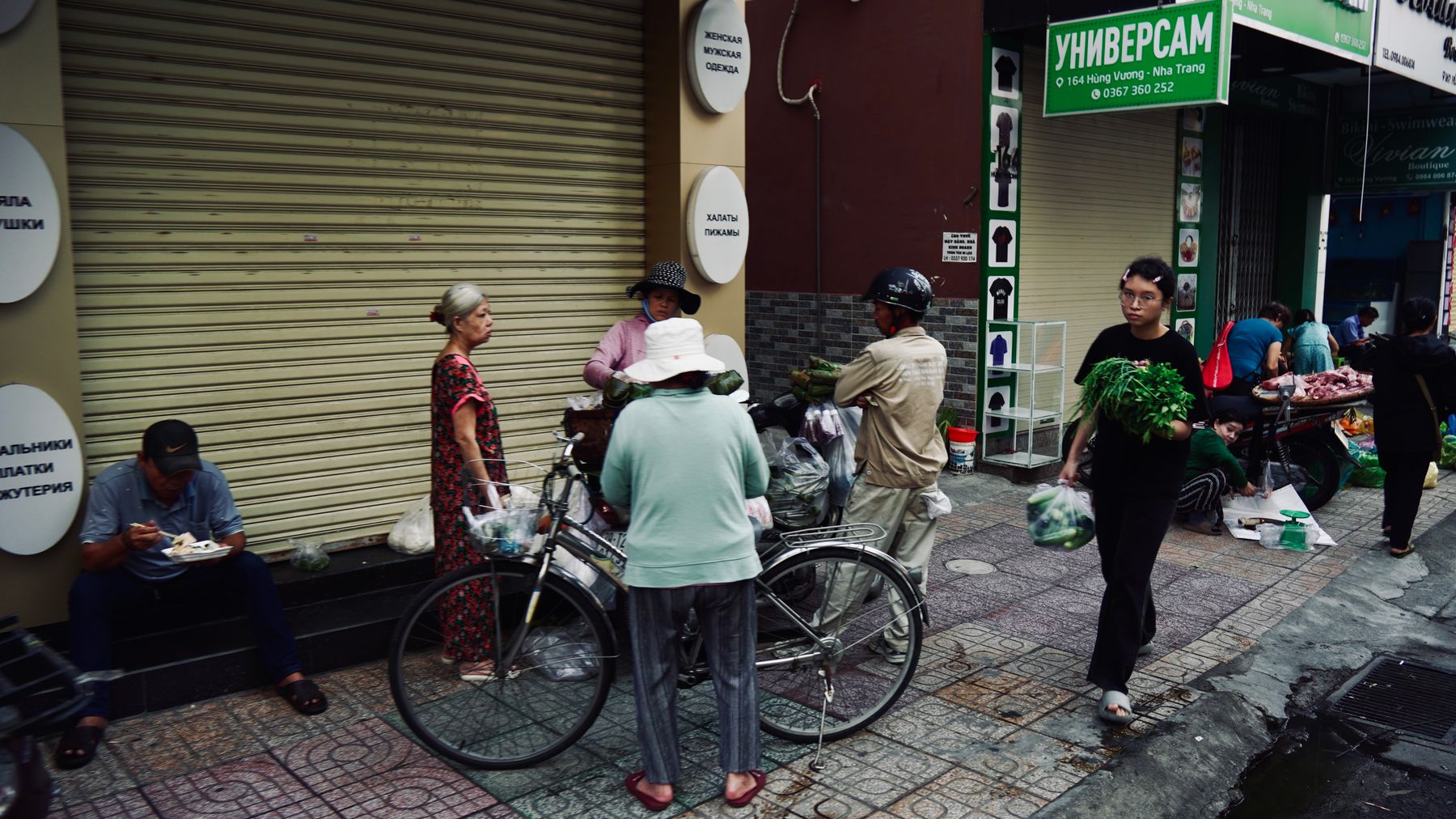
Photo by Tuan Vy on Pexels
Where to Eat It
Banh Canh Cha Ca Ba Lua
The most consistently recommended spot among locals. Ba Lua operates out of a narrow shophouse on Nguyen Thi Minh Khai street, opens around 6:00 AM, and is usually sold out by 10:30. A standard bowl runs 35,000–45,000 VND depending on whether you add extra fish cake. The cha ca here is steamed rather than fried, which keeps it softer and lets the fish flavor come through without the oil. Tables spill onto the sidewalk; arrive before 8 AM if you want a seat without waiting.
Quan 75 — Hoang Dieu
A slightly more structured setup on Hoang Dieu street, open from roughly 6:30 AM to noon. This version uses both steamed and pan-fried cha ca in the same bowl, and the broth has a deeper color from a heavier hand with the annatto. Prices are similar — 40,000–50,000 VND — and the bowls are slightly larger. Good option if Ba Lua is already closed by the time you surface.
Street Carts Near Dam Market (Cho Dam)
If you're already at Dam Market for the morning, several carts on the south side of the building serve banh canh cha ca from mobile setups. Quality varies more here than at the dedicated spots above, but the price drops to around 25,000–30,000 VND and the experience of eating it surrounded by the market chaos is worth something on its own terms.

Photo by FOX ^.ᆽ.^= ∫ on Pexels
How to Order and Eat It
Ask for "mot to banh canh cha ca" — one bowl. If you want extra fish cake, say "them cha ca." The table will have a small dish of sliced fresh chili and a bottle of fish sauce; a squeeze of lime is usually on the side. Most locals add a bit more shrimp paste ("mam ruoc") from the jar on the table, which deepens the brine significantly — worth trying even if fermented shrimp paste is outside your usual comfort zone. Eat it hot. The tapioca noodles absorb liquid quickly and turn gluey if they sit.
A Note on Timing
This is a breakfast and early-lunch dish. By early afternoon, the good shops are closed and you're left with reheated broth that has thickened awkwardly. Plan for a 7:00–9:00 AM window if you want the bowl at its best — fresh noodles, broth that hasn't been sitting for hours, and fish cake that was made the same morning.
Practical notes: Nha Trang's banh canh cha ca is cheap, fast, and genuinely specific to where you are — don't skip it in favor of a hotel breakfast. Most stalls are cash only; 50,000 VND covers a full bowl with extras and change to spare.
Last updated · May 29, 2026 · independently researched, never sponsored.