
What Dong Kinh Chu actually is
Dong Kinh Chu is a natural limestone cave system on the slopes of Kinh Chu mountain (also called An Phu mountain) in Kinh Mon district, now part of Hai Phong after the 2025 administrative merger with Hai Duong. The site has been a place of Buddhist worship since at least the Tran Dynasty (13th–14th century), and the caves contain carvings, inscriptions, and small shrines that have accumulated over several hundred years.
The complex sits within a karst landscape that geologically resembles Ninh Binh (닌빈 / 宁平 / ニンビン) or Ha Long Bay — towering limestone pillars wrapped in vegetation, except here you're inland and there's almost nobody around. The main grotto is tucked into the cliff face at the end of a stone staircase, and inside you'll find Buddhist altars, stalactites, and walls covered in Chinese-character inscriptions dating back centuries. It was recognized as a national historical and cultural relic in 1992.
If you've been to the major pagoda complexes around Hanoi and want something quieter, with real age to it, this is that place.
Why travelers go
Dong Kinh Chu isn't on most tourist itineraries, which is exactly the point. You go for three reasons: the historical inscriptions carved directly into cave walls (some dating to the 15th century), the strange beauty of a working Buddhist shrine inside a natural cave, and the surrounding karst scenery that you can enjoy without fighting bus groups for photo space.
It's also a chance to see a part of the Red River Delta that most visitors skip entirely. Kinh Mon district is agricultural, quiet, and deeply local. If your trip through northern Vietnam (베트남 / 越南 / ベトナム) has been heavy on cities and packaged tours, a morning here recalibrates things.
Best time to visit
October through March gives you the most comfortable weather — dry, cooler (18–25°C), and good visibility across the karst landscape. The cave itself stays cool year-round, but the climb up the stone steps in July or August heat (35°C+, high humidity) is genuinely unpleasant.
Avoid the days immediately around Tet and the Hung Kings Festival period if you want solitude. Local Buddhist visitors come in larger numbers during the first and fifteenth of each lunar month, so weekdays outside those dates are quietest. February and March often bring a light drizzle that makes the limestone and moss look particularly good, if you don't mind damp steps.
How to get there from Hai Phong
From central Hai Phong, Dong Kinh Chu is roughly 45 km northwest, in Kinh Mon district. You have a few options:
Motorbike or car: The most practical choice. Take QL5 (National Highway 5) west, then turn north toward Kinh Mon town. From there, follow signs to An Phu. Total drive time is about 50–60 minutes depending on traffic. If you're renting a motorbike in Hai Phong, expect to pay 120,000–180,000 VND per day for a Honda Wave or similar.
Grab car: A one-way Grab from central Hai Phong runs roughly 250,000–350,000 VND. Getting a return Grab from Kinh Mon is less reliable — have your driver wait, or negotiate a round trip.
Bus: Local buses run from Hai Phong to Kinh Mon town (around 30,000–40,000 VND), but from Kinh Mon you'll still need a xe om (motorbike taxi) for the last 5–6 km to the site. Budget about 30,000–50,000 VND for that leg.
If you're coming from Hanoi (about 100 km), take the Hanoi–Hai Phong expressway and exit at Kinh Mon. Drive time is around 1.5 hours.

Photo by Hugo Heimendinger on Pexels
What to do
Explore the main grotto
The primary cave is reached via a stone staircase of around 100 steps. Inside, the cave opens into a high-ceilinged chamber with natural stalactites and Buddhist shrines. Look for the Chinese-character inscriptions carved into the rock walls — some are poems, others are dedications from officials and monks across different dynasties. Bring a small flashlight; the deeper sections aren't lit.
Read the cliff inscriptions
Outside the main cave entrance, the cliff face holds additional carved inscriptions. These are some of the better-preserved examples of historical rock carving in the north. A few panels describe the mountain's significance and record restoration work from the Le Dynasty period. Even if you can't read classical Chinese, the physical scale of the carvings — some panels are over a meter wide — is worth the climb.
Walk the karst ridge
A trail continues beyond the main grotto along the ridge of Kinh Chu mountain. It's not a long hike — maybe 30–40 minutes round trip — but the views over the rice paddies and surrounding limestone formations are the kind of thing you came to northern Vietnam for. The trail is rough in places, so wear proper shoes, not sandals.
Visit the pagoda complex below
At the base of the mountain, a small pagoda complex serves as the working religious site. It's modest compared to places like Bai Dinh, but that's part of its appeal — incense smoke, a few resident monks, and none of the commercial sprawl you find at bigger complexes.
Combine with nearby Kinh Mon sites
If you have a full day, the Kinh Mon area has several other small karst caves and pagodas within a 10–15 km radius. An Phu temple complex is nearby, and the whole district is worth slow exploration by motorbike.
Where to eat nearby
Kinh Mon isn't a food destination, but you won't go hungry. In Kinh Mon town, look for "bun ca" (fish noodle soup) — the local version uses freshwater fish from nearby ponds, served with tomato broth and dill. A bowl runs 25,000–35,000 VND. There are also basic com binh dan (daily rice) spots along the main road where 35,000–50,000 VND gets you rice, a protein, and sides.
If you're heading back toward Hai Phong afterward, save your appetite — Hai Phong is famous for "banh mi" (the cay variety here, with a spicy pork filling, is a local specialty) and the city's version of "bun ca" is arguably the best in the north.
Where to stay
Most visitors treat Dong Kinh Chu as a day trip from Hai Phong or Hanoi. In Kinh Mon town, there are a handful of nha nghi (guesthouses) in the 200,000–350,000 VND range — basic but clean. Don't expect English-speaking staff.
For more comfortable options, base yourself in Hai Phong city, where budget hotels start around 300,000–500,000 VND/night and mid-range places run 600,000–1,200,000 VND.
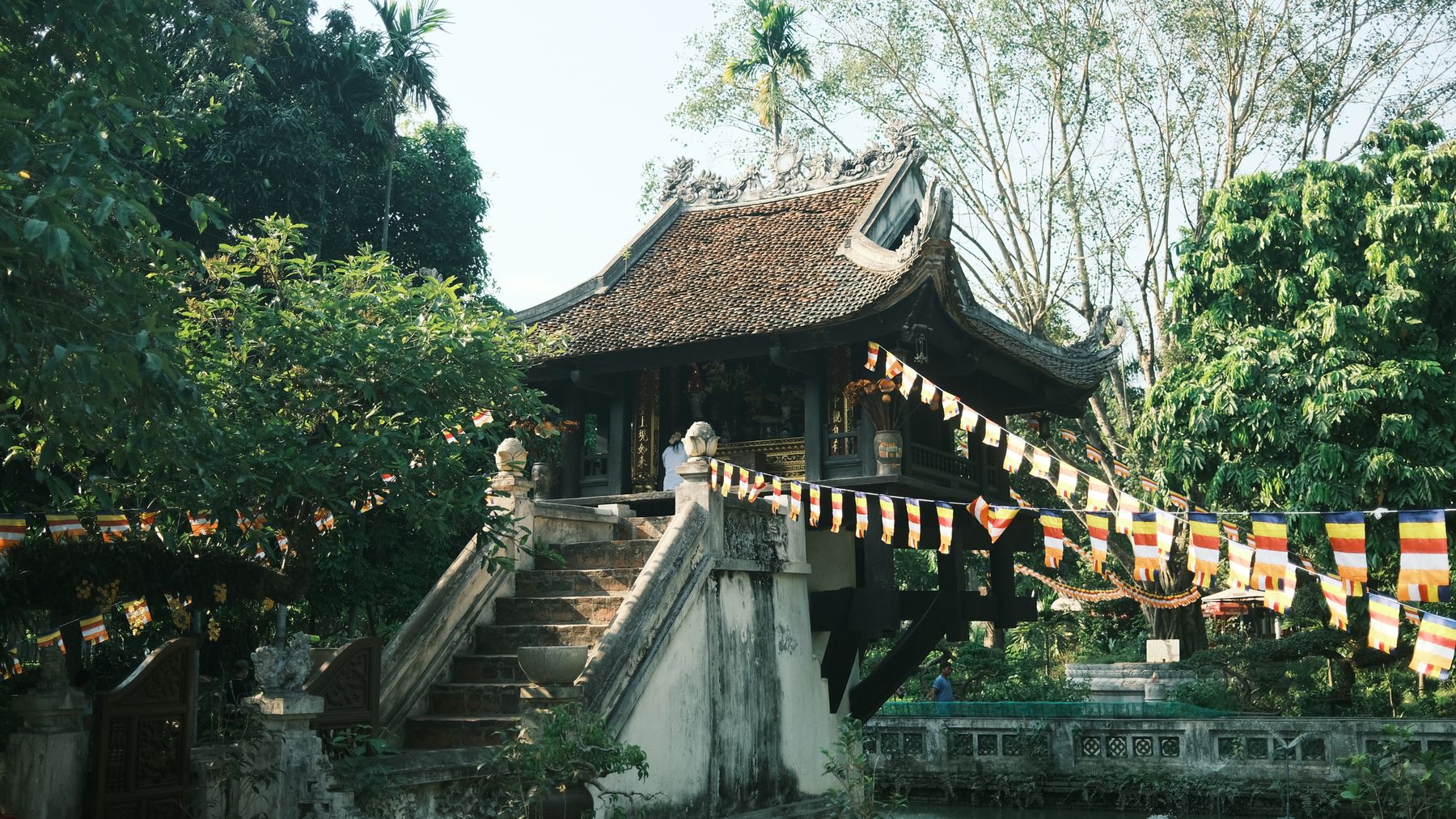
Photo by Quý Nguyễn on Pexels
Practical tips locals would tell you
- Dress modestly for the cave shrines — cover your shoulders and knees. This is an active place of worship.
- Bring water and a flashlight. There's no vendor at the grotto itself, only at the base.
- The stone steps get slippery after rain. Grip-sole shoes matter.
- Entry is free, though there's a donation box at the pagoda. Leaving 20,000–50,000 VND is standard.
- If you're visiting during a Buddhist holiday, expect incense smoke thick enough to sting your eyes in the enclosed cave.
Common mistakes to avoid
- Trying to visit by public transit alone. The last stretch from Kinh Mon town has no regular service — arrange your own wheels.
- Rushing it. The site is small but rewards slow looking. Budget at least 1.5–2 hours for the grotto, inscriptions, and ridge walk.
- Skipping the ridge trail. Most visitors see the cave and leave. The walk along the top is the best part.
- Coming in flip-flops. The steps are uneven, mossy, and steep in sections. Sneakers minimum.
Practical notes
Dong Kinh Chu works best as a half-day trip from Hai Phong, combined with a slow motorbike loop through Kinh Mon district. It's the kind of place that reminds you northern Vietnam's karst landscapes extend well beyond the usual suspects, and that some of the most interesting historical sites in the country are the ones nobody's bothered to put on a tour bus route yet.
Last updated · May 29, 2026 · independently researched, never sponsored.






