Hmong cooking doesn't try to impress you. It was developed at elevations above 1,000 meters, in communities where nothing goes to waste and the calendar is organized around planting and harvest. Spend any real time in the highlands around Sapa, Ha Giang, or Dong Van and you start to understand that the food here isn't rustic by accident — it's precise, purposeful, and worth paying attention to.
The Philosophy Behind the Pot
Hmong kitchens operate on a few consistent principles: use the whole animal, preserve what can be preserved, and cook in ways that generate heat as much as nutrition. At 1,500 meters in January, a bowl of something hot and fatty is not comfort food — it's practical. Lard is common. Smoking and drying are the default preservation methods. Herbs grow wild and get used fresh or bundled into broths without much ceremony.
Meat tends to be pork, chicken, or — at significant occasions — horse or buffalo. Vegetables lean toward whatever survives the altitude: mustard greens, chayote, foraged bamboo shoots, wild mushrooms pulled from the forest after rain. Rice grows in terraced paddies at lower elevations; at higher ones, corn takes over as the dominant starch, which shapes everything from the bread to the wine.
"Thang Co": The Dish People Either Love or Walk Away From
"Thang co" is the dish most associated with Hmong market culture, and it will divide any group of travelers immediately. It's a stew — traditionally made from horse meat and organs, cooked low and slow in a large communal pot with lemongrass, galangal, and a proprietary spice blend that varies by village and by cook. The result is dark, deeply savory, and unmistakably offal-forward.
The best place to encounter it is at a highland market, ideally on a Sunday morning in Bac Ha or Can Cau, where the pot has been going since before dawn. You order by the bowl — usually 25,000 to 40,000 VND — and eat standing up at a low folding table while the vendor keeps the communal pot simmering beside you. Pork and beef versions exist and are milder entry points, but the horse version is what you came for.
Don't expect it to taste like a refined broth. Thang co is earthy and funky in the way that long-cooked organ meat tends to be. That's the point. It's a dish designed for cold mornings and hard work, not Instagram.

Photo by Hồng Quang Official on Pexels
Festival Foods and the Ritual Table
Hmong festivals — particularly the Hmong New Year, which falls after the autumn harvest and runs roughly through November and December — involve a level of food preparation that starts days in advance. "Banh day", the sticky rice cake pounded in a wooden mortar, is central to the celebration. It's made from glutinous rice steamed then beaten until smooth and elastic, shaped into thick rounds, and eaten plain or with sesame and peanut. The process is communal — one person pounds, another folds the dough between strikes — and the sound of it carries across a village.
Pig is slaughtered for major gatherings. The meat is divided among households according to tradition, and a significant portion goes into preserved products: smoked pork belly hung over the fire for weeks, "thit lon cap nach" (the small free-range pigs carried in a basket-style harness by highland farmers), and fermented preparations that keep through the winter.
Chicken features in ceremonial meals, often prepared simply — boiled and served with dipping salt mixed with toasted chili and wild herbs. The broth from that boil becomes a soup. Waste is not a concept that translates well here.
"Ruou Ngo": Corn Wine and How It's Made
"Ruou ngo" — corn wine, though calling it wine undersells it — is the defining drink of the Hmong highlands. It's distilled from fermented corn using a clay pot still, a bamboo tube condenser, and a process that families have been running the same way for generations. The result is a clear spirit, typically 40 to 50 percent alcohol, with a slightly sweet, grainy finish that distinguishes it from the rice-based spirits more common in the lowlands.
In Ha Giang (하장 / 河江 / ハーザン) province, you'll see ruou ngo sold in repurposed plastic water bottles at market stalls for 20,000 to 40,000 VND per liter. The quality varies — some batches are clean and almost pleasant, others are aggressively rough — and there's no label to tell you which you're getting. Buying from a market vendor you can watch pour from a large jug is safer than buying pre-sealed bottles of uncertain origin.
Drinking ruou ngo is social before it's anything else. It's offered at the start of meals, at ceremonies, and whenever guests arrive. Refusing is considered impolite; accepting a small cup and returning the gesture is the right move even if you don't finish it.
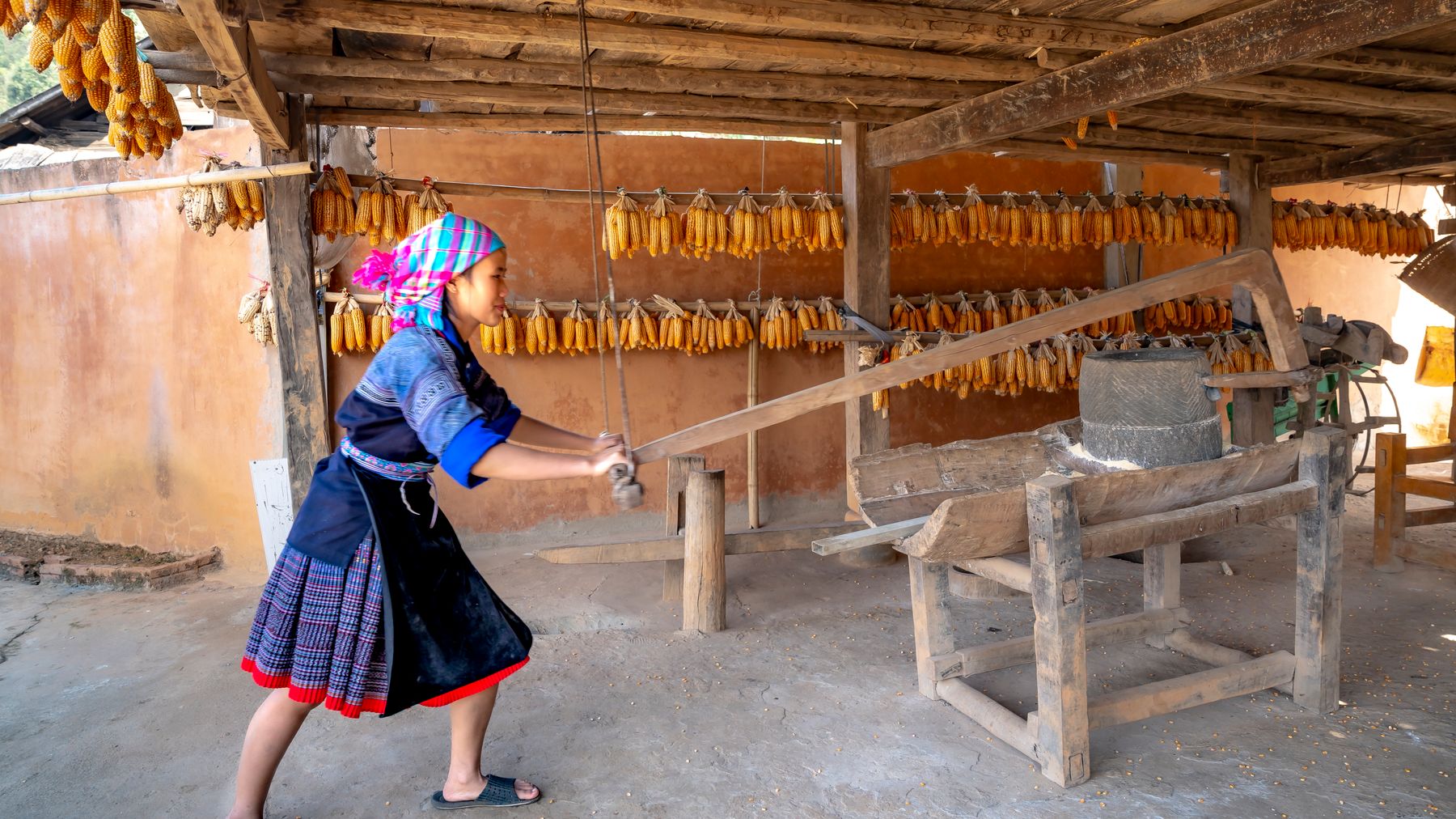
Photo by Quang Nguyen Vinh on Pexels
Where to Eat This Way
Sapa (사파 / 沙坝 / サパ) has the infrastructure but has also become tourist-facing enough that some of the food has softened toward what visitors expect. For a more genuine experience, head to the Bac Ha Sunday market or the Dong Van weekly market in Ha Giang. Both draw Hmong families from surrounding villages and both have vendors selling thang co, grilled corn, smoked meat, and ruou ngo from early morning.
In Sapa itself, the market on the lower level near the old town still has a functional wet section where you can find highland vegetables, dried herbs, and smoked meats not aimed at tourists. Arrive before 8am.
Practical Notes
If you're visiting highland markets specifically for the food, bring cash in small denominations — 10,000 and 20,000 VND notes move faster than 100,000 — and go early, as the best vendors sell out by mid-morning. Thang co is a morning dish; by noon the pot is often empty or the vendor has packed up. Allergies and dietary restrictions are difficult to communicate reliably in remote market settings, so plan accordingly.
Last updated · May 26, 2026 · independently researched, never sponsored.