What it is
Khu Tuong Niem Nha Van Nam Cao is a memorial complex dedicated to Nam Cao (1917–1951), one of Vietnam (베트남 / 越南 / ベトナム)'s most important realist writers. His short stories and novels — particularly "Chi Pheo" and "Song Mon" (Worn Out Lives) — are required reading in Vietnamese schools and remain sharp, unsentimental portraits of rural poverty in the Red River Delta.
The memorial sits in Hoa Hau commune, Ly Nhan district, in the area that was formerly Ha Nam province and is now part of the expanded Ninh Binh (닌빈 / 宁平 / ニンビン) administrative region. The complex includes Nam Cao's reconstructed family home, a small museum with manuscripts and personal belongings, his tomb, and a garden with literary quotations carved into stone. It's modest in scale — you can see everything in 60–90 minutes — but surprisingly well-maintained.
Why travelers go
Most visitors are Vietnamese students or literature enthusiasts, but the site offers something different for foreign travelers: a window into rural northern Vietnamese life that hasn't been curated for tourism. There are no souvenir shops selling Non La or fridge magnets. The surrounding village is a working agricultural community with rice paddies, brick houses, and water buffalo.
If you've read any Vietnamese literature in translation, standing in the landscape that shaped Nam Cao's writing makes the stories land differently. Even without that context, it's a genuinely peaceful place — the kind of stop that balances out days spent in crowded tourist circuits around Ninh Binh or Tam Coc.
Best time to visit
The memorial is open year-round, but timing matters for comfort.
October to March is ideal. Cooler temperatures (15–25°C), dry weather, and the winter rice harvest gives the surrounding fields a golden color that photographs well.
April to September is hot and humid, with afternoon rain common from June onward. The site has limited shade, so midday visits in summer are uncomfortable. If you go in this season, arrive before 9 AM or after 3 PM.
The anniversary of Nam Cao's death (November 30) sometimes draws small commemorative events, though nothing large-scale.
How to get there
From Ninh Binh city center, the memorial is approximately 45 km north, about 1 hour by motorbike or car via QL1A and local roads.
- Motorbike rental: 120,000–150,000 VND/day from guesthouses in Ninh Binh. The road is flat and straightforward — no mountain passes, no tricky navigation. Google Maps handles the route fine.
- Grab car: Around 250,000–350,000 VND one way from Ninh Binh. Ask the driver to wait (add 50,000–100,000 VND/hour) since you won't find return transport easily from the village.
- Local bus: No direct route. You'd need to get to Phu Ly town first, then hire a xe om (motorbike taxi) for the final 10 km. Not worth the hassle unless you're already in Phu Ly.
From Hanoi (about 90 km south), you can drive directly in under 2 hours via the Cau Gie – Ninh Binh expressway, exiting at Phu Ly. This makes it a feasible day trip from Hanoi if combined with other stops in the area.

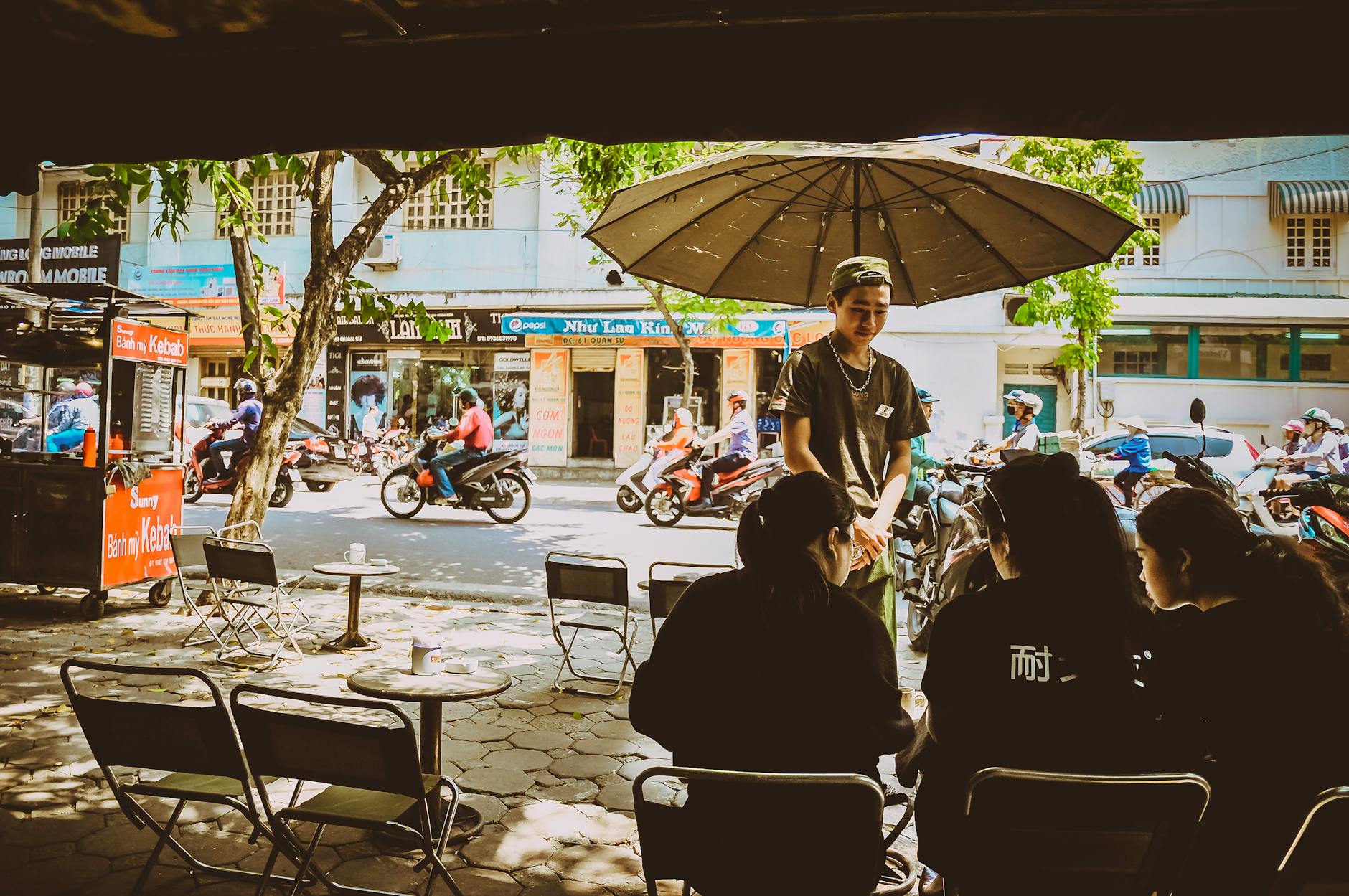
Photo by Quang Nguyen Vinh on Pexels
What to do
Walk through the reconstructed house
The three-bay traditional home is rebuilt on its original foundation. It's small — packed-earth floor, wooden columns, tile roof — and gives a sense of scale for how cramped rural life was in the 1930s–40s. Informational panels are in Vietnamese only, so having Google Translate's camera ready helps.
Visit the manuscript museum
A single-room exhibition with handwritten drafts, first editions, photographs, and a timeline of Nam Cao's life. The originals are behind glass. If you read Vietnamese or bring a translation app, the excerpts displayed on the walls are worth lingering over — his prose is blunt and unsentimental in a way that still feels modern.
Sit in the memorial garden
Stone tablets with quotations from Nam Cao's works line a path through a small landscaped area. It's quiet, shaded by banyan trees, and usually empty. A good place to sit for 20 minutes if you've been on the road.
Walk through Hoa Hau village
The village itself is the context. Take 30 minutes to walk the lanes around the memorial. You'll pass rice paddies, lotus ponds, and brick-making operations. People are friendly but not accustomed to foreign tourists — a nod and "xin chao" goes a long way.
Read "Chi Pheo" before or after
Seriously. It's a 30-page short story, available in English translation online. Reading it on-site or the evening before gives the whole visit a different weight.
Where to eat nearby
The village has no restaurants targeting visitors. Your best options:
- Phu Ly town (10 km away) has local "com binh dan" (everyday rice shops) along the main road. A plate of rice with two or three sides runs 35,000–50,000 VND. Look for places with a crowd at lunchtime.
- Try "bun cha" at any of the small shops near Phu Ly market — the northern-style grilled pork with noodles and herbs is reliable across this region.
- If you're heading back toward Ninh Binh, the stretch near Tam Coc has more tourist-oriented restaurants with English menus and slightly higher prices (80,000–150,000 VND per dish).
Where to stay
There's no accommodation at the memorial itself or in Hoa Hau village. Base yourself in:
- Ninh Binh city: Budget guesthouses from 200,000–400,000 VND/night. Mid-range hotels with air conditioning and breakfast from 500,000–900,000 VND.
- Tam Coc area: More atmosphere — homestays and small hotels clustered near the boat landings. Expect 300,000–700,000 VND for a double room.
- Phu Ly town: Basic hotels if you're passing through, 250,000–450,000 VND. Functional, not charming.

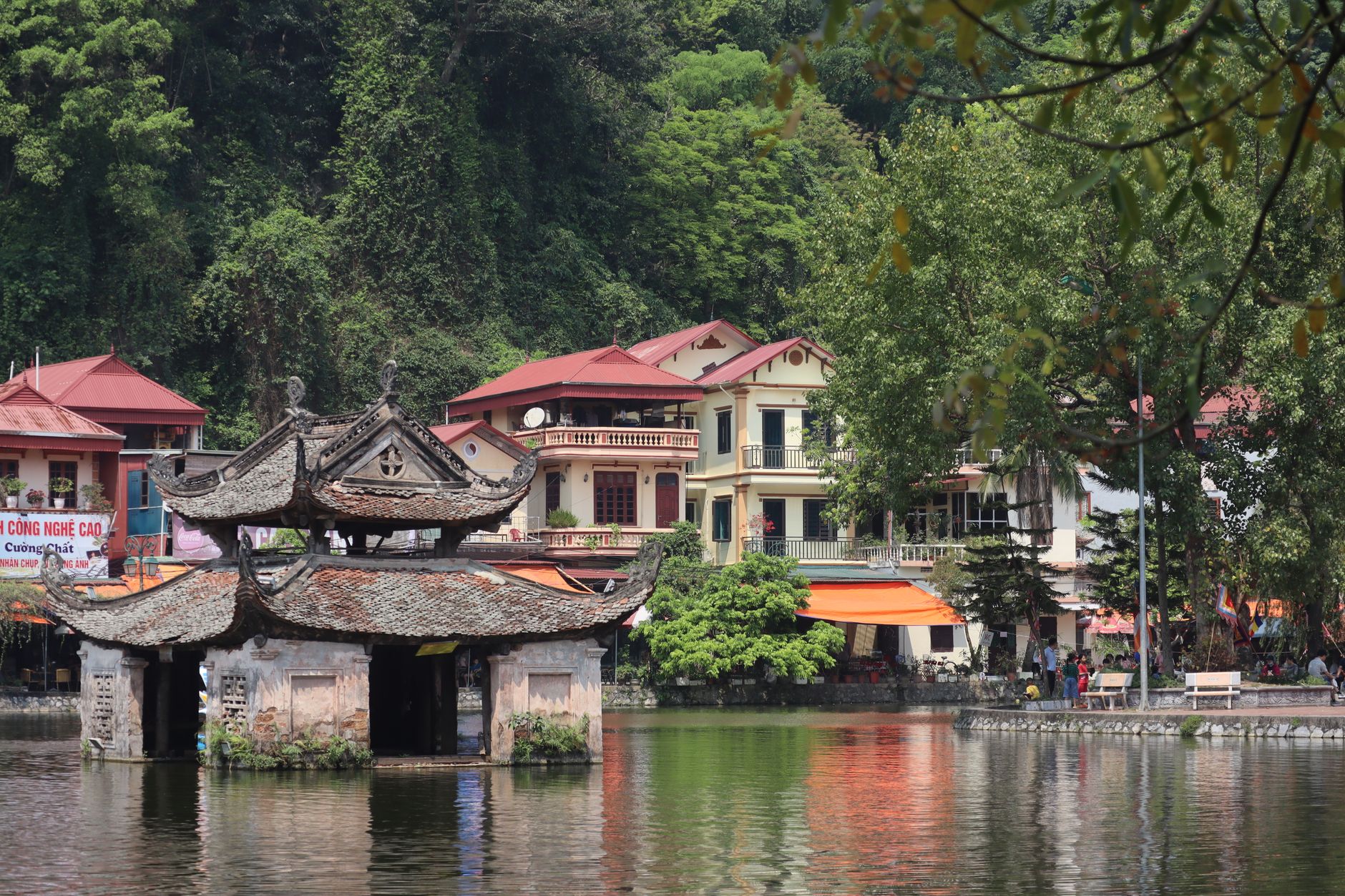
Photo by Son Tung Tran on Pexels
Practical tips locals would tell you
- Bring your own water and snacks. There's one small shop near the entrance gate but selection is limited to instant noodles and bottled water.
- Entrance is free. No ticket booth, no fee. The site is government-maintained.
- Wear shoes you can slip off easily. You remove footwear to enter the reconstructed house.
- Photography is allowed everywhere except flash inside the manuscript room.
- Combine with Ninh Binh attractions. The memorial alone doesn't justify a full day. Pair it with a morning at Hoa Lu or an afternoon boat ride at Tam Coc to make the drive worthwhile.
Common mistakes to avoid
- Showing up without context. If you don't know who Nam Cao is, the site will feel like a random village with a small museum. Spend 10 minutes reading about him beforehand.
- Arriving by bus expecting easy return transport. This is a rural village, not a tourist hub. No Grab bikes wait here. Arrange round-trip transport in advance.
- Visiting midday in summer. The complex is mostly outdoors with limited shade. Heat exhaustion is a real risk between 11 AM and 2 PM from May to August.
- Expecting English signage. There is none. Download Vietnamese on Google Translate offline before you go.
Practical notes
This isn't a site that will appear on most tourist itineraries, and that's precisely the point. It's a 90-minute detour that rewards curiosity about Vietnamese culture beyond the usual circuit of pagodas and caves. If you're spending a few days around Ninh Binh and want something off the well-worn path between Tam Coc and Trang An, this fits neatly into a half-day loop.
Last updated · May 29, 2026 · independently researched, never sponsored.